
TL;DR:
- AC unit noises serve as crucial signals indicating potential mechanical, electrical, or airflow issues needing attention. Recognizing high-urgency sounds like banging, screeching, or hissing is vital to prevent costly damage, especially to the compressor, while routine maintenance can prevent most noise-related problems. DIY troubleshooting is limited to simple tasks like filter changes and debris removal, with professional help required for electrical or refrigerant issues.
AC unit sounds are direct diagnostic signals from your air conditioner, revealing whether the system is running normally or heading toward a costly failure. Every noise your unit makes, from a soft hum to a sharp screech, corresponds to a specific mechanical, electrical, or airflow condition inside the system. Homeowners who learn to read these signals catch problems early, avoid compressor replacements that can exceed $2,000, and keep their homes comfortable year-round. This guide breaks down the most common AC noises, their urgency levels, and exactly what you should do about each one.
What do common ac unit sounds actually mean?
A healthy air conditioner produces a quiet hum during operation and a single soft click at startup and shutdown. Any noise outside that baseline is your system communicating a problem. The industry term for this diagnostic process is acoustic fault detection, and HVAC technicians use it as a first-pass assessment before opening any panel.
Here are the most common sounds homeowners report and what each one typically indicates:
- Banging or clanking: A loose or broken component, often a connecting rod, piston pin, or blower fan blade, is striking the interior housing. This sound means something has physically come apart inside the unit.
- Screeching or squealing: Motor bearings are failing, or the belt connecting the blower motor to the fan has slipped or worn through. This sound is most common in older systems with belt-driven blowers.
- Hissing: Refrigerant is escaping through a crack or loose fitting in the refrigerant line. Hissing or bubbling noises can also indicate a clogged condensate drain, which causes water damage if left unaddressed.
- Buzzing: An electrical component is failing. Failing capacitors, loose wiring, or a malfunctioning contactor all produce a buzzing sound. If the outdoor fan is not spinning but the unit is buzzing, the capacitor is the most likely culprit.
- Rattling: Loose cabinet screws, debris inside the condenser, or a disconnected duct panel are the usual causes. This is the most DIY-friendly noise on the list.
- Clicking (persistent): A single click at startup is normal. Repeated clicking signals a failing capacitor or control board, especially when paired with reduced cooling or iced coils.
- Whining or chirping: A faint, persistent whine is a critical early warning. Motor bearing failure produces this sound before the motor overheats and seizes entirely.
Location matters as much as the sound itself. A noise from the indoor air handler points to blower motor, filter, or duct issues. A noise from the outdoor condenser unit points to compressor, fan motor, or electrical components. Timing matters too. A noise that appears only at startup differs significantly from one that runs constantly throughout the cooling cycle.
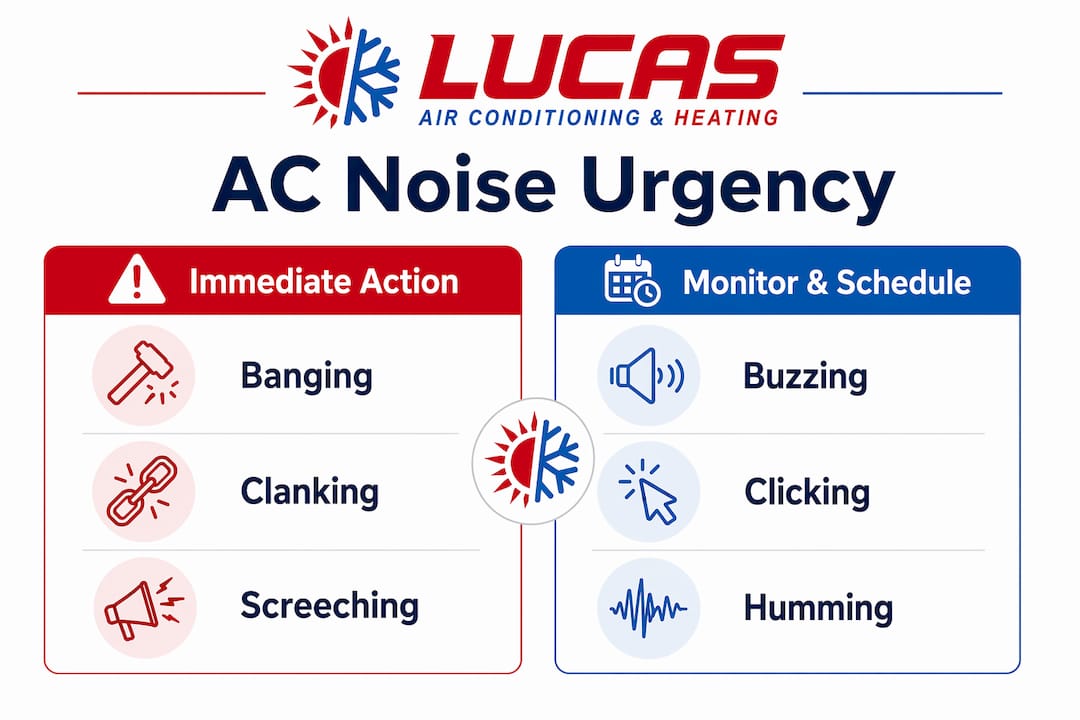
Urgency levels: which noises need immediate action?
Not every strange noise requires an emergency call. Understanding urgency levels helps you protect your system without overreacting to every sound.
| Sound | Urgency | Recommended action |
|---|---|---|
| Banging, clanking | High. Shut down immediately. | Turn off the system and call a technician. Running it risks total compressor failure. |
| Screeching, grinding | High. Shut down immediately. | Motor or bearing failure in progress. Continued operation causes irreversible damage. |
| Hissing (refrigerant) | High. Shut down immediately. | Refrigerant leaks damage the compressor and pose health risks. Do not run the system. |
| Buzzing (electrical) | High. Do not ignore. | Overheating electrical components risk fire, especially in older systems. |
| Persistent clicking | Moderate. Schedule within 48 hours. | Capacitor or control board issue. System may stop cooling without warning. |
| Rattling | Low to moderate. | Check for loose screws and debris first. Schedule service if rattling continues after inspection. |
| Soft humming | Low. | Normal operation sound. Monitor for changes in pitch or volume. |
Ignoring high-urgency sounds is where repair costs spiral. Capacitor replacements run $150 to $300, but delaying repairs on a failing compressor can push total costs past $2,000. The compressor is the most expensive single component in any residential AC system, and most noises that go unaddressed eventually reach it.
Pro Tip: When you hear a new sound, note the exact time it starts, whether it happens at startup or mid-cycle, and which part of the house the sound comes from. That information cuts a technician’s diagnostic time in half.
Safe DIY troubleshooting to reduce ac noise
Several common noises have causes you can address safely without any tools or technical training. Start here before scheduling a service call.
- Replace or clean your air filter. A clogged filter forces the blower motor to work harder, producing a strained hum or whistling sound through the vents. Replace filters every 30 to 90 days depending on household dust levels and whether you have pets.
- Clear the area around your outdoor unit. Restricted airflow around the condenser raises internal pressure and strains the motor. Maintain a minimum two-foot clearance on all sides by trimming shrubs, removing yard debris, and keeping furniture away from the unit.
- Tighten cabinet screws. Vibration loosens the sheet metal panels on both indoor and outdoor units over time. A screwdriver takes two minutes and eliminates rattling in many cases.
- Check your vents and registers. Furniture blocking supply or return vents creates pressure imbalances that produce whistling and banging in ductwork. Walk through each room and confirm every vent is fully open and unobstructed.
- Inspect the condensate drain line. A gurgling or bubbling sound from the indoor unit often means the drain line is partially clogged. Pouring a cup of diluted white vinegar into the drain access port clears most minor blockages.
Stop DIY troubleshooting the moment you suspect an electrical issue, refrigerant leak, or internal mechanical failure. Electrical component failures like buzzing should never be addressed by untrained homeowners. If your circuit breaker trips alongside any noise, shut the system off at the breaker and call a professional. You can also review basic HVAC troubleshooting steps to understand what falls within safe DIY territory.
Pro Tip: After any DIY fix, run the system for 15 minutes and listen again. If the noise returns or changes character, the root cause is deeper than a surface adjustment.
When to call a professional for ac noise repairs
Some problems simply require a trained technician with diagnostic equipment and refrigerant handling certification. Recognizing that line protects both your system and your safety.
Call a professional immediately for any of the following:
- Refrigerant-related sounds: Hissing or bubbling that persists after checking the drain line indicates a refrigerant leak. Refrigerant handling requires EPA Section 608 certification. Exposure to refrigerant is a health hazard, and the system cannot cool effectively with low refrigerant levels.
- Grinding or screeching: These sounds confirm motor bearing failure or a seized component. A technician will inspect the blower motor, condenser fan motor, and compressor bearings to determine whether repair or replacement is needed.
- Electrical buzzing with performance loss: When buzzing accompanies reduced airflow, warm air output, or a tripped breaker, the capacitor or contactor has likely failed. These components carry high voltage even after the system is powered down.
- Banging that stops and restarts: This pattern suggests a loose component is intermittently striking the housing. The damage compounds with each cycle.
A standard diagnostic visit from a licensed HVAC technician typically takes 30 to 60 minutes. The technician will identify the sound source, inspect related components, and provide a written repair estimate before any work begins. You can review common AC repair issues to understand what technicians typically find during these visits. Repair timelines for most component replacements, including capacitors, contactors, and fan motors, run one to two hours for parts that are in stock.
How regular maintenance prevents a noisy air conditioner
Preventive maintenance is the most cost-effective way to keep your system quiet and extend its operating life. Most noise issues develop gradually from components that were never serviced, not from sudden failures.
Annual tune-ups address the exact conditions that produce noise. A technician cleans the evaporator and condenser coils, which reduces the strain that causes motor hum. Lubricating motor bearings eliminates the friction that produces whining and chirping before it progresses to bearing failure. Clearing the condensate drain prevents the gurgling and bubbling that signals a clog. Inspecting electrical connections catches loose wiring before it produces buzzing or trips a breaker.
Regular maintenance also increases energy efficiency and extends the air conditioner’s operating lifespan, avoiding premature system replacement. A well-maintained system runs quieter because every component operates within its designed tolerances. When coils are dirty or bearings are dry, the system compensates by working harder, and that extra effort produces noise.
| Maintenance task | Noise it prevents | Recommended frequency |
|---|---|---|
| Filter replacement | Whistling, strained motor hum | Every 30 to 90 days |
| Coil cleaning | Overworked motor sounds | Annually |
| Motor lubrication | Whining, chirping, bearing squeal | Annually |
| Drain line clearing | Gurgling, bubbling | Annually or as needed |
| Electrical inspection | Buzzing, clicking | Annually |
The HVAC preventative maintenance guide from Lucasair walks through each of these tasks in detail, including what to expect during a professional tune-up in Central Florida’s climate.
Key takeaways
Identifying AC unit sounds early and matching them to their causes is the single most effective way to prevent minor issues from becoming major repairs.
| Point | Details |
|---|---|
| Sounds signal specific failures | Each noise type maps to a distinct component or system issue, not a general malfunction. |
| High-urgency sounds require shutdown | Banging, screeching, hissing, and electrical buzzing require immediate power-off to prevent compressor damage. |
| DIY has clear limits | Filter changes, debris clearing, and screw tightening are safe. Electrical and refrigerant work are not. |
| Repair costs escalate fast | Ignoring early warning sounds can push repair costs from $300 to over $2,000 as damage spreads. |
| Maintenance prevents most noise | Annual tune-ups address the root conditions that produce noise before they develop. |
What I’ve learned from years of AC noise calls
The most common mistake homeowners make is waiting. A soft chirp or faint whine gets dismissed as “just the AC being loud,” and three weeks later the motor seizes on the hottest day of the summer. I’ve seen this pattern more times than I can count, and it almost always costs significantly more than an early service call would have.
The second mistake is the opposite: panicking over a rattle that turns out to be a loose panel screw. A noisy air conditioner is not automatically a dying system. Loud rattles are frequently the most harmless noises on the list, while quiet, persistent whining is the sound that should keep you up at night.
What I tell every homeowner is this: trust your instincts about change. If your system has always made a certain sound and it suddenly gets louder, changes pitch, or starts at a different point in the cycle, that change is the signal. The sound itself is less important than whether it is new or different. And never attempt to fix electrical components yourself. The voltage stored in a capacitor can cause serious injury even when the system is powered off. That is a job for a licensed technician, every time.
— Lucasair
Lucasair can diagnose and fix your noisy AC unit

When your air conditioner starts making sounds you don’t recognize, Lucasair’s licensed technicians in Eustis, Florida are ready to help. The team at Lucas Air Conditioning and Heating handles everything from capacitor replacements and refrigerant leak repairs to full residential HVAC repairs, with same-week scheduling available for most service calls. Every diagnostic visit includes a written estimate before any work begins, so you know exactly what you’re dealing with and what it costs. Lucasair serves homeowners and renters across Central Florida, with a veteran-owned commitment to honest, safety-first service. Schedule your appointment online or call to speak with a technician directly.
FAQ
What are normal sounds from an AC unit?
A quiet hum during operation and a single soft click at startup and shutdown are normal AC sounds. Any noise outside that baseline, especially screeching, banging, or persistent clicking, signals a problem that needs attention.
Why is my AC making a buzzing noise?
AC unit buzzing typically indicates a failing capacitor, loose wiring, or a malfunctioning contactor. If the outdoor fan is not spinning alongside the buzz, capacitor replacement is the most common fix, costing $150 to $300.
Is an air conditioner clicking sound dangerous?
A single click at startup is normal. Persistent clicking throughout the cycle signals a failing capacitor or control board and requires professional service within 48 hours to prevent a complete system shutdown.
Can I fix a rattling AC unit myself?
Yes, in many cases. Loose cabinet screws and debris inside the outdoor condenser are common causes of rattling that homeowners can address safely. If rattling continues after tightening screws and clearing debris, schedule a service call.
How often should I service my AC to prevent noise issues?
Annual professional maintenance is the standard recommendation. Combining that with filter replacements every 30 to 90 days addresses the most common root causes of AC noise before they develop into component failures.
Recommended
- Common AC Repair Issues Every Homeowner Should Know – Lucas Air Conditioning and Heating
- HVAC Installation Step by Step for Homeowners
- Step by Step AC Troubleshooting for Homeowners – Lucas Air Conditioning and Heating
- HVAC Terminology Explained: Smart Decisions for Florida Homes – Lucas Air Conditioning and Heating
