

TL;DR:
- HVAC systems vary from split, ductless mini-splits, packaged units, hybrid, geothermal to hydronic, each suited to different needs and climates. Proper selection relies on understanding delivery methods, lifespan, and total ownership costs rather than initial price alone. Maintenance, duct condition, and energy efficiency significantly influence long-term performance and savings.
Types of HVAC units are distinct system configurations categorized by how they deliver conditioned air or heat, including split systems, ductless mini-splits, packaged units, hybrid systems, geothermal systems, and hydronic systems. The industry organizes these into four delivery types: all-air (duct-based), water-based or hydronic, refrigerant-based (which covers split and mini-split), and packaged or unitary. Knowing which category fits your home, budget, and climate is the single most important decision you will make before calling an installer. This guide covers every major residential HVAC option with real cost figures, lifespan data, and the specific scenarios where each system earns its place.
What are the main types of HVAC units?
Split systems are the most common HVAC configuration in American homes, and for good reason. They divide components between an indoor air handler and an outdoor condenser unit, connected by refrigerant lines and ductwork. Manufacturers like Trane and Bryant have built the split system into the default choice for small to medium residential homes because the technology is proven, parts are widely available, and contractors know how to service them quickly.
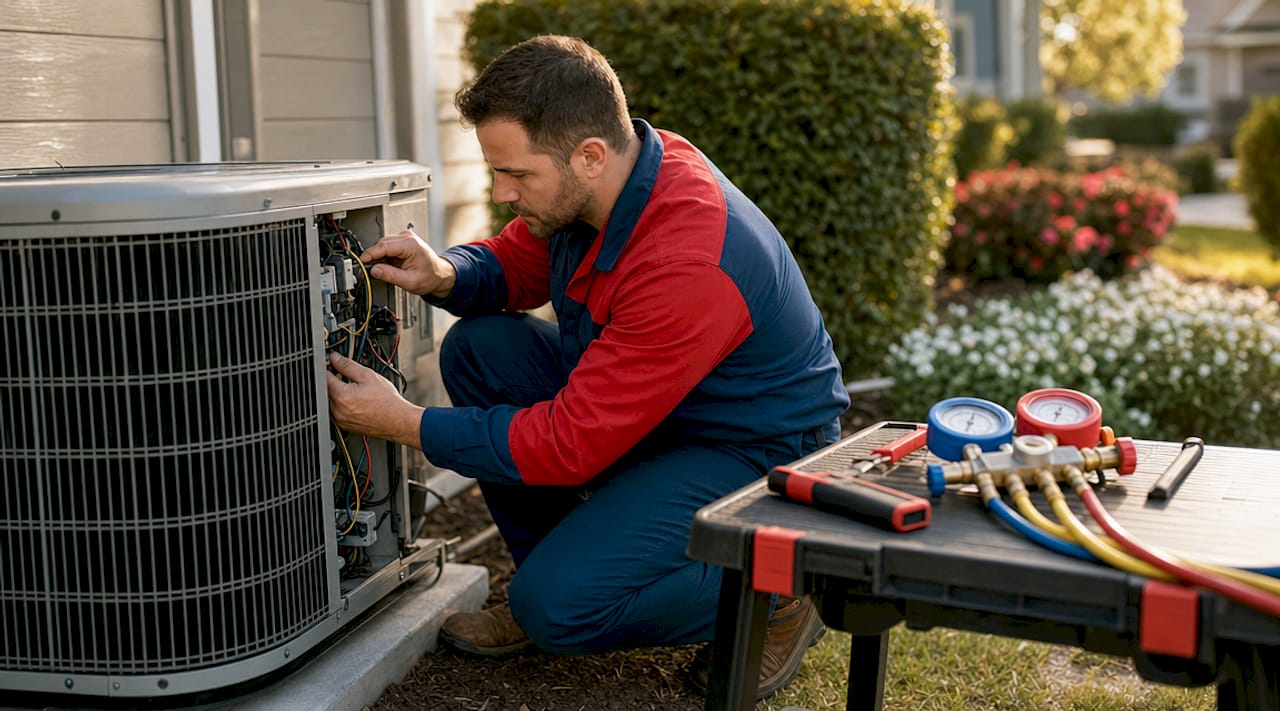
Split systems typically last 15 to 20 years, which means you get roughly two decades of reliable whole-home coverage from a single investment. That lifespan assumes your ductwork is in good shape, which is where many homeowners get surprised.
The ductwork problem most buyers overlook
Leaky or undersized ducts can waste more than 30% of your unit’s efficiency regardless of how high its SEER2 rating is. You can install a top-tier Trane XV20i and still pay inflated energy bills if your ducts are 25 years old and full of gaps. Always have ductwork inspected before committing to a split system upgrade.
Key advantages of split systems:
- Whole-home coverage through a single thermostat
- Wide contractor availability across Central Florida and nationally
- Compatible with add-on air purifiers, UV lights, and smart thermostats
- Lower upfront cost compared to geothermal or hydronic alternatives
Limitations to consider:
- Duct energy loss can significantly reduce real-world efficiency
- Ductwork installation adds cost and complexity in homes without existing ducts
- Less precise room-by-room temperature control than zoned alternatives
Pro Tip: If your home already has ducts from a previous system, a split system replacement is almost always the most cost-effective path. Get a duct leakage test before installation to confirm the ducts are worth keeping.
How do ductless mini-split systems work?
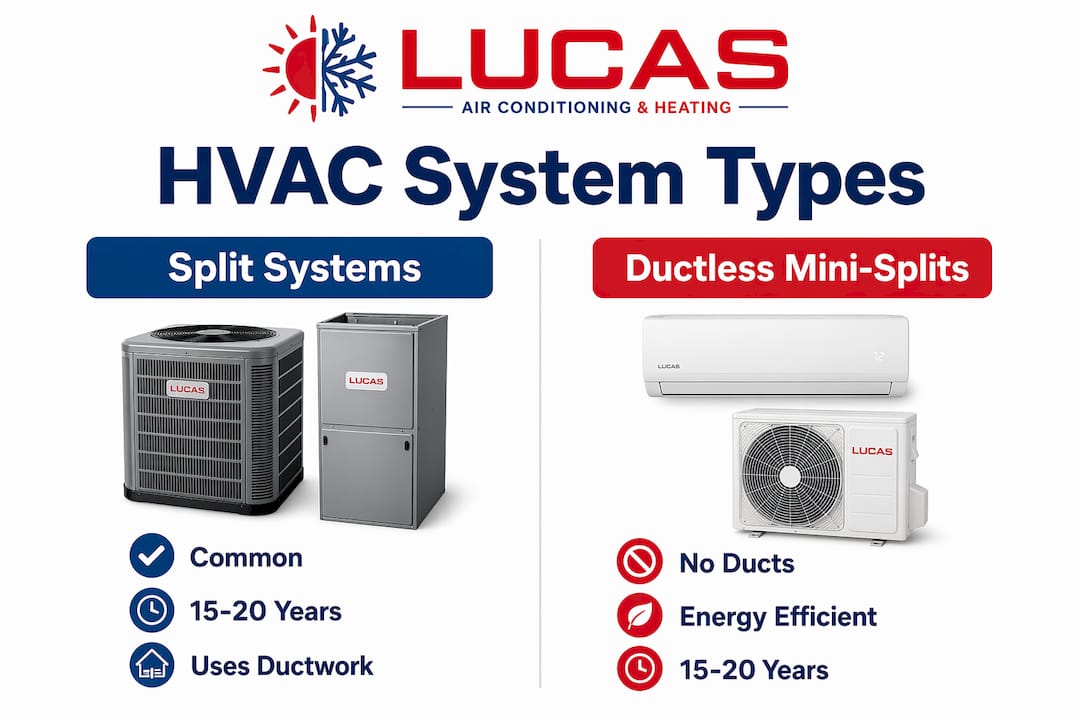
Ductless mini-splits use an outdoor compressor connected to one or more indoor air handlers mounted directly in the rooms you want to condition. There is no ductwork involved at any point. Mini-splits allow targeted comfort and eliminate the energy losses that come with duct leaks, making them one of the most efficient options available for residential use.
The zoning capability is what separates mini-splits from every other system type. Each indoor unit has its own remote or app control, so a bedroom can run at 68°F while a home office stays at 72°F simultaneously. That level of control is not possible with a standard single-zone split system without expensive zoning hardware.
Here is when a ductless mini-split makes the most sense:
- You are adding a room addition, garage conversion, or sunroom that your existing system cannot reach.
- Your home has no existing ductwork and you want to avoid the cost and disruption of installing it.
- You need quiet operation. Mini-split indoor units typically run at 19 to 26 decibels, quieter than a whisper.
- You want individual room control without a full zoning overhaul of your current system.
- You are managing a rental property and want tenants to control their own spaces independently.
Mini-splits share the same 15 to 20-year lifespan as standard split systems when maintained properly. Installation costs run higher per zone than a central system, but the absence of ductwork often offsets that difference in retrofit projects.
Pro Tip: For mini-split installation and maintenance, always work with a contractor certified for the specific brand you choose. Improper refrigerant charging is the leading cause of premature compressor failure in mini-split systems.
What are packaged HVAC systems and who needs them?
A packaged HVAC unit contains every component, the compressor, condenser, evaporator, and air handler, inside a single cabinet installed outside the building on a rooftop or concrete slab. Nothing goes inside the home except the supply and return air ducts. Packaged units simplify installation and make maintenance straightforward because a technician only needs to access one location.
Standard packaged system installation costs between $10,000 and $14,000 depending on unit size and site complexity. That figure is competitive with split system installations once you factor in the reduced labor from having everything in one cabinet.
Packaged systems are the practical choice in these situations:
- Small commercial spaces like retail shops or offices where rooftop placement saves interior square footage
- Residential properties with very limited indoor mechanical space
- Mobile homes and manufactured housing where split systems are not structurally compatible
- Properties where the homeowner wants to minimize indoor equipment footprint
The main limitation is exposure. Because the entire unit sits outside year-round, rust, pest intrusion, and UV degradation are real concerns. Annual maintenance is non-negotiable with packaged systems. Skipping a tune-up on an outdoor unit in Florida’s humidity is a fast path to a failed compressor.
How do hybrid and geothermal HVAC systems differ?
Hybrid and geothermal systems both prioritize energy efficiency over simplicity, but they achieve it through completely different mechanisms. Understanding the distinction helps you decide whether either one fits your property and budget.
Hybrid split systems combine a heat pump with a gas furnace, letting the system automatically switch between electric heat pump operation and gas heat depending on outdoor temperatures. When it is mild outside, the heat pump runs efficiently. When temperatures drop below the heat pump’s effective range, the furnace takes over. This makes hybrid systems particularly well-suited to variable seasonal climates where neither pure electric nor pure gas is optimal year-round.
Geothermal systems leverage stable underground temperatures for heat exchange rather than relying on outdoor air. The ground a few feet below the surface stays at a consistent 50 to 60°F regardless of season, which gives geothermal systems a massive efficiency advantage over air-source systems in extreme climates. The tradeoff is installation cost and complexity. Ground loops require significant excavation or drilling, and total installation costs can run two to three times higher than a conventional split system.
| Feature | Hybrid system | Geothermal system |
|---|---|---|
| Energy source | Electric heat pump plus gas furnace | Ground-loop heat exchange |
| Best climate | Variable seasonal temperatures | Any climate, especially extremes |
| Installation cost | Moderate, similar to split systems | High, due to ground loop excavation |
| Lifespan | 15 to 20 years | 25 to 50 years |
| Best for | Existing homes in variable climates | New construction, eco-conscious builds |
Geothermal systems can last 25 to 50 years, which dramatically changes the total cost of ownership calculation. A system that costs twice as much upfront but lasts twice as long while cutting energy bills by 30 to 50% is often the smarter financial decision over a 30-year mortgage horizon.
What are hydronic HVAC systems and when do they make sense?
Hydronic HVAC systems distribute heat and cooling through water circulating in pipes rather than through forced air. Radiant floor heating is the most familiar residential application. Hydronic systems distribute heating and cooling via water pipes and radiators, offering greater efficiency and longer lifespan than air-based systems.
The comfort difference is noticeable. Radiant heat warms surfaces and objects in a room rather than blowing hot air from a vent, which eliminates the drafty, uneven feeling common with forced-air systems. Allergy sufferers particularly benefit because there is no air movement to circulate dust and allergens.
| Specification | Hydronic system | Standard split system |
|---|---|---|
| Distribution method | Water through pipes and radiators | Conditioned air through ducts |
| Typical lifespan | 25 to 50 years | 15 to 20 years |
| Comfort quality | Even radiant warmth, no drafts | Whole-home coverage, faster response |
| Best application | New construction, radiant floor installs | Retrofit, existing duct systems |
| Retrofit complexity | High, structural modifications often required | Low to moderate |
Retrofitting from a fundamentally different delivery type to hydronic often requires structural modifications that exceed the equipment cost itself. Hydronic systems are most practical in new construction where pipes can be embedded in floors during the build. For existing homes, the cost and disruption of retrofitting rarely pencils out unless you are doing a major renovation anyway.
Hydronic systems also require a boiler or water heater as the heat source, adding another component to maintain. That said, the 25 to 50-year lifespan means you are likely looking at one installation for the life of the home.
Key takeaways
Selecting the right HVAC system requires matching delivery method, lifespan, and total cost of ownership to your specific building, climate, and budget rather than defaulting to the cheapest upfront option.
| Point | Details |
|---|---|
| Split systems suit most homes | Proven technology with 15 to 20-year lifespan, but duct condition determines real efficiency. |
| Mini-splits excel in zoning and retrofits | No ductwork needed, individual room control, and quiet operation make them ideal for additions. |
| Packaged units save space | All-in-one outdoor cabinet works for tight spaces but requires consistent annual maintenance. |
| Hybrid and geothermal offer long-term savings | Geothermal lasts 25 to 50 years; hybrid systems optimize fuel use across seasonal climates. |
| Hydronic systems suit new construction | Water-based radiant systems deliver superior comfort but are costly to retrofit into existing homes. |
Why the “cheapest unit” mindset costs you more
Most homeowners I talk to come in focused on the sticker price of the unit. That instinct is understandable, but it consistently leads to regret. Choosing HVAC systems based solely on upfront cost is one of the most common and expensive mistakes in residential HVAC. The real number that matters is total cost of ownership: energy bills over 15 years, repair frequency, and whether the system actually keeps every room comfortable.
I have seen homeowners install a budget split system in a home with aging ducts and wonder why their bills are higher than their neighbor’s with a newer, more expensive unit. The answer is almost always the ductwork. The unit is only as efficient as the delivery system it feeds.
The other mistake is ignoring zoning needs. A single-zone split system in a two-story Florida home with a west-facing master bedroom is going to leave someone uncomfortable no matter how good the equipment is. Selecting an HVAC system requires assessing building size, energy goals, and whether you are retrofitting or building new before you ever look at a price sheet.
My honest recommendation: get a load calculation done by a licensed contractor, have your ducts tested if you have them, and then compare system types based on 10-year total cost rather than day-one price. The energy-saving features available in 2026 systems make this analysis more favorable for efficient systems than it has ever been.
— Lucasair
Ready to find the right system for your home?
Lucasair serves homeowners and property managers across Central Florida with expert guidance on every HVAC system type covered in this article. Whether you are replacing an aging split system, adding a mini-split to a new room, or exploring a packaged unit for a commercial space, the team at Lucasair handles the full process from load calculation to final inspection.

Cameron Lucas and the Lucasair team bring hands-on experience with residential and commercial installations across Eustis and the surrounding counties. Financing options are available, and military and first responder discounts apply. Start with the step-by-step installation guide to understand what the process looks like, then schedule a consultation for a personalized system recommendation. You can also explore professional installation services for a full picture of what Lucasair offers.
FAQ
What are the main types of HVAC units for homes?
The six main types of residential HVAC units are split systems, ductless mini-splits, packaged units, hybrid systems, geothermal systems, and hydronic systems. Each differs by how it delivers conditioned air or heat and suits different building sizes, budgets, and climates.
How long do different HVAC systems last?
Split systems and mini-splits typically last 15 to 20 years, while geothermal and hydronic systems can last 25 to 50 years with proper maintenance. Portable units have the shortest lifespan at around 5 years.
Are ductless mini-splits more efficient than central air systems?
Ductless mini-splits eliminate duct energy losses, which can exceed 30% in older homes, making them more efficient in many retrofit scenarios. Central air systems with well-sealed ducts can match or exceed mini-split efficiency in whole-home applications.
What HVAC system is best for a home without existing ductwork?
A ductless mini-split is the most practical choice for homes without ductwork because it requires no duct installation and delivers individual room control. Hydronic radiant systems are another option but are best suited to new construction rather than retrofits.
How much does a packaged HVAC system cost to install?
A standard packaged HVAC system installation costs between $10,000 and $14,000 depending on unit size and site complexity. The all-in-one outdoor cabinet design reduces labor compared to split systems but requires consistent maintenance to prevent weather-related damage.
Recommended
- HVAC Installation Step by Step for Homeowners
- Best HVAC Features for New Homes in 2026 – Lucas Air Conditioning and Heating
- Step by Step HVAC Repair Guide for Homeowners – Lucas Air Conditioning and Heating
- HVAC Terminology Explained: Smart Decisions for Florida Homes – Lucas Air Conditioning and Heating