

TL;DR:
- Asking detailed questions before an HVAC installation helps homeowners identify sizing errors, verify contractor credentials, and understand warranty coverage. It ensures compliance with permits, assesses ductwork condition, and clarifies total costs to avoid unexpected expenses. These steps lead to a more reliable, efficient, and legally compliant HVAC system installation.
An HVAC installation questions list is the single most effective tool homeowners and property managers have to protect their investment before a contractor sets foot in the house. The right questions expose sizing errors, licensing gaps, and warranty blind spots before they cost you thousands. This guide covers the critical categories every HVAC setup inquiry should address: system sizing with Manual J load calculation, contractor credentials, labor and equipment warranties, permit compliance, and ductwork efficiency. Ask these questions before signing any contract.
1. What HVAC system size do I need and how is it determined?
Correct system sizing is the foundation of every successful HVAC installation. The industry standard method is the Manual J load calculation, a room-by-room analysis that accounts for your home’s square footage, insulation levels, window types and orientation, local climate, and occupancy patterns. Any contractor who quotes a system size over the phone without an in-person assessment is giving you an unreliable number.
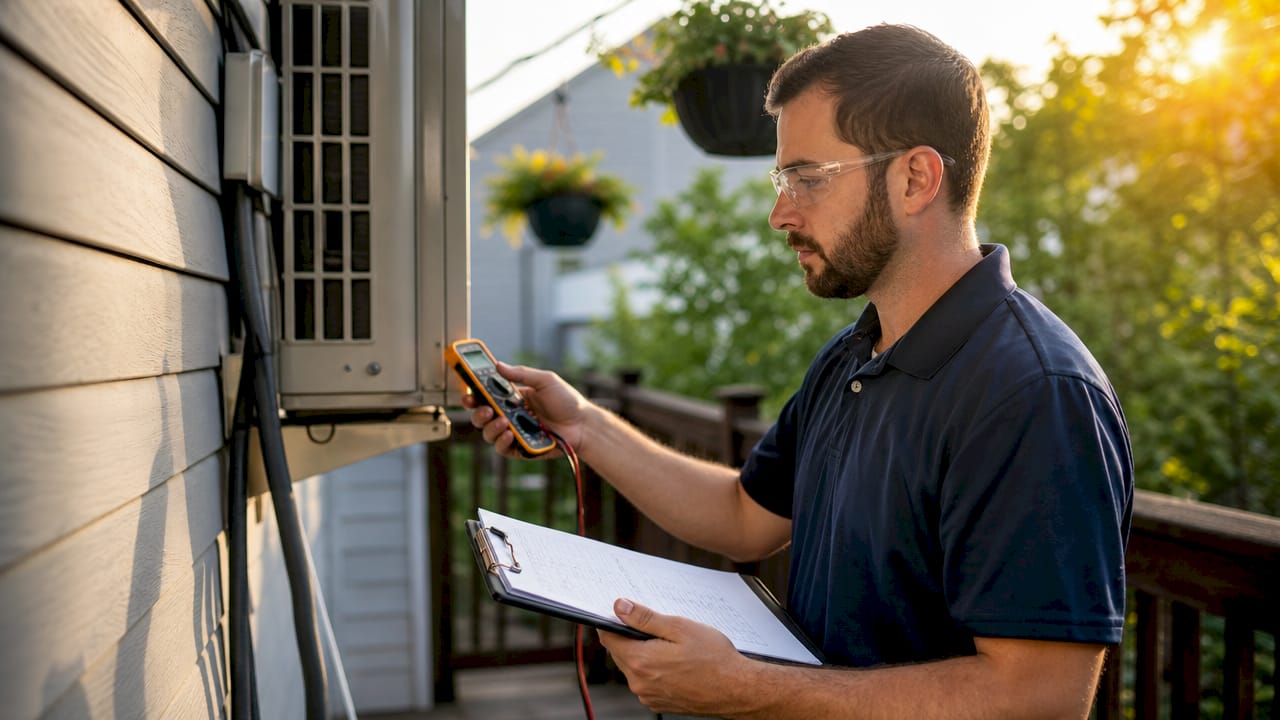
Oversized units short-cycle, meaning they turn on and off too frequently to remove humidity properly. Undersized units run constantly and still fail to reach your target temperature on the hottest Florida days. Both outcomes shorten equipment life and inflate your monthly utility bills.
Ask your contractor these questions on sizing:
- Will you perform a full Manual J calculation before recommending a system?
- Can you provide a written copy of the load calculation results?
- What specific factors about my home are you using to determine size?
- How does Central Florida’s climate affect your sizing recommendation?
Pro Tip: If a contractor dismisses Manual J and defaults to a “one ton per 500 square feet” rule of thumb, treat that as a red flag. That shortcut ignores insulation quality, ceiling height, and window exposure, all of which are significant in Florida homes.
Proper sizing also affects your energy-efficient system choice, since a correctly sized inverter-driven unit can deliver far better efficiency than an oversized standard unit.
2. How to verify HVAC contractor credentials and insurance
Installation quality determines 80% of HVAC system longevity, not the equipment brand. That single fact makes contractor vetting more important than brand selection. A licensed, bonded, and insured contractor is your first line of defense against substandard work.
Florida requires HVAC contractors to hold a state-issued license. Ask for the license number and verify it directly through the Florida Department of Business and Professional Regulation (DBPR) website. Also request certificates of both general liability insurance and workers’ compensation coverage. If a worker is injured on your property and the contractor lacks workers’ comp, you can be held liable.
Beyond basic licensing, look for these credentials:
- NATE (North American Technician Excellence) certification, which confirms technicians have passed rigorous industry exams
- EPA 608 certification, required for any technician handling refrigerants
- Manufacturer-specific training certifications for brands like Carrier, Trane, or Lennox
Recent references from the last six months are more reliable than older ones. Ask for at least two recent job references and follow up with a phone call.
Pro Tip: Ask the contractor directly: “Will you be pulling the permit for this job?” A contractor who hesitates or suggests skipping the permit is telling you something important about how they operate.
3. What warranty coverage should I expect?
Warranty terms on HVAC installations split into two distinct categories, and most homeowners only focus on one. The manufacturer’s equipment warranty covers parts and components, typically ranging from five to ten years depending on the brand and whether you register the unit after installation. The contractor’s labor warranty covers the installation work itself.
Labor warranties should be at least three to five years, since most installation-related failures appear within the first 24 months. A contractor offering only a 90-day labor warranty is signaling low confidence in their own work. Get the labor warranty terms in writing before the job starts.
Ask these warranty questions before signing:
- What is the length of your labor warranty and what does it cover?
- Does the manufacturer warranty require professional registration, and will you handle that?
- Is the warranty transferable if I sell the property?
- Does the warranty require annual maintenance to remain valid?
Many manufacturer warranties, including those from Carrier and Lennox, require annual professional maintenance to stay active. Skipping a tune-up can void coverage on a $10,000 system. Confirm this requirement in writing and factor it into your long-term budget.
4. What permit and inspection responsibilities apply to my installation?
Pulling permits is a legal requirement for HVAC replacement in virtually every Florida jurisdiction, and the responsibility falls on the licensed contractor. A permit triggers a third-party inspection that confirms the installation meets local building codes. Skipping this step can void your homeowner’s insurance coverage and create serious complications when you sell the property.
Permit fees vary by location. Some municipalities charge a flat fee while others calculate based on project value. The contractor should include permit costs in their written bid. If they do not, ask for a line-item breakdown that includes permit fees, inspection scheduling, and any re-inspection costs if the first inspection fails.
After installation is complete, request copies of the permit, the passed inspection report, and the equipment registration confirmation. These documents protect you if a warranty dispute arises later and are required by most title companies during a home sale.
5. Questions to ask about ductwork condition and efficiency
Ductwork is the delivery system for every dollar your HVAC unit produces, and it is frequently overlooked in the HVAC installation preparation checklist. Leaky ducts reduce system efficiency by up to 30%, forcing your new equipment to work significantly harder to reach the same temperature. Installing a high-efficiency unit on a leaky duct system is like putting a performance engine in a car with flat tires.
Ask your contractor these duct-specific questions:
- Will you inspect the existing ductwork before installation?
- Do you perform duct leakage testing per ASHRAE 152 standards?
- If leaks are found, is duct sealing or repair included in the bid or quoted separately?
- How will you verify airflow balance across all rooms after installation?
- Can you provide a written duct test report after the job is complete?
Many contractors exclude duct repairs from their initial bids. Hidden costs like duct repairs and electrical upgrades can add 10 to 20 percent to the final project price. Asking upfront and getting a line-item scope of work prevents budget surprises on installation day.
For a deeper look at how duct condition interacts with system sizing in Florida homes, the HVAC load calculation guide from Lucasair explains the relationship clearly.
6. What are the total costs and what is included in the bid?
Full HVAC replacement costs range from $8,000 to $15,000 on average, with high-efficiency inverter systems in premium markets exceeding that range. That number means nothing without a clear scope of work. A low bid that excludes electrical upgrades, thermostat wiring, or duct repairs will often cost more than a higher bid that covers everything.
Request a written, line-item proposal that specifies equipment model numbers, SEER ratings, labor costs, permit fees, disposal of the old unit, and any exclusions. Compare bids on scope, not just price. Two bids for the same system can differ by $2,000 simply because one contractor included duct sealing and the other did not.
Ask specifically: “Does this bid include everything needed to pass inspection?” That one question surfaces hidden exclusions before they become change orders. You can also review HVAC cost factors for Florida homes to understand what drives pricing in your region before you request bids.
Key takeaways
A successful HVAC installation depends on asking the right questions before any equipment is ordered or contracts are signed.
| Point | Details |
|---|---|
| Require Manual J sizing | Never accept a system size recommendation without a written load calculation. |
| Verify license and insurance | Confirm contractor license numbers through DBPR and request insurance certificates before work begins. |
| Separate labor from equipment warranty | Labor warranty should be at least three to five years in writing, separate from the manufacturer’s parts coverage. |
| Demand permit compliance | Skipping permits risks voiding your insurance and creating title issues when you sell. |
| Audit ductwork before installation | Leaky ducts cut system efficiency by up to 30%; get a duct test report in writing. |
What I’ve learned from watching homeowners skip these questions
Most HVAC installation regrets I’ve seen come down to one pattern: the homeowner chose the lowest bid without asking what was excluded. They signed a contract, the crew showed up, and by noon there was a change order for duct repairs that added $1,500 to the job. That scenario is not bad luck. It is the predictable result of skipping a structured HVAC installation questions list.
The contractors who resist detailed questions are rarely the ones you want doing a $10,000 job in your home. Strong contractors welcome specific questions because their answers demonstrate competence. When a technician explains their Manual J process without prompting, or volunteers to show you their NATE certification, that confidence is earned. It reflects training and experience, not just a sales pitch.
Price matters, but it is the wrong starting point. Start with credentials, then scope, then price. A contractor with a verified license, documented insurance, a written labor warranty, and a clear permit process will almost always deliver a better outcome than the cheapest bid on the table. The HVAC installation process guide from Lucasair walks through what that process looks like from the homeowner’s side, which is worth reviewing before your first contractor conversation.
One more thing: get everything in writing. Verbal promises about warranty length, duct repairs, or permit handling disappear the moment a dispute arises. A professional contractor will not hesitate to put their commitments on paper.
— Lucasair
How Lucasair handles every question on this list
Lucasair, founded by Army Veteran Cameron Lucas and based in Tavares, Florida, is built around the kind of transparency this article describes. Every installation starts with a proper load calculation, not a square footage guess. Lucasair holds Florida license CAC1819409. Permits are pulled on every job, and labor warranties are documented in writing before work begins. Lucasair serves homeowners and property managers across Central Florida, including The Villages, Eustis, and surrounding communities. If you want an HVAC contractor in The Villages who answers every question on this list before you ask, Lucasair is ready to schedule your installation consultation today.
FAQ
What is a Manual J load calculation?
Manual J is the industry-standard method for calculating the correct HVAC system size for a specific home. It accounts for square footage, insulation, window types, local climate, and occupancy to produce an accurate sizing recommendation.
How do I verify an HVAC contractor’s license in Florida?
Search the contractor’s license number through the Florida Department of Business and Professional Regulation (DBPR) online portal. A valid license confirms the contractor meets state requirements for HVAC work.
What is the difference between a labor warranty and an equipment warranty?
An equipment warranty covers parts and components and is issued by the manufacturer. A labor warranty covers the installation work itself and is issued by the contractor. Both should be documented in writing before the job starts.
Why do permits matter for HVAC installation?
Permits trigger a third-party inspection that confirms code compliance. Skipping permits can void your homeowner’s insurance, create title issues during a property sale, and leave installation defects undetected.
How many questions should I ask before hiring an HVAC contractor?
There is no fixed number, but your HVAC questions for homebuyers and property managers should cover at minimum: system sizing method, license and insurance verification, warranty terms, permit handling, ductwork inspection, and a full line-item cost breakdown.