
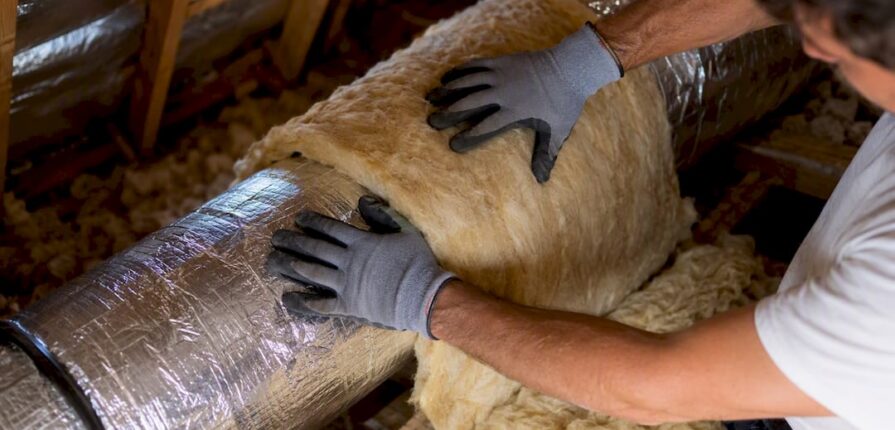
Most homeowners pay $3 to $13 per square foot installed, or roughly $1,000 to $4,500 total for a typical residential job, with fiberglass wrap covering most of that range. Before you sign anything, get your ducts inspected and sealed first. Insulating leaky ductwork without sealing it wastes money on materials that can’t do their job.
TL;DR:
- Sealing ducts before insulating can significantly reduce overall costs and improve energy savings, especially in humid or inaccessible areas.
- The typical cost to insulate ductwork ranges from $3 to $13 per square foot, with larger projects reaching up to $32,500 depending on size and location.
- Material choice heavily influences the price, with fiberglass wrap being the most affordable and spray foam offering the best sealing but at a higher cost.
- An accurate quote requires inspection, leak testing, and surface area measurement, along with clear itemization of materials, labor, and repairs.
- Combining sealing and insulation can reduce energy losses by up to 40%, with full payback usually achieved within two to four years on home utility bills.
Table of Contents
- How Much Does Ductwork Insulation Cost?
- Cost by Insulation Material and Method
- What Raises or Lowers Your Ductwork Insulation Price?
- DIY vs. Hiring a Pro for Duct Insulation
- How to Get an Accurate Ductwork Insulation Estimate
- What ROI Can You Expect from Insulating Ducts?
- Questions to Ask Before Signing a Duct Insulation Quote
- A Contractor’s View on Getting Duct Insulation Right
- Get Your Ducts Inspected Before You Pay for Insulation
- Sources
How Much Does Ductwork Insulation Cost?
Industry pricing guides put installed duct insulation at $3 to $13 per square foot, with national averages landing near $2,000 to $2,800 for a full residential system. Some smaller jobs price by the linear foot instead, running roughly $1.50 to $8 per linear foot depending on material and duct access.
Here’s how that scales for a real project:
- 500 sq ft of duct surface: roughly $1,500 to $6,500
- 1,000 sq ft of duct surface: roughly $3,000 to $13,000
- 2,500 sq ft of duct surface (larger home or commercial run): roughly $7,500 to $32,500
| Project Size | Low Estimate | High Estimate |
|---|---|---|
| 500 sq ft | $1,500 | $6,500 |
| 1,000 sq ft | $3,000 | $13,000 |
| 2,500 sq ft | $7,500 | $32,500 |
Where you land in that range depends heavily on local labor rates, which the Bureau of Labor Statistics tracks regionally, and on how easy your ducts are to reach. A crawlspace crew working in 100-degree Florida attic heat charges more per hour than one working an open basement.
Cost by Insulation Material and Method
Material choice moves your price more than almost any other single factor. Fiberglass wrap remains the most common residential pick because it balances upfront cost against real thermal performance, but it isn’t the right call everywhere.
- Fiberglass wrap: $1 to $3 per sq ft installed. Cheapest, widely available, works fine in dry attics but can absorb moisture in humid crawlspaces.
- Rigid foam board: $2 to $5 per sq ft. Handles moisture far better than fiberglass and holds its shape on exposed runs, though it takes longer to cut and fit.
- Reflective foil systems: $1.50 to $4 per sq ft. Excels in scorching attics where radiant heat is the enemy, less useful in shaded or below-grade spaces.
- Spray foam coating: $5 to $13 per sq ft. The priciest option, but it seals and insulates in one pass, which matters when your ducts are leaking as much as they’re losing heat.
| Material | Installed Cost per Sq Ft | Best Fit |
|---|---|---|
| Fiberglass wrap | $1–$3 | Dry attics, budget jobs |
| Rigid foam board | $2–$5 | Humid climates, exposed ducts |
| Reflective foil | $1.50–$4 | Hot, sun-exposed attics |
| Spray foam | $5–$13 | Leaky ducts needing sealing + insulation |
In Florida’s humidity, moisture-resistant materials cost more upfront but head off the mold and insulation breakdown that exposed fiberglass invites over a few humid summers.
What Raises or Lowers Your Ductwork Insulation Price?
Two identical houses can get wildly different quotes, and it’s rarely about the crew overcharging one of them.
- Access difficulty: Open attics are cheap to work in. Tight crawlspaces, wall cavities, and exposed exterior runs slow crews down and raise labor cost fast.
- Duct condition: Rusted joints, torn sections, and pest damage mean repair or partial duct replacement before insulation even starts.
- R-value and code requirements: Higher-R materials cost more but may be required by your local energy code.
- Project scale and season: Small jobs often carry a minimum service fee, and summer in Central Florida is peak booking season, which can push scheduling and pricing.
Pro Tip: Ask your contractor for the duct condition report before you agree to an insulation quote. A $200 repair now can save you from paying to insulate ducts you’ll rip out again in two years.
DIY vs. Hiring a Pro for Duct Insulation
A homeowner comfortable in an attic can wrap accessible fiberglass insulation themselves and save on labor, sometimes cutting the bill by half. That’s realistic for short, straight, easily reached runs.
It stops being realistic once ducts run through tight crawlspaces, exterior walls, or humid spaces where a poor seal invites mold. Spray foam application, exterior duct runs, and anything requiring a blower-door test belong to professionals with the right equipment and training.
- DIY fits: short, accessible attic runs with basic fiberglass wrap
- Hire a pro for: spray foam, exterior ducts, crawlspace work, and any job in a humid climate
- Professional work typically preserves manufacturer warranties and keeps you code-compliant
- A licensed contractor can verify indoor air quality isn’t compromised by trapped moisture or debris, something duct cleaning sometimes needs to address first
How to Get an Accurate Ductwork Insulation Estimate
A trustworthy quote starts before anyone touches insulation material.
- Visual inspection of duct runs, joints, and insulation condition
- Duct leakage test, commonly priced $150 to $500, to find leaks that change the whole scope of work
- Measurement of total duct surface area to calculate material needs
Sealing and insulation are usually quoted as separate line items, not because contractors are padding the bill, but because sealing addresses air loss while insulation addresses temperature loss. A transparent written estimate should break out:
- Materials and their R-value
- Labor hours
- Sealing scope
- Any repair work needed before insulation goes on
What ROI Can You Expect from Insulating Ducts?
Sealing and insulating ducts together can cut heating and cooling energy losses by 10% to 30%, and in the best-case scenarios where ducts run through unconditioned attics, combined savings can approach 40%.
The payback math: most homeowners recoup their investment in roughly 2 to 4 years through lower utility bills, faster in Florida homes where attic ducts sit in extreme heat most of the year. Ducts running through conditioned living space see smaller gains since they’re losing less to begin with.
- Attic and crawlspace ducts see the biggest efficiency gains
- Sealing alone without insulation leaves real savings on the table
- Pairing both steps consistently outperforms either one done separately
Our guide to cutting Central Florida energy bills covers additional moves that stack on top of duct work.
Questions to Ask Before Signing a Duct Insulation Quote
A few sharp questions separate a solid contractor from one who’ll leave you with an underperforming system.
- What R-value are you installing, and does it meet or exceed local code?
- Is a vapor barrier included, and what material is it?
- Is duct sealing part of this quote or billed separately?
- Are you licensed and insured, and can you provide references?
- Will you provide before and after photos of the work?
Watch for red flags: a one-line quote with no inspection behind it, a bid dramatically lower than three others with no explanation, or a contractor who can’t answer basic R-value questions. Get at least three written quotes before deciding.
A Contractor’s View on Getting Duct Insulation Right
We inspect and seal before we ever recommend insulation, because insulating leaky ducts wastes a homeowner’s money. Every quote breaks out materials, labor, and R-value clearly, with financing available. Request a written estimate or book our $70 system check to see where your ducts actually stand.
— Results
Get Your Ducts Inspected Before You Pay for Insulation
Lucasair is the straightforward alternative to guessing at a duct insulation quote in Central Florida: we inspect and seal first, so you’re never paying to insulate air leaks instead of fixing them.

That inspection-first order matters because insulation on a leaky duct system caps your savings no matter how good the material is. We check duct condition, run leakage testing where warranted, and quote sealing and insulation together so you see the full R-value, materials, and labor breakdown before committing. Financing is available if you’d rather spread the cost than pay it all at once. If your ducts run through a hot Eustis attic or a humid crawlspace, that combination typically delivers the fastest payback on your utility bills.
Ready to see what your system actually needs? Schedule residential HVAC service with Lucasair and get a written estimate built around your ducts, not a generic price sheet.
