
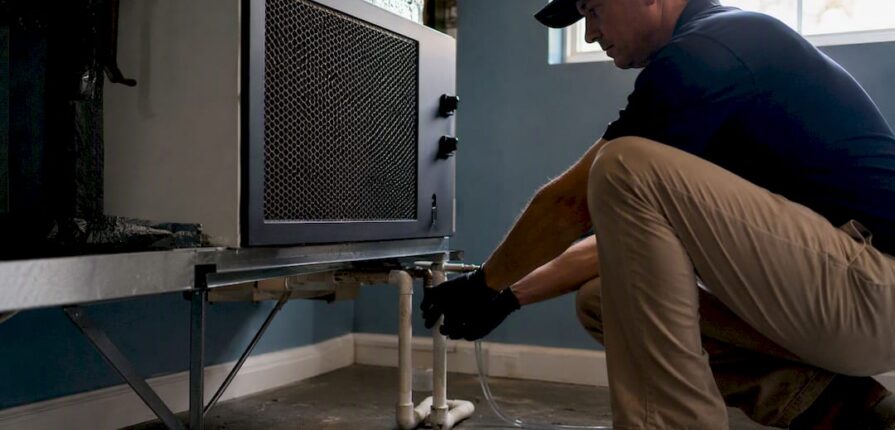
If your Florida home stays sticky and above roughly 60% relative humidity even after basic HVAC checks, a whole-house dehumidifier is usually the right next step. Run a hygrometer reading first, set the thermostat fan to AUTO, and check the filter and coil for restriction. If humidity still won’t budge, schedule a diagnostic visit with an HVAC contractor before buying equipment.
TL;DR:
- An enclosed, professional load calculation is essential to properly size a dehumidifier, especially in humid Florida homes with high occupancy or leaks.
- The ideal capacity for a typical 2,000 square foot Florida home ranges from 70 to 90 pints per day, with higher needs for leakier or coastal properties.
- Installation costs usually start in the thousands of dollars and depend on drainage method, duct configuration, and local code compliance.
- A dehumidifier’s effectiveness is limited if underlying issues like water leaks, poor insulation, or an oversized AC are not addressed first.
- Proper diagnosis includes a Manual J calculation, duct inspection, and integration coordination, with false or incomplete load assessments being major red flags.
Table of Contents
- Signs You Need a Whole House Dehumidifier in Florida
- How Do Whole House Dehumidifiers Work?
- How Big a Dehumidifier Do You Need?
- What Does a Whole House Dehumidifier Cost to Install?
- Weighing the Benefits Against the Downsides
- What to Ask Before You Buy a Dehumidifier
- What We See on Central Florida Humidity Calls
- Get a Florida-Specific Humidity Assessment From Lucasair
- Sources
Signs You Need a Whole House Dehumidifier in Florida
Before spending money on equipment, figure out whether you actually have a humidity problem or an AC problem wearing a humidity costume. The two look almost identical from a homeowner’s chair.
Watch for these signals:
- Air that feels sticky or clammy even when the thermostat says it’s cool enough
- Condensation beading on windows or sliding glass doors
- A musty smell that returns no matter how often you clean
- Visible mold spots on baseboards, closet walls, or bathroom ceilings
- Swollen wood trim, sticking doors, or warped cabinet faces
Run a few checks yourself first. A $15 hygrometer will tell you your actual indoor relative humidity, and most Florida homes should sit between 30% and 50%. Set your thermostat fan to AUTO rather than ON, since constant fan operation blows moisture back off a wet coil into your ducts. Then check for a dirty filter, an iced-over coil, or an AC that short cycles on and off every few minutes, all of which mimic humidity problems by robbing the system of dehumidification capacity.
Pro Tip: If you see water stains, active leaks, or humidity that stays above 60% after these basic fixes, stop troubleshooting on your own. That’s a signal for a professional load and moisture assessment, not another trip to the hardware store.
How Do Whole House Dehumidifiers Work?
A whole-home dehumidifier is a centralized appliance tied into your ductwork and HVAC system, pulling moist air across a cold coil, collecting the condensate, and returning drier air through the same duct network. A humidistat controls the whole cycle, running the unit only when indoor moisture crosses a set threshold instead of running constantly like a window-unit AC.
Florida homeowners typically encounter three configurations:
- Integrated inline units tie directly into existing supply and return ducts, sharing the air handler’s distribution system
- Independent ducted units run their own dedicated ductwork, often placed in an attic, closet, or mechanical room, with separate inlet and outlet grilles for better distribution
- Supplemental or portable units handle a single problem room or zone rather than the whole structure
The reason Florida is different from drier states comes down to latent load versus sensible load. Your AC removes heat (sensible load) efficiently, but it only pulls moisture (latent load) as a side effect of cooling. On mild, humid days when the thermostat is satisfied quickly, the AC shuts off before it has removed enough moisture, leaving the air cool but damp.
How Big a Dehumidifier Do You Need?
Dehumidifier capacity is measured in pints per day, and manufacturer data shows whole-home units commonly remove somewhere in the 70 to 130 pints/day range depending on model and conditions. That range is a starting point, not a shopping list, because the right number depends on square footage, ceiling height, occupancy, and how much moisture your envelope lets in.
This is exactly where a Manual J load calculation earns its keep. Contractors following ACCA guidance size dehumidification separately from cooling capacity, because an oversized AC that short cycles will never solve a moisture problem no matter what dehumidifier you bolt onto it.
A few practical guideposts:
- A tight, well-insulated 2,000 square foot home in Central Florida often lands in the 70 to 90 pints/day range
- Homes with a walkout basement equivalent, a crawlspace, or older, leakier construction usually need more
- High occupancy, frequent door traffic, or a pool enclosure attached to the living space pushes capacity up further
- Coastal humidity exposure and homes near lakes or wetlands tend to need the higher end of the manufacturer range
What Does a Whole House Dehumidifier Cost to Install?
Installed pricing varies based on unit capacity, installation complexity, and condensate routing, with costs typically starting at several thousand dollars and increasing with more complex installations.
Drainage is the detail most homeowners underestimate:
- Gravity drainage to a nearby floor drain is the cheapest option when the geometry allows it
- A condensate pump moves water uphill or across long distances when gravity isn’t available
- Tying into existing plumbing requires code compliance and sometimes a permit, depending on your county
Running costs stay modest compared to running your AC harder to fight humidity. Expect routine filter changes, an annual coil check, and periodic inspection of the condensate line for algae growth or clogs, all of which a standard preventative maintenance agreement already covers for most HVAC components.
Weighing the Benefits Against the Downsides
The upside is straightforward: lower mold risk, a more comfortable house at a higher thermostat setting, and protection for wood floors, trim, and furniture that swell and warp in damp air. Controlling indoor moisture directly reduces the conditions that let mold grow, which matters most during Florida’s long cooling season when the AC alone can’t keep pace.
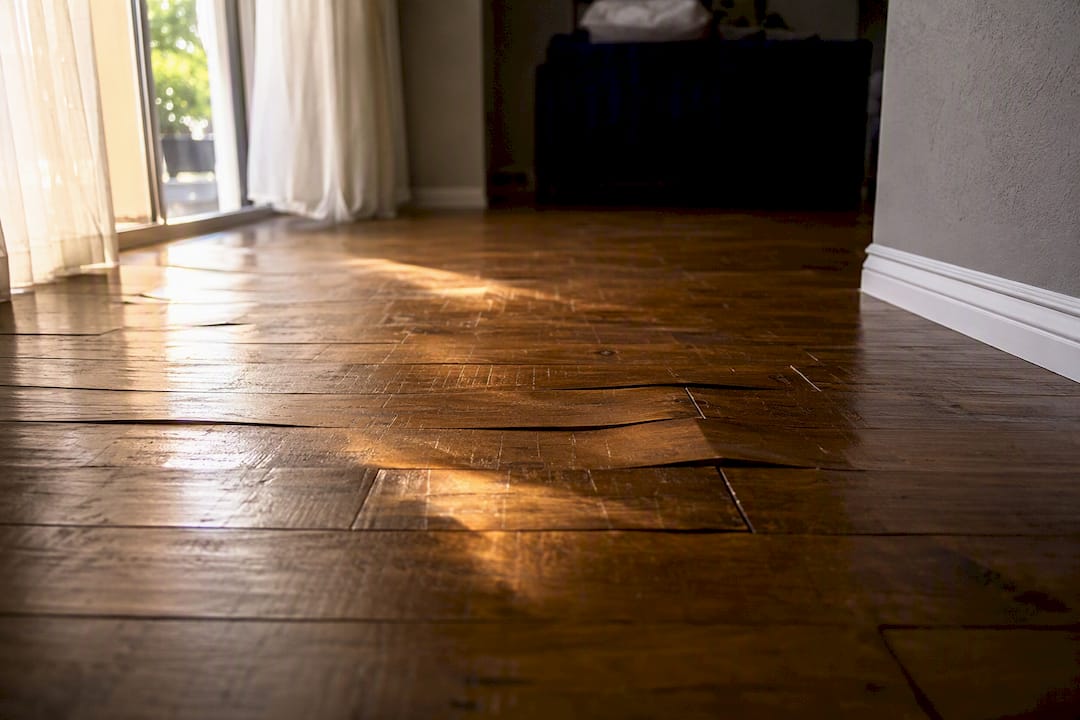
The downsides are real too. You’re adding upfront cost, a modest bump in electricity use, and one more system that needs periodic service. A poorly integrated unit can also fight your thermostat instead of working with it if the controls aren’t coordinated.
A dehumidifier is the wrong fix if you have an active water leak, major air leakage around windows and doors, or an AC that’s badly oversized for the space. Those problems need repair or a proper HVAC evaluation first, not another appliance layered on top.
What to Ask Before You Buy a Dehumidifier
A good technician quote should answer five questions before you sign anything:
- Did they perform or reference a Manual J calculation, or are they sizing by square footage alone?
- How will the humidistat integrate with your existing thermostat or smart controls?
- What’s the exact drain routing plan, and does it meet local code?
- What warranty covers the unit, and is service included or billed separately?
- What’s the realistic monthly operating cost added to your electric bill?
Pro Tip: Ask “what happens if the drain clogs” and listen closely. A contractor with a real answer will mention a float switch or overflow shutoff. A vague answer or a shrug is a red flag that installation planning stopped at the unit itself.
Walk away from any quote that skips load calculations entirely or can’t describe where the condensate physically goes. Those are the two corners installers cut when they’re rushing a bid, and they’re the two things that determine whether the system actually works.
What We See on Central Florida Humidity Calls
Most calls we run in Lake and Orange County start the same way: a homeowner blames the AC for a house that “never feels dry,” and the fix is a dehumidifier only about half the time. On an inspection, we measure indoor RH, check airflow and runtime against the rated capacity, look for duct leaks pulling in attic air, and map out where a condensate line would actually drain before recommending anything.
— Results
Get a Florida-Specific Humidity Assessment From Lucasair
Lucasair gives you something a big-box dehumidifier display never will: an actual Manual J look at your ductwork before anyone recommends a unit size. As a veteran-owned Central Florida company based in Eustis, Lucasair runs the diagnostic first, checking your AC system for hidden causes of humidity before quoting equipment you may not even need.

Our technicians walk through drainage routing, humidistat integration, and warranty terms upfront, not after the unit is already on your wall. If your home needs correct duct sizing or airflow work alongside dehumidification, our residential and commercial installation team handles both in the same visit, and financing options are available for the full project. Schedule an assessment and get a straight answer on whether your house needs a whole-house dehumidifier, an AC repair, or both.
Sources
- What Is a Whole House Dehumidifier? | Bryant
- Whole-house dehumidification guidance (BASC/PNNL TechNotes)
- Whole Home Dehumidifier System | DEHXX (Carrier)
- EPA: Mold course chapter 2
