

Most cases of AC blowing warm air trace back to one of five things: a clogged filter, a wrong thermostat or fan setting, an outdoor condenser that isn’t running, a frozen evaporator coil, or a refrigerant leak. Start by checking your thermostat mode and fan setting, then pull the filter and hold it to a light. If you hear hissing or grinding, or see ice on the indoor coil, shut the system down and call an EPA-certified technician instead of troubleshooting further.
TL;DR:
- A clogged filter reducing airflow by up to 50 percent and ice buildup are common causes that homeowners can fix by replacing the filter or defrosting the coil.
- Outdoor issues such as a non-running condenser fan or debris blocking airflow often require checking breakers, clearing obstructions, or verifying that the outdoor unit is operational.
- Refrigerant leaks, low refrigerant, or electrical failures can cause warm air and usually need professional diagnosis and repair, with refrigerant work legally restricted to certified technicians.
- Storms, power surges, or debris can damage components or block airflow, making outdoor inspections or breaker resets effective quick fixes after severe weather.
- Exterior inspections and early diagnostics help reduce service time, but persistent issues after basic checks require a professional to accurately measure pressures and test system components.
Table of Contents
- How Does Central AC Actually Cool Your Home?
- What’s Actually Causing Your AC to Blow Warm Air?
- What’s the Right Order to Check Things?
- When Should You Stop Troubleshooting and Call a Pro?
- Can Storms or Power Outages Cause This?
- What Do Lucasair Technicians Check First, and How Should You Prepare?
- Get a Real Diagnosis Instead of Guessing at Parts
- Sources
How Does Central AC Actually Cool Your Home?
Central air conditioning moves heat, it doesn’t create cold. Refrigerant absorbs heat from indoor air at the evaporator coil, then travels to the outdoor compressor, which pressurizes it and pushes it through the condenser coil where that heat gets released outside. The blower then pushes the now-cooled air through your ducts. Energy is worth a skim if you want the full picture.
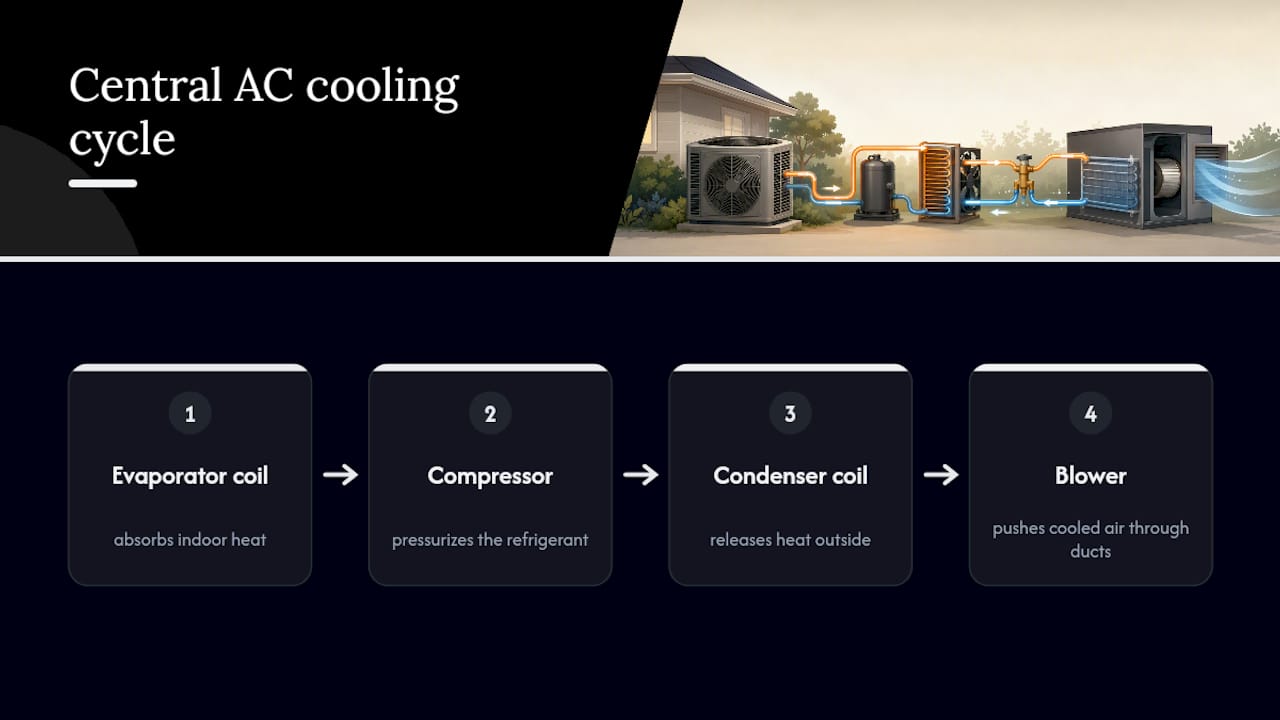
Warm air from the vents means one link in that chain broke. If the outdoor unit isn’t rejecting heat (dead fan, blocked coil), refrigerant comes back warm instead of cold. If the coil freezes over, air can’t pass through it. If refrigerant is low, there’s not enough of it circulating to absorb heat in the first place. And if airflow through the system is restricted, the whole cycle backs up. That last one is the sneaky culprit, because it doesn’t look like an airflow problem. It looks like your AC just stopped working.
What’s Actually Causing Your AC to Blow Warm Air?
Your symptoms usually point straight to the cause, if you know what to look for.
- Dirty or clogged air filter. Weak airflow at the vents, a filter that looks gray or matted when you hold it up to a light. This is DIY territory and often the whole problem: a clogged filter can cut system airflow by 25 to 50 percent, which starves the coil of air and can trigger a freeze.
- Thermostat set wrong or acting up. Display blank, fan set to “On” instead of “Auto,” or the mode accidentally switched to Heat or Fan Only. Low urgency, fixed in under a minute.
- Outdoor condenser not running or blocked. No fan spinning, no hot air coming off the top of the unit, or the unit buried in leaves and vegetation. Moderate urgency. Start with the breaker and any exterior disconnect switch.
- Frozen evaporator coil. Visible ice on the indoor coil or refrigerant lines, cooling that works for a while then quits. Moderate to high urgency. Never chip at the ice; it can puncture the coil.
- Low refrigerant or a leak. A hissing sound near the lines, cooling that gets progressively worse over days or weeks, ice forming on the coil. High urgency, and legally not a DIY fix.
- Electrical failure or compressor trouble. A humming outdoor unit that never actually starts, repeated breaker trips, or loud grinding. This pattern often points to a failing capacitor or contactor rather than a dead compressor, which is good news since that’s a far cheaper fix. High urgency either way.
What’s the Right Order to Check Things?
Work through these in order. Each one rules something out before you move to the next, and most take five minutes or less.
- Check the thermostat first. Confirm it’s set to Cool, the fan is on Auto, and the target temperature is at least 5°F below the current room temperature. Swap the batteries if the display looks dim or unresponsive. Simple thermostat mistakes resolve a surprising share of “AC is broken” calls before a technician ever gets involved.
- Pull the filter. Hold it up to a window or lamp. If light barely gets through, replace it.
- Walk outside while the system is calling for cooling. Confirm the condenser fan is spinning and that warm air is coming off the top. Check the breaker panel and any disconnect switch near the unit.
- Clear debris. Power the unit off first, then clear leaves, grass clippings, or vegetation, and gently rinse the fins with a garden hose if you can reach them.
- Look for ice. If the indoor coil or lines are frozen, switch the system off and set the fan to “On” so it can thaw over 2 to 4 hours.
- Listen closely. Hissing means a possible refrigerant leak. Grinding means a motor or compressor problem. Either sound means stop and call a professional.
Give each fix 10 to 15 minutes before checking for a change, and jot down what you tried. It saves the technician time and often saves you money on the diagnostic call. For a longer walkthrough, Lucasair’s step-by-step AC troubleshooting guide covers a few edge cases this list doesn’t.
Pro Tip: Walking straight to the outdoor unit while the thermostat calls for cooling is the fastest way to split the problem in half. No fan or compressor activity points outdoors. A running condenser with warm vents points to a frozen coil or refrigerant issue indoors.
When Should You Stop Troubleshooting and Call a Pro?
Some signs mean stop immediately, not “try one more thing.”
- A burning smell of any kind
- Loud grinding from the outdoor unit
- Visible ice combined with a hissing sound
- The breaker trips repeatedly when you reset it
- The outdoor compressor never engages, even with the fan spinning
Refrigerant work isn’t optional DIY territory. Federal law under EPA Section 608 restricts handling, recharging, or repairing refrigerant lines to certified technicians only. Those cans of refrigerant sold at auto parts stores aren’t a safe substitute. They can damage a system that a proper leak repair would have saved.
Cost ranges vary by the fix. A capacitor or contactor replacement typically runs $150 to $450. Refrigerant leak repairs land anywhere from $150 to $1,500 depending on the leak’s location and size. A full compressor replacement is the most expensive outcome, often $1,500 to $3,500. A technician will measure system pressures, test the capacitor and contactor, confirm the compressor starts properly, and use an electronic leak detector if refrigerant loss is suspected. Odd sounds coming from the unit are worth reading up on separately. Lucasair’s guide to AC unit sounds and what they mean breaks down which noises are urgent and which aren’t.
Can Storms or Power Outages Cause This?
Florida weather does a number on AC systems, and it’s easy to miss the connection. A brief power outage during a summer storm can trip a breaker without you noticing, especially if the outage happened overnight. The system looks “dead” the next morning, but the fix is just flipping the breaker back on.
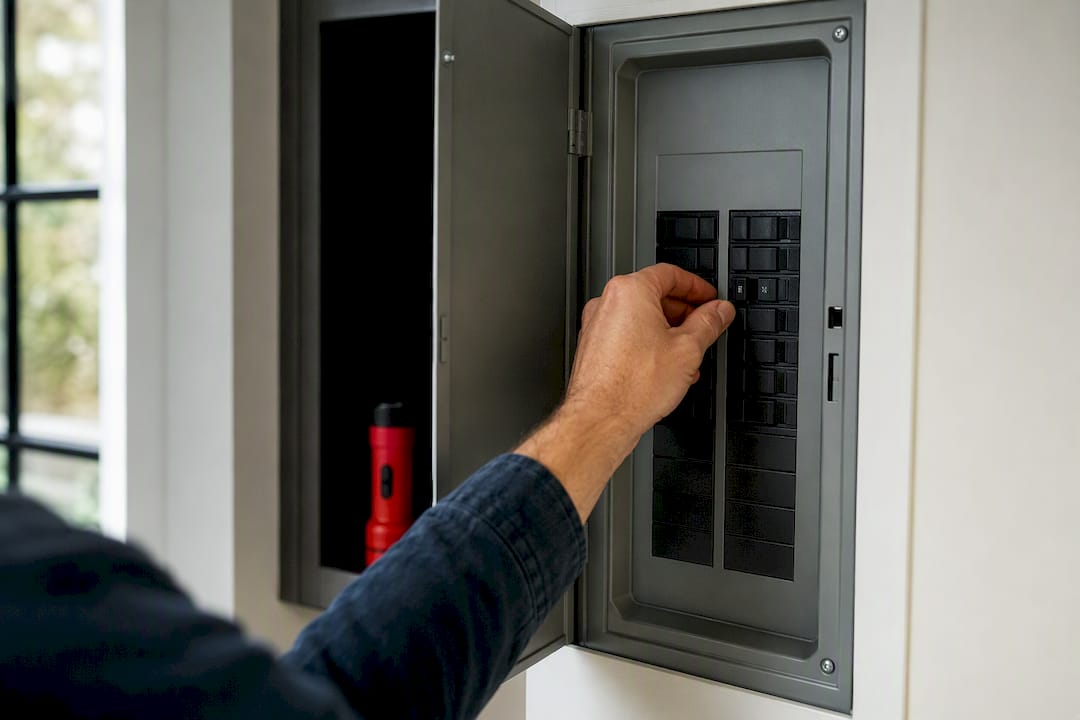
Lightning strikes and voltage surges are a bigger concern. A nearby strike can damage a capacitor or the control board even when the power never fully goes out, and that damage doesn’t always show up immediately. If your AC worked fine before a storm and started blowing warm air right after, that’s a strong clue the outdoor electrical components took a hit.
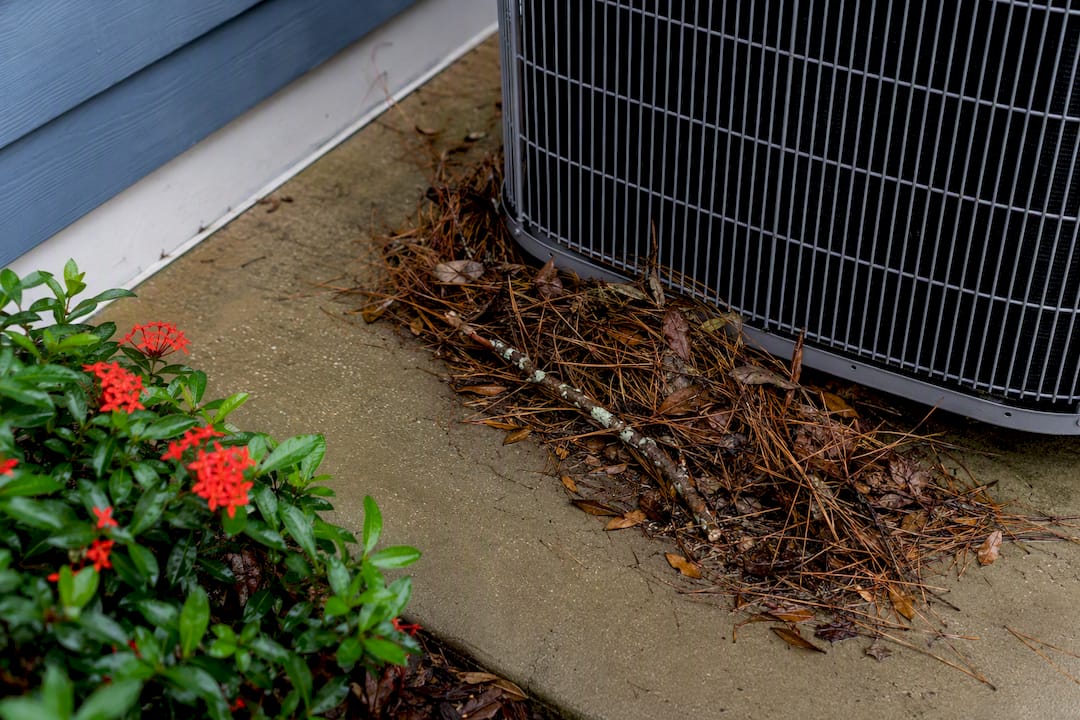
Heavy wind and rain also pile debris against the outdoor condenser fast. Leaves, pine straw, and small branches block airflow across the coil within a single storm, and a blocked coil can’t reject heat properly no matter how well the rest of the system runs. After any significant storm, a quick visual check of the outdoor unit is worth the two minutes it takes.
Extended heat waves create a different problem: they push undersized or aging systems past their limit, so a unit that cooled fine in April starts struggling by July simply because it’s running nonstop with no rest between cycles.
What Do Lucasair Technicians Check First, and How Should You Prepare?
On a first visit, a Lucasair technician inspects the filter and return air, checks thermostat settings, listens to the outdoor unit, and examines the coils before running pressure tests. You can speed things up by noting when the problem started, any sounds or smells, and which steps you’ve already tried, including the breaker and thermostat. A few photos of the outdoor unit help too.
— Results
Get a Real Diagnosis Instead of Guessing at Parts
If you’ve run through the thermostat, filter, and breaker checks and the vents are still blowing warm, the next right move is a technician who can measure pressures and test components rather than swap parts on a hunch, supported by specialized construction software for HVAC contractors that improves diagnostic accuracy and service efficiency. Lucasair sends EPA-compliant technicians throughout Central Florida who handle everything from a simple capacitor swap to a full refrigerant leak repair, backed by financing options if the fix turns out to be bigger than expected.

Before you call, run through Lucasair’s pre-repair call checklist so the technician can diagnose faster and skip the steps you’ve already covered. Summer service windows fill up quickly once temperatures climb, so booking early matters more than most homeowners expect. Head to the repairs page to see what’s covered and schedule a visit before the next heat wave hits.
Sources
For more on airflow and upkeep, see Energy.gov’s air conditioner maintenance guide, the EPA’s Section 608 certification rules, and the ENERGY STAR maintenance checklist.
- Energy
- Section 608 technician certification requirements | EPA
- Many basic thermostat mistakes cause AC confusion | USA Today
