
TL;DR:
- Maintaining indoor relative humidity between 45% and 55% helps Florida homes prevent mold and dust mites. A humidistat signals HVAC systems to control moisture, especially when outdoor humidity is high. Proper settings and regular verification ensure comfortable, healthy indoor air year-round.
The best humidistat settings for Florida homes keep indoor relative humidity between 45% and 55%. The EPA recommends 30%–50% for general comfort and health, but Florida’s subtropical climate pushes that target slightly higher to account for the constant outdoor moisture load. Getting these numbers right protects your home from mold, reduces dust mites, and keeps your family comfortable year-round. A humidistat, also called a dehumidistat or humidity controller, is the device that tells your HVAC system when to run based on moisture levels rather than temperature alone.
What are the right humidistat settings for Florida?
Florida’s outdoor humidity regularly climbs above 80%, which means your home is under constant moisture pressure from june through september and beyond. The ideal indoor range is 45%–55% relative humidity, and crossing 60% creates real problems. Mold growth begins above 60% relative humidity. Dust mites thrive in the same conditions. Both cause respiratory issues and structural damage over time.

The table below shows what different indoor humidity levels mean for your home.
| Humidity level | What it means |
|---|---|
| Below 30% | Air is too dry; skin irritation, static electricity |
| 30%–44% | Acceptable but slightly dry for Florida conditions |
| 45%–55% | Ideal range for Florida homes |
| 56%–60% | Borderline; monitor closely and adjust settings |
| Above 60% | Mold risk, dust mites, structural damage likely |
Common indoor moisture sources make the problem worse. Cooking, showering, breathing, and even houseplants add moisture to the air. Older homes with poor weatherstripping or unsealed crawl spaces pull in humid outdoor air constantly. Florida renters and homeowners in older construction face the steepest challenge because the building envelope leaks more.
The health stakes are real. Humidity above 60% increases the risk of mold and dust mites, both of which trigger asthma and allergy symptoms. Keeping your humidistat set correctly is not a comfort preference. It is a health decision.
How do HVAC systems and humidistats work together?
Your air conditioner removes moisture as a byproduct of cooling, not as its primary job. When warm, humid air passes over the cold evaporator coil, water condenses and drains away. That process works well when the AC runs long, steady cycles. The problem is that AC systems are not designed as dedicated dehumidifiers and can struggle to keep humidity below 60% year-round in Florida’s climate.
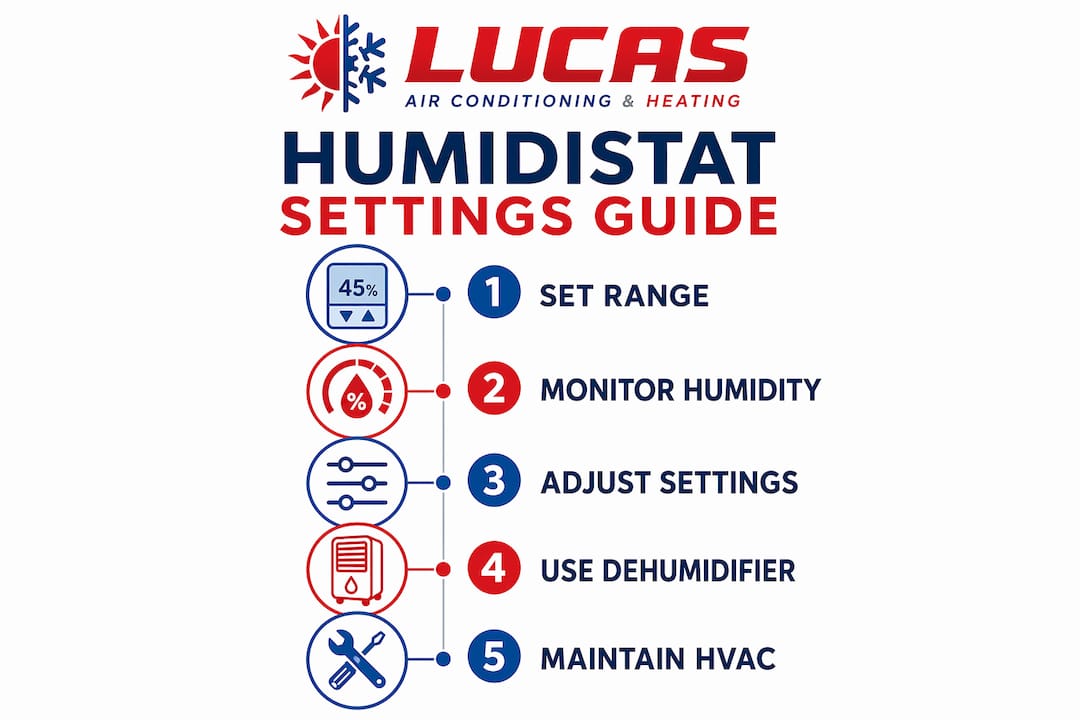
A humidistat adds a second layer of control. It monitors relative humidity independently and signals the system to run even when the temperature is already satisfied. Without one, your AC shuts off when the thermostat hits its target, even if the air is still damp and clammy.
Key points about how these two systems interact:
- Fan setting matters. Continuous fan operation re-evaporates moisture from the evaporator coil back into your home. Always set your fan to AUTO, not ON.
- Smart thermostats with humidity sensors run the AC longer to pull out moisture, even after the temperature target is met. Adjusting humidity setpoints to 45%–50% on these devices gives you tighter control.
- Oversized AC units short-cycle. They cool the air quickly and shut off before completing a full dehumidification cycle, leaving the air feeling damp.
- Standalone humidistats can control a dedicated dehumidifier separately from the AC, which is the most reliable setup for Florida homes.
Pro Tip: If your home feels clammy even when the thermostat reads 74°F, the problem is humidity, not temperature. Check your humidistat setting before reaching for the thermostat dial.
Understanding how AC affects humidity helps you avoid the common mistake of overcooling your home just to feel less sticky. Dropping the temperature to 68°F wastes energy and still may not fix a humidity problem caused by short-cycling or a missing humidistat.
How to set and adjust your humidistat in Florida
Setting your humidistat correctly takes three steps: pick a target, verify with a separate tool, and adjust for the season.
- Set your humidistat to 50% relative humidity. This sits in the middle of the 45%–55% ideal range and gives you buffer in both directions. Start here and adjust based on what you measure.
- Buy a hygrometer to verify. Basic hygrometers cost $10–$50 and give you an independent reading of actual indoor humidity. Smart hygrometers send phone alerts, which is useful overnight when humidity spikes while the AC runs less.
- Compare the hygrometer reading to your humidistat. If the hygrometer reads 62% but your humidistat is set to 50%, the humidistat sensor may be faulty, or your system lacks the capacity to reach the target.
- Adjust for the season. During mild winter months in Florida, the AC runs less frequently. Humidity can creep up even when temperatures are comfortable. Lower your humidistat setting to 45% from november through february to compensate.
- Set your thermostat between 74°F and 78°F. This temperature range keeps the AC running long enough to dehumidify. Setting it too high reduces AC runtime and lets humidity climb.
Pro Tip: Place your hygrometer in the bedroom overnight. Humidity peaks when the AC cycles down after midnight. If you wake up feeling sticky, your overnight readings will confirm the cause.
Balancing comfort with energy efficiency means accepting that the AC may run longer than you expect. Optimal humidity control requires run time, and run time costs energy. The tradeoff is worth it when you consider the cost of mold remediation or structural repairs.
When should you add supplemental dehumidification?
Your AC and humidistat combination has limits. During Florida’s mild, humid winters, the AC may not run enough to pull moisture out of the air. Rainy season brings sustained outdoor humidity that overwhelms a standard setup. This is when supplemental dehumidification becomes necessary.
Whole-home dehumidifiers remove moisture independently of AC cooling cycles. They typically handle 70–130 pints of water per day and cost $1,500–$3,000 installed. That is a significant investment, but it solves the problem permanently and runs quietly in the background.
Portable dehumidifiers work well for specific problem areas. A bedroom, a laundry room, or a bathroom that stays damp despite AC use benefits from a portable unit. They cost far less but require manual emptying unless you run a drain hose.
Beyond equipment, several habits reduce indoor moisture:
- Run exhaust fans during and after cooking and showering for at least 20 minutes.
- Seal gaps around doors, windows, and pipe penetrations to block humid outdoor air.
- Check that your dryer vents outside, not into a crawl space or attic.
- Fix plumbing leaks immediately. A slow drip under a sink raises localized humidity enough to grow mold inside a cabinet.
- Schedule annual HVAC maintenance to keep the evaporator coil clean. A dirty coil transfers less heat and removes less moisture.
When humidity stays above 60% despite all adjustments, act within 24–48 hours. Mold can begin developing on surfaces in that window. A whole-home dehumidifier or a professional HVAC assessment is the right next step, not another thermostat adjustment.
Common mistakes and how to troubleshoot your humidistat
Most Florida homeowners make the same handful of errors when managing indoor humidity. Recognizing them saves time and money.
Oversized AC units are the most common structural problem. Homes with oversized AC units suffer short cycling, which cools the air quickly but does not run long enough to condense and drain moisture. The result is a home that feels cold and clammy at the same time. If your AC reaches its temperature target in under 10 minutes, it is likely oversized.
- Setting the humidistat too high (above 55%) lets moisture accumulate before the system responds. Many homeowners set it to 60% thinking that is the safe limit. It is not. It is the danger threshold.
- Setting it too low (below 40%) causes the system to run constantly, driving up energy bills without meaningful comfort gains.
- Running the fan on ON re-evaporates condensed moisture from the coil. Switch to AUTO every time.
- Ignoring sensor drift. Humidistat sensors lose accuracy over time. If your hygrometer and humidistat disagree by more than 5%, recalibrate or replace the sensor.
Pro Tip: Use two hygrometers in different rooms to check for hot spots. A reading of 52% in the living room and 68% in a back bedroom points to a duct or insulation problem, not a humidistat issue.
Maintenance prevents most of these problems. Clean or replace air filters every 30–60 days in Florida. Schedule a professional HVAC tune-up once a year to catch coil buildup, refrigerant issues, and sensor drift before they turn into humidity problems. Many homeowners also benefit from reviewing common HVAC repair myths that lead to poor decisions about system sizing and settings.
Key Takeaways
Keeping indoor humidity at 45%–55% is the single most effective action Florida homeowners can take to prevent mold, protect their home, and stay comfortable year-round.
| Point | Details |
|---|---|
| Target humidity range | Set your humidistat to 45%–55% relative humidity; never let it exceed 60%. |
| Verify with a hygrometer | A $10–$50 hygrometer confirms actual indoor levels independent of your humidistat. |
| Fan setting | Always use AUTO, not ON, to prevent moisture from re-evaporating into the home. |
| Seasonal adjustment | Lower your setting to 45% during Florida’s mild winter months when AC runs less. |
| Supplemental dehumidification | Add a whole-home dehumidifier when AC alone cannot maintain the target range. |
What I’ve learned from Florida homes that get humidity wrong
Most Florida homeowners I’ve seen struggle with humidity are not ignoring the problem. They are solving the wrong problem. They drop the thermostat to 68°F because the house feels sticky, the AC runs harder, energy bills climb, and the humidity barely moves. The real issue is almost always one of three things: an oversized system that short-cycles, a fan set to ON, or no humidistat at all.
The hygrometer is the tool that changes everything. Once you put a $20 sensor in your bedroom and watch the numbers overnight, the problem becomes concrete. You stop guessing and start adjusting with real data. I’ve seen homeowners cut their energy bills noticeably just by switching the fan to AUTO and setting a proper humidity target, without touching the thermostat temperature at all.
The other thing worth saying directly: Florida’s climate does not forgive neglect. A home in Minnesota can tolerate a few weeks of high indoor humidity without serious consequences. A Florida home can develop visible mold in a matter of days during rainy season. The 45%–55% target is not a suggestion. It is the line between a healthy home and a remediation bill.
Annual HVAC inspections matter more here than almost anywhere else in the country. A technician who checks system sizing, coil condition, and refrigerant levels is not doing routine maintenance. They are protecting your home from the most persistent threat Florida weather creates.
— Lucasair
Lucasair can help you get your humidity under control
Florida’s humidity is relentless, and the right HVAC setup makes all the difference between a comfortable home and a mold problem waiting to happen.
Lucas Air provides professional HVAC assessments, system installations, and tune-ups for homeowners and renters across Central Florida. Whether you need a system sized correctly for your square footage or a full HVAC installation review to make sure your setup handles Florida’s moisture load, the Lucasair team has the experience to get it right. Founded by Army Veteran Cameron Lucas and based in Tavares, Florida, Lucasair brings honest, local expertise to every job. Schedule a consultation and get your humidity settings dialed in before the next rainy season hits.
FAQ
What is the ideal humidistat setting for a Florida home?
The ideal setting is 45%–55% relative humidity. The EPA recommends staying below 60% to prevent mold and dust mite growth.
Why does my Florida home feel humid even with the AC running?
Your AC may be oversized and short-cycling, which cools the air quickly but does not run long enough to remove moisture. Setting the fan to AUTO and checking system sizing resolves most cases.
How do I know if my humidistat is accurate?
Buy a separate hygrometer and compare readings. If the two devices disagree by more than 5%, your humidistat sensor likely needs recalibration or replacement.
Should I use a whole-home dehumidifier in Florida?
A whole-home dehumidifier is worth considering if your AC cannot maintain humidity below 60% during mild winter months or extended rainy periods. Units typically handle 70–130 pints per day and operate independently of cooling cycles.
What fan setting should I use on my thermostat for humidity control?
Always set the fan to AUTO. Running it continuously on ON re-evaporates moisture from the evaporator coil back into your home, raising indoor humidity levels.
Recommended
- Upgrading HVAC systems in Central Florida: Your 2026 guide – Lucas Air Conditioning and Heating
- HVAC design considerations every Central Florida home needs – Lucas Air Conditioning and Heating
- Energy-saving HVAC tips for Central Florida homeowners – Lucas Air Conditioning and Heating
- How to Plan Central Florida HVAC Upgrades for Comfort and Savings – Lucas Air Conditioning and Heating