
TL;DR:
- Pool heat pumps transfer heat from outdoor air into your pool water, operating on refrigeration cycles rather than generating heat directly. They are most efficient in warm climates like Central Florida, especially when run consistently with proper airflow and maintenance. Choosing the right type—fixed-speed, heat and cool, or inverter—depends on your budget, energy preferences, and desired temperature control for year-round swimming.
Most homeowners assume a pool heater burns something to create heat. Gas. Electricity. Some kind of fuel. But a pool heat pump works on a completely different principle, and understanding that difference changes how you size it, use it, and budget for it. This guide breaks down what a pool heat pump actually is, how it works, what types are available, and how to get the most out of one in Central Florida’s climate, where warm air and a long swim season create near-perfect conditions for this technology to shine.
Table of Contents
- How pool heat pumps work: pulling heat from the air
- Types of pool heat pumps: fixed speed, heat & cool, and inverter models
- Pros and cons of pool heat pumps compared to gas heaters
- Optimizing pool heat pump use in Central Florida
- How to choose the right pool heat pump for your home
- Why consistent maintenance heating with a pool heat pump is the smartest approach
- Find expert pool heat pump installation and maintenance in Central Florida
- Frequently asked questions
Key Takeaways
| Point | Details |
|---|---|
| Pool heat pumps move heat | They work by pulling heat from outdoor air, making them energy efficient compared to gas heaters. |
| Best for warm climates | Heat pumps perform well in places like Central Florida where temperatures stay above 50°F most swimming seasons. |
| Slow but cost-effective heating | They take 1-3 days to warm pools but cost much less to run than gas heaters in typical usage. |
| Use pool covers | Covers reduce heat loss and evaporation, improving heat pump efficiency and lowering energy costs. |
| Choose pump type wisely | Variable-speed (inverter) models offer better energy savings and temperature control than fixed-speed units. |
How pool heat pumps work: pulling heat from the air
The name is slightly misleading. A pool heat pump does not generate heat. It moves heat from one place to another, specifically from the outdoor air into your pool water. This is the same core principle behind your home’s air conditioner, just running in the opposite direction.
The process relies on the vapor-compression cycle, which uses four main components:
- Evaporator coil: Absorbs heat from the outdoor air using refrigerant
- Compressor: Pressurizes the refrigerant, raising its temperature significantly
- Condenser: Transfers that concentrated heat into the pool water passing through the unit
- Expansion device: Releases pressure so the refrigerant cools and the cycle starts again
Because the system is moving existing heat rather than generating it, pool heat pumps pull heat from outdoor air and concentrate it using refrigeration cycle compression. This means for every one unit of electricity a heat pump consumes, it typically delivers three to five units of heat energy into your pool. A gas heater or electric resistance heater can never match that ratio because they are converting energy, not multiplying it.
Efficiency does depend on ambient temperature and humidity. The warmer the air outside, the more heat there is to extract and the less the compressor has to work. That is why Central Florida’s climate is so well-suited to this technology.
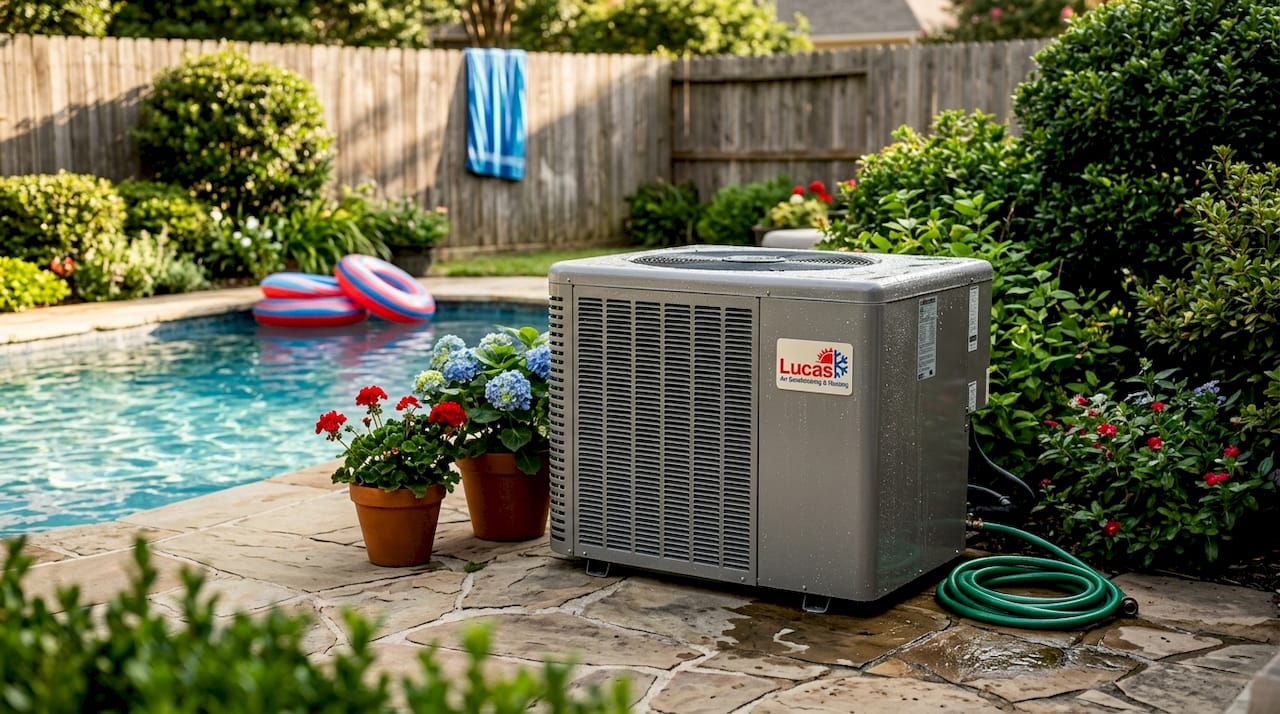
According to our heat pump efficiency guide, even small drops in airflow around the evaporator coil can noticeably reduce how much heat the unit can pull in.
Pro Tip: Keep at least two feet of clear space around your heat pump unit. Shrubs, fences, or pool equipment blocking airflow force the compressor to work harder, which cuts efficiency and shortens the unit’s lifespan.
Types of pool heat pumps: fixed speed, heat & cool, and inverter models
Not all pool heat pumps are built the same. Common pool heat pump types include fixed-speed, heat & cool (reverse-cycle), and inverter or variable-speed models, each with distinct energy use patterns and practical trade-offs.
| Feature | Fixed-speed | Heat & cool | Inverter |
|---|---|---|---|
| Upfront cost | Lowest | Moderate | Highest |
| Energy efficiency | Moderate | Moderate | Best |
| Heating speed | Standard | Standard | Faster at full demand |
| Temperature control | Basic on/off | On/off, can cool | Precise and consistent |
| Best use case | Budget-conscious buyers | Year-round or hot climates | Energy savings, comfort |
Fixed-speed units run at 100% capacity until the target temperature is hit, then shut off. Simple, reliable, and affordable upfront, but less efficient over long seasons.
Heat and cool models can both raise and lower water temperature. If you live in Central Florida and find your pool gets uncomfortably warm in August, this type gives you control in both directions.
Inverter models adjust their output continuously based on how much heating is actually needed. Instead of cycling on and off at full power, they run at lower speeds for longer periods, which keeps pool temperature more stable and uses less electricity overall. Think of it like cruise control versus constant stop-and-go driving.
When choosing a type, consider these factors:
- Your typical pool season length and how often you swim
- Whether you want the option to cool the water in peak summer
- Your monthly electricity budget and tolerance for higher upfront costs
- How often you want to adjust temperature and how precise that control needs to be
Explore pool heater upgrade options to get a clearer picture of which configuration fits your pool setup and budget.
Pros and cons of pool heat pumps compared to gas heaters
Pool heat pumps heat slower than gas but cost significantly less to operate in warm climates, and heating can take days instead of hours. That trade-off matters a lot depending on how you use your pool.
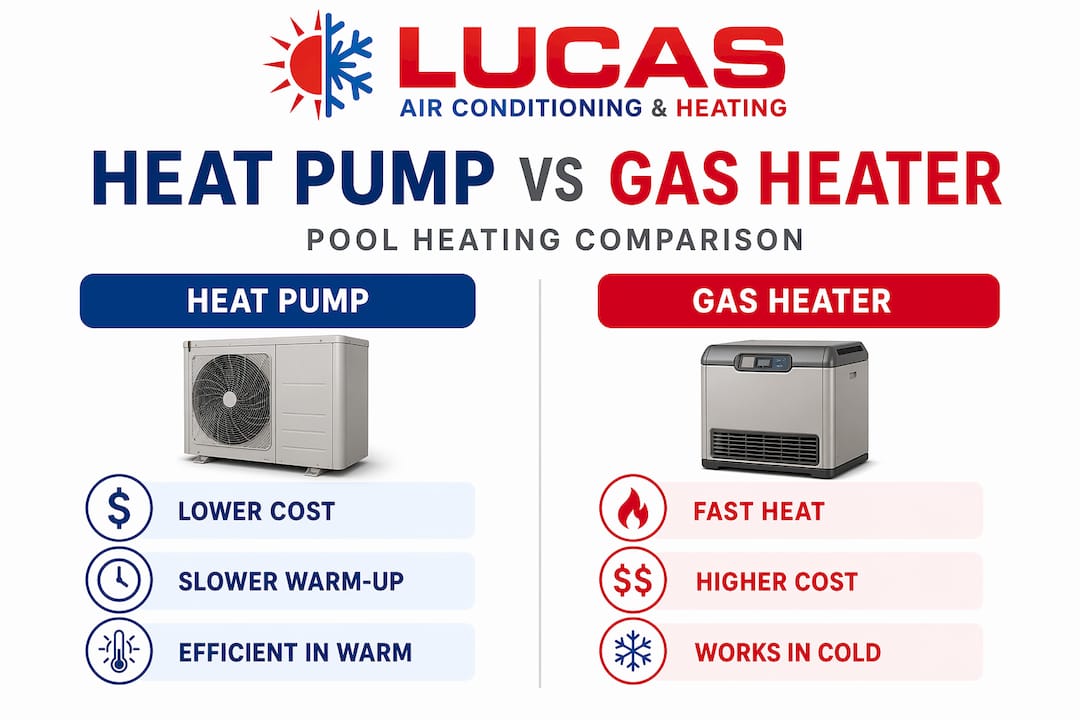
| Factor | Pool heat pump | Gas heater |
|---|---|---|
| Heating speed | 24 to 72 hours | 3 to 6 hours |
| Energy cost per hour | $1 to $3 | $5 to $10 |
| Average lifespan | 10 to 20 years | 5 to 10 years |
| Seasonal operating cost | Lower | Higher |
| Works best in | Warm climates | Any climate |
Pros of pool heat pumps:
- Operating costs are typically 50% to 80% lower than gas heaters over a full swim season
- Lifespan is significantly longer, often double that of a gas unit with proper maintenance
- No combustion means no carbon monoxide risk and a lower carbon footprint
- Consistent, steady heating is ideal for pools used regularly throughout the season
- Pairs well with pool covers, multiplying your savings further
Cons of pool heat pumps:
- Heating a cold pool from scratch takes 24 to 72 hours, not ideal for spontaneous use
- Performance drops when outdoor temperatures fall below 50°F
- Higher upfront purchase and installation cost compared to basic gas heaters
- Requires consistent electricity access and space for proper airflow
“If you plan to heat your pool regularly throughout the swim season, a heat pump almost always delivers better long-term value than a gas heater in Central Florida. The key is using it consistently to maintain temperature, not as a last-minute solution the night before a party.”
This insight ties directly to how Central Florida homeowners should think about their heat pump efficiency practical guide and long-term planning.
Pro Tip: A solar pool cover used alongside your heat pump can cut your heating costs by 30% to 50% by preventing evaporation, which is the single biggest source of heat loss in any pool.
Optimizing pool heat pump use in Central Florida
Central Florida is arguably the best place in the country to own a pool heat pump. Pool heat pumps perform best in regions where ambient air temperature stays above 50°F most seasons, like Central Florida, especially when used with pool covers to reduce heat loss. That describes most of the year here, including a good stretch of fall and winter.
Here is how to get the most out of yours:
- Run it consistently. Keeping your pool at a target temperature year-round costs less than repeatedly heating it from cold. The less temperature swing, the less work the unit does.
- Use a pool cover every night. Florida evenings can drop temperature fast. A cover keeps heat in and reduces overnight losses dramatically.
- Set a schedule. Program the heat pump to run during off-peak electricity hours, typically early morning or midday, to lower your bill.
- Clean the evaporator coil annually. Dust, pollen, and debris reduce airflow. A dirty coil means the unit pulls in less heat, works harder, and wears out faster.
- Monitor water chemistry regularly. Poor water balance accelerates corrosion inside the heat exchanger, one of the most expensive parts to replace.
- Winterize smartly. Even in Central Florida, if you stop swimming from December through February, lowering your target temperature to 70°F rather than shutting the unit off entirely protects equipment and keeps restart time short.
Review our pool heat pump maintenance tips and check out this guide to Central Florida pool tune-ups to set up a maintenance schedule that keeps your system running cleanly.
Pro Tip: If you are buying a new unit for Central Florida, seriously consider an inverter model. The temperature stability alone is worth it, and the electricity savings typically offset the higher purchase price within two to three seasons.
How to choose the right pool heat pump for your home
Sizing and planning for pool heat pumps in Central Florida considers swim season length, desired pool temperature, and balancing fast heat-up versus maintenance heating. Follow these steps to make a confident decision.
- Calculate your pool volume. Length x width x average depth x 7.5 gives you gallons. This number drives everything else in the sizing formula.
- Determine your temperature target. Most Central Florida homeowners aim for 80°F to 84°F. The wider the gap between that target and your coldest outdoor temperature, the larger the unit you need.
- Match BTU output to pool size. A rough rule is 50,000 BTUs per 10,000 gallons of pool water, but a professional assessment accounts for shading, wind exposure, and your pool cover habits.
- Choose your model type. Fixed-speed if you are budget-focused and swim seasonally. Inverter if you want lower bills and consistent temperature. Heat and cool if you also want to manage summer heat.
- Factor in installation requirements. The unit needs proper electrical service, clearance for airflow, and proximity to the pool’s return line. These are not DIY decisions.
- Plan for a maintenance schedule from day one. Factor annual tune-ups into your total cost of ownership. A $15 to $20 monthly average maintenance cost is far cheaper than a mid-season repair.
Visit our pool heat pump installation services page or review our guide on choosing the right heat pump to compare your options with professional input.
Why consistent maintenance heating with a pool heat pump is the smartest approach
Here is something most guides do not tell you plainly: the single biggest mistake Central Florida pool owners make with heat pumps is treating them like a gas heater.
People install a heat pump, let the pool drop to 65°F in January, then expect it warm by Saturday morning. When it takes until Monday, they declare the heat pump “not worth it.” That frustration is completely understandable and completely avoidable.
Pool heat pumps are best for maintenance heating with consistent use, delivering the best value over fast, one-time heat-ups in places like Central Florida. Think of your heat pump not as an on-demand appliance but as a slow-burn investment. It performs best when it holds a temperature, not when it chases one.
“The pool owners who get the most value from heat pumps are the ones running them at a steady setpoint all season. They never experience a cold pool and their monthly electricity bills are predictable and far lower than gas.”
This mindset shift changes how you interact with heat pump maintenance benefits too. A well-maintained unit running at a consistent setpoint lasts longer, draws less power, and requires fewer emergency repairs than one that gets pushed hard from a cold start every few weeks.
Florida’s mild climate is genuinely a gift for heat pump owners. You rarely need to overcome a 30-degree temperature deficit. A few degrees of maintenance heating is exactly what this technology was built for.
Pro Tip: Treat your pool heat pump as part of a three-part system: the unit itself, a quality pool cover, and annual professional tune-ups. All three together deliver the comfort and savings that each one alone cannot match.
Find expert pool heat pump installation and maintenance in Central Florida
Getting the most from a pool heat pump starts with the right installation. Incorrect sizing, poor placement, or skipped commissioning steps can cut efficiency by 20% to 30% before you ever swim a lap. At Lucas Air Conditioning and Heating, we size, install, and maintain pool heat pumps specifically for Central Florida homes, so you get correct setup from day one with warranty protection intact.

Our team serves homeowners throughout the region, including those looking for a trusted HVAC contractor in The Villages and surrounding communities. Whether you need a new installation, a system upgrade, or a tune-up before swim season, we bring local knowledge that out-of-state call centers simply cannot offer. Check out our pool heater upgrade and savings guide or schedule your pool tune-up in Central Florida today and start the season with a system you can count on.
Frequently asked questions
How long does it take a pool heat pump to warm my pool?
Pool heat pump heating takes between 24 to 72 hours, compared to 3 to 6 hours for gas heaters, which is why they work best for steady temperature maintenance rather than last-minute heat-ups.
Are pool heat pumps efficient in Central Florida’s climate?
Yes, because heat pumps perform best in climates where temperatures stay above 50°F for most of the pool season, and Central Florida’s warm winters and long swim season create near-ideal operating conditions.
What types of pool heat pumps are available and which is best for me?
Fixed-speed, heat and cool, and inverter pool heat pumps each offer different efficiency and functionality trade-offs, with inverter models providing the best balance of energy savings and temperature control for year-round Central Florida use.
How can I improve my pool heat pump’s efficiency and reduce running costs?
Pairing heat pumps with pool covers reduces evaporation heat loss and operating time, and combining that with consistent seasonal use and annual professional maintenance delivers the biggest reduction in operating costs.
Recommended
- Heat pump efficiency: A practical guide for Central Florida – Lucas Air Conditioning and Heating
- Pool heater upgrade: comfort and savings in Central Florida – Lucas Air Conditioning and Heating
- Commercial Pool Heater Repair: Cut Costs 60% in 2026 – Lucas Air Conditioning and Heating
- Pool tune-ups: essential performance guide for Central Florida – Lucas Air Conditioning and Heating
