

TL;DR:
- Many Central Florida homeowners assume indoor air is safer than outdoor wildfire smoke, but pollutants can accumulate indoors to worse levels. Effective air quality management requires source control, proper ventilation, and filtration working together, with upgraded MERV-13 filters vital during wildfire season, provided systems can handle them. Seasonal external factors like prescribed burns demand adaptive strategies, such as sealing homes and using portable HEPA cleaners, supported by routine maintenance and a systematic IAQ approach for lasting indoor air health.
Most Central Florida homeowners assume their indoor air is safer than the hazy air outside on a wildfire smoke day. It is not always true. The role of air quality management is to close that gap between assumption and reality, because pollutants like dust, mold spores, volatile organic compounds (VOCs), and fine particles can accumulate inside a sealed home to levels far worse than the outdoors. Central Florida’s unique mix of humidity, wildfire smoke, and prescribed burn seasons makes managing indoor air not a luxury but a necessity for anyone serious about comfort and long-term health.
Table of Contents
- Understanding the core strategies of air quality management
- Why upgrading to MERV 13 filters matters in Central Florida homes
- Managing seasonal challenges: wildfire smoke and prescribed burns in Central Florida
- Practical best practices for maintaining and improving home air quality year-round
- Why Central Florida homeowners need a systematic ‘IAQ Stack’ approach to truly breathe easy
- How Lucas Air Conditioning and Heating supports your air quality management needs
- Frequently asked questions
Understanding the core strategies of air quality management
To manage air quality effectively, you need to understand the foundational strategies that experts consistently recommend. Think of these as the three legs of a stool. Pull one away and the whole thing tips over.
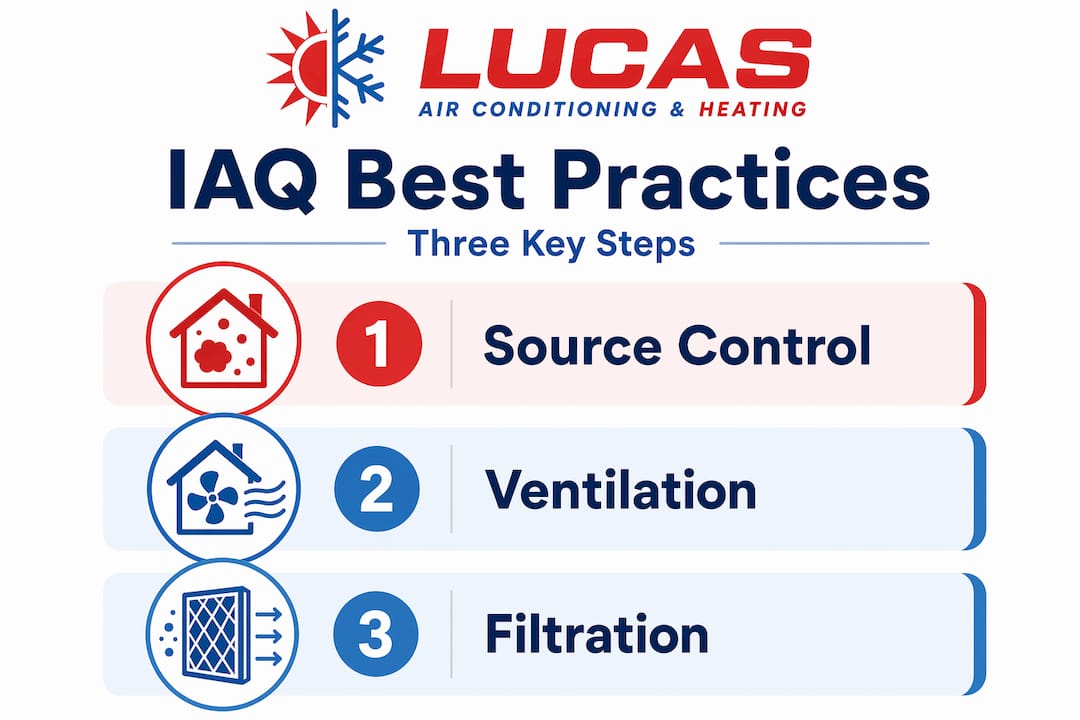
The three fundamental strategies for effective indoor air quality management are source control, improved ventilation, and air cleaning and filtration. Each plays a different role, and together they cover every stage of how pollutants enter, circulate, and leave your home.
Source control is the first and most important leg. It means eliminating or reducing the origin of pollutants before they spread. This includes switching to low-VOC paints and cleaning products, banning indoor smoking, sealing off crawlspaces prone to mold, and keeping garage fumes from entering living spaces. No filtration system can compensate for a house full of active pollutant sources.
Ventilation dilutes indoor air by bringing in fresh outdoor air. In Central Florida, this works beautifully on a clear 72-degree day in January. It becomes a liability during a burn event in March. Knowing when to ventilate and when to seal your home is one of the most underappreciated skills in air quality management strategies for this region.
Filtration and air cleaning remove what source control and ventilation leave behind. This is where your HVAC filter and portable air cleaners do their work. Here is how these three approaches stack up:
- Source control targets pollutants at the origin
- Ventilation dilutes pollutants with cleaner outside air
- Filtration captures particles and contaminants already circulating indoors
Putting them together is what actually works. Relying solely on a portable air purifier while ignoring a mold source behind your drywall, for example, is like bailing water from a boat without plugging the hole. If you want to improve indoor air quality in a meaningful way, you need all three working in parallel. Our HVAC infection control guide goes deeper on how your HVAC system fits into this picture.
Why upgrading to MERV 13 filters matters in Central Florida homes
With the foundational strategies clear, let’s look at how upgrading HVAC filters plays a critical role in achieving cleaner indoor air.
MERV stands for Minimum Efficiency Reporting Value. It is a scale from 1 to 16 that rates how well a filter captures particles of specific sizes. Most builder-grade homes in Central Florida ship with MERV 8 filters. They catch dust and pollen well enough, but they let virus-sized particles and fine wildfire smoke pass right through.
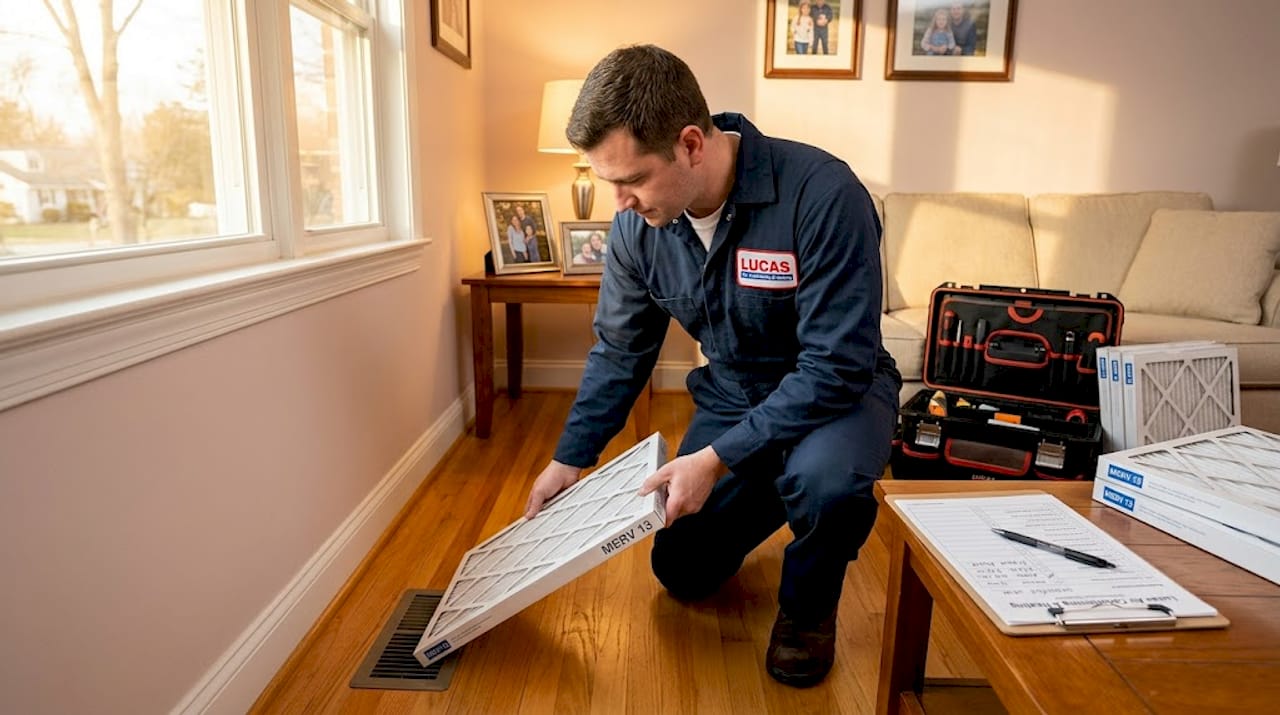
ASHRAE, EPA, and CDC recommend a minimum MERV 13 rating for residential HVAC filters to mitigate airborne virus particles and fine PM2.5. PM2.5 refers to particles smaller than 2.5 microns, the ones that penetrate deep into lung tissue. MERV 13 captures at least 85% of particles in the 1 to 3 micron range, a category that includes virus carriers and the fine particles in wildfire smoke.
| Feature | MERV 8 | MERV 13 |
|---|---|---|
| Particle capture range | 3 to 10 microns | 1 to 3 microns |
| Captures fine smoke particles | No | Yes |
| Captures virus carriers | No | Yes |
| Risk of airflow restriction | Low | Moderate if system not designed for it |
| Recommended for wildfire season | No | Yes |
There is one important caveat: not every HVAC system can handle a MERV 13 filter without airflow problems. Higher MERV ratings create more resistance, which can strain older or undersized systems, reduce efficiency, and even damage the blower motor over time. Before upgrading, check your system’s static pressure capacity. Our HVAC design considerations resource walks you through what your specific system can handle.
Pro Tip: If your system struggles with MERV 13, a properly sized MERV 11 filter changed more frequently can outperform a restrictive MERV 13 that starves your system of airflow. Pair it with a portable HEPA air cleaner in your main living area for added protection. Schedule seasonal HVAC tune-ups to ensure your system handles any filter upgrade without hidden strain.
Managing seasonal challenges: wildfire smoke and prescribed burns in Central Florida
Understanding filter upgrades is vital, but seasonal external factors like wildfire smoke also demand adaptable air quality management.
Central Florida sits in one of the most active prescribed burn zones in the country. The Florida Forest Service conducts burns from October through June to reduce wildfire fuel loads. While this is smart land management, it means that wildfire and burn smoke affects both outdoor and indoor air quality and requires residents to actively adjust their indoor air strategies throughout the year.
The key tool here is the Air Quality Index, or AQI. The AQI is a 0 to 500 scale where readings above 100 are considered unhealthy for sensitive groups and readings above 150 are unhealthy for everyone. On days when your local AQI spikes due to smoke, your ventilation strategy must flip completely. Windows stay closed. Fresh air intake vents on your HVAC should be shut if possible. Your home shifts from breathing to filtering.
Here is a practical checklist for high smoke days in Central Florida:
- Check the AQI on airnow.gov before opening windows in the morning
- Close all windows, doors, and fireplace dampers
- Switch your HVAC to recirculation mode if available
- Run portable HEPA air cleaners in bedrooms and main living areas
- Avoid activities that add indoor pollutants like cooking on a gas range or burning candles
One statistic that surprises most homeowners: strategic prescribed burns can reduce wildfire damage by 16% and smoke impacts by 14% compared to unmanaged fuel loads. So while burns are temporarily disruptive to your air quality plans, they are actually part of the solution at a regional level. Knowing this helps you plan around them rather than fight against them.
Our air quality solutions for Central Florida guide and the preventative HVAC benefits article cover how maintaining your system year-round keeps you ready for seasonal air quality shifts.
Practical best practices for maintaining and improving home air quality year-round
Seasonal challenges highlight the need for practical, routine maintenance and smart habits that keep your home’s air healthy all year.
The impact of poor air quality is felt gradually, which is exactly why most people miss it. Fatigue, increased allergy symptoms, and poor sleep are common signs, but they rarely get connected to the HVAC filter that has not been changed in four months. Shortening your filter replacement cycle during high-risk periods is one of the simplest actions that delivers real results.
Follow this order of operations for year-round air management:
- Eliminate sources first. Switch to low-VOC cleaning products, seal off mold-prone areas, and never smoke indoors. This is always the first step before spending money on filtration.
- Ventilate when conditions allow. On clear days with AQI readings below 50, open windows and let fresh air flush indoor pollutants. This is free, effective, and underused.
- Filter what remains. Run your HVAC with a MERV 13 filter and add portable HEPA units in bedrooms if anyone has asthma or allergies.
- Replace filters on an accelerated schedule during wildfire season. Every 30 to 45 days instead of the usual 60 to 90 days.
- Schedule professional HVAC maintenance at least twice a year. A clogged evaporator coil or dirty ductwork erases every benefit your filter delivers.
Effective air quality management requires a stacked approach: source control, ventilation, then filtration. Relying on only one method is rarely sufficient, no matter how expensive that single solution is.
Pro Tip: Add a simple humidity monitor in your main living area. Central Florida homes frequently run above 60% relative humidity indoors, which encourages mold and dust mite growth. Keeping humidity between 40% and 50% reduces biological pollutants without any additional filtration at all.
Regular preventative HVAC maintenance is what makes every other strategy actually work. A neglected system loses filtration performance, wastes energy, and creates new pollutant sources through mold growth in dirty coils. Review HVAC lifespan factors specific to Florida’s climate so you know when your system is costing you more than it is saving.
Why Central Florida homeowners need a systematic ‘IAQ Stack’ approach to truly breathe easy
Here is the uncomfortable truth about how most homeowners respond to air quality concerns: they buy one product, feel like they have done something, and stop there. A new air purifier in the living room. A box of HEPA filters. Maybe a fancy diffuser that definitely does not help. The product feels like a solution. But nothing actually changes in any measurable way.
The reason is that a systematic IAQ Stack approach prioritizing source control, then ventilation, then filtration ensures measurable improvements in respiratory comfort and cognitive performance. Skipping straight to filtration while ignoring active pollutant sources or poor ventilation is like putting a premium fuel in a car with a cracked engine block.
What makes Central Florida particularly tricky is that the conditions change constantly. January may be perfect ventilation weather. March could bring three weeks of prescribed burn smoke. Summer brings high humidity that makes mold a real threat. Each condition demands a different response, and that is exactly why a structured approach wins over individual product purchases every time.
We have seen this pattern repeatedly: a homeowner invests in a high-end air purifier but skips the twice-yearly HVAC maintenance. The system coils grow mold. The ducts circulate contaminated air throughout the house every time the system runs. The purifier captures a fraction of what the HVAC is distributing. Net result: wasted money and still-poor indoor air.
The mindset shift that matters is moving from “what product can I buy” to “what is my system doing at each stage of the air quality process?” Start with source reduction. Then establish a ventilation schedule based on daily AQI checks. Then layer in filtration through both your HVAC system and portable units where needed. If you want a solid starting point, our improve home air quality resource lays out the full picture in practical terms for Central Florida homes specifically.
How Lucas Air Conditioning and Heating supports your air quality management needs
Now that you understand the role of effective air quality management, here is how you can partner with local experts to keep your home healthy through every season.
At Lucas Air Conditioning and Heating, we have helped Central Florida homeowners navigate everything from wildfire smoke season to humidity-driven mold risk since 2018. Every service we provide connects directly to the IAQ Stack approach described in this article. Our HVAC installation process ensures your system is designed to handle advanced filtration like MERV 13 without sacrificing airflow or efficiency. When something goes wrong, our HVAC repair workflow gets your system back to protecting your air fast. And with a preventative HVAC maintenance plan, you stay ahead of the seasonal challenges that Central Florida throws at your home every year. As a veteran-owned business based in Eustis, we understand this community and the air quality conditions that come with living here.
Frequently asked questions
What is the best filter rating for residential HVAC systems to improve air quality?
A MERV 13 filter is recommended because it captures at least 85% of particles sized 1 to 3 microns, including virus carriers and wildfire smoke particles, making it the current minimum standard from ASHRAE, EPA, and CDC.
How do wildfires and prescribed burns affect indoor air quality in Central Florida?
Smoke from wildfires and burns can significantly worsen both outdoor and indoor air quality, requiring residents to seal their homes and rely entirely on indoor filtration during high AQI days rather than opening windows.
How often should I replace HVAC air filters during wildfire season?
During wildfire smoke events or other high-pollutant periods, replace filters every 30 to 45 days instead of the standard 60 to 90 day cycle to maintain airflow and keep filtration effective.
Can I improve indoor air quality by ventilating even during wildfire smoke days?
No. During wildfire smoke events, stop ventilation entirely and keep windows and doors sealed, relying exclusively on your HVAC filtration and portable air cleaners to avoid drawing polluted outdoor air inside.
Recommended
- Indoor air quality: improve comfort and health at home – Lucas Air Conditioning and Heating
- Apartment air quality: practical solutions for Central Florida – Lucas Air Conditioning and Heating
- Air filters: your guide to cleaner, healthier indoor air – Lucas Air Conditioning and Heating
- HVAC considerations for real estate in Central Florida – Lucas Air Conditioning and Heating
