

Managing a commercial property in Central Florida often means battling high energy bills while trying to keep tenants comfortable year-round. HVAC systems are not just about cooling or heating—their performance directly affects indoor air quality, occupant safety, and operational costs. By understanding the core functions of commercial HVAC, property managers can make smarter investments that support tenant satisfaction and budget goals.
Table of Contents
- Defining Commercial HVAC And Core Functions
- Types Of Commercial HVAC Systems Explained
- How HVAC Influences Tenant Comfort And Health
- Operational Costs And Energy Efficiency Impact
- Maintenance, Compliance, And Common Pitfalls
- ROI, Property Value, And Competitive Edge
Key Takeaways
| Point | Details |
|---|---|
| Understanding Commercial HVAC | These systems are designed for large environments and provide critical functions beyond temperature control, such as humidity management and air quality improvement. |
| Choosing the Right System | Selecting the appropriate HVAC system type is essential for operational effectiveness and varies based on specific building needs and environmental factors. |
| Impact on Tenant Well-Being | Adequate HVAC design significantly affects tenant comfort and health, emphasizing the importance of maintaining air quality and optimal humidity levels. |
| Cost Efficiency and Sustainability | Investing in high-performance HVAC systems can reduce operational costs and enhance property value while supporting energy efficiency initiatives. |
Defining Commercial HVAC and Core Functions
Commercial HVAC represents the sophisticated heating, ventilation, and air conditioning systems designed specifically for business and institutional environments. Unlike residential systems, these complex networks are engineered to manage substantial square footage, multiple zones, and rigorous performance standards. HVAC systems in commercial settings require intricate design to maintain precise indoor environmental conditions.
The core functions of commercial HVAC systems extend far beyond basic temperature regulation. These systems are responsible for:
- Maintaining consistent indoor temperatures across different building zones
- Controlling humidity levels to prevent moisture-related damage
- Ensuring proper air circulation and ventilation
- Filtering and purifying indoor air quality
- Supporting energy efficiency through advanced control mechanisms
Commercial HVAC technologies integrate multiple components to achieve optimal performance. Technical fundamentals involve sophisticated equipment like air handling units, chillers, boilers, cooling towers, and complex ductwork systems designed to handle varying environmental demands. These systems must adapt to different occupancy levels, external temperature fluctuations, and specific industry requirements.
Key Distinguishing Characteristics:
- Scalable design for large commercial spaces
- Zoned temperature management
- Advanced digital control systems
- High-capacity air handling capabilities
- Redundant system backup mechanisms
Pro tip: Invest in regular commercial HVAC system assessments to maintain peak operational efficiency and prevent unexpected performance interruptions.
Types of Commercial HVAC Systems Explained
Commercial HVAC systems are not one-size-fits-all solutions. Instead, they represent a diverse range of technologies designed to meet specific environmental and operational requirements for different business environments. HVAC system types vary dramatically in their design, complexity, and performance characteristics, making selection critical for Florida property managers.
The primary categories of commercial HVAC systems include:
- Centralized Systems: Large-scale solutions typically used in office complexes and institutional buildings
- Decentralized Systems: Smaller, more flexible units ideal for varied commercial spaces
- Variable Refrigerant Flow (VRF) Systems: Advanced technologies offering precise zone-based temperature control
- Radiant Heating and Cooling Systems: Innovative approaches using embedded pipes or panels
- Rooftop Package Units: Self-contained systems commonly used in retail and light industrial settings
Each system type presents unique advantages and challenges for property managers. Centralized systems offer comprehensive building-wide climate management, while decentralized options provide more granular control and potentially lower installation costs. VRF technologies have gained significant traction in recent years due to their energy efficiency and ability to simultaneously heat and cool different zones within the same facility.
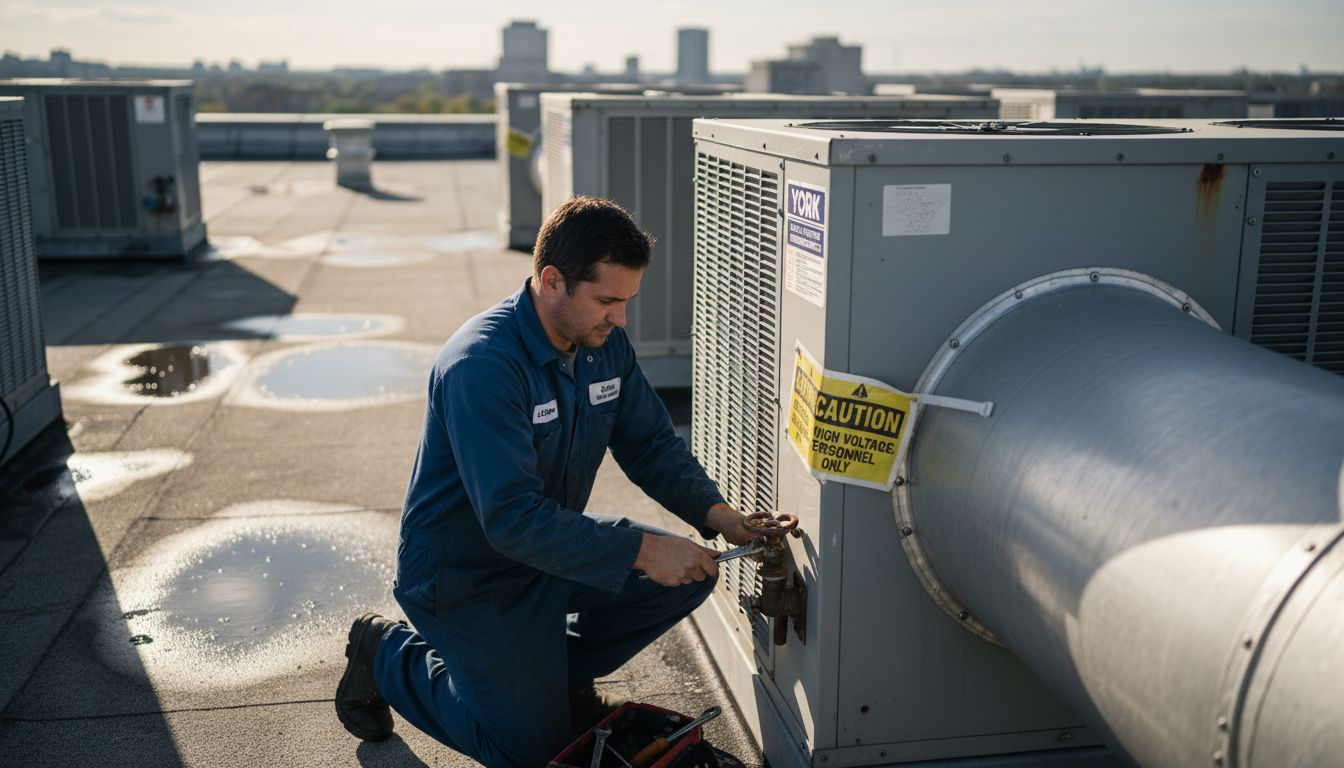
Here’s a quick comparison of the major commercial HVAC system types and their typical applications:
| System Type | Typical Building Use | Advantages | Challenges |
|---|---|---|---|
| Centralized Systems | Office complexes, hospitals | Unified control, scalability | Higher upfront costs |
| Decentralized Systems | Retail, small office buildings | Flexible placement, easy repair | Limited zone control |
| VRF Systems | Hotels, mixed-use properties | Simultaneous heating/cooling | Complex installation |
| Radiant Heating/Cooling | Warehouses, specialty facilities | Energy saving, silent operation | Specialized technician |
| Rooftop Package Units | Retail, light industry | Quick install, self-contained | Less efficient for large scale |
Key Considerations for System Selection:
- Building square footage
- Occupancy patterns
- Energy efficiency requirements
- Budget constraints
- Local climate conditions
Pro tip: Consult with HVAC professionals who understand Florida’s unique environmental challenges to select the most appropriate system for your specific commercial property.
How HVAC Influences Tenant Comfort and Health
In the dynamic world of commercial properties, HVAC systems play a critical role far beyond simple temperature regulation. Thermal environmental conditions directly impact tenant satisfaction, productivity, and overall well-being, making them a fundamental consideration for Florida property managers.
The key aspects of HVAC’s impact on tenant health and comfort include:
- Precise temperature and humidity control
- Air quality management
- Reduction of airborne contaminants
- Prevention of mold and moisture-related issues
- Noise level moderation
- Consistent environmental conditions
Poor HVAC system design and maintenance can lead to significant health risks. HVAC system design plays a crucial role in controlling indoor air quality, managing moisture levels, and preventing the spread of potential pathogens. In Florida’s humid climate, these considerations become even more critical, as improper humidity control can create breeding grounds for mold, bacteria, and other harmful microorganisms.
Critical Health Factors Influenced by HVAC:
- Respiratory system protection
- Allergen and pollutant reduction
- Thermal comfort regulation
- Humidity-related health prevention
- Psychological well-being through environmental stability
Pro tip: Conduct quarterly HVAC system assessments to ensure optimal performance and maintain a healthy indoor environment for tenants.
Operational Costs and Energy Efficiency Impact
Commercial HVAC systems represent a substantial financial investment and ongoing operational expense for Florida property managers. High-performance HVAC systems can dramatically reduce energy consumption, with potential savings ranging from 10% to 40% through strategic design and implementation.
The most significant cost considerations for commercial HVAC systems include:
- Initial installation expenses
- Regular maintenance requirements
- Energy consumption patterns
- Potential system upgrade investments
- Long-term operational efficiency
- Utility rate fluctuations
- Equipment lifecycle management
Energy efficiency is not just a cost-saving strategy but a critical environmental responsibility. Energy efficiency improvements in commercial HVAC systems can lead to substantial reductions in operational expenses while simultaneously minimizing carbon footprint. In Florida’s demanding climate, where cooling systems operate extensively, these efficiency gains become even more crucial for property managers seeking to balance economic and environmental considerations.
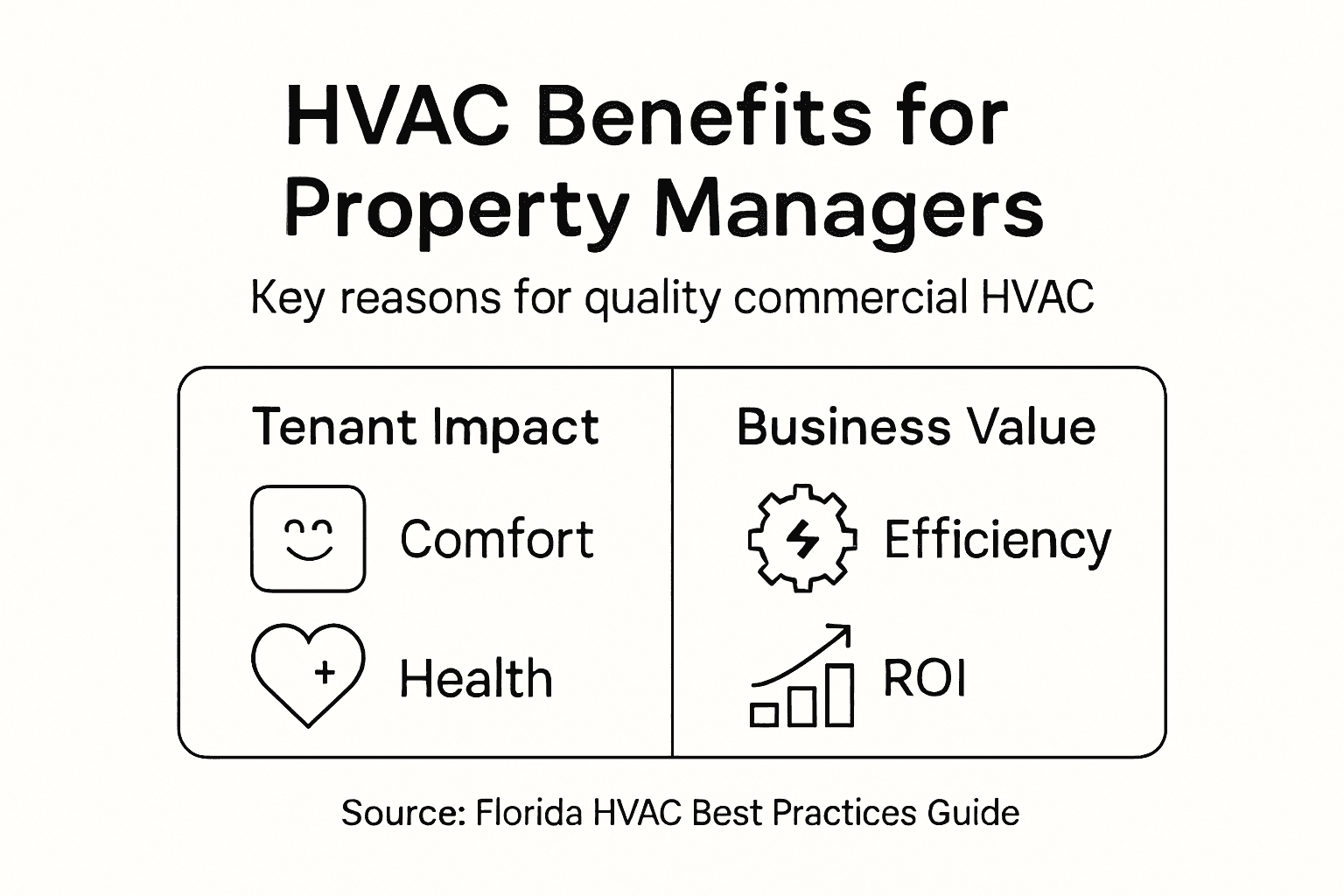
Key Financial Optimization Strategies:
Below is a summary of cost optimization strategies for commercial HVAC systems:
| Strategy | Impact on Expenses | Environmental Benefit |
|---|---|---|
| Advanced monitoring technology | Prevents energy waste | Reduces greenhouse gas emissions |
| Predictive maintenance | Lowers repair costs | Improves equipment longevity |
| Energy-efficient equipment | Reduces utility bills | Decreases electricity consumption |
| Smart building management | Optimizes system usage | Supports sustainability goals |
- Implement advanced monitoring technologies
- Regular system performance assessments
- Upgrade to energy-efficient equipment
- Utilize predictive maintenance protocols
- Leverage smart building management systems
Pro tip: Develop a comprehensive HVAC efficiency plan that includes annual energy audits and progressive system upgrades to maximize long-term cost savings.
Maintenance, Compliance, and Common Pitfalls
Commercial HVAC systems in Florida require meticulous maintenance to ensure optimal performance and regulatory compliance. Maintenance best practices are critical for preventing system failures, reducing operational costs, and maintaining indoor environmental quality.
Common maintenance challenges and potential pitfalls include:
- Inconsistent inspection schedules
- Delayed equipment replacement
- Inadequate documentation of maintenance activities
- Neglecting filter and ductwork cleaning
- Ignoring early warning signs of system degradation
- Poor technician training
- Insufficient budget allocation for preventative maintenance
Preventive maintenance programs are essential for commercial property managers to mitigate risks and ensure system reliability. Florida’s unique climate presents additional challenges, with high humidity and temperature extremes demanding more rigorous maintenance protocols. Effective programs typically involve comprehensive documentation, scheduled inspections, and proactive equipment management.
Critical Compliance Considerations:
- Regular system performance evaluations
- Adherence to manufacturer specifications
- Compliance with local and state regulations
- Comprehensive maintenance documentation
- Employee safety training
Pro tip: Implement a digital maintenance tracking system to streamline documentation, schedule inspections, and quickly identify potential system issues.
ROI, Property Value, and Competitive Edge
Investing in high-performance commercial HVAC systems transcends simple operational maintenance, representing a strategic approach to property management and value enhancement. High-performance HVAC systems directly contribute to increased property values by improving tenant satisfaction, reducing operational costs, and creating more attractive commercial environments.
Key financial and competitive advantages include:
- Enhanced tenant retention rates
- Reduced long-term operational expenses
- Increased property market valuation
- Improved energy efficiency ratings
- Stronger sustainability credentials
- Potential tax credit eligibility
- Competitive differentiation in the marketplace
Energy efficiency incentives provide additional financial motivations for strategic HVAC investments. These incentives not only offset initial implementation costs but also position properties as forward-thinking and environmentally responsible. In Florida’s competitive real estate market, such investments can distinguish a property from similar offerings, potentially commanding premium lease rates and attracting high-quality tenants.
Strategic Investment Considerations:
- Long-term cost-benefit analysis
- Potential tax credit opportunities
- Energy performance benchmarking
- Tenant comfort and satisfaction metrics
- Sustainability marketing advantages
Pro tip: Conduct a comprehensive cost-benefit analysis that includes potential energy savings, tax incentives, and increased property valuation before major HVAC system investments.
Enhance Your Commercial HVAC Performance with Trusted Local Expertise
Managing a commercial HVAC system in Florida means balancing energy efficiency, tenant comfort, and system reliability in a challenging climate. If you are facing issues like inconsistent temperature zones, rising operational costs, or health concerns from poor air quality, Lucas Air Conditioning and Heating is here to help. Our veteran-owned company specializes in tailored commercial HVAC solutions that address the exact challenges discussed, including humidity control, advanced maintenance, and system upgrades.
Discover how our comprehensive commercial services can maximize HVAC efficiency and tenant satisfaction. Take advantage of our current Special Offers and explore expert insights in our Commercial Archives to learn more about modern ventilation and system care. Ready to optimize your property’s HVAC performance today Visit us at Lucas Air Conditioning and Heating to schedule a consultation and secure your Florida business’s comfort and value now.
Frequently Asked Questions
What are the core functions of commercial HVAC systems?
Commercial HVAC systems maintain consistent indoor temperatures, control humidity levels, ensure proper air circulation, filter indoor air quality, and enhance energy efficiency through advanced control mechanisms.
How do commercial HVAC systems affect tenant comfort and health?
Effective HVAC systems regulate temperature and humidity, manage air quality, and prevent moisture-related issues, which directly influence tenant satisfaction, productivity, and overall well-being.
What types of commercial HVAC systems are available?
Commercial HVAC systems include centralized systems, decentralized systems, variable refrigerant flow (VRF) systems, radiant heating and cooling systems, and rooftop package units, each designed for specific building needs and advantages.
Why is energy efficiency important for commercial HVAC systems?
Energy efficiency in commercial HVAC systems can lead to significant cost savings, reduce operational expenses, and minimize the carbon footprint, which is especially crucial in climates with high cooling demands.
