
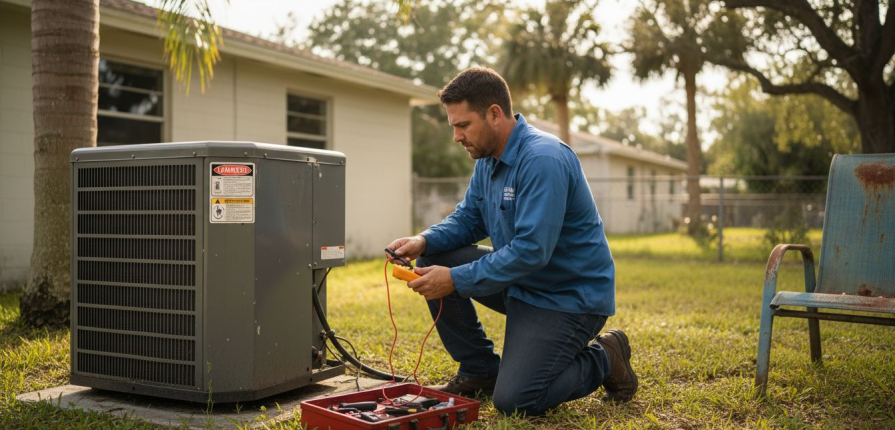
Sweltering afternoons in Eustis can turn stressful fast when your HVAC system suddenly stops working. In the intense Florida climate, a complete loss of cooling is more than an inconvenience, it threatens your family’s comfort and safety. When system failures strike, quick action is crucial and ordinary repairs just won’t cut it. Discover what truly counts as an emergency HVAC repair and how knowing the warning signs helps you respond with confidence before living conditions become dangerous.
Table of Contents
- Defining Emergency HVAC Repair Needs
- Types of HVAC Emergencies Homeowners Face
- How Emergency HVAC Response Works
- Expected Costs and Service Fees
- Choosing Qualified HVAC Repair Technicians
Key Takeaways
| Point | Details |
|---|---|
| Emergency HVAC Repairs Are Time-Sensitive | Recognizing critical failures, like complete cooling loss or water damage, necessitates immediate professional help to ensure safety and comfort. |
| Understanding Costs Is Essential | Emergency repairs typically incur higher costs due to urgency and specialized scheduling; knowing potential fees aids in budgeting. |
| Qualified Technicians Are Crucial | Hiring certified technicians with ongoing training ensures reliable service and safety compliance for your HVAC system. |
| Be Proactive in Emergency Preparedness | Research and save contact information for qualified HVAC companies in advance to streamline service during an emergency. |
Defining Emergency HVAC Repair Needs
You probably don’t think about your HVAC system until it stops working. In Florida’s heat and humidity, that moment arrives with urgency. An emergency HVAC repair is different from regular maintenance or standard repairs. It’s when your system fails completely, putting your home’s comfort and safety at risk, and waiting even a few hours creates real problems. Temperatures inside can soar beyond 90 degrees, making the space unbearable and potentially dangerous for children, elderly family members, or anyone with health conditions.
Emergencies occur when specific mechanical failures happen. System failures due to electrical or mechanical faults trigger the need for immediate attention. In Eustis homes, the most common emergency scenarios include complete cooling loss during summer, refrigerant leaks that cause sudden performance drops, compressor failures that create unusual noises, electrical issues that prevent the system from powering on, and thermostat malfunctions that leave you with no temperature control. Other triggers include water damage to indoor units after heavy Florida storms, frozen evaporator coils that block airflow, or burning smells indicating electrical damage. These aren’t situations where you can schedule a repair in two weeks. They demand same-day or next-day response.
Building code compliance also defines what constitutes an emergency. Mechanical systems in buildings face emergency conditions when ventilation system failures occur or power disruptions prevent normal operation. While your home may not face the same healthcare facility standards, Florida building codes still require functional HVAC systems to maintain habitable indoor environments. When your system stops meeting these minimum requirements, you’ve got an emergency on your hands. The difference between an emergency and a standard repair comes down to safety and habitability. If your family can’t maintain reasonable indoor temperatures, your system’s failure has crossed from inconvenient into critical.
Recognizing when you actually have an emergency versus a situation that can wait helps you respond appropriately. If your AC is running but producing warm air, that’s typically a standard repair. If your AC won’t turn on at all and outdoor temperature is 92 degrees with humidity at 80 percent, that’s an emergency. The key question: can your family safely and comfortably remain in the home? When the answer is no, you need professional help now, not later.
Pro tip: _Document the exact moment your system fails and what you notice before calling a technician. Details like unusual sounds, burning smells, or water pooling help your technician diagnose the problem faster and potentially save you time and money on the repair.
Types of HVAC Emergencies Homeowners Face
Not all HVAC problems are created equal. Some can wait a day or two for a scheduled appointment, while others demand immediate action. Understanding the different types of emergencies helps you know when to call for urgent service versus when you can plan ahead. The worst time to figure this out is when your home is already uncomfortable and you’re frantically searching for solutions.
Complete loss of cooling or heating tops the list of true emergencies. If your AC stops working entirely during a Florida summer, your indoor temperature can climb dangerously fast. Within hours, your home becomes uninhabitable, especially for young children, elderly residents, or anyone with respiratory conditions. Similarly, losing heat during Florida’s occasional cold snaps creates emergency conditions. Electrical failures that prevent your system from powering on at all fall into this category. You’ll notice the system won’t respond to thermostat adjustments, no fans are running, and you hear nothing from the outdoor unit. Gas failures in systems that use gas heating create the same urgent situation. These scenarios aren’t about comfort anymore. They’re about safety and livability.
Water damage represents another major emergency category that many homeowners underestimate. Florida’s heavy rains, air conditioning condensation overflow, or plumbing leaks near HVAC equipment can cause significant problems. Water leakage affecting HVAC units requires immediate attention because standing water damages critical components like motors, electrical connections, and circuit boards. Beyond the immediate mechanical damage, flooding can degrade indoor air quality through mold growth within the system itself. Mold spores then circulate throughout your home every time the system runs, creating health hazards. If you notice water pooling around your indoor unit, water dripping from vents, or a musty smell coming from your HVAC, this demands emergency service to prevent property damage and health risks.
Refrigerant leaks and compressor failures also qualify as emergencies because they cause rapid performance loss. Your AC might start the day working fine but progressively lose cooling ability throughout the afternoon. By evening, you realize it’s barely cooling at all. A refrigerant leak wastes your system’s cooling capacity and, if left unchecked, can damage the compressor permanently. Compressor failures announce themselves through unusual noises like grinding, squealing, or loud rattling from the outdoor unit. These sounds indicate mechanical damage that will only worsen without professional intervention. Burning smells or visible sparks signal electrical emergencies that pose fire hazards and require immediate power shutdown and professional evaluation.
Here is a quick reference for common HVAC emergencies and their possible impacts:
| Emergency Type | Typical Cause | Immediate Impact | Health/Safety Risk |
|---|---|---|---|
| Complete cooling failure | Mechanical/electrical issue | Rapid rise in indoor temperature | Heat exhaustion, dehydration |
| Water damage | Flooding or leaks | Damaged electrical components | Mold growth, circuit failure |
| Refrigerant leak | Pipe rupture or seal break | Loss of cooling, system strain | Compressor damage, air hazard |
| Electrical hazard | Wiring/power problems | System shutoff or sparks | Fire risk, shock hazard |
| Thermostat malfunction | Faulty sensor or wiring | No temperature control | Comfort issues, overheating |
Pro tip: When you notice an emergency developing, turn off your thermostat immediately if you smell burning or see sparks, then call a professional right away rather than troubleshooting yourself, as this prevents further damage and keeps your family safe.
How Emergency HVAC Response Works
When you call for emergency HVAC service in Eustis, you’re entering a structured process designed to get your system running again as quickly as possible. The response isn’t random or chaotic. Professional HVAC companies follow established protocols that prioritize speed without sacrificing thoroughness. Understanding how this process works helps you know what to expect and how to prepare when you make that call.
The first step happens the moment you contact a service provider. A dispatcher asks specific questions about your symptoms and situation. Are you completely without cooling? Do you smell burning? Is there water pooling? These details help the technician arrive prepared with the right tools and parts. When you describe your problem clearly, you save precious time that would otherwise be spent on basic diagnosis. Emergency HVAC response begins with targeted system evaluations guided by recognized protocols that help technicians quickly identify what’s wrong. A technician familiar with your specific problem type can often carry the right replacement parts to your home, meaning they don’t have to leave to gather supplies after arriving.
Once the technician arrives, they perform a rapid assessment of your system. They check electrical connections, listen to the unit’s operation, feel for proper airflow, and run diagnostic tests if needed. This targeted evaluation process takes minutes, not hours, because experienced technicians know what to listen and look for. Based on this quick diagnosis, they determine whether the repair is something they can handle immediately or if the system needs component replacement. For simple fixes like a tripped breaker or a clogged drain line, they solve it while you watch. For more complex issues, they explain what’s damaged and what options you have. The key principle guiding this work is prioritizing repairs based on criticality to your family’s safety and comfort.
Once repairs begin, the technician works efficiently but doesn’t cut corners. They test the system thoroughly before declaring the job complete, ensuring your cooling or heating is actually restored. Many emergency calls happen during nights or weekends, which is why companies that offer true 24/7 service make a real difference. Your family shouldn’t have to suffer through a sweltering night waiting for business hours to arrive. When the system is running again and your home is returning to normal temperature, the technician will discuss what led to the failure and what you can do to prevent similar emergencies.
Pro tip: Before calling, write down when the problem started, what sounds or smells you noticed, and whether the system ever worked partially that day—this information speeds up diagnosis and gets your home comfortable faster.
Expected Costs and Service Fees
Emergency HVAC repairs cost more than standard repairs, and that’s a reality you should understand before picking up the phone. The pricing reflects the urgency, the specialized scheduling required, and the fact that technicians are often leaving other jobs or coming in during nights and weekends to reach you. Knowing what drives these costs helps you make informed decisions when you’re stressed about your broken system.
Service fees typically include several components stacked on top of each other. The diagnostic fee is what you pay just to have a technician come out and identify the problem. This usually ranges from 75 to 150 dollars, though many companies waive it if you proceed with repairs. Emergency service premiums apply when you call outside normal business hours. A Saturday afternoon service call might cost 25 to 50 percent more than the same repair on a Tuesday morning. After-hours calls, especially late nights or early mornings, can add 100 to 200 dollars or more to your total bill. Weekend and holiday premiums exist because the company must staff technicians specifically to handle these calls, and you’re paying for that availability.
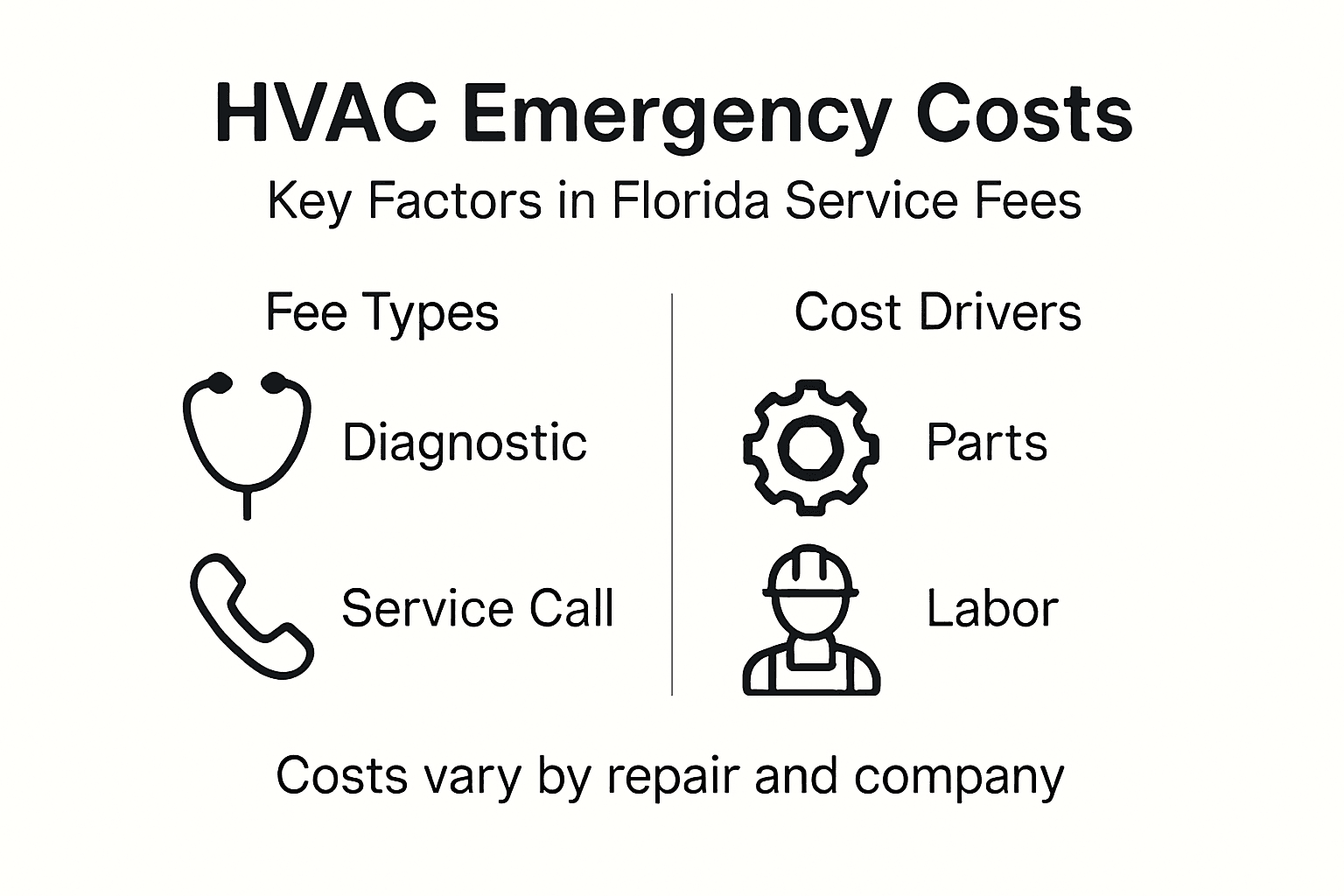
The actual repair costs vary dramatically based on what’s broken. Simple repairs like replacing a thermostat might cost a few hundred dollars, while major component failures run much higher. A compressor replacement typically costs 1,500 to 3,000 dollars depending on your system size. Refrigerant recharge ranges from 200 to 600 dollars depending on how much refrigerant your system needs. Water damage repairs involving component replacement and mold remediation can exceed 2,000 dollars. If your system is old and beyond economical repair, emergency repair costs combined with equipment operational expenses might push you toward replacement instead. A complete system replacement ranges from 5,000 to 10,000 dollars or more depending on system size and complexity.
The following table compares emergency HVAC repair costs and what affects final pricing:
| Repair Scenario | Typical Cost Range | Pricing Factors | Financial Tip |
|---|---|---|---|
| Regular diagnostic fee | $75–$150 | Time of call, waived with repair | Ask if fee credited to repair |
| Refrigerant recharge | $200–$600 | System size, refrigerant type | Compare rates before approving |
| Compressor replacement | $1,500–$3,000 | Brand/model, labor time | Check warranty, consider financing |
| Water damage repairs | $2,000+ | Mold remediation, part replacement | Review insurance coverage |
| Full system replacement | $5,000–$10,000+ | System complexity, home size | Consider long-term energy savings |
What you can control is how you respond when problems emerge. Smaller issues caught early cost far less than catastrophic failures. Catching a refrigerant leak before it destroys the compressor saves thousands of dollars. Addressing water damage immediately prevents mold growth that requires expensive remediation. Many companies offer financing options that spread emergency repair costs over time, making them more manageable. Ask about this when you call. Some homeowners also find that their home insurance covers certain emergency HVAC damage, particularly from storms or flooding. Before accepting the final bill, ask the technician to explain every charge and why each one applies to your specific situation. Transparency about costs builds trust and ensures you understand exactly what you’re paying for.
Pro tip: Ask your HVAC company about their diagnostic fee structure upfront—many will credit it toward repairs if you move forward, and some offer free estimates for certain issues, so knowing your options before the service call can save you money.
Choosing Qualified HVAC Repair Technicians
When your AC stops working on a Saturday afternoon in July, you don’t have time to research HVAC companies thoroughly. But making smart choices about who enters your home and works on your critical systems matters tremendously. A qualified technician gets your system running safely and reliably. An unqualified one might create more problems than they solve, leaving you with additional repairs and expenses. Knowing what credentials and qualifications matter helps you make confident decisions even under pressure.
Start by asking about certifications before you hire anyone. Professional certifications such as EPA Section 608, NATE, and HVAC Excellence demonstrate competency in safe refrigerant handling, system repair, and maintenance according to industry standards. The EPA Section 608 certification specifically means the technician is legally allowed to handle refrigerants, which is critical for most AC repairs. NATE certification indicates the technician has passed rigorous exams covering HVAC systems and best practices. When you call a company, ask specifically whether their dispatched technician holds these credentials. Reputable companies are proud of their technicians’ qualifications and provide this information readily. If a company hesitates or can’t quickly confirm certifications, keep looking. You’re not being picky. You’re protecting your investment and your family’s safety.
Beyond basic certifications, look for technicians who pursue ongoing professional development. ASHRAE Certification validates a technician’s knowledge and practical skills in HVAC system operations, installations, and repairs. Technicians who maintain ASHRAE credentials show commitment to staying current with industry standards and best practices. When a company mentions that their technicians pursue continuing education, that’s a positive sign. Technology in HVAC systems evolves constantly. A technician who stopped learning five years ago might not understand modern systems properly. Ask whether the company requires its technicians to complete ongoing training. The answer tells you whether they prioritize quality and safety.
Also consider the company’s track record and reputation. How long have they been in business? Do they have positive reviews from past customers? Ask for references from people in your community who’ve used their emergency services. Local reputation matters because Eustis is a tight community where word travels fast. A company that cuts corners or treats customers poorly won’t last long here. You can also check whether they’re properly licensed and insured. Licensing requirements vary by state, but Florida requires HVAC contractors to hold proper credentials. Insurance protects you if something goes wrong during the repair. Never hire anyone who can’t provide proof of liability insurance. Finally, consider choosing a company where you know the owner or have a personal connection. Professional HVAC repair services often emphasize local expertise and community roots as signs of trustworthiness and accountability. When the person answering your emergency call is someone who lives in your community and has a reputation to protect, you get better service.
Pro tip: Before an emergency happens, research and save the contact information for two or three qualified HVAC companies in Eustis, then you can compare quickly when you actually need service rather than accepting the first company that answers your panicked call.
Fast Emergency HVAC Repair You Can Trust in Eustis
When your AC stops working in Florida’s heat, waiting is not an option. This article highlights the urgency of emergency HVAC repair needs such as complete cooling failure, water damage, refrigerant leaks, and electrical hazards that threaten your home’s comfort and safety. Lucas Air Conditioning and Heating understands these critical challenges and offers swift, professional solutions that prioritize your family’s well-being.
Don’t let an HVAC emergency disrupt your peace of mind. Take advantage of our Special Offers for January 2026 to make emergency repairs more affordable. Our veteran-owned company stands ready 24/7 to deliver trusted, certified service with transparency and respect. Schedule your emergency service now through our main site at https://lucasair.com and restore your home’s comfort without delay. You deserve prompt, expert care that keeps you safe and comfortable regardless of the hour.
Frequently Asked Questions
What constitutes an emergency HVAC repair?
An emergency HVAC repair occurs when your system experiences a complete failure, putting your home’s comfort and safety at risk. This includes scenarios like a complete loss of cooling or heating, severe refrigerant leaks, electrical failures, or water damage affecting HVAC components.
How do I know if my HVAC issue is an emergency?
You can identify an HVAC emergency if your system won’t turn on in extreme temperatures, if you notice burning smells or electrical sparks, or if there’s water pooling around your HVAC units. If your family’s safety and comfort are compromised, it’s time to call for emergency assistance.
What should I do if my HVAC system fails?
If your HVAC system fails, first turn off your thermostat to prevent further damage, especially if you notice burning smells or see sparks. Then, contact a professional HVAC technician for emergency service, providing them with detailed information about the issue to expedite the diagnosis.
How much do emergency HVAC repairs typically cost?
Emergency HVAC repair costs can vary widely based on the situation. Service fees generally range from $75 to $150 for diagnostics, while actual repairs can range from a couple of hundred dollars for minor fixes to several thousand for major component replacements like compressors or extensive water damage.
