

TL;DR:
- Regular AC tune-ups improve efficiency, extend system lifespan, and reduce energy bills.
- Homeowners can handle filter changes and drain line clearing safely, but repairs need professionals.
- Skipping maintenance steps like drain cleaning can lead to costly damage in Florida’s humid climate.
One overlooked step during your AC tune-up can quietly push your energy bills up by hundreds of dollars before summer even peaks. In Central Florida, where your air conditioner runs nearly year-round against punishing heat and humidity, that kind of oversight adds up fast. A structured tune-up checklist is not just a nice habit. It is the difference between a system that performs reliably through August and one that leaves you sweating through an emergency repair call. This article walks you through exactly what to check, what to leave to the pros, and how to measure the real payoff from keeping up with your system.
Table of Contents
- Set your tune-up criteria: What to check and why
- The must-do AC tune-up checklist for Florida homes
- Pro-level methods vs. DIY: What experts do differently
- Tune-up results: Comparing performance and cost savings
- Why skipping ‘minor’ AC tune-up steps costs Central Florida homeowners more
- Get expert AC tune-up help in Central Florida
- Frequently asked questions
Key Takeaways
| Point | Details |
|---|---|
| Follow a full checklist | Completing every essential step ensures top performance and prevents expensive breakdowns. |
| Know DIY limits | Many tasks are safe for homeowners, but refrigerant and electrical work require a pro. |
| Tune-ups cut costs | Regular AC tune-ups can lower energy bills by up to 10% and extend your unit’s life. |
| Details matter | Neglecting small maintenance items can lead to big repair bills in Florida’s climate. |
Set your tune-up criteria: What to check and why
Before you open the air handler closet or grab a replacement filter, it helps to know why each step matters. Not every tune-up task carries equal weight, and knowing how to prioritize saves you time and money.
Here is what separates an essential tune-up step from a nice-to-have:
- Direct efficiency impact: Does skipping this step make your system work harder and use more energy?
- Risk of breakdown: Could neglecting this lead to a repair call or complete failure?
- Indoor air quality: Does this step affect the air your family breathes every day?
- DIY vs. professional scope: Is this something you can safely handle, or does it need a licensed technician?
The preventative maintenance essentials principle is simple: a poorly maintained system loses 5 to 10% efficiency every year it goes without proper service. That means a system that was running at 95% efficiency three years ago might now be struggling at 75%, and you are paying for every lost percentage point on your electric bill.
Some tasks belong squarely in the homeowner category: replacing filters, clearing the condensate drain line, and hosing down the outdoor unit. Others, like refrigerant checks and electrical diagnostics, require a licensed technician. Trying to cross those lines without the right training creates safety risks and can void your equipment warranty.
Timing matters too. Central Florida homeowners should aim to complete their tune-up before late spring, ideally between February and April, when HVAC companies are less slammed and your system has a full season ahead to benefit.
Pro Tip: Use the full HVAC checklist as your seasonal roadmap. Running through it twice a year, once before cooling season and once before the milder winter months, keeps small issues from turning into costly repairs.
The must-do AC tune-up checklist for Florida homes
With your tune-up criteria defined, let’s walk through the core steps to cover every time you service your AC system. Each one has a specific job to do, and none of them are optional if you want full performance.
- Replace the air filter. This is the single highest-impact task you can do. Cleaning or replacing AC filters is the most critical step for improving airflow and preventing breakdowns. A clogged filter makes your blower motor strain and your coils ice over.
- Clear the condensate drain line. Florida humidity means your drain line is constantly moving moisture. A blocked line causes water backup, potential flooding, and mold growth inside the air handler.
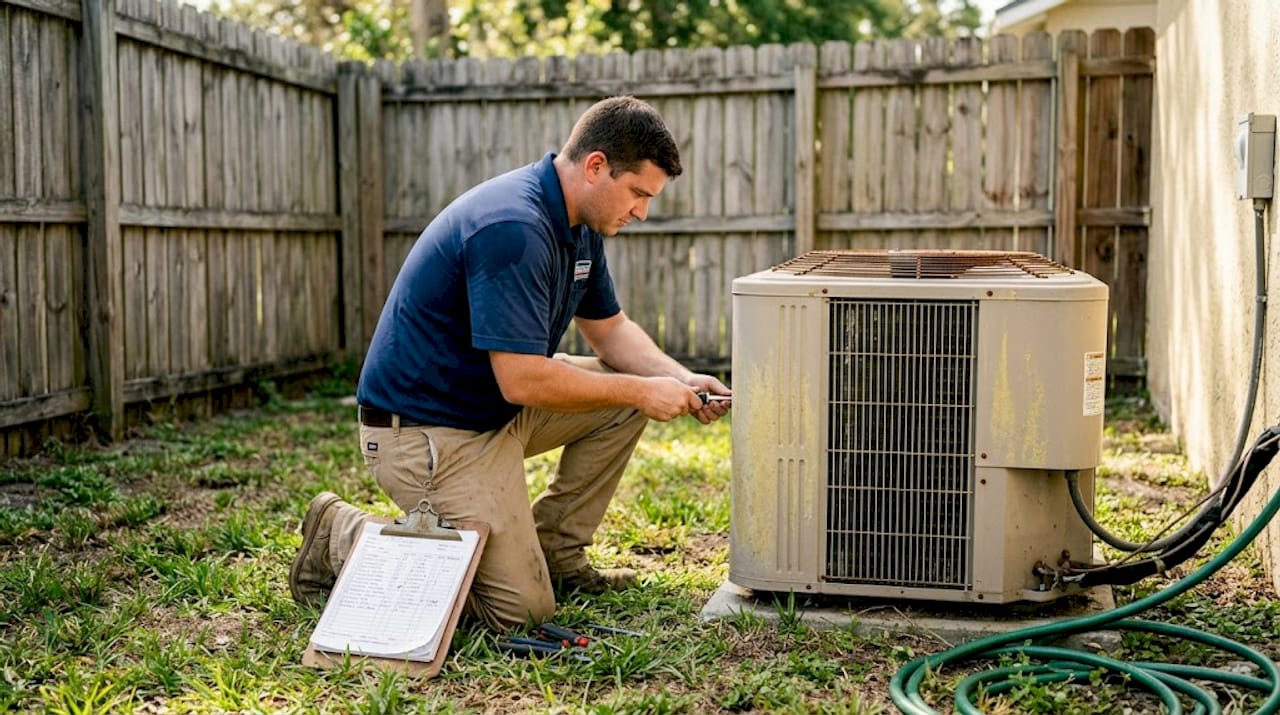
- Clean the evaporator and condenser coils. Dirty coils reduce heat transfer efficiency, which forces your system to run longer cycles. A garden hose and coil cleaner are all you need for the outdoor unit.
- Inspect refrigerant levels. Low refrigerant is a sign of a leak. You can check for ice buildup on the lines yourself, but actual refrigerant charging requires a certified technician.
- Tighten electrical connections. Loose wiring inside the air handler or disconnect box is a fire and failure risk. Visually inspect and tighten terminal screws carefully if you are comfortable doing so.
- Test the thermostat. Confirm it is reading accurately and cycling the system on and off at the correct temperatures. A miscalibrated thermostat wastes energy all season long.
The EPA and DOE recommend changing AC filters every one to three months in high-use climates like Florida. During peak summer months, monthly changes are often the smarter call.
Pro Tip: Set a recurring phone reminder for the first of every month to check your filter. If you upgrade to a smart thermostat with filter alerts, it does the reminding for you. Professional AC tune-up services can also confirm your filter type and replacement schedule based on your specific system.
Pro-level methods vs. DIY: What experts do differently
After getting familiar with the steps, it’s smart to know which are truly homeowner-friendly and which require professional expertise. The distinction matters for your safety, your system’s warranty, and the quality of results.
| Task | DIY Safe | Pro Required |
|---|---|---|
| Replace air filter | Yes | No |
| Clear condensate drain | Yes | No |
| Rinse outdoor unit coils | Yes | No |
| Inspect for ice on refrigerant lines | Yes | No |
| Refrigerant charging or leak repair | No | Yes |
| Electrical diagnostics and testing | No | Yes |
| Blower motor and capacitor checks | No | Yes |
| Ductwork sealing and pressure testing | No | Yes |
Refrigerant charging and electrical diagnostics should only be performed by licensed professionals. Refrigerant is regulated under EPA Section 608, and handling it without certification is illegal. Electrical diagnostics inside the air handler involve live voltage that can cause serious injury.
Here is what consistent DIY attention actually protects:
- Keeps airflow strong and coils clean, reducing strain on the compressor
- Prevents drain line clogs that lead to mold, water damage, and shutdowns
- Catches early warning signs, like unusual sounds or ice on the lines, before they escalate
- Reduces the scope of work a technician needs to do, which lowers your service bill
For the tasks that require a pro, use the HVAC repair workflow as a reference when preparing for a service visit. Knowing what your technician checks helps you ask better questions and verify the work is complete. If you are ever considering an upgrade rather than a repair, reviewing installation steps for homeowners can help you understand what that process involves.
Tune-up results: Comparing performance and cost savings
Now that you know which steps matter and who should do them, see how a full tune-up delivers real-world benefits for your home and wallet.
| Metric | Without Regular Tune-Ups | With Annual Tune-Ups |
|---|---|---|
| Monthly energy use | Up to 10% higher | Baseline or lower |
| Major repair likelihood | High after year 3-5 | Significantly reduced |
| Average system lifespan | 12-14 years | 15-17 years |
| Emergency repair costs | Frequent and unpredictable | Up to 30% lower |
| Indoor comfort consistency | Uneven cooling, high humidity | Steady temperatures |
Annual AC tune-ups can extend unit life by two to three years and cut major repair costs by up to 30%. That is a meaningful return on a service visit that typically costs between $75 and $150.
The savings go beyond the obvious. Here are some benefits homeowners often do not expect:
- Lower humidity indoors: A clean, well-calibrated system removes moisture more effectively, which also reduces mold risk
- Quieter operation: Tightened connections and clean components reduce vibration and noise
- Better air quality: Fresh filters and clean coils mean fewer allergens and dust particles circulating
- Fewer thermostat complaints: When the system runs efficiently, temperature swings between rooms shrink noticeably
Check out the seasonal tune-up guide for a deeper look at how Florida’s climate specifically affects each of these metrics. And if you want a clear picture of the full return on maintenance investment, the benefits of regular AC tune-ups page breaks it down with real numbers.
Why skipping ‘minor’ AC tune-up steps costs Central Florida homeowners more
Here is something we see regularly in the field: homeowners who change their filters faithfully but have not cleared their condensate drain line in two years. The filter looks fine. The system seems to be cooling. Then one August afternoon, the drain pan overflows, water seeps into the drywall, and suddenly a $10 maintenance task has turned into a $1,200 remediation job.
Central Florida’s humidity is relentless. Your AC pulls gallons of moisture out of the air every single day during summer. That moisture has to go somewhere. When a partially blocked drain line slows that process, biological growth takes hold fast. The same logic applies to loose wire connections. A terminal that vibrated slightly loose over a year of operation creates resistance, generates heat, and can eventually arc. We have seen that cause compressor failures on units that were only five years old.
The point is not to scare you. It is to reframe what counts as a ‘small’ maintenance task. In a climate like ours, there are no trivial steps. Why tune-ups matter is not an abstract discussion. It is about protecting a $5,000 to $12,000 piece of equipment from conditions that are genuinely harsh. Consistent attention to every item on your checklist is the most cost-effective home protection strategy available to Central Florida homeowners.
Get expert AC tune-up help in Central Florida
Handling filter changes and drain line flushes on your own is a great start. But having a licensed technician run a full diagnostic once a year ensures nothing slips through the cracks.

At Lucas Air Conditioning and Heating, we tune up systems specifically for Central Florida’s demanding conditions, including humidity management, refrigerant verification, and full electrical safety checks. You can book a professional AC tune-up online in minutes and get your system assessed before peak season hits. For homeowners who want ongoing peace of mind, our maintenance agreement plans cover scheduled visits, priority service, and discounts on repairs. If you are in The Villages or surrounding communities, we are your trusted Villages HVAC contractor ready to keep your home comfortable all year long.
Frequently asked questions
How often should I do an AC tune-up in Florida?
Annual tune-ups are the minimum recommended in Florida’s hot, humid climate. If your system runs heavily or is older than eight years, twice-yearly service is worth considering.
What AC tune-up tasks can I safely do myself?
You can replace filters, rinse the outdoor unit, and clear the condensate drain line safely on your own. However, refrigerant and diagnostics require a licensed pro and should never be attempted without proper certification.
Does a tune-up really lower my energy bills?
Yes. Annual tune-ups reduce energy consumption by up to 10% and significantly reduce the risk of costly emergency repairs during peak cooling months.
Should I schedule AC service before summer?
Pre-season tune-ups prevent summer breakdowns and ensure your system is calibrated and ready before Florida’s most demanding months arrive. Spring scheduling also means shorter wait times and more flexible appointment windows.
