

TL;DR:
- The fan auto setting is the most energy-efficient option because the blower only runs during active heating or cooling cycles.
- Constant “on” operation increases energy costs, accelerates blower motor wear, and can raise indoor humidity levels, especially in humid climates.
What does “fan auto” mean on your thermostat?
The fan auto setting is the industry-recommended default for most residential HVAC systems. It means your blower fan runs only when the system is actively heating or cooling your home. Once the thermostat hits your target temperature, both the compressor and the fan shut off together until the next cycle begins.
Here is why that matters for most homeowners:
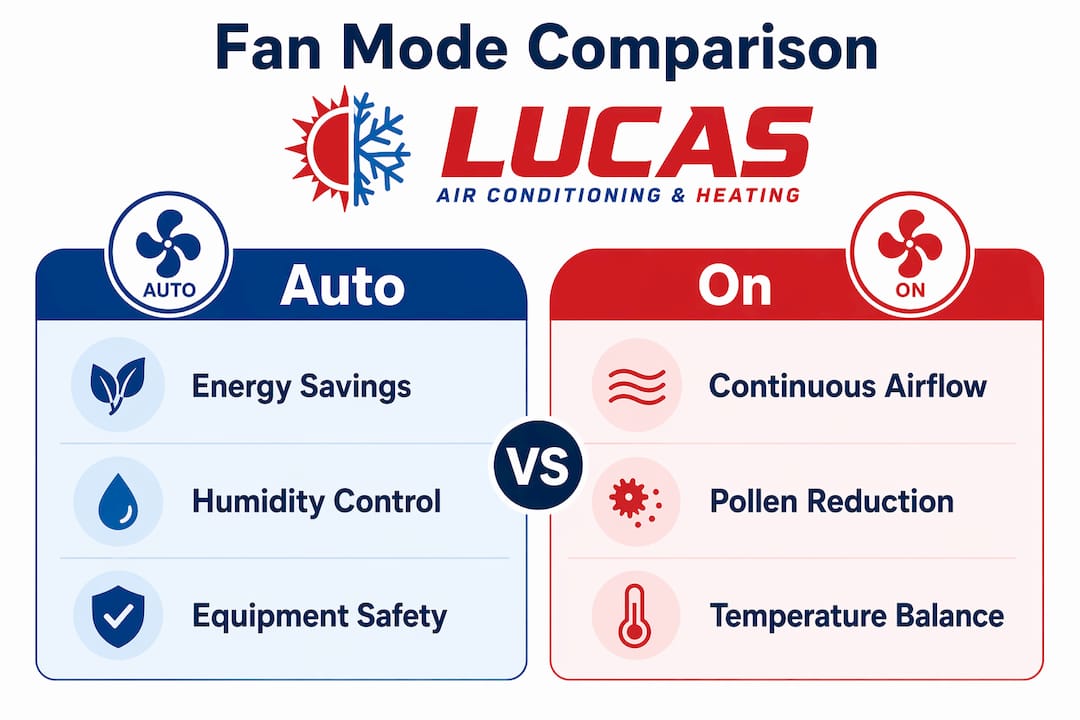
- Energy savings: The fan draws power only during active cycles, not around the clock.
- Better humidity control: When the fan stops, condensate drains off the evaporator coil instead of evaporating back into your living space.
- Reduced blower wear: Fewer operating hours mean less mechanical stress on the motor over time.
- Quieter home: No constant background hum between heating or cooling cycles.
The core difference from continuous operation is simple. In auto mode, your fan follows the system. In “on” mode, it runs regardless of what the system is doing.
How do “auto” and “on” fan settings actually differ?
The operational gap between these two settings is bigger than most homeowners realize.
- Fan auto: Blower activates only when the thermostat calls for heating or cooling, then shuts off with the compressor.
- Fan on: Blower runs 24 hours a day, seven days a week, whether the system is conditioning air or not.
- Energy consumption: Continuous operation draws significantly more electricity. A standard residential blower motor pulls 400–800 watts continuously, which can add roughly 14 kilowatt-hours per day in “on” mode.
- Temperature evenness: “On” mode circulates air between cycles, which reduces hot and cold spots, especially in multi-story homes.
- Blower motor wear: Continuous fan operation accelerates mechanical wear and increases service frequency compared to auto cycling.
The practical upshot: auto saves money and protects equipment. “On” trades those benefits for more consistent airflow.
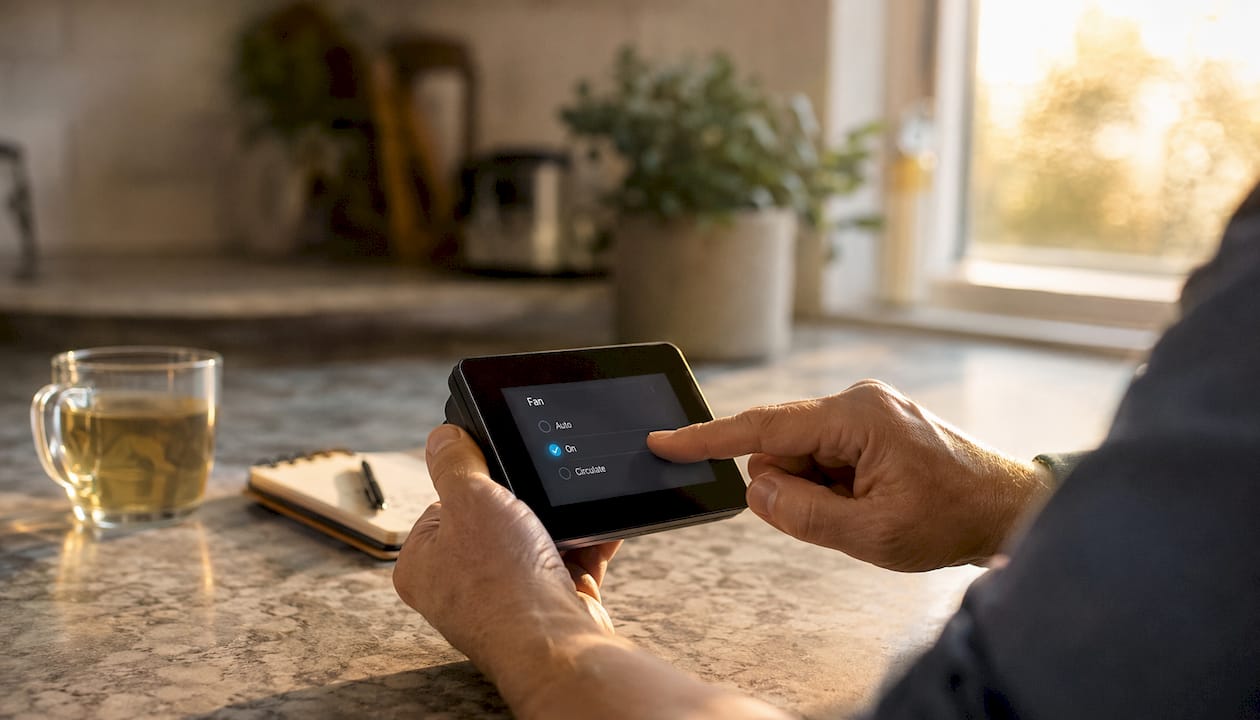
Pros and cons of the auto fan setting
Auto is the right default for most households, but it comes with real trade-offs worth knowing.
Pros:
- Lower electricity bills, since the motor only runs during active cycles
- Moisture drains off the evaporator coil properly, keeping indoor humidity in check
- Less wear on the blower motor, which extends its service life
- Quieter operation between cycles
Cons:
- Air circulates and filters only when the system runs, so dust and allergens settle between cycles
- Rooms far from the thermostat may feel slightly uneven in temperature
- Some homeowners notice minor temperature swings before the next cycle kicks in
Auto is most beneficial in humid climates, in homes where energy costs are a priority, and for systems with older blower motors not rated for continuous use. For humidity control specifically, auto is the clear winner.
Pros and cons of running the fan on “on” mode
The “on” setting has genuine uses, but it works best as a tactical choice rather than a permanent default.
Pros:
- Continuous air filtration, since air passes through the filter even between heating and cooling cycles
- More even temperatures throughout the home, particularly helpful in multi-story layouts
- Fewer hot or cold spots near vents
- Useful during allergy season or when airborne particulates are a concern
Cons:
- Higher electricity consumption and constant background noise from the blower running nonstop
- Faster blower motor wear, increasing the likelihood of earlier replacement
- In humid climates, the fan blows moisture from wet cooling coils back into your living space, raising indoor humidity
- Filter replacement frequency increases significantly, since total airflow volume through the filter is two to three times higher than in auto mode
Experts recommend “on” mode selectively for pollen season, homes with persistent temperature imbalances, or households with allergy or asthma concerns, then switching back to auto when those conditions ease.
How fan settings affect energy costs and indoor humidity
This is where the choice gets concrete, especially for homeowners in humid regions like Central Florida.
- Electricity: Running the blower continuously can add 15–20% to your total HVAC electricity bill compared to auto mode.
- Moisture re-evaporation: Research from the Florida Solar Energy Center found that in a 5-minute-on/5-minute-off compressor cycle, moisture removal dropped 44% in “on” mode versus auto, and 19% of condensed moisture re-evaporated back into the living space.
- Humid climates: In places like Central Florida, that re-evaporation creates a clammy, sticky feeling even when the thermostat reads a comfortable temperature. Auto mode prevents this by letting condensate drain before the next cycle starts.
- Dry climates: Homeowners in low-humidity regions feel the humidity penalty far less, which makes “on” mode a more viable option when filtration or temperature balance is the priority.
For energy-efficient HVAC use, auto is the default that keeps both your utility bill and your indoor humidity under control.
What is the “circulate” fan setting, and when should you use it?
Circulate mode sits between auto and “on,” and it is worth knowing about if your thermostat offers it.
- How it works: The fan runs for roughly 35% of each hour even when the system is not actively heating or cooling.
- Energy use: Higher than auto, but well below continuous “on” operation.
- Humidity: Better than “on” mode because the fan is not running the entire time between cycles, so some condensate still drains properly.
- Best use case: Mild shoulder seasons, spring and fall, when you want air movement without the full cost of continuous operation.
Modern smart thermostats often include circulate as a built-in option. It is a practical middle ground for homeowners who want better air distribution than auto provides but are not ready to absorb the full energy cost of “on” mode. For more on how HVAC ventilation affects air quality, the tradeoffs between these modes follow the same logic.
What Lucasair recommends for Central Florida homeowners
Central Florida’s humidity changes the fan setting conversation in a way that generic national advice often misses.
In a humid climate like ours, the auto setting is not just about saving energy. It is about keeping your home from feeling sticky and preventing the kind of moisture buildup that leads to musty odors and mold risk. Most of our customers who switch from “on” to auto notice the difference within a day or two.
When to use auto: Year-round for most Central Florida homes, especially during the long cooling season. If your home feels cool but clammy, switching to auto for 48–72 hours is the fastest diagnostic step to check whether the fan setting is driving your humidity problem.
When to use “on” strategically: During high-pollen days, after a renovation with airborne dust, or if you have a multi-story home with persistent temperature differences between floors. Switch back to auto once the specific need passes.
Blower motor matters: Homes with older PSC motors should stay on auto. Systems with modern ECM motors handle continuous operation more efficiently, but even those benefit from auto as the everyday default in Florida’s climate.
Pro Tip: Switch your fan to “on” temporarily during peak allergy season, then return to auto when pollen counts drop. You get the filtration benefit without paying for continuous operation all year.
For indoor air quality concerns that go beyond fan settings, duct condition and filter quality play an equally important role.
Lucasair can help you get the most from your HVAC system
Getting your fan setting right is one piece of the puzzle. The bigger picture is whether your system is sized, maintained, and configured to handle Central Florida’s heat and humidity the way it should.
Lucas Air, founded by Army Veteran Cameron Lucas and based in Eustis, Florida, has been helping Central Florida homeowners and businesses get reliable comfort since 2018. Whether you need a new HVAC installation, a tune-up to keep your blower motor running cleanly, or a preventative maintenance plan that catches wear before it becomes a repair bill, the team brings real local expertise to every job. Lucasair also offers special pricing for military members and first responders. Schedule your appointment at lucasair.com and get a system that handles Florida’s climate the right way.
Key Takeaways
The fan auto setting is the most energy-efficient and humidity-friendly default for most homeowners, especially in humid climates like Central Florida.
| Point | Details |
|---|---|
| Auto is the default for most homes | The blower runs only during active heating or cooling cycles, saving energy and controlling humidity. |
| “On” mode raises humidity risk | Research shows moisture removal drops 44% in “on” mode, with 19% of condensate re-evaporating into the living space. |
| Circulate mode is a middle ground | Running the fan about 35% of each hour balances airflow and energy use during mild weather. |
| Use “on” mode selectively | Allergy season, temperature imbalances, and post-renovation dust are the right triggers, not a permanent setting. |
| Lucasair serves Central Florida | Lucasair provides HVAC installation, maintenance, and repairs tailored to Florida’s humidity and heat demands. |
Recommended
- Fan Setting on Thermostat: A Homeowner’s Guide – Lucas Air Conditioning and Heating
- Air Conditioning Terminology: A Homeowner’s Guide – Lucas Air Conditioning and Heating
- Humidistat Settings for Florida: Your 2026 Guide – Lucas Air Conditioning and Heating
- Forced Air Heating and Cooling Systems: 2026 Guide – Lucas Air Conditioning and Heating
