
TL;DR:
- Maintaining a pool’s comfort and efficiency requires proper heater selection, healthy circulation, and regular cleaning.
- Consistent use of pool covers and annual professional tune-ups significantly reduce energy costs and equipment wear.
Five things determine whether your pool stays comfortable, efficient, and structurally sound: proper heater sizing and type, healthy circulation and filtration, deck-level ventilation for chloramine control, humidity management for indoor pools, and smart energy controls paired with a pool cover. The Department of Energy confirms heat pumps deliver COPs of 3.0–7.0 in mild climates, and industry testing shows a pool cover alone cuts evaporation heat loss by up to 70%. Lucasair handles all five for Central Florida pool owners.
Quick actions:
- Use a pool cover every night to slash heater run-hours
- Check skimmer and pump baskets weekly to protect circulation
- Keep pH between 7.2–7.6 to prevent heat exchanger corrosion
- Clear 20 inches of space around your heat pump at all times
- Schedule an annual pro tune-up before peak swimming season
Table of Contents
- What does your pool HVAC essentials checklist look like?
- How do HVAC and pool systems actually work together?
- Which pool heater type fits your climate and budget?
- What maintenance tasks prevent the most common pool HVAC problems?
- Which upgrades cut your pool operating costs the most?
- When should you call an HVAC technician for your pool?
- Key Takeaways
- Why local context changes everything about pool HVAC
- Lucasair is ready to handle your pool HVAC needs
- Sources and further reading
What does your pool HVAC essentials checklist look like?
Run through these ten items this weekend. Items marked (DIY) you can handle yourself; items marked (Pro) need a licensed technician.
- Skimmer and pump baskets — clear debris weekly (DIY)
- Filter condition — backwash sand filters or rinse cartridges monthly (DIY)
- Circulation pressure — check gauge; a reading outside normal range signals a clog (DIY)
- Heat pump clearance — confirm at least 20 inches of open space on all sides (DIY)
- Pool cover use — cover the pool every night and after each swim (DIY)
- Water chemistry — test pH (7.2–7.6), alkalinity, and calcium hardness weekly (DIY)
- Thermostat and timers — verify setpoints and scheduled run windows (DIY)
- Dehumidifier drain line (indoor pools) — check for blockages monthly (DIY)
- Condensate routing — confirm drain discharges away from electrical components (DIY)
- Safety cutouts and sensors — test high-limit switches and flow sensors annually (Pro)
Pro Tip: The single highest-impact habit costs almost nothing: cover the pool every night and clear the skimmer basket every week. Those two steps reduce heater run-time and protect your pump more than any upgrade.
How do HVAC and pool systems actually work together?
Ventilation, dehumidification, and pool circulation work as one system. Treat any of the three as separate and you pay for it in corrosion, chemical buildup, or a comfort problem that no single fix resolves.
For indoor pools, the Seresco Natatorium Design Guide recommends delivering conditioned, filtered air directly into the pool deck breathing zone. Chloramines form when chlorine reacts with organic material and then rise just above the water surface. Pulling that air away at deck level before it accumulates protects swimmers’ lungs and slows corrosion on structural components.
A heat pump works by extracting heat from outdoor air and transferring it to pool water through a refrigerant cycle. It can deliver multiple units of heat for every unit of electricity it consumes. That ratio holds well above roughly 50°F ambient air temperature; below that threshold, efficiency drops sharply and a gas heater becomes the faster, more practical choice.
Clogged pump baskets, dirty filters, and blocked coils force motors to work harder and reduce effective heat transfer. Field guidance from pool service practitioners consistently shows that circulation and airflow problems cut system efficiency more than modest differences between heater models. Clean the system first; upgrade second.
Which pool heater type fits your climate and budget?
Match the heater to how you actually use the pool, not just the sticker price.
| Heater type | Heating speed | Running cost | Cold-weather performance | Typical lifespan |
|---|---|---|---|---|
| Heat pump | Moderate (1–2°F/hr) | Low ($50–$150/mo) | Limited below ~50°F | 10–15 years |
| Gas heater | Fast (1–3°F/hr) | Higher ($200–$600/mo) | Any temperature | 7–12 years |
| Solar collectors | Slow (varies) | Near zero | Minimal in overcast/cold | 15–20 years |
| Hybrid system | Fast + efficient | Low-to-moderate | Broad range | 10–15 years |
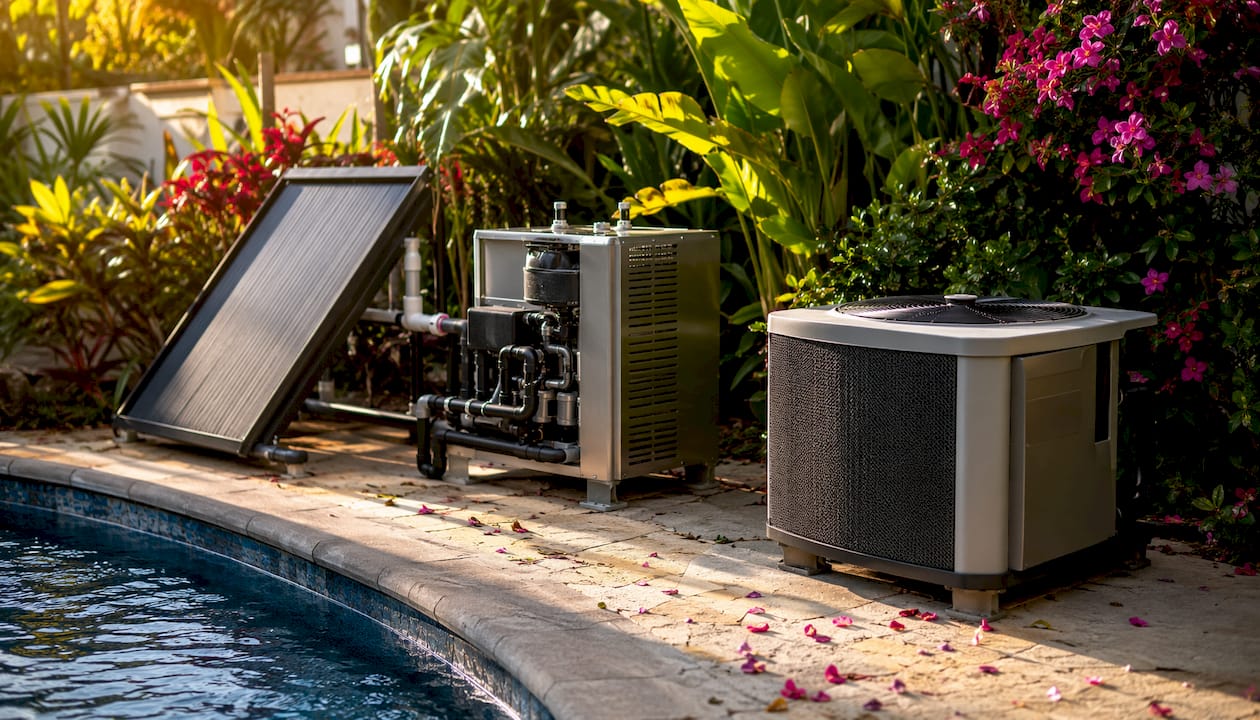
Heat pumps make the most sense for Florida and other mild-climate states where air temperatures stay above 50°F most of the year. The DOE confirms COPs of 3.0–7.0 under standard test conditions, which translates to substantially lower monthly electricity bills compared to gas. The trade-off is a higher upfront cost ($3,500–$7,000 installed) and slower warm-up times.
Gas heaters are the right call when you need the pool or spa hot within an hour, or when winter temperatures regularly drop below 50°F. They heat at 1–3°F per hour regardless of outdoor conditions. Note that some jurisdictions have restricted gas installations for new construction, so check local code before committing.
Solar collectors cost almost nothing to run after installation but depend entirely on sun exposure and heat slowly. They work well as a supplement in sunny climates, not as a standalone solution for on-demand heating.
Pro Tip: If you want year-round warmth with occasional rapid heating, a heat pump plus a gas backup is the most flexible setup. The heat pump maintains temperature day-to-day; the gas unit fires up when you need the spa hot in 30 minutes.
What maintenance tasks prevent the most common pool HVAC problems?
Triage in this order: water chemistry first, then circulation, then airflow, then electrical and sensors.
- Test and balance water chemistry weekly. Acidic water (pH below 7.2) acts like a slow solvent on heat exchangers and seals, causing premature corrosion even in titanium-grade units.
- Clean skimmer and pump baskets weekly. Restricted flow forces the pump motor to work harder and starves the heater of adequate water volume.
- Backwash or rinse filters monthly. A dirty filter raises system pressure and cuts heat transfer across the exchanger.
- Clear heat pump coils and confirm 20-inch clearance. Blocked airflow reduces COP and can overheat electrical components.
- Inspect refrigerant lines and electrical connections annually. Refrigerant loss and loose connections are the two leading causes of sudden heat pump failure.
For pool heater troubleshooting, use this symptom-to-cause map:
| Symptom | First check | Likely cause | Estimated repair range |
|---|---|---|---|
| No heat output | Flow switch, thermostat | Sensor failure or low flow | $150–$400 |
| Heat on but slow temp rise | Filter pressure, coil condition | Dirty filter or blocked coil | $75–$200 |
| Unit cycling on/off | Refrigerant level, airflow | Low refrigerant or restricted airflow | $200–$600 |
| Strange noises | Fan blade, compressor mounts | Debris in fan or loose hardware | $100–$350 |
| Heat exchanger corrosion | Water chemistry log | Chronic low pH | $500–$1,500+ |
Estimates are ballpark ranges for diagnostic and repair labor; parts costs vary by unit.
Clogged filters and blocked coils reduce heat transfer more than a marginally undersized heater. Fix the maintenance gap before assuming the unit needs replacement. For detailed pool heater maintenance steps, Lucasair’s guide walks through each task with the right service intervals.
Which upgrades cut your pool operating costs the most?
Automation, variable-speed pumps, and smart scheduling deliver the largest recurring savings without sacrificing comfort.
- Variable-speed pump: Runs at lower RPMs during off-peak hours, cutting pump energy use significantly compared to single-speed models. Pairs directly with heat pump controls for coordinated scheduling.
- Pool cover (every night): The 70% evaporation reduction means your heater runs far fewer hours. A $100–$150 solar cover paired with any heater outperforms a premium heater with no cover.
- Time-of-use scheduling: Program the pump and heater to run during off-peak electricity hours. Most utility rates in Florida drop overnight, so heating between 10 PM and 6 AM costs less.
- Smart thermostat or pool automation controller: Lets you set temperature setpoints remotely and monitor run-time from your phone. Prevents the heater from running while the pool is unused.
- Insulated piping and thermal blankets: Reduce standby heat loss between heating cycles, especially for above-ground plumbing runs exposed to cooler air.
Pro Tip: Before adding a variable-speed pump, confirm your existing electrical panel supports the load. Many heat pumps require a 50–60 amp, 240V circuit. Adding a variable-speed pump on the same panel may require a service upgrade — ask your installer before purchasing.
A good water heater maintenance checklist covers corrosion and plumbing checks that apply equally to pool heating equipment, especially heat exchanger connections and supply-line integrity.
When should you call an HVAC technician for your pool?
Call a licensed technician when the problem involves refrigerant, electrical components, persistent leaks, suspected heat exchanger corrosion, or when you need correct sizing for a new installation. DIY checks get you to the symptom; a pro finds the cause.
A technician’s inspection covers:
- System sizing verification against pool surface area and local climate data
- Refrigerant level and leak check
- Electrical safety: connections, capacitors, contactors
- Heat exchanger integrity and corrosion assessment
- Dehumidifier operation and drain routing (indoor pools)
- Ventilation balance and airflow measurement
Expect a diagnostic visit to take 60–90 minutes. Simple repairs (sensor swap, coil cleaning, minor electrical) often complete the same day. Parts-dependent repairs typically add 3–7 business days for lead time. Diagnostic fees generally run $75–$150; repair costs vary by the table in the previous section.
A preventative maintenance agreement changes the math. Instead of reacting to failures, you get scheduled tune-ups, documented inspection reports, and priority scheduling during peak season. For pool owners, that means a technician checks refrigerant, cleans coils, tests sensors, and verifies water flow before summer demand peaks.
“Annual professional inspection is recommended for inverter-style heat pumps — periodic electronic checks and accurate sensor calibration are what preserve efficiency and prevent hard-start damage over time.” — BluePlenum inverter maintenance guidance
Lucasair’s pool heater repair service covers diagnostics, refrigerant service, heat exchanger assessment, and full installation for Central Florida homeowners. One service call that catches a refrigerant leak early costs far less than a compressor replacement six months later.
Key Takeaways
Consistent pool HVAC care comes down to five habits: cover the pool, keep chemistry balanced, protect circulation, maintain clearance around equipment, and schedule annual professional service.
| Point | Details |
|---|---|
| Cover the pool nightly | A pool cover cuts evaporation heat loss by up to 70%, reducing heater and pump run-hours. |
| Balance water chemistry | Keep pH at 7.2–7.6; acidic water corrodes heat exchangers and shortens heater life. |
| Keep circulation clean | Clear skimmer baskets weekly and clean filters monthly to maintain heat transfer efficiency. |
| Maintain 20-inch clearance | Heat pumps need open airflow on all sides; blocked coils reduce COP and risk electrical damage. |
| Lucasair annual tune-up | Lucasair’s preventative maintenance agreements include coil cleaning, refrigerant checks, and sensor testing for Central Florida pool owners. |
Why local context changes everything about pool HVAC
The conventional wisdom in most pool HVAC guides assumes a four-season climate. Florida doesn’t have one. Central Florida’s combination of year-round heat, high humidity, and salt-influenced air creates a maintenance environment that punishes the same neglect twice as fast. Coils corrode faster. Dehumidifiers work harder. And because the pool is usable eleven months of the year, there is no natural off-season that gives equipment a break.
What Lucasair sees repeatedly in Central Florida is not dramatic equipment failure. It’s slow degradation from three compounding problems: pH that drifts low and quietly eats through heat exchanger walls, airflow blocked by overgrown landscaping around the heat pump pad, and pool covers that owners buy but stop using by week three. Each problem alone is manageable. Together, they cut equipment life in half.
The practical adjustment for Florida pool owners is simple: treat pool HVAC maintenance as a monthly habit, not an annual event. Check chemistry and baskets every week. Walk around the heat pump pad once a month and clear anything within 20 inches. Use the cover. And when something sounds or performs differently, call before it becomes a compressor.
*— Results
Lucasair is ready to handle your pool HVAC needs
Central Florida pool owners get one thing most HVAC guides don’t account for: a climate that runs equipment hard, year-round, in humid and sometimes salt-influenced air. That’s exactly the environment Lucasair was built for.
Lucas Air provides pool heater repair, diagnostics, full system installation, and preventative maintenance agreements for residential pool owners across Central Florida. Whether your heat pump has stopped producing heat, your unit is cycling unexpectedly, or you want a technician to verify sizing and refrigerant before summer, the team is ready. Financing options are available for installations and upgrades. For a step-by-step look at what a new installation involves, the HVAC installation guide for homeowners walks through every stage. Book a service call online or call directly — and get a documented inspection report you can actually use.
Sources and further reading
- Heat pump swimming pool heaters — Department of Energy
- Seresco Natatorium Design Guide
- How to Maximize the Life of Your Pool Heat Pump — TURBRO
- Inverter pool heat pump maintenance tips — BluePlenum
- Annual Pool Heater Maintenance Checklist — The Pool Co
- Pool Heaters: Types, Costs, and the Best Option for Your Climate — JDesigns
- Pool Heating Options: The Complete Homeowner’s Playbook — Poolify
- Pool Heater Repair — Lucasair
- Preventative Maintenance Agreement — Lucasair
Recommended
- Step by Step Pool HVAC Maintenance for Lasting Comfort – Lucas Air Conditioning and Heating
- How HVAC enhances pool comfort and energy efficiency – Lucas Air Conditioning and Heating
- Pool Heater Troubleshooting Guide for Every Owner – Lucas Air Conditioning and Heating
- What is a pool heat pump: Central Florida homeowner’s guide – Lucas Air Conditioning and Heating
