
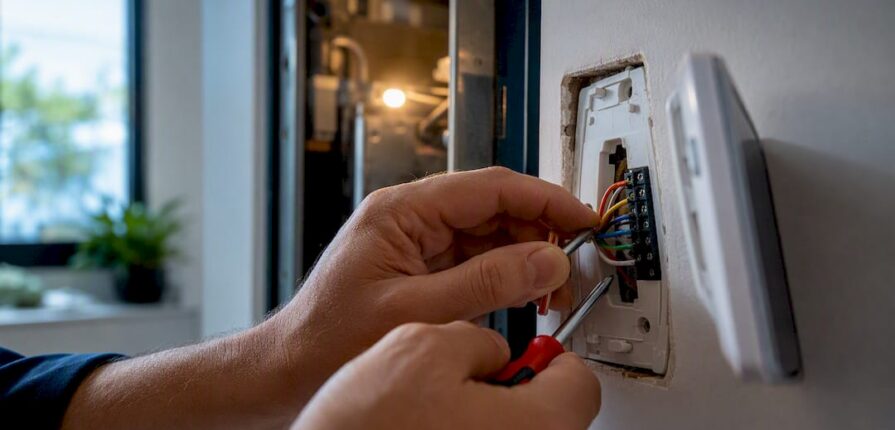
Most homeowners pay between $200 and $500 total for a smart thermostat installation, with the thermostat itself running $70 to $280 and professional labor adding roughly $100 to $250. Expect the low end when your home already has a C‑wire and a straightforward single‑zone system. Expect the high end, or more, when a technician has to run new wiring, add a C‑wire, or work around a heat pump’s extra control wires.
TL;DR:
- Wiring issues, especially the absence of a C-wire, can add hundreds of dollars to installation costs, with added wiring sometimes costing $100 to $300.
- Homes with existing C-wires and straightforward single-zone systems typically keep total costs between $200 and $400, while complex setups with heat pumps may reach $650 or more.
- Homeowners should verify C-wire presence before installation to avoid unexpected expenses, and keep in mind that wiring customization is the main factor driving up prices.
- DIY installation is feasible and inexpensive if a C-wire exists, but complex wiring or heat pump systems generally warrant professional help to prevent system damage.
- Rebates and careful planning can cut overall costs, with ENERGY STAR thermostats offering about 8% savings, and combining installation with HVAC tune-ups often provides additional value.
Table of Contents
- Smart Thermostat Pricing: Unit Cost, Labor, and Real Example Totals
- What Drives the Price Up: C‑Wires, Heat Pumps, and Electrical Work
- Should You Install It Yourself or Hire a Pro?
- Cutting Your Net Cost: Rebates, Bundling, and Buying Smart
- What Happens During the Service Visit
- Lucas Air: How We Price Smart Thermostat Installs
- The Real Lesson in These Numbers
- Get an Itemized Smart Thermostat Quote From Lucasair
- Sources
Smart Thermostat Pricing: Unit Cost, Labor, and Real Example Totals
The thermostat itself splits into three rough price bands. Budget models from brands like Honeywell or Amazon typically cover basic scheduling and remote app control. Mid‑range models, including most Ecobee and Google Nest units, add features like room sensors or geofencing. Premium models with advanced sensors, HomeKit compatibility, or multi‑zone support cost more.
Labor pricing follows two common models. Some HVAC companies charge a flat installation fee, often $100 to $200 regardless of how long the job takes, while others bill hourly, typically $75 to $150 an hour with a one‑hour minimum plus a service call fee. Either way, most installations take 30 to 90 minutes, so a straightforward swap rarely eats into serious labor hours.
Here’s how that plays out in practice:
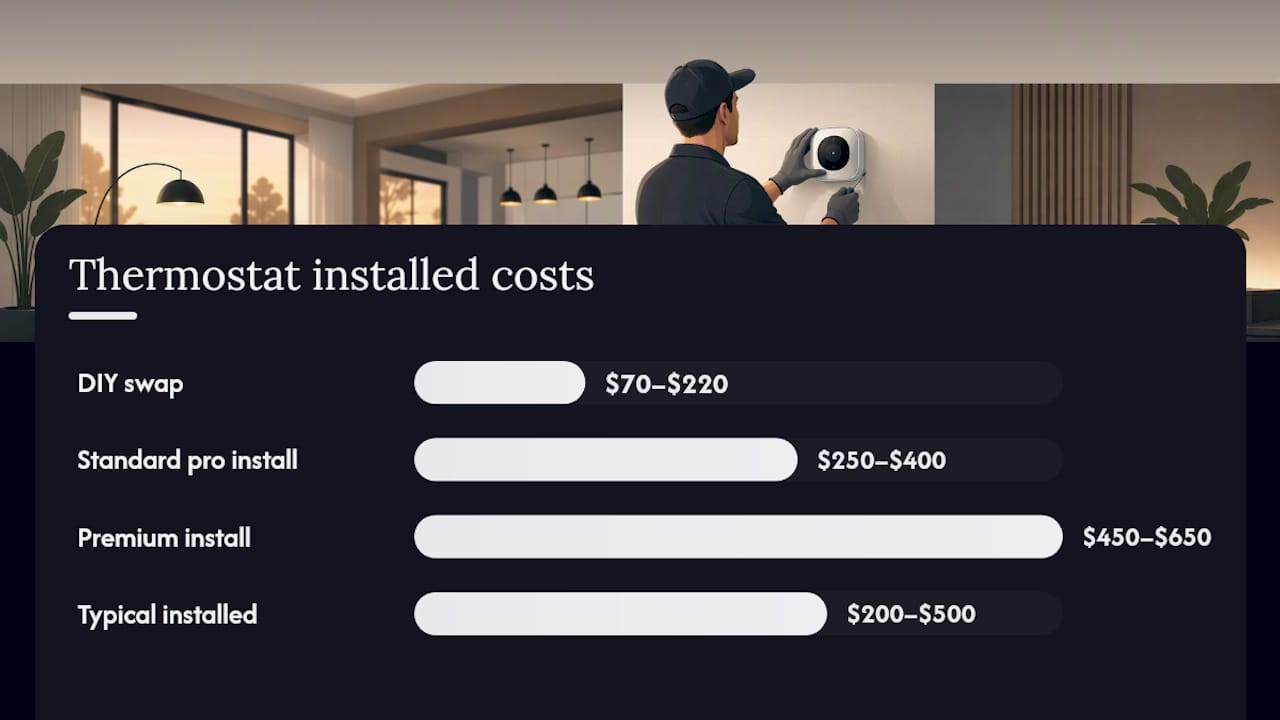
- DIY swap with existing C‑wire: thermostat only, $70 to $220, zero labor cost.
- Standard professional install, single zone: $250 to $400 total, including a mid‑range thermostat and one hour of labor.
- Premium install with new wiring or a heat pump: $450 to $650 total, once you add C‑wire installation and extra configuration time.
Typical installed cost: Industry cost guides put the average full installation, thermostat plus labor, right around $350, with a normal range of $200 to $500. Where you land inside that range mostly comes down to your existing wiring and how many zones you’re controlling.
What Drives the Price Up: C‑Wires, Heat Pumps, and Electrical Work
Wiring is the single biggest wildcard in any smart thermostat quote. Older homes built before central air conditioning became standard often lack a dedicated C‑wire, the low‑voltage wire that supplies continuous power to a smart thermostat’s screen and Wi‑Fi radio. Adding one, or running a power extender kit instead, typically costs $100 to $300 for parts and labor, depending on how far the technician has to fish wire through walls.
A handful of other factors push quotes higher:
- Heat pumps and dual‑fuel systems need auxiliary heat wiring configured correctly, or you risk triggering expensive backup heat strips unnecessarily.
- Multistage systems (two‑stage cooling, variable‑speed blowers) require thermostats that support staged control, plus extra setup time to match settings to your equipment.
- Relocating the thermostat to a better wall means new wire runs and drywall patching, often adding $50 to $150.
- Electrical add‑ons like a new transformer, surge protector, or panel work for older wiring can add well beyond $200, since that’s licensed electrician territory rather than routine HVAC labor.
Metro‑area labor rates also tend to run 10% to 25% above national averages, while rural jobs sometimes carry a travel fee baked into the quote.
Pro Tip: Ask your installer to confirm C‑wire status over the phone before the visit. A quick photo of your existing thermostat’s wiring, sent ahead, often lets a technician quote you accurately instead of padding the estimate for unknowns.
Should You Install It Yourself or Hire a Pro?
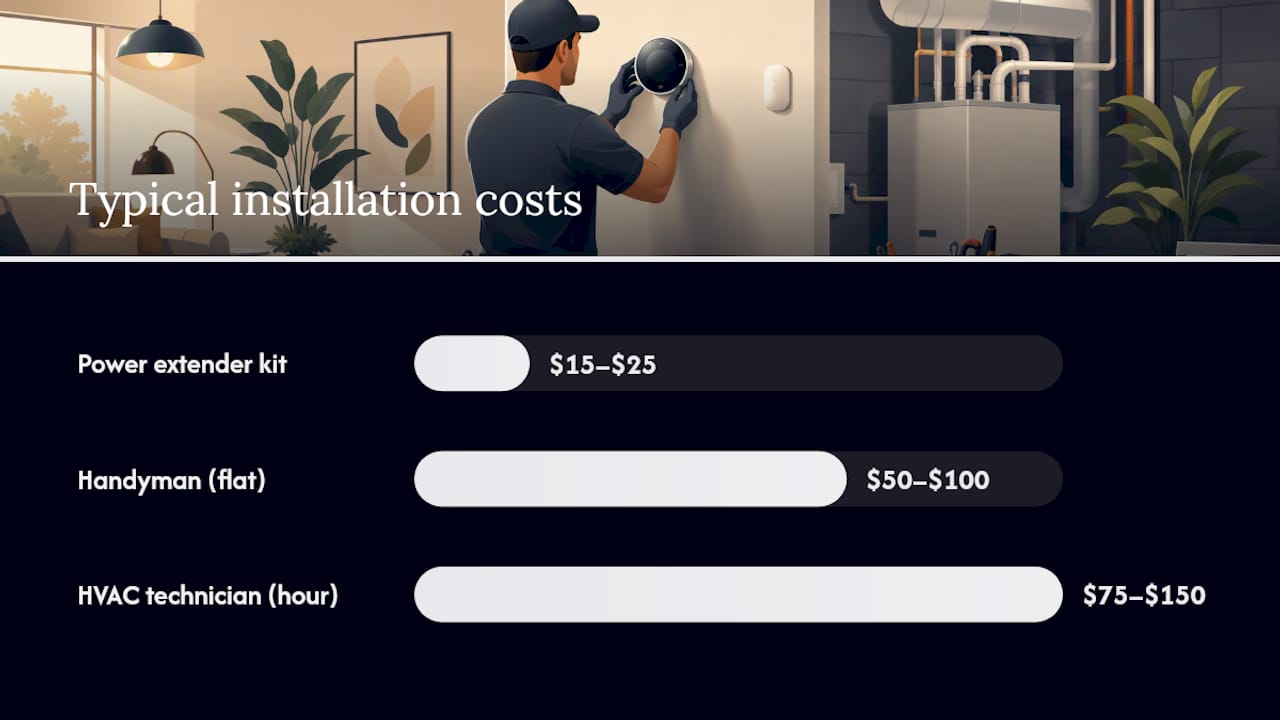
If your current thermostat already has a C‑wire, swapping in a smart model yourself takes about 20 to 45 minutes and costs nothing beyond the device itself. A basic screwdriver and your phone’s camera, to snapshot the old wiring before you disconnect anything, cover most of what you need. Even without a C‑wire, a power extender kit runs $15 to $25 and often avoids a full wire run.
Here’s when to bring in help instead of going it alone:
- You can’t identify every wire’s function. If the old thermostat’s wiring isn’t labeled or diagrammed, Consumer Reports recommends calling a professional rather than guessing.
- You have a heat pump with auxiliary or emergency heat wiring. Miswiring aux heat can spike your bill or damage the system.
- You’re unsure of your system’s voltage or amperage. An HVAC technician typically charges $75 to $150 an hour; an electrician runs similar or slightly higher for panel‑related work; a handyman may handle simple swaps for $50 to $100 flat, but won’t touch wiring additions.
- The thermostat needs to move to a new wall. That’s a job for someone comfortable with drywall and fishing new wire, as any experienced tradesperson will tell you about DIY relocation projects.
Cutting Your Net Cost: Rebates, Bundling, and Buying Smart
ENERGY STAR certified thermostats save an average of about 8% on heating and cooling costs, which adds up over a few winters even before you factor in a rebate. Many utility rebate programs permit bring‑your‑own thermostats, allowing customers to buy devices and self-install or hire installers before applying for rebates. A few tactics stretch your dollar further:
- Check your utility’s rebate page before buying anything. Some rebates require a specific certified model, and applying after the fact with the wrong receipt gets rejected.
- Keep your itemized receipt and the thermostat’s model number. Most programs need both to process a rebate claim.
- Bundle the installation with a scheduled HVAC tune‑up visit to avoid paying a separate service call fee twice.
- Buying the thermostat yourself and paying only for labor often beats letting an installer mark up the unit price, sometimes by $30 to $50.
What Happens During the Service Visit
A typical visit starts with a compatibility check against your HVAC system, followed by wiring diagnosis to confirm what’s already run to the wall. From there, the technician mounts the new thermostat, wires it, and configures the schedule and any smart features before running a test cycle to confirm heating and cooling both engage properly. Standard single‑zone installs wrap up in under an hour; jobs needing new wiring or multistage configuration can stretch to two hours or more.
Every written quote should list three things clearly: the thermostat model and price, labor cost, and any wiring or parts needed. Before booking, ask what happens if the thermostat isn’t compatible once the technician opens the wall plate, and whether the device carries a manufacturer or installer warranty.
Lucas Air: How We Price Smart Thermostat Installs
A visit from Lucas Air starts with a full compatibility and wiring check, not a guess. We confirm C‑wire status, evaluate your system type (including heat pumps and multistage setups), and walk you through exactly what the install involves before any work starts. Our current $70 system check offer gives homeowners a low‑cost way to get that diagnosis done, and financing options are available if you’re bundling the thermostat with a larger HVAC upgrade.
If you want a written, itemized estimate before committing to anything, our HVAC installation questions checklist covers exactly what to ask any installer, including us.
The Real Lesson in These Numbers
The conventional advice on this topic treats the thermostat itself as the expensive part. It isn’t. The device is often the cheapest, most controllable line item in the whole job. Wiring is where budgets go sideways, and it’s also the part homeowners are least equipped to diagnose over the phone or through a marketplace app.
If you take one thing from this guide, let it be this: get your wiring assessed before you fall in love with a specific thermostat model. A $280 premium unit is worthless if your home needs $300 in electrical work to support it, and a $70 budget model might be all you need if a C‑wire is already sitting behind your wall plate. Rebate programs reward patience, not speed. Read your utility’s rules first, buy second, and let an itemized quote, not a marketing page, tell you what your specific house actually needs.
— Results
Get an Itemized Smart Thermostat Quote From Lucasair
Lucasair skips the guesswork that inflates so many installation quotes. Instead of a flat “smart thermostat install” line item with no detail, you get a real wiring check, a clear breakdown of device versus labor, and honest guidance on whether your system needs a C‑wire, a heat pump adapter, or nothing extra at all.

Based in Eustis and serving homeowners across Central Florida, Lucasair offers HVAC services with a focus on clear communication to customers. If you’re weighing a smart thermostat against a broader system upgrade, our step‑by‑step installation guide walks through what a full visit looks like, and financing options may be available when bundling thermostat installation with other HVAC services. Request your itemized estimate today and find out exactly what your home needs before you spend a dollar on equipment.
Sources
Cost ranges throughout this guide come from field data compiled by HomeGuide and HomeAdvisor, rebate guidance from ENERGY STAR, and wiring cost data from Angi. These sources track actual installer pricing and program rules rather than manufacturer marketing figures.
- How Much Does It Cost to Install a Smart Thermostat? (HomeGuide)
- How Much Does Smart Thermostat Installation Cost (HomeAdvisor)
- How Much Does It Cost to Install a C‑Wire? (Angi)
