

TL;DR:
- Improving clinic air quality involves reducing airborne contaminants through source control, ventilation, and filtration. Proper assessment, compliance with standards, and ongoing monitoring are essential to protect patient safety and maintain reimbursement rates.
Clinic air quality improvement is defined as a structured process of reducing airborne contaminants in healthcare settings through source control, ventilation enhancement, and air filtration. Poor indoor air quality in healthcare leads to hundreds of millions of infections annually and $200 billion in costs in high-income countries. That scale makes indoor air quality (IAQ) a clinical and financial priority, not a facilities afterthought. The U.S. EPA ranks source control, ventilation, and air cleaning as the three core IAQ strategies, in that order. ASHRAE 170 and OSHA set the binding standards that every clinic administrator must meet to protect patients, staff, and reimbursement rates.
What does a clinic air quality improvement guide cover?
A practical guide to clean air in clinics starts with understanding what you are managing. Indoor air quality in a clinical setting involves controlling particulate matter (PM2.5), volatile organic compounds (VOCs), CO2 levels, humidity, and airborne pathogens simultaneously. Each of these pollutants behaves differently and requires a different response. Getting all of them under control requires a layered strategy, not a single fix.
ASHRAE 170 requires space-by-space air change rates and pressure relationships that vary by room type. A consulting room has different requirements than a procedure room or an isolation suite. That distinction matters because a one-size approach to HVAC maintenance will leave critical gaps in compliance.
Failure to comply with air quality standards affects CMS reimbursement programs and HCAHPS scores, risking up to 2% loss of base Medicare DRG payments. For a mid-size clinic, that loss adds up fast. OSHA also requires hospitals to provide a workplace free of recognized dangers, and documented IAQ failures risk citations and financial penalties.
What are the essential prerequisites for improving clinic indoor air quality?
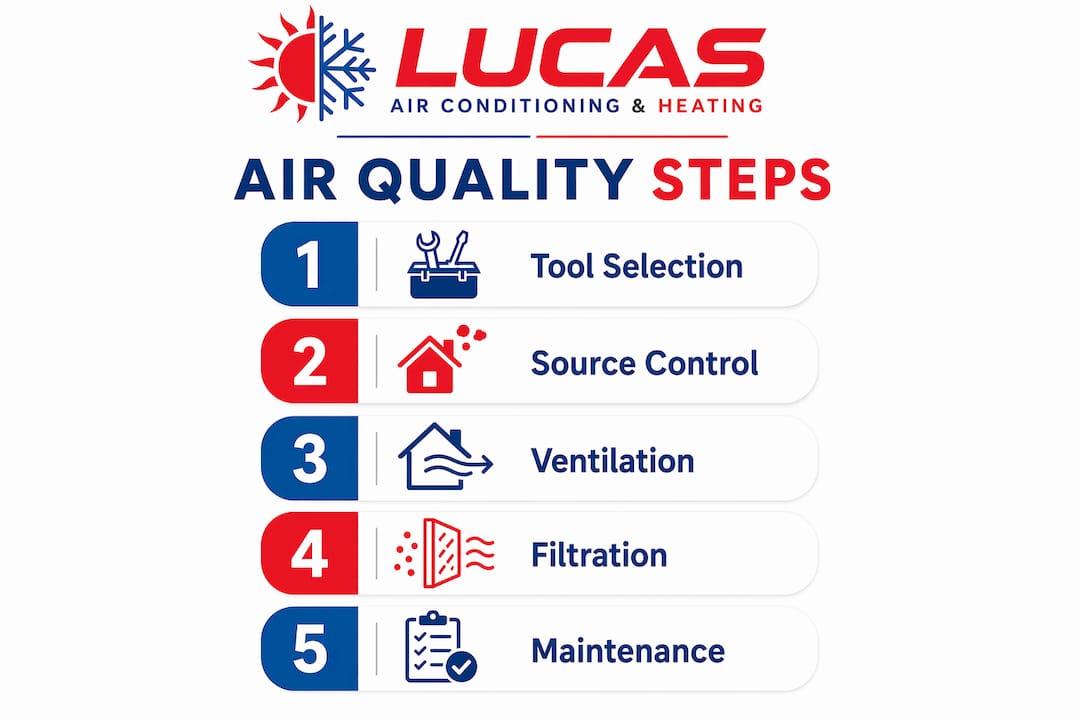
Before upgrading any equipment, you need a clear picture of your current air quality status. Three foundational tools make that possible.
Assessment and monitoring tools every clinic needs:
- Space classification matrix: A documented room-by-room record of required air change rates, pressure relationships, and filtration specifications per ASHRAE 170. This is the baseline document for any compliance audit.
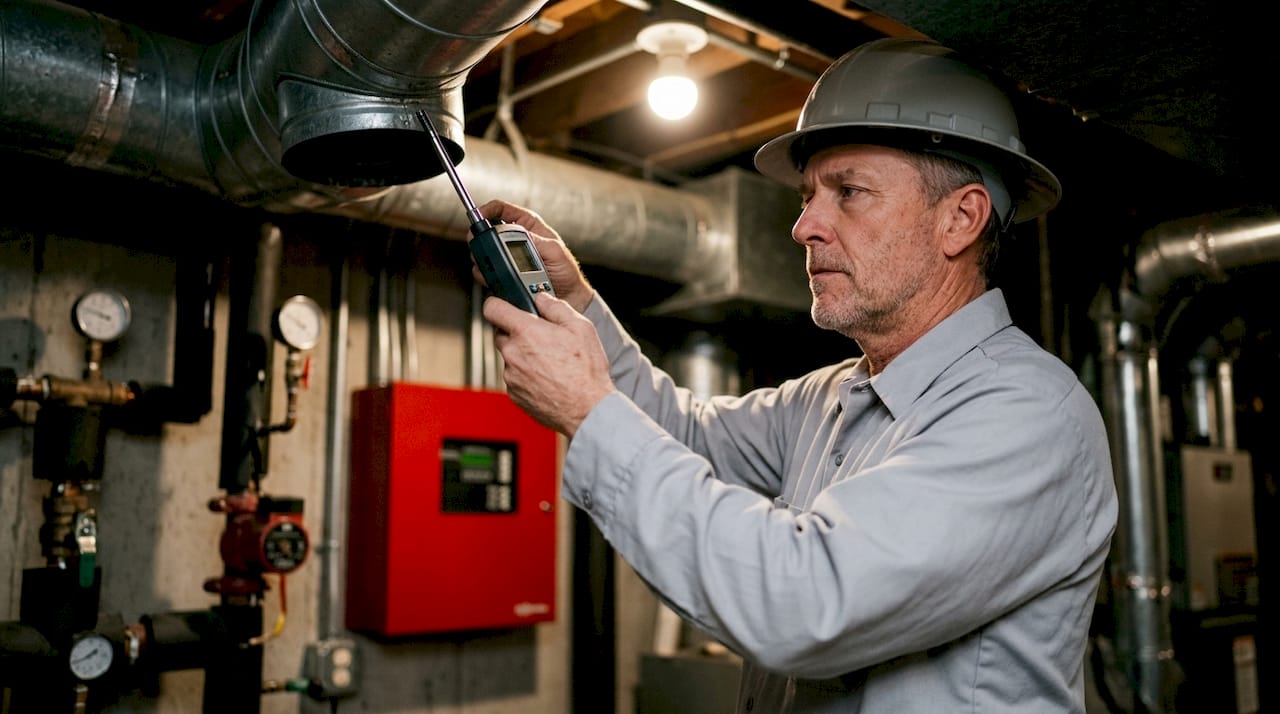
- Real-time IAQ sensors: Devices monitoring PM2.5, VOCs, CO2, temperature, and humidity give you live data rather than snapshots. Sensor-based monitoring is non-negotiable because VOC contamination can be odorless at dangerous levels, making human detection unreliable.
- Professional HVAC audit: A specialized audit goes beyond standard maintenance. It verifies actual air change rates and pressure balance compliance, which standard HVAC contracts routinely miss.
| Tool | What it measures | Why it matters |
|---|---|---|
| PM2.5 sensor | Fine particulate matter | Tracks airborne pathogen carriers |
| VOC monitor | Chemical off-gassing | Detects odorless toxic compounds |
| CO2 sensor | Ventilation adequacy | Signals insufficient fresh air exchange |
| Humidity sensor | Moisture levels | Prevents mold growth and pathogen survival |
| Pressure differential gauge | Room-to-room airflow direction | Confirms isolation and procedure room integrity |
Pro Tip: Schedule your professional HVAC audit before purchasing any new equipment. The audit results will tell you exactly where to spend your budget first.
The space-by-space classification matrix documenting air change rates, pressure relationships, and filtration specifications by room type is critical for compliance audits. Without it, you cannot demonstrate compliance to accreditation bodies, regardless of how well your system actually performs.
How to implement source control measures in clinic settings?
Source control is the most impactful IAQ strategy, according to the EPA. It means eliminating or reducing pollutants at their origin rather than cleaning them up after they spread. In a clinical environment, the most common indoor pollutants are VOCs from cleaning products and disinfectants, odors from medical waste, and airborne pathogens generated during procedures.
Practical source control steps for clinics:
- Switch to low-VOC and fragrance-free cleaning products and disinfectants throughout the facility.
- Train cleaning staff on protocols that minimize aerosolization, such as wiping rather than spraying directly onto surfaces.
- Implement a fragrance-free policy for staff and visitors to reduce chemical load in patient areas.
- Store chemicals in sealed, ventilated cabinets away from patient care zones.
- Schedule high-emission cleaning tasks during low-occupancy hours to reduce patient and staff exposure.
Policies matter as much as products. A fragrance-free environment policy, enforced consistently, removes a significant VOC source that many clinics overlook. The same applies to limiting the use of aerosol sprays near air intake vents.
Pro Tip: Calibrate your VOC sensors on a quarterly schedule. Sensor drift is common, and an uncalibrated sensor can give false-low readings that mask real contamination events.
What ventilation system enhancements effectively improve clinic air quality?
Ventilation is the second pillar of IAQ management. The goal is to dilute indoor contaminants with clean outdoor air at a rate appropriate for each room’s risk level. Consulting rooms, procedure rooms, and isolation suites each require different air change rates. Getting those rates right requires a system designed for clinical use, not a standard commercial HVAC setup.
Mechanical ventilation with heat recovery (MVHR) systems balance fresh air delivery with energy efficiency. They bring in outdoor air while recovering heat from exhaust air, which reduces operating costs without sacrificing air change rates. For Central Florida clinics where cooling loads are high year-round, this balance is especially valuable.
Maintaining correct pressure relationships between patient and non-patient areas is non-negotiable. Procedure rooms and isolation suites require negative pressure to prevent contaminants from escaping into corridors. Waiting rooms and reception areas typically operate at neutral or positive pressure. A pressure imbalance in either direction creates an infection control risk.
Ventilation best practices for clinical facilities:
- Verify air change rates room by room against ASHRAE 170 requirements, not just building averages.
- Use dedicated exhaust systems for high-risk areas like exam rooms and isolation suites.
- Install MVHR units to maintain fresh air delivery without excessive energy costs.
- Conduct smoke pencil or tracer gas tests to confirm actual airflow direction at doorways.
- Review and update your ventilation design whenever you change a room’s clinical function.
HVAC design costs for clinics range from $4,000 to $10,000 for small clinics and $10,000 to $30,000 or more for larger facilities with complex ventilation needs. That investment is significant, but it is far smaller than the financial exposure from a CMS reimbursement reduction or an OSHA citation. Understanding the benefits of HVAC upgrades helps administrators build the business case for capital expenditure.
How to select and maintain air filtration systems in clinics?
Air filtration is the third layer of a complete IAQ strategy. The right filter for a waiting room is not the right filter for a procedure room. Matching filtration technology to clinical risk level is what separates an effective system from one that merely looks compliant on paper.
MERV 8 filters are appropriate for low-risk areas like administrative offices and storage rooms. HEPA filters are the standard for procedure rooms, isolation suites, and any area where airborne pathogen control is critical. HEPA filtration at 6–12 air changes per hour can reduce airborne viral load by 40% to 90% in healthcare facilities. That range reflects the difference between a properly sealed system and one with bypass leaks.
Filtration system selection and maintenance checklist:
- Match filter grade to room risk level: MERV 8 for low-risk areas, HEPA for high-risk clinical zones.
- Use sealed filter housings to prevent air bypass around filter media.
- Install multi-stage filtration setups with a pre-filter to extend HEPA filter life.
- Add portable HEPA air cleaners in high-occupancy waiting areas as a supplement to central HVAC filtration.
- Inspect filters monthly and replace on a schedule tied to actual pressure drop readings, not just calendar dates.
- Document every filter change with date, filter grade, and technician signature for compliance records.
Properly sealed HEPA filtration systems with multi-stage filtering provide up to 90% airborne viral load reduction when operated at 6–12 air changes per hour. That performance depends entirely on installation quality and ongoing maintenance. A HEPA filter installed in a leaky housing performs no better than a MERV 8. Reviewing your HVAC systems for clinics with a qualified technician confirms whether your current setup actually delivers rated performance.
Pro Tip: Schedule filtration system inspections at the same time as your regular HVAC maintenance visits. Combining them reduces downtime and ensures nothing gets skipped between service cycles.
What common challenges arise when improving clinic air quality?
The most common mistake clinic administrators make is assuming that standard HVAC maintenance guarantees ASHRAE 170 compliance. It does not. HVAC maintenance contracts often overlook ASHRAE 170 specifics, requiring specialized testing to verify air change rates and pressure balance compliance. A technician who services residential and light commercial systems may not have the tools or training to perform that testing.
Common pitfalls and how to address them:
- Assuming compliance without verification: Commission an independent air balance test annually, separate from routine maintenance.
- Missing VOC events: VOC contamination can be odorless at toxic levels. Sensor-based monitoring is the only reliable detection method.
- Incomplete documentation: Continuous real-time IAQ monitoring with timestamped data logging creates an auditable record that regulators and accreditation bodies require.
- Pressure relationship drift: Pressure differentials shift as filters load and duct conditions change. Monthly pressure checks catch drift before it becomes a compliance issue.
- Budget-driven shortcuts: Skipping a room type in your classification matrix to save time creates a gap that surfaces during accreditation reviews.
Integrate IAQ data into your quality improvement records and accreditation documentation. Regulators want to see not just that your system is designed correctly, but that you monitor it, respond to events, and document those responses. A medical office HVAC compliance checklist gives you a structured framework for keeping those records current.
Pro Tip: Prioritize upgrades based on patient risk profiles first. Isolation rooms and procedure suites carry the highest infection risk and the highest regulatory scrutiny. Start there, then work outward to lower-risk zones as budget allows.
Key Takeaways
Effective clinic air quality improvement requires source control, correctly specified ventilation, and properly maintained HEPA filtration working together as a system, not as isolated fixes.
| Point | Details |
|---|---|
| Source control comes first | Eliminate VOC and pathogen sources at origin before relying on filtration or ventilation to compensate. |
| ASHRAE 170 compliance is room-specific | Document air change rates and pressure relationships for every room type, not just the facility average. |
| HEPA filtration delivers measurable results | Sealed HEPA systems at 6–12 air changes per hour reduce airborne viral load by 40% to 90%. |
| Continuous monitoring creates compliance records | Timestamped IAQ data logs are required evidence for CMS, OSHA, and accreditation reviews. |
| Budget upgrades by patient risk level | Start with isolation suites and procedure rooms, then expand to lower-risk areas as resources allow. |
Why IAQ is a clinical imperative, not just a maintenance task
Healthcare administrators who treat IAQ as a facilities issue rather than a clinical one consistently underinvest until a compliance event forces their hand. I have seen this pattern repeatedly. The HVAC system gets serviced on schedule, the maintenance log looks clean, and then an accreditation survey reveals that two procedure rooms have been running below their required air change rates for months.
The financial stakes reinforce the clinical ones. Air quality compliance affects CMS reimbursement programs and HCAHPS scores directly. A 2% reduction in Medicare DRG payments is not an abstract risk. For a clinic billing $3 million annually in Medicare, that is $60,000 gone because the HVAC system was not verified against the right standard.
The clinics that get this right treat IAQ data the same way they treat clinical data. They monitor it in real time, respond to deviations, and document everything. That approach does not require a massive capital outlay upfront. It requires a decision to treat air quality as part of patient safety culture, and then building the systems to support that decision.
— Lucasair
How Lucasair supports clinic air quality compliance
Clinics in Central Florida face year-round cooling demands that put constant pressure on HVAC systems designed for patient safety. Lucasair provides commercial HVAC installation, preventive maintenance agreements, and system assessments tailored to healthcare facility requirements.

A preventative maintenance agreement with Lucasair keeps your filtration, ventilation, and pressure relationships verified on a regular schedule, not just when a problem surfaces. The team understands the difference between standard commercial HVAC service and the specialized testing that clinical environments require. Explore the full range of commercial HVAC services available for clinics and medical offices, or contact Lucasair directly to schedule an assessment of your current system against ASHRAE 170 requirements.
FAQ
What is the most effective IAQ strategy for clinics?
The EPA identifies source control as the most impactful IAQ strategy, followed by ventilation and air cleaning. Eliminating pollutant sources at their origin reduces the burden on filtration and ventilation systems.
How often should clinic HVAC systems be tested for ASHRAE 170 compliance?
Clinics should conduct a full air balance test at least annually, separate from routine HVAC maintenance. Standard maintenance contracts do not typically verify air change rates or pressure relationships against ASHRAE 170 requirements.
What MERV rating do clinic procedure rooms require?
Procedure rooms and isolation suites require HEPA filtration, which exceeds the MERV rating scale. MERV 8 is appropriate only for low-risk administrative areas. Using MERV 8 in a procedure room does not meet clinical infection control standards.
Can poor clinic air quality affect Medicare reimbursement?
Yes. Failure to meet air quality standards affects CMS reimbursement programs and HCAHPS scores, with potential losses of up to 2% of base Medicare DRG payments for documented compliance failures.
How do portable HEPA air cleaners fit into a clinic IAQ strategy?
Portable HEPA air cleaners supplement central HVAC filtration in high-occupancy areas like waiting rooms. They are not a replacement for properly designed central systems but provide additional airborne particle reduction where patient density is highest.
Recommended
- How HVAC Systems Help Control Infection: A 2026 Guide – Lucas Air Conditioning and Heating
- How to Improve Indoor Air Quality at Home – Lucas Air Conditioning and Heating
- Best HVAC systems for clinics: types, features & safety – Lucas Air Conditioning and Heating
- Role of air quality in hospitality: a Central Florida manager’s guide – Lucas Air Conditioning and Heating
