
Most AC breakdowns trace back to one of ten problems: dirty filters, refrigerant leaks, failed capacitors or other electrical parts, a frozen evaporator coil, a clogged condensate line, a filthy condenser, thermostat glitches, or a compressor that’s simply worn out. Nine out of ten no-cool service calls come down to a clogged air filter or restricted airflow, which tells you exactly where to start looking. Changing filters regularly and booking a professional tune-up each spring prevents the majority of these failures before they require expensive repairs.
Before you call anyone, run these checks yourself:
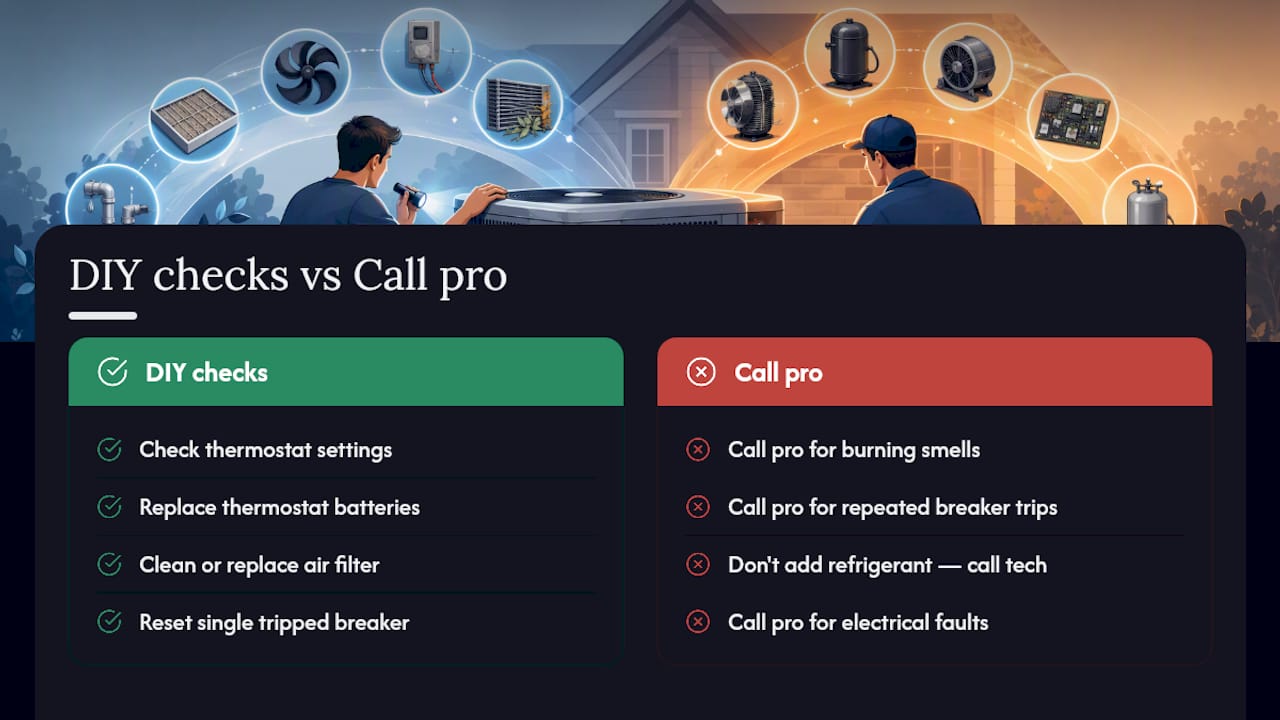
- Is the thermostat set to “cool” with a target temperature below room temperature?
- Is the air filter visibly gray or clogged?
- Has a breaker tripped?
- Is the outdoor unit clear of leaves, mulch, or grass clippings?
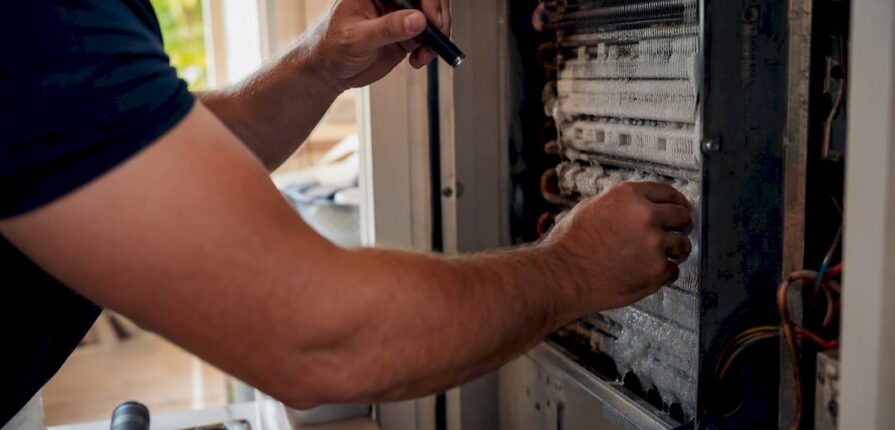
Pro Tip: Keep a small flashlight near your air handler. A quick visual check for ice on the coil or lines takes ten seconds and tells a technician exactly where to start.
Key Takeaways
Most AC breakdowns come from a handful of preventable causes, and catching them early with regular filter changes and an annual tune-up avoids the majority of emergency repairs.
| Point | Details |
|---|---|
| Filters cause most no-cool calls | Nine out of ten no-cool service calls trace back to a clogged filter or restricted airflow. |
| Low refrigerant means a leak | A sealed AC system never “uses up” refrigerant, so low charge always signals a leak needing repair. |
| Frozen coils are a symptom | Ice on the coil usually points to restricted airflow or low refrigerant, not a standalone problem. |
| Annual tune-ups prevent failures | A spring service visit covers electrical connections, coil cleaning, and refrigerant verification. |
| Lucasair handles the full repair cycle | Lucasair offers diagnostics, tune-ups, and repairs across Central Florida with financing available. |
Table of Contents
- Skipping Regular Maintenance and Ignoring the Air Filter
- Why Do Refrigerant Leaks Cause AC Failure?
- Electrical Failures: Capacitors, Contactors, and Wiring
- Thermostat and Control Problems
- Frozen Evaporator Coils and What Causes Them
- Blocked or Dirty Condenser and Outdoor Unit Issues
- Clogged Condensate Drain Lines and Moisture Problems
- Compressor and Motor Failures: When Age Catches Up
- Early Warning Signs Before a Full Breakdown
- How Often Should You Schedule AC Maintenance?
- If Your AC Just Broke: What to Do Right Now
- Why Formicary Corrosion and Capacitor Failures Trip Up Homeowners
- Book a Tune-Up Before the Next Breakdown
- Frequently Asked Questions
- Sources
Skipping Regular Maintenance and Ignoring the Air Filter
A dirty filter doesn’t just make your air dirtier. It starts a chain reaction: restricted airflow forces the blower to work harder, the evaporator coil gets too cold and ices over, and the compressor ends up straining against a system that can’t move air properly. Left long enough, that strain shortens compressor life.
Change standard filters every 30 to 90 days, and lean toward the shorter end if you have pets, run the system constantly, or live somewhere dusty.
- Check the filter monthly for the first few months to learn your home’s real dirt load.
- Keep return air grilles unblocked by furniture or rugs.
- Glance at the visible section of the indoor coil for frost or dust buildup once a season.
Pro Tip: A MERV 8 to 11 filter catches most household dust and allergens without choking airflow the way a MERV 13+ filter can in a residential system not designed for it.
Why Do Refrigerant Leaks Cause AC Failure?
Refrigerant leaks are the second most common reason systems stop cooling, and here’s the part homeowners often miss: an AC system is a sealed loop. It doesn’t consume refrigerant the way a car burns gas. If the charge is low, something is leaking.
Formicary corrosion, a slow chemical reaction between household chemicals and copper tubing, is one of the most common causes of pinhole leaks in AC lines, alongside vibration damage, physical impact, and worn seals at fittings.
Watch for these symptoms:
- A hissing or bubbling sound near the indoor unit
- Ice forming on the refrigerant lines
- Noticeably higher indoor humidity
- The system running nonstop without reaching the set temperature
A licensed technician has to handle any repair since refrigerant work requires EPA Section 608 certification, and simply “topping off” a leaking system without fixing the leak just delays the same failure.
Electrical Failures: Capacitors, Contactors, and Wiring
Electrical components fail more often than most homeowners expect. A worn run capacitor, a pitted contactor, or a loose wire connection can all stop your system cold, and each tends to announce itself differently.
- A humming sound with no fan or compressor movement usually points to a failed capacitor.
- A clicking relay that won’t engage often means a bad contactor.
- A tripped breaker that won’t reset, or trips again immediately, signals a short somewhere in the circuit.
It’s safe to reset a breaker once and check your thermostat’s batteries. Beyond that, stay out of the electrical panel.
If you smell anything burning or the breaker trips more than once, shut the system off at the breaker and call a technician. Repeated resets can mask a wiring fault that starts an electrical fire.
Pro Tip: A loud hum at startup that cuts off after a few seconds, without the fan ever spinning, is the classic sound of a dying capacitor. Note the timing for your technician.
Thermostat and Control Problems
Sometimes the AC unit is fine and the thermostat is lying to it. Dead batteries, a unit set to “heat” or “fan only” by accident, a thermostat mounted in direct sunlight, or buggy smart-thermostat firmware can all mimic a full system failure.
- Confirm the mode is set to “cool” and the fan is on “auto.”
- Swap the batteries even if the screen looks fine.
- Restart a smart thermostat by pulling it off its base for 30 seconds.
- Check mode and set temperature first.
- Replace batteries.
- Reboot the thermostat if it’s a smart model.
A blank screen, exposed wiring, or behavior that resets itself repeatedly means it’s time to call a pro.
Frozen Evaporator Coils and What Causes Them
A block of ice on your indoor coil looks dramatic, but it’s almost always a downstream symptom, not the actual problem. Restricted airflow from a dirty filter or low refrigerant from a leak both starve the coil of the conditions it needs to stay above freezing, and ice builds from there.
Running the system while the coil is frozen forces the compressor to work against a blocked evaporator, which is one of the fastest ways to turn a cheap repair into a compressor replacement.
If you spot ice, shut the system off, flip the fan setting to “on” so it blows without cooling, and give it two to four hours to thaw fully before running the AC again.
Blocked or Dirty Condenser and Outdoor Unit Issues
Your outdoor condenser needs open airflow to reject the heat pulled out of your house. Vegetation growing against the cabinet, leaves packed inside the fan guard, matted debris on the fins, or a dent from a weed trimmer all choke that airflow.
- The unit runs but the house never cools down.
- Head pressure climbs and the compressor works harder than it should.
- The unit sounds noticeably louder than usual.
Keep two to three feet of clearance on all sides and rinse the fins gently with a garden hose. Pro Tip: Never use a pressure washer on condenser fins. The force bends the thin aluminum and permanently reduces the unit’s ability to shed heat, even after the debris is gone.
Clogged Condensate Drain Lines and Moisture Problems
Algae and sludge build up inside the PVC condensate line over a humid summer, and once it clogs, a safety float switch shuts the whole system down to stop water from spilling into your house; for detailed advice, see this guide on condensate drain hygiene.
- Turn off power to the unit at the breaker.
- Pour a cup of boiling water down the drain access, or use a wet/dry vacuum at the outdoor termination point.
Water stains near the air handler or a system that shuts off without warning on a humid afternoon almost always trace back to this exact clog.
If the line still won’t clear, or you’re not comfortable near the electrical connections, that’s a technician’s job.
Compressor and Motor Failures: When Age Catches Up
The compressor is the most expensive part in your system, and most compressor deaths aren’t random. They follow years of smaller neglected problems: chronic low refrigerant, a coil that’s run dirty for seasons, or a capacitor that failed and got “reset” instead of replaced.
- Seized compressors and burned motor windings usually show up in systems 12 to 15 years old or older.
- Regional service data shows most summer breakdowns stem from gradual wear and deferred maintenance rather than sudden random failure.
When a compressor quote approaches half the cost of a new system, replacement is usually the smarter budget call.
Early Warning Signs Before a Full Breakdown
Most systems give you a warning before they quit outright. Rising electric bills with no change in habits, a new buzzing or screeching sound, a musty or faintly burning smell, weak airflow from the vents, and breakers that keep tripping all count as signals worth acting on.
- Check the filter, thermostat setting, breaker, and outdoor fan. That five-minute pass catches most simple issues.
Pro Tip: A burning smell or any hint of gas odor means shut the system off immediately and call a technician the same day. Don’t wait to see if it “clears up.”
How Often Should You Schedule AC Maintenance?
An annual professional tune-up, ideally scheduled every spring before peak heat, covers the tasks homeowners can’t do themselves. If you also run a heat pump for winter heating, a second fall check keeps both seasons covered.
A proper technician visit typically includes:
- Tightening electrical connections at the disconnect and control board
- Measuring motor voltage and amp draw against manufacturer specs
- Cleaning both the evaporator and condenser coils
- Inspecting and flushing the condensate drain
- Verifying refrigerant charge against factory specifications
- Cleaning and adjusting blower components
- Testing thermostat calibration and start cycles
ENERGY STAR’s maintenance guidance lists these exact items as the core of a preventive visit. A preventive maintenance visit typically costs far less than a single emergency compressor replacement, which is the real math behind skipping the tune-up.
If Your AC Just Broke: What to Do Right Now
- Shut the system off at the breaker if you smell burning or see standing water.
- Reset the breaker once. If it trips again, leave it off.
- Swap the filter if it’s dirty, and clear any debris from the outdoor unit.
- Set the thermostat fan to “on” if you suspect a frozen coil.
Before your technician arrives, write down when the problem started, any recent storms or repairs, your last service date, and any unusual sounds or smells. Having your system’s make, model, and age ready saves time on the visit.
Why Formicary Corrosion and Capacitor Failures Trip Up Homeowners
Formicary corrosion eats microscopic tunnels through copper tubing from the inside out, which is why leaks often show no visible damage until refrigerant is already low. A run capacitor stores the electrical jolt a motor needs to start spinning; when it degrades, you get a hum with no movement. And a frozen coil is almost never the root problem itself. It’s a symptom of something upstream.
Pro Tip: Note exactly where ice formed, what sounds you heard, and whether indoor humidity spiked recently. That detail cuts diagnostic time significantly.
A publisher’s take on maintenance and realistic expectations
We recommend a preventive-first approach because the math holds up: a tune-up costs a fraction of a compressor. Expect most systems to need real repairs by year eight to ten, and replacement to become the sensible option somewhere past year twelve.

Book a Tune-Up Before the Next Breakdown
Lucas Air handles the exact failure points covered above: worn capacitors, dirty coils, low refrigerant, and clogged drain lines, through residential tune-ups, diagnostics, and full repairs across Central Florida.

A standard visit follows the same checklist outlined earlier: electrical connections tightened, coils cleaned, refrigerant charge verified, and condensate drains inspected, so you leave with a system that’s actually been checked, not just glanced at. Financing options and maintenance agreements are available for larger repairs or full system replacements. If your unit is already down, schedule a repair online or call to get a technician out. If it’s still running but overdue for service, book a tune-up now instead of waiting for the breakdown that skipped maintenance tends to guarantee.
Frequently Asked Questions
What are the most common causes of AC breakdowns?
Dirty air filters, refrigerant leaks, failed capacitors, frozen evaporator coils, clogged condensate lines, and dirty condensers account for the large majority of residential AC failures.
How often should I change my AC filter to prevent breakdowns?
Every 30 to 90 days, with more frequent changes if you have pets or run the system continuously through a Florida summer.
Can I add refrigerant myself if my AC is low?
No. Low refrigerant means there’s a leak, and handling refrigerant legally requires EPA Section 608 certification, so this is a job for a licensed technician.
Why does my AC ice up even though it’s still running?
Restricted airflow or low refrigerant is almost always the actual cause. The ice itself is just the visible result.
How do I know if my AC problem needs a professional versus a simple fix?
Thermostat settings, dead batteries, dirty filters, and a single breaker reset are homeowner-safe checks. Burning smells, repeated breaker trips, refrigerant issues, and electrical faults need a technician.
Sources
- Maintenance Checklist | ENERGY STAR
- AC Refrigerant Leaks: Leak Detection and Repair – Trane®
- 10 Types of Central AC System Failures H… | LC Heating & Air
Recommended
- Common AC Repair Issues Every Homeowner Should Know – Lucas Air Conditioning and Heating
- AC Tripping Breaker: Quick Checks for Homeowners – Lucas Air Conditioning and Heating
- 7 Benefits of Regular Air Conditioning Maintenance – Lucas Air Conditioning and Heating
- Step by Step AC Troubleshooting for Homeowners – Lucas Air Conditioning and Heating
