
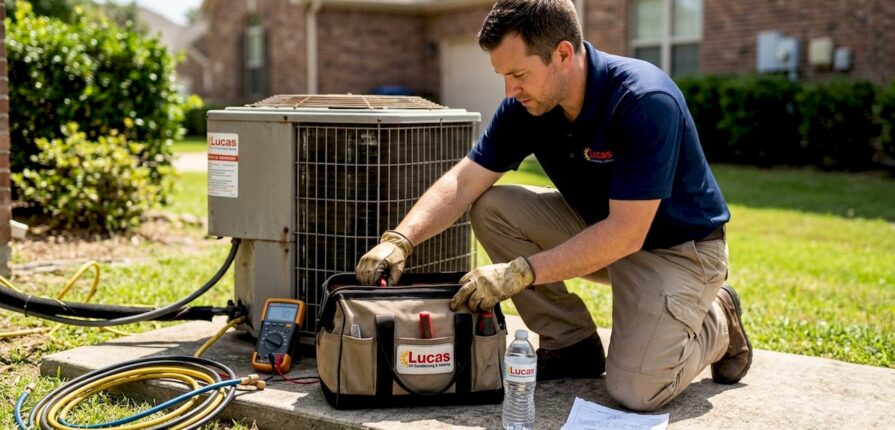
TL;DR:
- Building an effective HVAC toolkit depends on your skill level and certification, focusing on durability, safety, and ergonomics. Homeowners need basic hand tools and non-contact thermometers, while professionals require advanced diagnostic, refrigerant, power, and specialty equipment. Proper tool use and building skills outperform owning numerous tools without training, ensuring safety, efficiency, and long-term cost savings.
Whether you’re a homeowner changing your first filter or a seasoned technician charging refrigerant on a rooftop unit, building the right HVAC maintenance tools list is not as straightforward as it looks. The market is flooded with options, and the wrong choice costs you time, money, and sometimes safety. This guide cuts through the noise with a practical, segmented breakdown of tools for HVAC service across three user groups: homeowners doing basic upkeep, DIY enthusiasts tackling deeper tasks, and HVAC professionals who need precision gear that performs every day.
Table of Contents
- Key takeaways
- 1. How to pick the right tools from any HVAC maintenance tools list
- 2. Essential hand tools for HVAC maintenance
- 3. Critical diagnostic and measuring tools
- 4. Power tools and specialty equipment
- 5. Tool comparison by user group
- What I have learned about building an HVAC tool kit
- Trust the tools. Trust the team behind them.
- FAQ
Key takeaways
| Point | Details |
|---|---|
| Match tools to your skill level | Homeowners need basic hand tools; pros require diagnostic and refrigerant equipment. |
| Safety is non-negotiable | Refrigerant handling without EPA certification is illegal and can damage systems permanently. |
| Diagnostic tools save money | Digital multimeters and manifold gauges catch problems before they become expensive repairs. |
| Comfort tools matter too | Quality gloves, headlamps, and kneeling pads improve safety and efficiency in tight spaces. |
| Right tool beats more tools | Understanding how to use fewer tools correctly outperforms owning a large collection you can’t operate safely. |
1. How to pick the right tools from any HVAC maintenance tools list
Not every tool on a popular list belongs in your bag. The best tools for HVAC work share a few core qualities, and understanding those qualities protects you from wasting money on gear that sits unused or, worse, causes damage.
Durability and reliability are the foundation. HVAC work exposes tools to heat, moisture, refrigerant vapors, and constant vibration. A cheaply made screwdriver or meter will fail mid-job. Stick with brands that back their products with warranties and have a proven track record in the trades.
Safety compatibility is critical, especially for electrical and refrigerant work. Tools used near live circuits need proper insulation ratings. Any tool touching refrigerant lines must be compatible with the refrigerants common to your region, including R-410A and the newer R-32 systems gaining traction.
Ergonomics matter more than most buyers realize. A tool that strains your wrist during a two-hour job is a tool you will put down early. Look for rubberized grips, balanced weight distribution, and intuitive controls.
Here are the criteria to run every tool through before purchasing:
- Will it hold up to daily use or occasional weekend projects?
- Does it meet safety ratings for electrical environments (CAT III or CAT IV for meters)?
- Is it compatible with the refrigerant types in your area?
- Can a person at your skill level use it without formal training?
- Does the price reflect the frequency you will actually use it?
Pro Tip: Before buying any diagnostic tool, check whether your local HVAC supply house offers demo units. Fifteen minutes of hands-on testing beats hours of reading reviews online.
2. Essential hand tools for HVAC maintenance
Every HVAC tool kit essentials list starts here. Hand tools are the backbone of any service call or DIY maintenance session. You cannot do basic work without them, and quality matters more than quantity.
Screwdrivers and nut drivers cover the majority of panel access, control board connections, and duct work. You need a full set of both Phillips and flathead types in multiple sizes, plus extensions for reaching screws in deep cavities. A magnetic tip is a genuine time-saver when you are working inside an air handler with one hand.
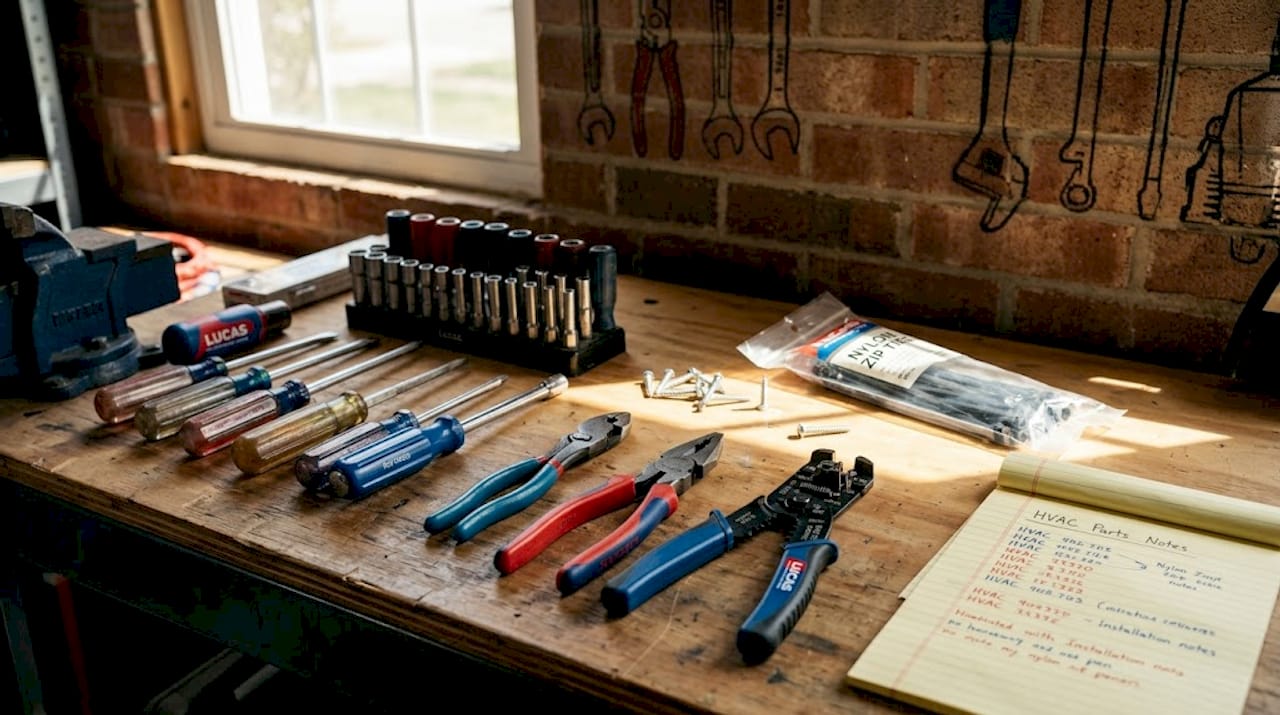
Pliers are just as important. Linesman pliers handle wire work cleanly. Needle-nose pliers reach into tight terminal blocks. Channel-lock pliers (also called tongue-and-groove pliers) grip refrigerant lines and conduit fittings that no standard pair will hold.
Wrenches round out the hand tool section. Adjustable wrenches handle most fittings, but a dedicated set of combination wrenches in SAE and metric sizes will serve you better on actual equipment. Add a pipe wrench for larger line connections and a tube cutter for clean copper cuts.
Wire strippers and cutters are non-negotiable for anyone working beyond just filter changes. A quality wire stripper with multiple gauge slots prevents nicked conductors, which cause failures at the worst possible moment.
Pro Tip: Invest in a dedicated tool bag with labeled pockets rather than a generic toolbox. When you are under an air handler in a crawl space, knowing exactly where your needle-nose pliers are without looking saves real time.
Homeowners doing basic upkeep can start with just screwdrivers, nut drivers, and pliers. DIYers and pros need the full lineup. A 7-step maintenance checklist can help you identify exactly which tasks you will be tackling and match your tool purchases to real job requirements.
3. Critical diagnostic and measuring tools
This is where the difference between guessing and knowing shows up. HVAC diagnostic tools let you measure what the system is actually doing instead of relying on symptoms alone.
Digital multimeters and clamp meters are the starting point for all electrical troubleshooting. A clamp meter reads amperage without breaking the circuit, which is both safer and faster. Multimeters check voltage, resistance, and continuity across contactors, capacitors, and control boards.
Manifold gauge sets are required for any refrigerant work. Digital manifold gauges operate in a range of 0 to 800 PSI with ±0.5% accuracy, making them far more reliable than analog sets for modern high-efficiency systems. They show you exactly what is happening on both the high and low sides of the refrigerant circuit.
Vacuum pumps and micron gauges work together during system evacuation. A micron gauge confirms the system has reached a deep enough vacuum before you introduce refrigerant. Skipping this step leaves moisture in the system and shortens compressor life significantly.
Leak detectors save you from chasing symptoms for hours. An electronic leak detector sniffs out refrigerant at concentrations your nose will never catch. Paired with UV dye and a UV light, you have a two-method approach that finds even the smallest leaks.
Multifunction diagnostic tools are changing the way pros work in the field. The Fluke 561 HVAC Pro measures temperature, pressure, and vacuum in a single device, which reduces the number of instruments you carry and the time spent switching between them. The trend toward these multifunction diagnostic instruments is accelerating because it directly cuts diagnostic time on complex calls.
Here is how diagnostic tools stack up by user group:
- Homeowners: non-contact thermometer for supply/return air temperature checks
- DIY enthusiasts: digital multimeter, clamp meter, and basic leak detector
- HVAC professionals: full manifold gauge set, vacuum pump, micron gauge, electronic leak detector, and a multifunction unit like the Fluke 561
4. Power tools and specialty equipment
Power tools move HVAC work from feasible to efficient. For installation and heavy repair tasks, hand tools alone will not get the job done in any reasonable timeframe.
Cordless drills and impact drivers are the workhorses of any service van. A quality 18V or 20V platform from a reputable brand handles sheet metal screws, equipment mounting bolts, and ductwork connections without fatigue. The impact driver specifically shines on self-tapping screws into metal, where a standard drill would stall or cam out.
Reciprocating saws cut through existing ductwork, conduit, and even structural elements when you are running new line sets. An angle grinder handles metal burrs and cuts that a reciprocating saw cannot reach cleanly.
For commercial work especially, SDS-Plus rotary hammers are a separate category entirely. Generic hammer drills do not deliver enough impact force for anchoring equipment into concrete slabs or masonry walls. Using the wrong tool here is both slow and a safety risk.
Refrigerant recovery machines belong in the specialty tools category, and they come with serious legal weight. Handling refrigerants improperly without EPA certification is illegal and environmentally harmful. This is not a tool for DIYers. Proper operation of recovery machines requires hands-on demonstration before first use.
Safety gear rounds out this section and gets ignored far too often. Cut-resistant gloves, ANSI-rated safety glasses, and non-slip footwear are not optional on a job site. Treating them as optional is how technicians get hurt on otherwise routine calls.
Pro Tip: Build your cordless tools around a single battery platform. Mixing brands means carrying multiple chargers and battery types. A unified ecosystem from one manufacturer saves space, weight, and money over time.
A professional HVAC cordless tool ecosystem built around drill, impact driver, and reciprocating saw covers the vast majority of installation and repair tasks while keeping your tool bag manageable.
5. Tool comparison by user group
This table gives you a fast reference for matching HVAC maintenance equipment to the right user, budget range, and skill requirement.
| Tool | Homeowner | DIY Enthusiast | HVAC Professional |
|---|---|---|---|
| Screwdriver and nut driver set | Yes, basic set | Yes, full set | Yes, full set with extensions |
| Digital multimeter | Optional | Yes | Yes, CAT III rated |
| Manifold gauge set | No | Optional | Yes, digital preferred |
| Vacuum pump and micron gauge | No | No | Yes |
| Cordless drill and impact driver | Optional | Yes | Yes, professional platform |
| Refrigerant recovery machine | No | No | Yes, EPA required |
| Non-contact thermometer | Yes | Yes | Yes |
| Electronic leak detector | No | Optional | Yes |
| Fin comb and soft brush | Yes | Yes | Yes |
| Rotary hammer | No | No | Yes, for commercial work |
| Price range | $50 to $200 | $200 to $800 | $1,500 and up |
A key point the table reinforces: homeowners doing basic maintenance, like filter changes every 30 to 90 days and clearing debris from outdoor units, genuinely do not need diagnostic tools. Spending money on a manifold gauge set you cannot legally use makes no sense. Start with the basics, learn the benefits of regular maintenance, and upgrade your tool set as your skills grow.
One homeowner-specific note worth emphasizing: when cleaning condenser coils, use a garden hose on low pressure and a fin comb for bent fins. High-pressure washers flatten condenser fins permanently, restrict airflow, and reduce efficiency in ways that cannot be undone without professional fin straightening.
What I have learned about building an HVAC tool kit
In my experience watching technicians and DIYers approach this the wrong way, the mistake is almost always the same. They buy the list instead of building the skill. A new technician who understands how to use ten tools correctly will outperform someone who owns fifty tools and has not been shown how half of them work. Learning tool purpose and safe operation matters more than tool quantity. That is not a soft opinion. It is what separates a confident technician from a liability on a job site.
I have also seen seasoned pros underestimate the impact of comfort tools. Quality LED headlamps, leather gloves, and ergonomic kneeling pads sound like minor additions, but they change how long you can work effectively in a tight attic or on a rooftop unit in Florida heat. The technician who is physically comfortable makes fewer mistakes and moves faster.
My practical advice: build your HVAC tool kit essentials in three phases. Start with hand tools and a non-contact thermometer. Add electrical diagnostic tools when you are ready for deeper troubleshooting. Only move into refrigerant-side tools after proper certification and training. Rushing that progression does not save time. It creates problems that cost more to fix than the tools ever would have saved.
— Lucasair
Trust the tools. Trust the team behind them.

Having the right HVAC maintenance equipment puts you ahead of most homeowners, but tools only go so far. When a system needs more than what your kit can handle, the team at Lucasair is ready to step in. Based in Eustis, Florida and founded by Army Veteran Cameron Lucas, Lucasair provides residential and commercial installation, expert repairs, and scheduled tune-ups designed to keep your system running at peak efficiency year-round.
If you want the peace of mind of never missing a maintenance cycle, Lucasair’s preventative maintenance agreement gives you scheduled professional service at a predictable cost. For systems that are already showing signs of trouble, the professional repair service gets you back to comfort fast. Reach out online or call to schedule. Central Florida homeowners and business owners get local expertise without the national chain pricing.
FAQ
What tools do HVAC technicians need most?
The most used tools for HVAC service are screwdrivers, nut drivers, pliers, a digital multimeter, and a manifold gauge set. Professionals add vacuum pumps, leak detectors, and refrigerant recovery machines as their work scope expands.
Can homeowners use HVAC diagnostic tools?
Homeowners can safely use non-contact thermometers and basic multimeters for surface-level checks. Refrigerant-side tools require EPA certification and should not be operated without proper training and credentials.
How often should homeowners perform basic HVAC maintenance?
Homeowners should change air filters every 30 to 90 days and clear at least two feet of space around outdoor units seasonally. These two tasks alone can prevent significant energy loss and extend equipment life.
What is the best entry-level HVAC tool kit for DIY enthusiasts?
A solid starter kit includes a full screwdriver and nut driver set, linesman and needle-nose pliers, a digital multimeter, a non-contact thermometer, a fin comb, and a soft brush for coil cleaning. Budget between $200 and $400 for quality versions of each.
Are multifunctional HVAC diagnostic tools worth the cost?
Yes, for professionals. Devices like the Fluke 561 HVAC Pro measure temperature, pressure, and vacuum in one unit, cutting diagnostic time and reducing the number of instruments you need to carry on every call.
Recommended
- Essential HVAC Preventative Maintenance Guide for Homeowners
- HVAC Maintenance Checklist for 2026: Avoid Costly Repairs – Lucas Air Conditioning and Heating
- 7 Steps to a Complete Home HVAC Maintenance Checklist
- How to maintain hotel HVAC for efficient guest comfort – Lucas Air Conditioning and Heating
