
TL;DR:
- A radiant barrier is a reflective foil installed in the attic to block radiant heat and reduce cooling costs. Proper installation with an air gap and pairing with insulation and ventilation maximizes energy savings in hot climates. It lowers attic temperatures, cuts cooling bills up to 17%, and requires careful placement to prevent moisture issues.
A roof heat barrier is a reflective material installed in your attic to block radiant heat from transferring into your living space, cutting cooling costs and improving indoor comfort. The industry term for this product is a radiant barrier, and the two names refer to the same technology. The U.S. Department of Energy requires qualifying radiant barriers to have an emittance of 0.10 or lower, meaning they reflect 90% to 97% of incoming radiant heat. That standard matters because it separates effective products from marketing claims. For homeowners and property managers in Florida, Texas, Arizona, and similar climates, a properly installed radiant barrier is one of the most cost-effective upgrades available for energy-efficient roofing.
How does a roof heat barrier reduce thermal transfer?
Radiant heat is the energy that travels in waves from a hot surface to a cooler one, without needing air or physical contact. On a sunny afternoon, your roof deck can reach temperatures well above 150°F. That heat radiates downward into your attic, raising air temperatures and pushing your air conditioner to work harder.
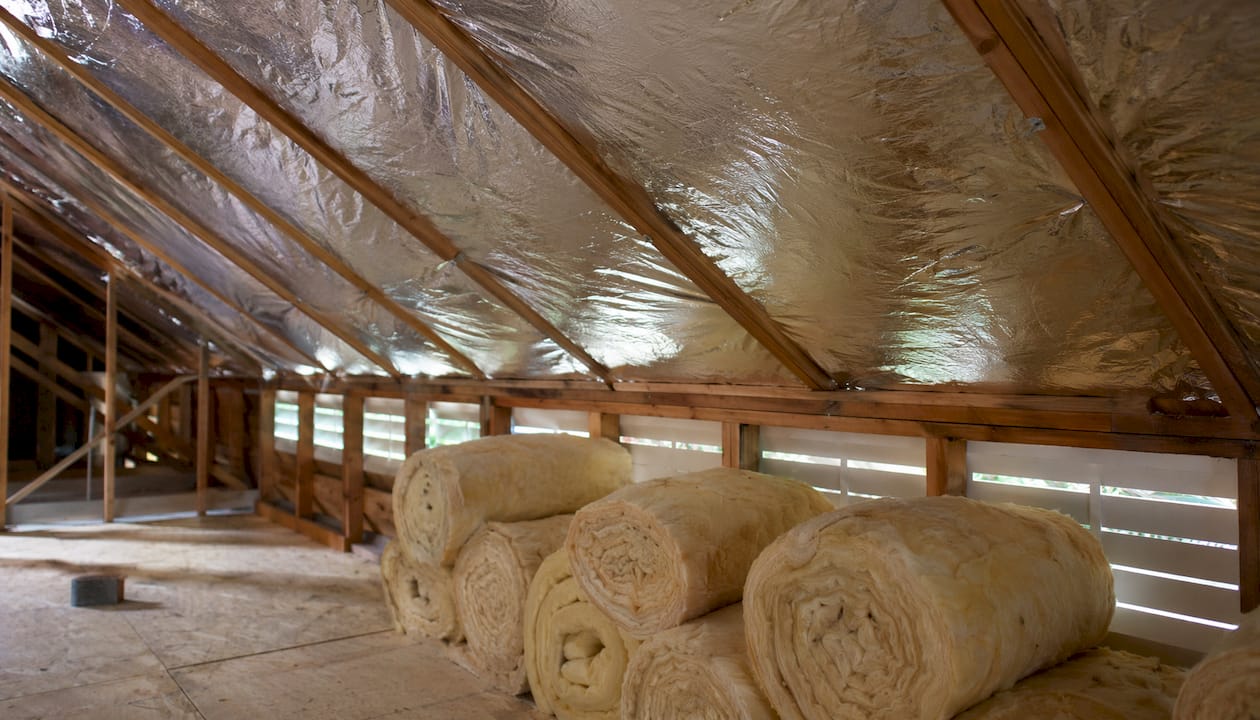
A radiant barrier interrupts this process by reflecting heat waves back toward the roof deck before they reach your attic floor or living space below. The key is the reflective foil surface, which must face an open air space to work. Without that air gap, the foil conducts heat like any other material and loses its reflective benefit entirely.
Understanding the three types of heat transfer helps clarify why radiant barriers are not a complete solution on their own:
- Radiant heat travels as electromagnetic waves. Radiant barriers reflect it.
- Conductive heat moves through solid materials like wood and drywall. Bulk insulation resists it.
- Convective heat moves through air currents. Ventilation and air sealing control it.
Radiant barriers only address radiant heat. That is why pairing them with thermal roof insulation and proper air sealing produces the best results.
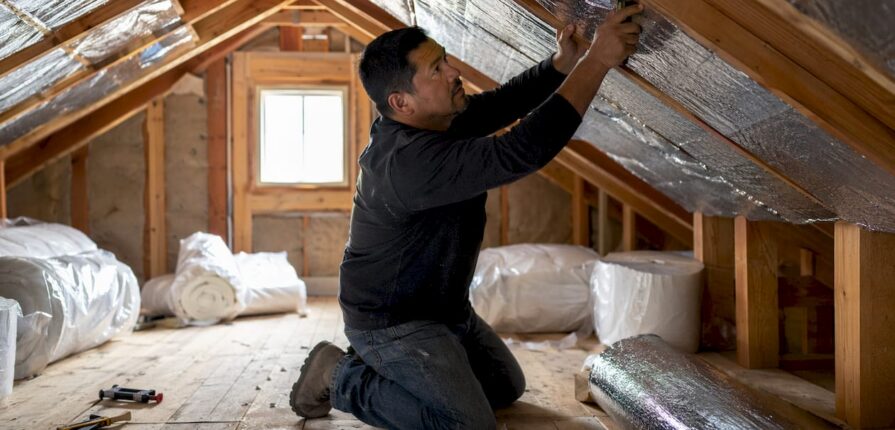
Pro Tip: Install the radiant barrier on the underside of your roof rafters rather than on the attic floor. This placement keeps the barrier closer to the heat source and prevents dust from settling on the reflective surface, which would reduce its effectiveness over time.
The effect on your attic air temperature is significant. When radiant heat is reflected before it enters the attic space, the air inside stays cooler. That directly reduces the thermal load on your HVAC ducts, which often run through the attic and absorb heat before conditioned air even reaches your rooms.
What energy savings can homeowners expect?
Radiant barriers deliver measurable results in hot, sunny climates. Cooling costs drop 5% to 17% in peak summer conditions, with the higher end of that range occurring in Climate Zones 1 through 3, which cover most of Florida, the Gulf Coast, and the Southwest.
The attic temperature reduction is equally impressive. Properly installed radiant barriers lower attic temperatures by 10°F to 30°F during peak afternoon hours. That drop directly reduces the heat load on your air conditioning system and on any ductwork running through the attic.
Homeowners in warm climates report several comfort improvements beyond the energy bill:
- Upper floors and rooms directly below the attic stay noticeably cooler.
- HVAC systems cycle less frequently, reducing wear on the equipment.
- Duct losses decrease because attic air temperatures are lower.
- Homes with poor insulation see the largest immediate comfort gains.
One important caveat: radiant barriers offer minimal benefit in cold climates. Their value depends entirely on intense, persistent solar gain. Radiant barriers perform best in hot climates like Florida, Texas, and Arizona, where the sun drives attic temperatures to extremes for months at a time. If you live in a northern state, bulk insulation upgrades will deliver a better return.
The return on investment for radiant barriers in hot climates typically occurs within 2 to 4 years. That payback period makes them one of the faster-returning energy upgrades available for residential properties in warm regions.
How to install a heat barrier correctly
Installation quality determines whether a radiant barrier delivers its full potential or underperforms. The most common mistake is eliminating the air gap, which is the single most critical requirement for the product to function.
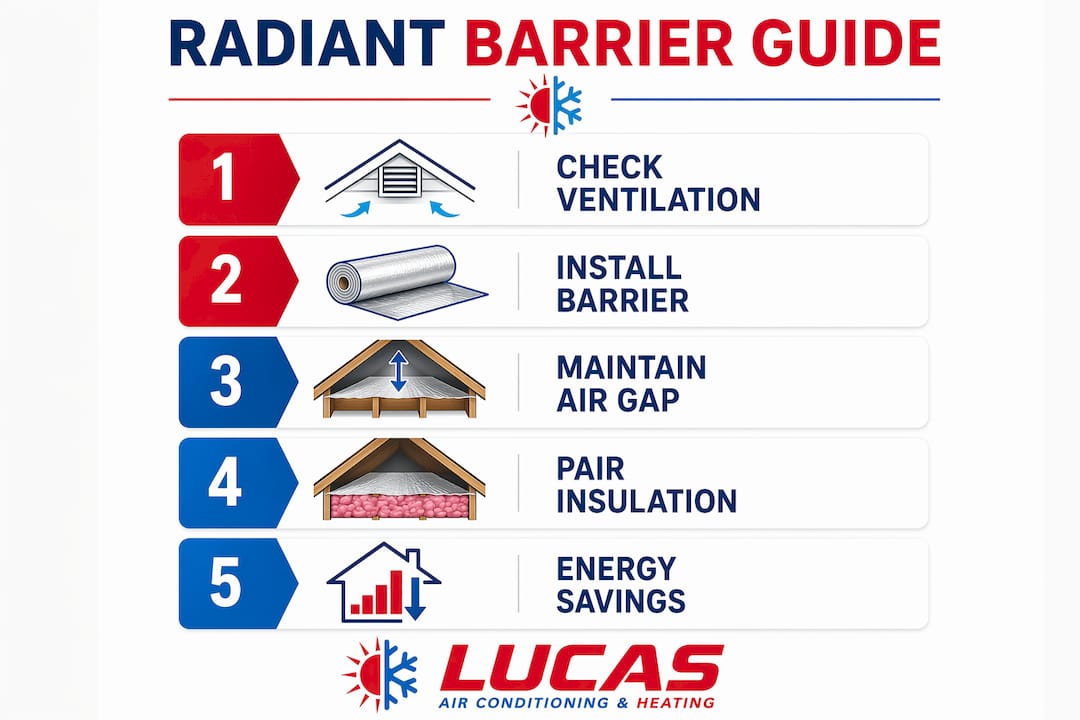
Follow these steps for a correct installation:
- Choose the right placement. Staple the foil to the underside of roof rafters. This keeps the reflective surface facing the open attic air space below, which is where the air gap forms naturally.
- Maintain at least a 1-inch air gap. The reflective surface needs clearance from any solid material. Contact with insulation, wood, or spray foam eliminates the air gap and turns the foil into a conductor instead of a reflector.
- Use perforated foil in vented attics. Perforated radiant barrier foil allows moisture vapor to pass through, preventing condensation from building up behind the barrier. This is especially important in humid climates like Florida.
- Keep the foil tight and continuous. Staple the foil firmly, minimize tears, and avoid sag. Gaps and wrinkles reduce the effective reflective area and lower performance.
- Orient the foil to reduce dust accumulation. Installing foil vertically or at an angle prevents dust from settling on the reflective surface, which would degrade performance over time.
- Never apply spray foam directly onto the foil. Spray foam eliminates the air gap and negates the reflective effect entirely. If spray foam is part of your attic plan, install it separately from the radiant barrier.
Pro Tip: Before starting installation, check your attic ventilation. A poorly ventilated attic traps hot air regardless of the barrier, so fixing ventilation first maximizes the barrier’s impact.
DIY installation is possible for homeowners comfortable working in attic spaces. Professional installation is worth the cost if your attic has complex framing, limited access, or existing insulation that needs to be worked around. Improper installation in humid climates can trap moisture if a non-perforated barrier accidentally creates a vapor barrier, so getting the details right matters. You can review the full HVAC installation process to understand how attic upgrades fit into a broader home comfort plan.
How do radiant barriers compare to other roofing insulation methods?
Radiant barriers are one tool in a larger system. Understanding how they differ from other methods helps you build the right combination for your home.
Radiant barriers have no R-value and do not replace bulk insulation. R-value measures resistance to conductive heat flow, which is how heat moves through solid materials like wood, drywall, and fiberglass batts. Bulk insulation handles that job. A radiant barrier handles radiant heat only.
| Method | What it addresses | R-value | Best use |
|---|---|---|---|
| Radiant barrier | Radiant heat from roof deck | None | Hot, sunny climates |
| Bulk insulation | Conductive and convective heat | Yes | All climates |
| Cool roof coating | Solar radiation at roof surface | None | Hot climates with high sun exposure |
| Attic ventilation | Convective heat buildup in attic air | None | All climates as a baseline |
Cool roofs take a different approach. A reflective roof coating or cool roof material reduces roof surface temperature by 20°F to 50°F by reflecting solar radiation before it even enters the roof deck. Cool roofs act as the first line of defense. Radiant barriers act as the second, catching the heat that still conducts through the deck. Neither replaces the other, and neither replaces bulk insulation.
Attic ventilation controls the air temperature inside the attic space. Ridge vents, soffit vents, and powered attic fans remove hot air before it can transfer into the living space below. Ventilation works alongside radiant barriers rather than competing with them.
Combining radiant barriers with bulk insulation and air sealing addresses all three heat transfer modes at once. That combination delivers the best thermal performance for attics in hot climates. For property managers overseeing multiple units, this layered approach also reduces HVAC maintenance frequency, which connects directly to HVAC preventative maintenance savings over time. If you want to understand how duct condition affects overall system efficiency, the HVAC duct cleaning process is worth reviewing as part of your attic energy plan.
Key Takeaways
A radiant barrier is most effective in hot, sunny climates when installed with a proper air gap, perforated foil, and paired with bulk insulation and air sealing.
| Point | Details |
|---|---|
| Radiant barriers reflect, not insulate | They have no R-value and must be paired with bulk insulation to address all heat transfer types. |
| Air gap is non-negotiable | A minimum 1-inch gap between the foil and any solid surface is required for the barrier to function. |
| Cooling cost savings are real | Properly installed barriers reduce cooling costs by 5% to 17% in hot climates like Florida and Texas. |
| Perforated foil prevents moisture problems | In humid climates, perforated foil allows vapor to pass through and prevents condensation buildup. |
| Layering methods yields the best results | Combining a radiant barrier, bulk insulation, cool roof, and ventilation addresses every heat transfer mode. |
What I’ve learned from recommending radiant barriers in Florida
Radiant barriers are genuinely effective, but they are also one of the most misunderstood upgrades in the residential energy space. Homeowners often install them expecting a complete solution and then feel disappointed when their cooling bills only drop modestly. The barrier did its job. The problem is that conductive and convective heat were still flowing freely because the insulation was thin or the attic was poorly sealed.
The homes where I’ve seen the strongest results share three things: adequate bulk insulation already in place, good attic ventilation, and a radiant barrier installed correctly with a full air gap. Remove any one of those three, and the results drop noticeably. The barrier is a multiplier, not a standalone fix.
The moisture risk in humid climates is real and underreported. Florida’s humidity means that a non-perforated barrier installed incorrectly can trap moisture against the roof deck, leading to mold and wood rot. That outcome is rare with proper installation, but it happens often enough that I always recommend professional assessment before DIY work in high-humidity regions.
Looking ahead, the combination of cool roof coatings, radiant barriers, and high-efficiency HVAC systems represents the most practical path to meaningful energy savings for warm-climate homeowners. Each layer compounds the benefit of the others. The ROI math works out clearly in Climate Zones 1 through 3, and the payback period of 2 to 4 years makes this one of the few home upgrades that genuinely pays for itself.
— Results
Lucasair helps Central Florida homeowners cut cooling costs
Central Florida homeowners face some of the most intense solar heat loads in the country. Lucasair, based in Eustis, Florida, works with homeowners and property managers to assess attic conditions, HVAC performance, and energy efficiency opportunities together rather than in isolation.
When a radiant barrier upgrade pairs with a properly sized and maintained HVAC system, the combined savings are greater than either improvement alone. Lucas Air’s team can walk you through the full HVAC installation process and identify where your home loses the most energy. If your system needs attention alongside your attic upgrades, the residential installation services page covers what Lucasair offers for complete home comfort solutions. Schedule a consultation to get a clear picture of what your home needs.
FAQ
What is a roof heat barrier?
A roof heat barrier, also called a radiant barrier, is a reflective foil material installed in the attic to block radiant heat from transferring from the roof deck into the living space below.
Does a radiant barrier replace attic insulation?
No. Radiant barriers have no R-value and only address radiant heat. Bulk insulation handles conductive heat transfer and must remain in place alongside the barrier.
How much can a radiant barrier lower my cooling bill?
Radiant barriers reduce cooling costs by 5% to 17% in hot, sunny climates, with the highest savings occurring during peak summer months in Climate Zones 1 through 3.
Does the air gap really matter that much?
Yes. Without at least a 1-inch air gap between the reflective foil and any solid surface, the barrier conducts heat instead of reflecting it and provides no meaningful benefit.
Can I install a radiant barrier myself?
DIY installation is possible in straightforward attic configurations, but professional installation is recommended in humid climates or complex attics to avoid moisture problems and ensure the air gap is maintained correctly throughout.
Recommended
- What is energy efficient heating: A homeowner’s guide – Lucas Air Conditioning and Heating
- Energy-saving HVAC tips for Central Florida homeowners – Lucas Air Conditioning and Heating
- Home Ventilation: Your 2026 Guide to Cleaner Air – Lucas Air Conditioning and Heating
- HVAC design considerations every Central Florida home needs – Lucas Air Conditioning and Heating
