
TL;DR:
- Upgrading heating systems improves guest comfort, staff performance, and reduces energy costs.
- Modern appliances like ENERGY STAR and demand-controlled ventilation save up to 30% annually.
- Proactive maintenance and strategic upgrades are more cost-effective than waiting for system failure.
Central Florida restaurant owners often assume that mild winters make heating upgrades a low priority. That assumption is costing them money. Outdated heating systems quietly inflate utility bills, create uneven temperatures that frustrate guests, and strain staff trying to work in uncomfortable conditions. The evidence is clear: restaurants that invest in modern heating technology see measurable gains in energy savings, customer satisfaction, and bottom-line performance. This guide walks you through why heating upgrades matter more than you think, which technologies deliver the best returns, and exactly how to plan a smart, cost-effective upgrade for your operation.
Table of Contents
- How restaurant heating impacts customer comfort and revenue
- Energy savings: Modern heating technologies versus traditional systems
- Common heating system upgrade strategies that work
- Planning your upgrade: Steps for Central Florida restaurants
- Our take: What most restaurant owners get wrong about heating upgrades
- Connect with trusted HVAC upgrade experts in Central Florida
- Frequently asked questions
Key Takeaways
| Point | Details |
|---|---|
| Higher comfort boosts revenue | Up-to-date heating systems keep guests and staff comfortable, raising satisfaction and repeat business. |
| Significant energy savings | Modern upgrades can cut heating and cooling energy costs by up to 30 percent. |
| Multiple upgrade strategies | Options range from low-cost maintenance visits to full high-efficiency system replacements. |
| Easier upgrades with expert help | Following a structured upgrade plan with HVAC specialists ensures better results and fewer disruptions. |
How restaurant heating impacts customer comfort and revenue
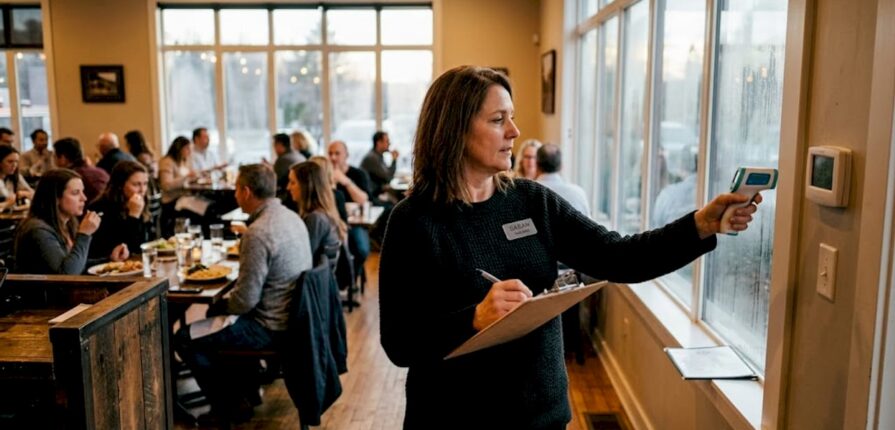
Guest comfort is not just a nice-to-have. It is a direct revenue driver. When diners feel too cold near a drafty entrance or sit under a vent blowing uneven air, they eat faster, tip less, and rarely come back. Thermal discomfort can decrease dining revenue by up to 20%, a number that should get any owner’s attention. That is not a minor inconvenience. That is a significant hit to your monthly income.
Older heating systems are especially prone to creating these problems. They cycle on and off inefficiently, leaving cold spots in dining areas while overheating the kitchen. Drafts near doors and windows become worse when the system cannot respond quickly to temperature changes. Guests notice, even if they never say anything out loud.
Staff performance is affected too. Servers, hosts, and kitchen workers all perform better in stable, comfortable environments. Inconsistent temperatures lead to more errors, lower morale, and higher turnover. Replacing a single front-of-house employee can cost thousands of dollars when you factor in recruiting, training, and lost productivity. A properly functioning heating system is one of the simplest ways to protect that investment.
Central Florida’s winters are mild, but they are not predictable. A cold snap in January or February can drop temperatures fast, and an aging system that has been limping along will struggle to keep up. Here is what outdated heating typically causes in a restaurant setting:
- Uneven temperatures across dining zones, making some tables uncomfortable
- Cold drafts near entrances and windows that guests associate with poor management
- Frequent cycling that wastes energy and wears out components faster
- Slow response times when outdoor temperatures drop suddenly
- Higher repair costs as aging parts fail more often during peak use
“Heat load-based design and demand-controlled kitchen ventilation (DCKV) can reduce exhaust energy use by 30 to 50 percent, making it one of the most impactful upgrades available to commercial kitchens.”
The connection between a well-functioning heating system and a profitable restaurant is not abstract. It shows up in your reviews, your repeat visit rate, and your monthly utility statement.
Energy savings: Modern heating technologies versus traditional systems
Once you understand how comfort ties to revenue, the next question is simple: which technologies actually deliver savings? The answer depends on your current setup, but the gap between old and new systems is significant.
Traditional rooftop units and standard ductwork were designed for general use, not the intense heat loads of a commercial kitchen. They waste energy by running at full capacity regardless of actual demand. Modern alternatives use smarter controls and more efficient components to match output to real-time conditions.
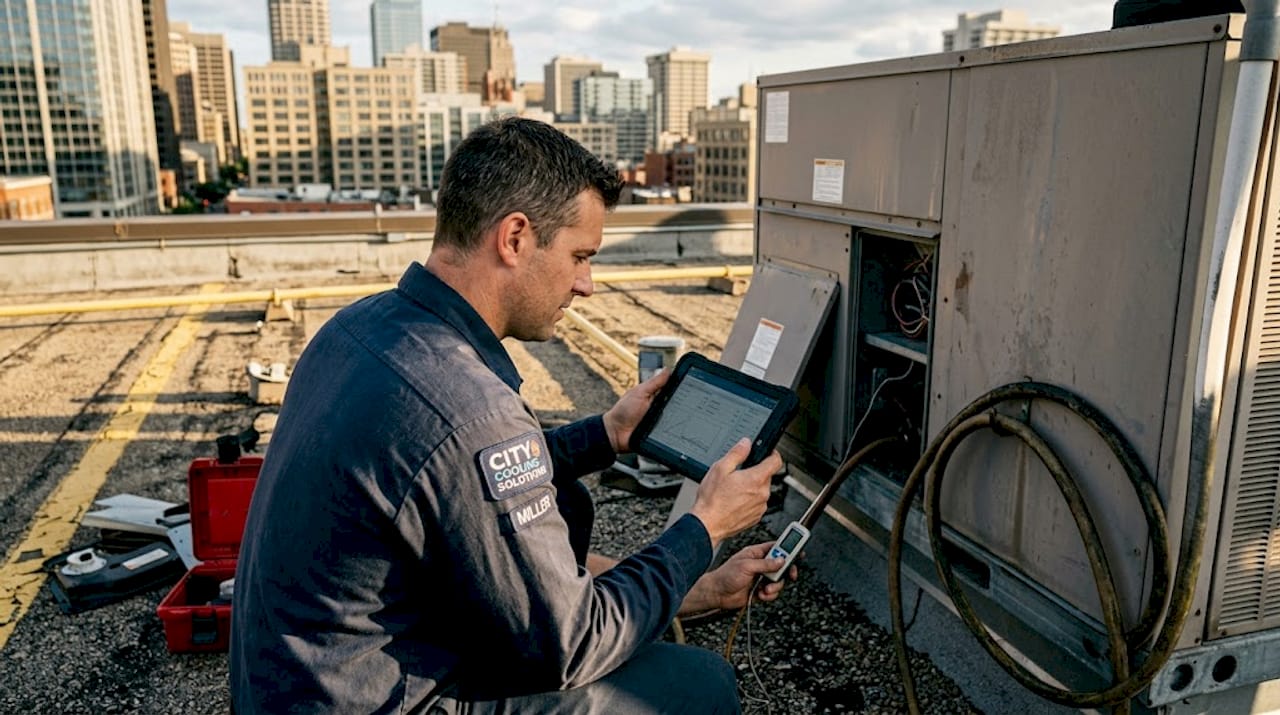
ENERGY STAR equipment saves 10 to 30 percent compared to standard models, and full system upgrades can push total HVAC savings to 25 to 30 percent annually. Even smaller steps like smart thermostats deliver 5 to 20 percent reductions without requiring a full replacement.
Comparison: Annual energy costs by system type
| System type | Estimated annual cost | Potential savings |
|---|---|---|
| Aging standard unit (10+ years) | $18,000 to $24,000 | Baseline |
| ENERGY STAR replacement | $13,000 to $18,000 | 10 to 30% |
| Full upgrade with DCKV | $12,000 to $16,000 | 25 to 30% |
| Smart thermostat add-on only | $15,000 to $20,000 | 5 to 20% |
These numbers vary by restaurant size and usage, but the trend is consistent. Newer systems cost less to run, period.
Demand-controlled kitchen ventilation, or DCKV, is worth highlighting separately. It adjusts exhaust fan speed based on actual cooking activity rather than running at full blast all day. This is a major efficiency gain for kitchens with variable cooking schedules. Combined with heat load-based design, which sizes equipment to the actual thermal demands of your space, you get a system that works smarter instead of harder.
Pro Tip: Before committing to a full replacement, ask your HVAC provider to run an energy audit. You may find that targeted upgrades to specific components deliver strong returns without the cost of replacing everything at once. Exploring the HVAC upgrade benefits available to commercial properties can help you frame the right conversation with your contractor.
Common heating system upgrade strategies that work
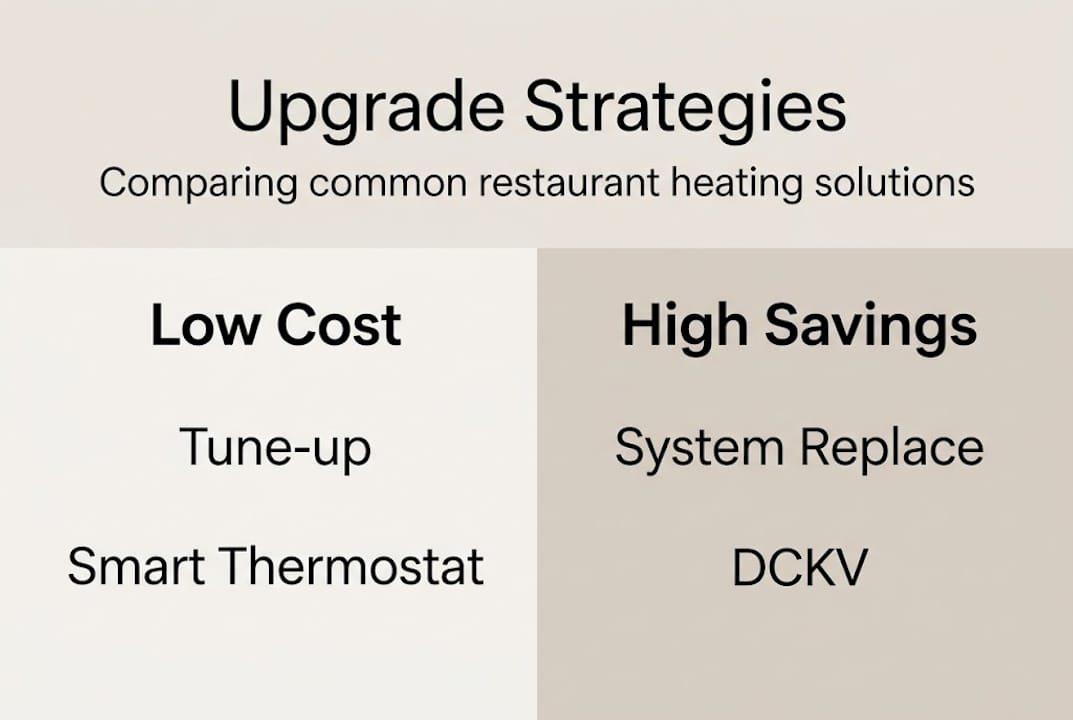
Not every restaurant needs a full system overhaul. The right strategy depends on your equipment age, budget, and how much disruption you can absorb. Here are the most effective upgrade paths, ranked by investment level.
- Professional maintenance tune-up. This is the fastest win. A thorough inspection, cleaning, and calibration can immediately boost efficiency and catch problems before they become expensive failures. Maintenance alone saves 5 to 15 percent on energy costs. For a restaurant spending $20,000 per year on HVAC energy, that is $1,000 to $3,000 back in your pocket with minimal upfront cost.
- Smart thermostat and controls upgrade. Adding programmable or smart thermostats to existing equipment is low-cost and delivers fast returns. These devices learn your schedule, reduce heating during off-hours, and prevent the system from working overtime when the restaurant is empty.
- Variable-speed motor installation. Replacing fixed-speed motors with variable-speed alternatives allows the system to ramp up and down based on demand. This reduces wear and energy use simultaneously, making it a strong mid-range investment.
- Full system replacement. When equipment is over 10 to 15 years old, replacement often makes more financial sense than continued repairs. New units are dramatically more efficient and come with warranties that reduce your risk.
Upgrade strategy comparison
| Strategy | Upfront cost | Energy savings | Best for |
|---|---|---|---|
| Maintenance tune-up | Low | 5 to 15% | All restaurants |
| Smart thermostat | Low to moderate | 5 to 20% | Smaller spaces |
| Variable-speed motors | Moderate | 10 to 20% | Mid-size operations |
| Full system replacement | High | 25 to 30% | Aging equipment |
Pro Tip: Never skip annual maintenance to save money in the short term. Neglected systems lose efficiency fast and fail at the worst possible times, like a busy Friday night in January. Review your upgrade strategies options and use a restaurant HVAC checklist to stay on top of your system’s needs throughout the year.
The biggest pitfall we see is owners waiting until a system fails completely before acting. At that point, you have no time to compare options, negotiate pricing, or schedule installation at a convenient time. Proactive upgrades almost always cost less than emergency replacements.
Planning your upgrade: Steps for Central Florida restaurants
Knowing which upgrade path fits your restaurant is one thing. Executing it without disrupting your business is another. A clear plan makes the difference between a smooth transition and a chaotic week of service interruptions.
Start with these evaluation steps before you commit to anything:
- Conduct a heat load calculation. This determines how much heating capacity your space actually needs, based on square footage, occupancy, kitchen equipment, and ventilation. Sizing equipment correctly prevents both under-performance and energy waste.
- Review your current equipment age and condition. Systems over 10 years old are likely candidates for replacement. Younger systems may just need maintenance or targeted upgrades.
- Assess your ductwork. Leaky or poorly insulated ducts waste a significant portion of the energy your system produces. Duct sealing or replacement may be part of your upgrade plan.
- Check for local rebates and incentives. Florida utility providers and energy programs often offer rebates for ENERGY STAR equipment and efficiency upgrades. These can meaningfully offset your upfront costs.
- Schedule a professional site visit. An HVAC specialist can identify issues that are not visible during a casual walkthrough and provide a tailored recommendation based on your specific operation.
“Heat load-based design and maintenance should be coordinated for best results, ensuring that new equipment is sized correctly and maintained from day one to maximize efficiency and lifespan.”
Timing matters too. Plan upgrades during your slowest season or schedule work during off-hours to minimize guest impact. Create a brief communication plan for your staff so they know what to expect during installation. A well-informed team handles disruptions more calmly and keeps service quality consistent. Follow a clear upgrade planning workflow and stay current with the latest heating upgrade tips specific to Florida’s commercial market.
Our take: What most restaurant owners get wrong about heating upgrades
Here is the honest truth: most Central Florida restaurant owners treat heating upgrades as a grudge purchase. They wait until something breaks, spend the minimum to fix it, and move on. That mindset is leaving real money and real competitive advantage on the table.
The restaurants that invest proactively in comfort systems are the ones that build loyal regulars. Guests do not always know why they prefer one spot over another, but they feel it. A dining room that is consistently comfortable, even during an unexpected cold snap, signals that the owner cares about the experience. That impression sticks.
There is also a staff retention angle that almost nobody talks about. High turnover is one of the biggest costs in the restaurant industry. Comfortable working conditions are a tangible benefit that employees notice and appreciate. A reliable heating system is part of that.
Finally, in Florida, heating upgrades are not just about winter. Ventilation improvements and demand-based controls extend system life through the long cooling season too. The more benefits of upgrading go well beyond a lower utility bill. They include longer equipment life, better air quality, and a dining environment that keeps people coming back.
Connect with trusted HVAC upgrade experts in Central Florida
Upgrading your restaurant’s heating system is one of the smartest investments you can make for guest comfort, staff retention, and long-term energy savings. The data is clear, the technology is proven, and the process is manageable with the right partner.
At Lucas Air Conditioning and Heating, we work with Central Florida restaurant owners and managers to design upgrade solutions that fit their budget and their operation. Whether you want to explore upgrade benefits, understand the Florida-specific reasons to act now, or get started with our commercial installation services, we are ready to help. Reach out today to schedule a site visit and get a tailored recommendation from a team that knows Central Florida’s climate inside and out.
Frequently asked questions
How much can I really save by upgrading my restaurant’s heating system?
A full system upgrade can reduce HVAC energy use by 25 to 30 percent, while routine professional maintenance alone delivers 5 to 15 percent in savings without major upfront cost.
What’s the most cost-effective first step for improving restaurant heating?
Start with a professional maintenance check. It boosts efficiency immediately and helps you determine whether a full upgrade makes sense for your specific system and budget.
Are there incentives or rebates for upgrading commercial heating in Central Florida?
Yes. Local utility providers and state energy programs frequently offer rebates for ENERGY STAR-rated equipment and efficiency improvements, so it is worth checking before you purchase.
Do smart thermostats make a big difference for restaurants?
Smart thermostats can cut heating and cooling costs by 5 to 20 percent, especially in restaurants where occupancy and cooking schedules vary throughout the day.
