
TL;DR:
- Sweating air ducts develop when warm, humid air contacts cold duct surfaces, causing condensation. Untreated moisture leads to mold, water damage, and HVAC inefficiency, but fixing insulation, sealing leaks, and controlling indoor humidity prevents the problem. Proper system sizing and routine maintenance are essential for long-term control of duct condensation.
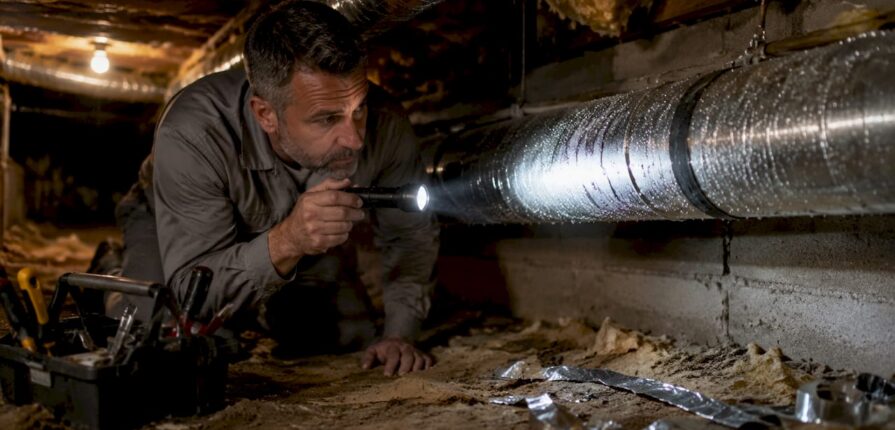
Sweating air ducts are defined as ductwork that develops condensation on its outer surface when warm, humid air contacts cold metal or flex duct walls. This is the same physics behind a cold glass of water sweating on a summer day. Left untreated, moisture in air ducts leads to mold growth, water stains, structural damage, and a measurable drop in HVAC efficiency. Industry guidance for 2026 recommends keeping indoor relative humidity between 30% and 50% to prevent condensation and mold. Homeowners and property managers who understand the root causes can fix the problem permanently rather than chasing symptoms.
What causes sweating air ducts and how does humidity play a role?
Duct sweating occurs when the outer surface of ductwork drops below the dew point of the surrounding air. The dew point is the temperature at which air can no longer hold its moisture. When that threshold is crossed, water vapor turns into liquid on the duct surface.
Several conditions push ducts past that threshold:
- Poor or missing insulation. Uninsulated ducts in attics or crawlspaces get extremely cold when the AC runs. That cold surface meets warm, humid air and condensation forms immediately.
- Duct leaks. Gaps and cracks let cold air escape into the surrounding space, chilling the outer duct wall even further.
- High indoor humidity. The higher the humidity, the higher the dew point. A home running at 65% relative humidity will produce condensation far more readily than one at 45%.
- Unconditioned spaces. Attics in Central Florida regularly exceed 130°F in summer. Ducts routed through these spaces face extreme temperature differences between the cold air inside and the hot, humid air outside.
- Oversized AC systems. An oversized air conditioner cools the home too fast, shuts off before completing a full dehumidification cycle, and leaves excess moisture in the air. That moisture then settles on cold duct surfaces.
Pro Tip: Check your thermostat’s humidity reading if it has one. A reading above 55% indoors while the AC is running points to either an oversized system or a duct leak worth investigating.
The role of HVAC in humidity control is often underestimated. A properly sized, well-sealed system does most of the dehumidification work automatically. When the system or ductwork is compromised, moisture accumulates fast.
What signs and risks should homeowners watch for?
Catching damp air duct issues early prevents the most expensive repairs. The signs are usually visible or detectable by smell before serious damage sets in.
Visible signs to check:
- Water droplets or a wet sheen on duct surfaces or around supply vents
- Water stains on ceilings or walls directly below or near ductwork
- Rust or corrosion on metal duct sections or vent covers
- Peeling paint or bubbling drywall near vents
- Pooled water on the floor in utility rooms or near air handlers
Musty odors coming from vents are one of the clearest early warnings of moisture buildup. Do not dismiss that smell as normal. It signals that conditions for mold growth are already present.
Mold in air ducts is often a symptom of moisture problems and will return without fixing the condensation or leaks first. Cleaning mold without correcting the source is a short-term fix that fails within weeks. The risks extend beyond mold. Persistent condensation in HVAC systems weakens duct joints, corrodes metal components, and forces the system to work harder to maintain temperature. That added strain shortens equipment life and raises energy bills. For property managers, water damage from sweating ducts can affect multiple units and trigger liability concerns if mold spreads to tenant spaces.
Many dark stains on vents are dust or debris rather than mold. Accurate identification matters before spending money on remediation. A simple surface swab test from a certified inspector confirms whether you are dealing with mold or ordinary buildup.
How can sweating air ducts be fixed and prevented?
Fixing condensation in HVAC systems requires addressing both the temperature differential and the moisture level. Surface cleaning alone does not work. Here is a step-by-step approach:
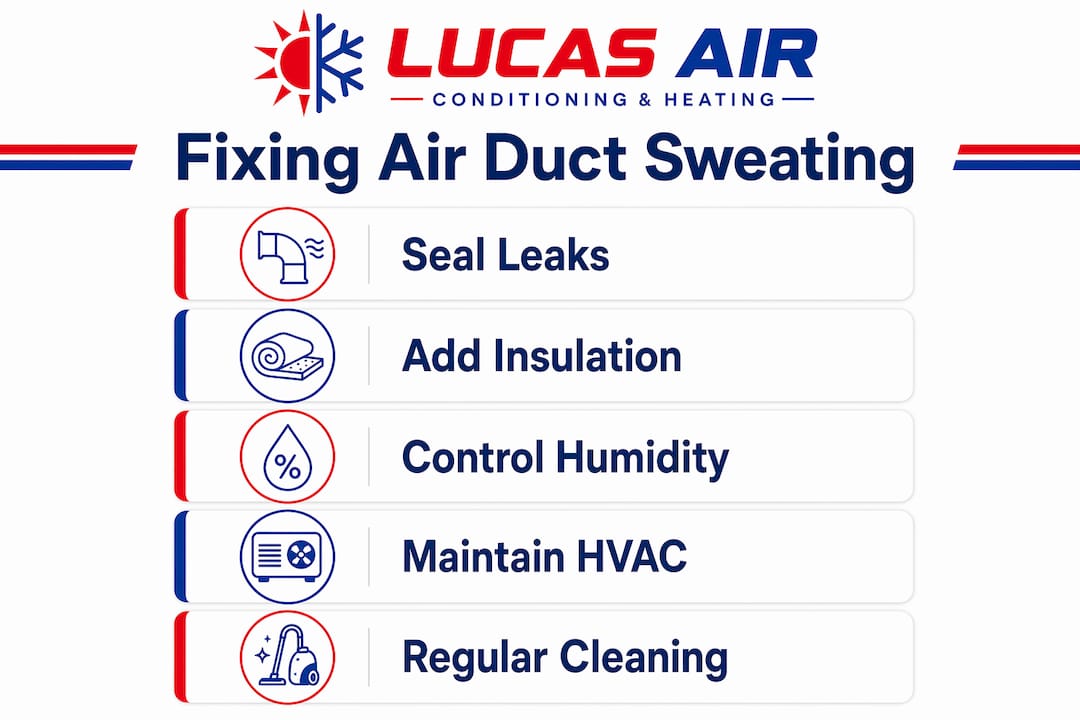
- Seal duct leaks first. Use mastic sealant or metal-backed tape on all joints and seams. Standard duct tape degrades quickly in attic heat and is not a lasting fix. Sealing leaks and improving insulation raises the duct surface temperature, which directly reduces condensation risk.
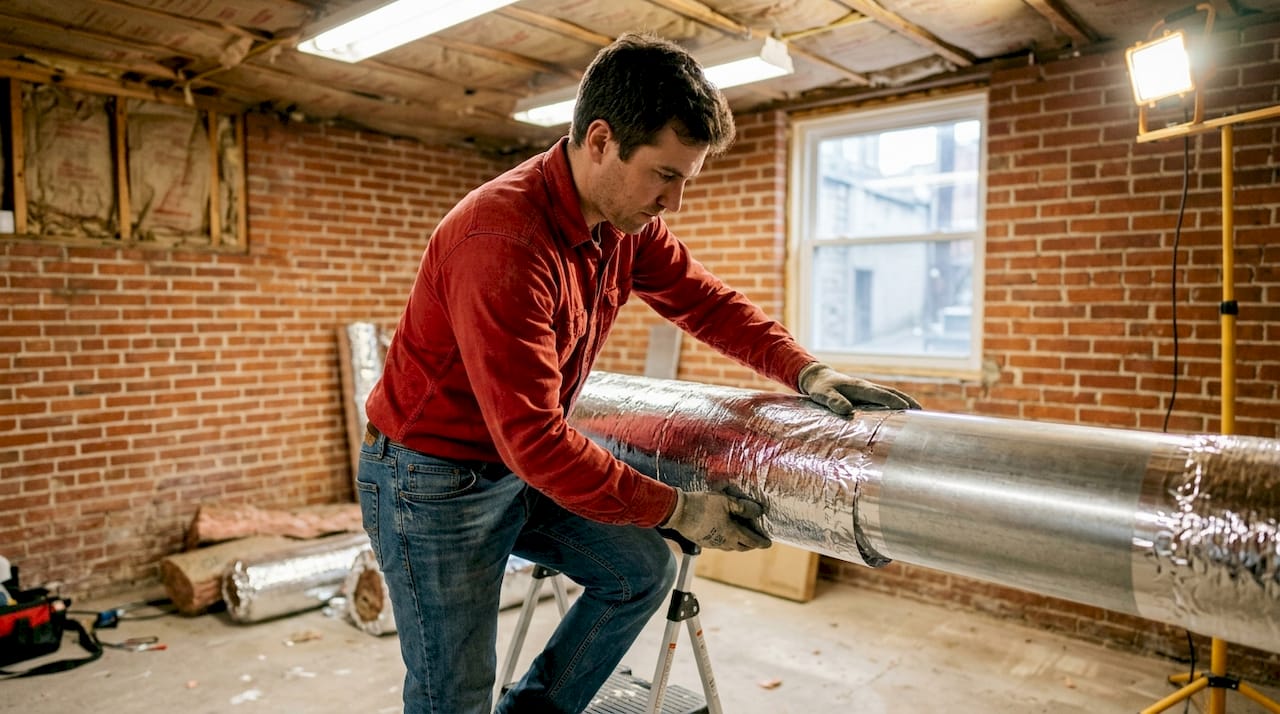
- Upgrade duct insulation. Foil-faced fiberglass insulation and closed-cell spray foam are the two most effective options for ducts in unconditioned spaces. The R-value needed depends on your climate zone. In Central Florida, higher R-values are warranted given extreme attic temperatures.
- Control indoor humidity. Keep relative humidity at 30–50% using a whole-home dehumidifier or properly sized AC. Whole-home dehumidifiers and proper ventilation in crawlspaces and attics are especially effective in humid climates like Florida.
- Improve ventilation in attics and crawlspaces. Powered attic ventilators and crawlspace vapor barriers reduce the ambient moisture that surrounds ductwork. Less moisture in the surrounding air means a higher dew point threshold before condensation forms.
- Evaluate system sizing. If your AC short-cycles (runs for only a few minutes before shutting off), it is likely oversized. A Manual J load calculation by a licensed HVAC technician determines the correct system size for your home.
- Replace air filters on schedule. Dirty filters restrict airflow, which causes the evaporator coil to run colder than designed. That extra cold transfers through the system and worsens condensation. Replacing HVAC air filters every 1–2 months is the standard recommendation.
Pro Tip: Never just wipe condensation off duct surfaces and call it done. That removes the symptom for a day. The water returns within hours if the underlying temperature and humidity imbalance is not corrected.
| Fix | What it addresses | Difficulty |
|---|---|---|
| Mastic duct sealing | Cold air escaping through leaks | Moderate, DIY possible |
| Foil-faced insulation wrap | Low duct surface temperature | Moderate, DIY possible |
| Whole-home dehumidifier | Excess indoor humidity | Low, professional install |
| Manual J sizing evaluation | Oversized or undersized AC | Professional required |
| Crawlspace vapor barrier | Ground moisture entering air | Moderate, DIY possible |
What routine maintenance keeps duct moisture problems away?
Preventing humidity problems in ducts long-term requires consistent habits, not one-time fixes. A few scheduled tasks cover most of the risk.
- Replace air filters every 1–2 months. This is the single highest-impact maintenance task for airflow and moisture control. Clogged filters force the system to work harder and create temperature imbalances that worsen condensation.
- Schedule professional duct cleaning every 3–5 years. Debris buildup inside ducts traps moisture and creates conditions where mold can establish itself. Routine professional HVAC maintenance detects moisture issues before they become severe.
- Use a humidity monitor. A basic digital hygrometer costs under $20 and tells you exactly what your indoor relative humidity is. Place one in the main living area and one near the air handler. If either reads above 50% consistently while the AC runs, investigate the system.
- Book seasonal HVAC tune-ups. A preventative maintenance agreement with a licensed technician includes airflow checks, coil inspections, and duct integrity assessments. These catch developing condensation problems before water damage appears.
- Run bathroom and kitchen exhaust fans every time. These two rooms generate the most indoor moisture. Fans that vent directly outside (not into the attic) remove that moisture at the source.
- Verify mold before treating it. If you see dark staining near vents, get a test before spending on remediation. Misidentifying dust as mold leads to unnecessary costs and leaves the real problem untreated.
What misconceptions about duct sweating cause homeowners to miss the real problem?
The most common mistake homeowners make is treating duct sweating as a surface problem. Wiping down ducts or cleaning vents feels productive, but it does not change the temperature or humidity conditions that caused the condensation. The water returns within hours.
A second widespread misconception is that bigger AC means better cooling. An oversized AC system cools the space too quickly, shuts off before completing a dehumidification cycle, and leaves the air humid. That humid air then contacts cold ducts and the sweating cycle continues. Proper sizing is not optional. It is the foundation of a dry, comfortable home.
Other overlooked causes include:
- Ignoring small duct leaks. A pinhole leak in an attic duct seems minor but continuously chills the outer duct wall and raises local humidity.
- Assuming mold remediation solves the moisture problem. Mold remediation fails to solve duct sweating unless the underlying moisture source is corrected first. Mold is the result, not the cause.
- Skipping duct inspections during HVAC upgrades. Installing a new AC unit into old, leaky, uninsulated ductwork wastes money and guarantees the condensation problem continues.
What I’ve learned from years of watching homeowners fight this problem
After seeing hundreds of homes with wet ductwork, the pattern is almost always the same. Homeowners notice a stain or a smell, clean the surface, and assume the problem is solved. Six months later the mold is back and the drywall is worse.
Duct sweating is fundamentally a physics problem. The fix has to restore the thermal and moisture balance, not just remove the visible water. That means insulation, sealing, and humidity control working together. Any one of those alone is not enough.
The other thing I see constantly is oversized equipment installed by contractors who sized the system based on square footage alone rather than a proper Manual J calculation. That shortcut creates short-cycling, poor dehumidification, and sweating ducts that the homeowner blames on humidity rather than the system itself.
My honest recommendation: if your ducts are sweating and you have already checked the insulation, get a licensed technician to evaluate system sizing and run a duct leakage test. Those two diagnostics identify the root cause in almost every case. Proactive monitoring with a hygrometer and a consistent maintenance schedule costs far less than repairing water-damaged ceilings or remediating mold.
— Results
Lucasair can help you stop duct sweating for good
Wet ductwork is a solvable problem when the diagnosis is right and the work is done correctly. Lucasair serves homeowners and property managers across Central Florida with expert evaluations for duct insulation, sealing, and system sizing. The team handles everything from duct cleaning and moisture assessments to whole-home dehumidifier installation and preventative maintenance plans.

If you are dealing with water stains, musty odors, or visible condensation on your ductwork, the right next step is a professional inspection. Lucasair’s technicians follow 2026 HVAC standards and can identify whether your issue is insulation, system sizing, or humidity control. Start with the HVAC installation guide to understand what a properly designed system looks like, or book a service call directly to get a diagnosis on your current setup.
Key Takeaways
Sweating air ducts require correcting both the temperature differential and indoor humidity together. Surface cleaning alone never produces a lasting fix.
| Point | Details |
|---|---|
| Root cause is physics | Condensation forms when duct surfaces drop below the dew point of surrounding air. |
| Humidity target matters | Keep indoor relative humidity at 30–50% to prevent condensation and mold growth. |
| Seal before you insulate | Duct leaks must be sealed with mastic or metal-backed tape before adding insulation. |
| Oversized AC worsens sweating | Short-cycling systems fail to dehumidify, leaving excess moisture that settles on cold ducts. |
| Maintenance prevents recurrence | Replace filters every 1–2 months and schedule professional duct cleaning every 3–5 years. |
FAQ
What causes air ducts to sweat?
Duct sweating occurs when the outer duct surface temperature drops below the dew point of the surrounding air, causing moisture to condense on the surface. Poor insulation, duct leaks, high indoor humidity, and oversized AC systems are the most common contributing factors.
Is duct sweating dangerous?
Yes, if left untreated. Persistent condensation leads to mold growth, structural water damage, and reduced HVAC efficiency. Mold in ducts will return unless the underlying moisture source is corrected first.
How do I stop my ducts from sweating?
Seal all duct leaks with mastic sealant, upgrade insulation with foil-faced or closed-cell foam wrap, and control indoor humidity to 30–50% using a properly sized AC or whole-home dehumidifier.
How often should I have my ducts cleaned to prevent moisture issues?
Professional duct cleaning every 3–5 years is the standard recommendation. Pair that with air filter replacements every 1–2 months to maintain airflow and reduce moisture buildup.
Can an oversized AC cause sweating ducts?
Yes. An oversized system cools the home too quickly, shuts off before completing a dehumidification cycle, and leaves excess moisture in the air. That moisture then condenses on cold duct surfaces.
Recommended
- Why Regular Duct Cleaning Boosts Air Quality and Efficiency – Lucas Air Conditioning and Heating
- Air Conditioning and Humidity Levels: A Homeowner’s Guide – Lucas Air Conditioning and Heating
- Duct Cleaning & Indoor Air Quality: Evidence & Best Practices – Lucas Air Conditioning and Heating
- How to Improve Indoor Air Quality at Home – Lucas Air Conditioning and Heating
