
TL;DR:
- Shared ventilation, building infrastructure, and neighbor activities significantly impact apartment indoor air quality.
- Effective control involves source management, enhanced ventilation, and filtration, complemented by building maintenance.
- Residents must advocate for building-wide upgrades while optimizing their personal indoor environment.
If you think closing your front door keeps your air clean, your apartment has already proven you wrong. Shared ventilation and building features can transfer up to 50% of a neighbor’s pollutants into your unit without you ever noticing. For Central Florida residents sitting through long, humid summers indoors, that stat hits differently. You can’t control what your neighbors cook, smoke, or spray, but you can control what happens next. This guide walks you through exactly what’s compromising your apartment air and what changes actually make a difference.
Table of Contents
- How apartment buildings affect your indoor air
- Key indoor air pollutants and their effects
- Why Central Florida is unique for apartment air quality
- What works: EPA strategies for cleaner apartment air
- What most residents miss about apartment air quality
- How Lucas Air can help your apartment stay healthy
- Frequently asked questions
Key Takeaways
| Point | Details |
|---|---|
| Shared air is a real issue | Pollutants can travel between units through shared systems and building leaks, affecting your air even if you keep your place clean. |
| Florida climate adds extra risk | High humidity and heat in Central Florida make mold and poor air quality a year-round threat for apartment residents. |
| Actionable EPA-backed steps | Focus on source control, smart ventilation, and better filtration for the biggest improvements in apartment air quality. |
| Monitor and advocate | Use air quality monitors for quick checks and encourage building-wide action for lasting results. |
How apartment buildings affect your indoor air
Most people think of indoor air as something separate from the building around them. It isn’t. Every apartment is connected to its neighbors through ventilation ducts, door gaps, elevator shafts, plumbing chases, and wall penetrations. These pathways are invisible, but they’re constantly moving air, and everything in that air, between units.
Shared ventilation, door gaps, and wall penetrations can transfer 30 to 50% of neighbor emissions directly into your unit. That means if the person three doors down is frying food, using cleaning sprays, or smoking, a measurable portion of what they release ends up in your air. Most residents never connect their symptoms to someone else’s habits.
Central Florida complexes have their own set of typical sources. Mold growth from high humidity, pesticide treatments in common areas, cleaning chemicals from janitorial staff, and even cigarette smoke from outdoor common areas all find their way inside. Hallway air often isn’t fresh either. During wildfire season or construction periods, outdoor air quality in the Orlando and Lake County areas can drop quickly, making ventilation a double-edged situation.
Here’s a quick look at how pollutants move between apartments:
- Return air grilles shared across floors pull air from corridors and neighboring spaces
- Under-door gaps allow air pressure differences to push pollutants through
- Bathroom and kitchen exhaust fans create negative pressure that draws hallway air inward
- Elevator shafts and stairwells act like chimneys, moving air vertically throughout the building
- Plumbing and cable penetrations in walls leave unsealed channels for air to pass through
| Challenge | Single-family home | Apartment unit |
|---|---|---|
| Source of pollution | Mostly internal | Internal + neighbors + building |
| Ventilation control | Full owner control | Limited to in-unit settings |
| Mold risk | Moderate | Higher due to shared humidity |
| Filter access | Owner managed | Often managed by building |
| Outdoor air entry points | Windows, doors | Windows, corridors, shafts |
Following HVAC maintenance tips matters even more in multi-unit buildings, because your system is one of the few variables you can actually influence. Good EPA air quality strategies also recommend that residents understand what they share before trying to fix it alone.
“Shared buildings mean shared air. What enters one unit rarely stays there.”
Key indoor air pollutants and their effects
Understanding airflow is only half the battle. What are you actually breathing, and how does it affect you?
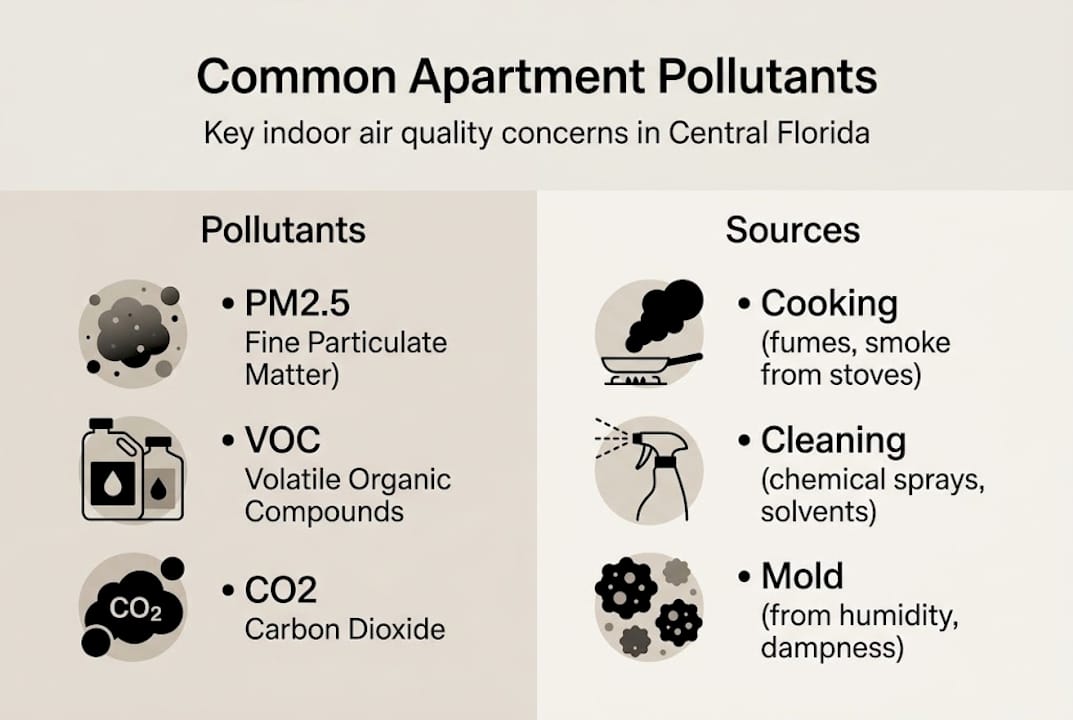
Five pollutants show up consistently in apartment air quality data: PM2.5 (fine particulate matter), volatile organic compounds (VOCs), carbon dioxide (CO2), mold spores, and excess humidity. Each one has a different source and a different health effect, but they often show up together.
| Pollutant | Common source | Typical apartment level | Health effect |
|---|---|---|---|
| PM2.5 | Cooking, candles, smoking | Up to 1360 µg/m³ while cooking | Lung irritation, heart stress |
| VOCs | Cleaning sprays, paint, furniture | 2 to 5x outdoor levels | Headaches, dizziness, nausea |
| CO2 | Breathing, gas stoves | Up to 1500 ppm overnight | Headaches, poor sleep |
| Mold spores | Humidity above 60% | Highly variable | Respiratory issues, allergies |
| Humidity | Florida climate, poor sealing | Often exceeds 60% indoors | Supports mold and dust mites |
CO2 in bedrooms can reach 1500 ppm overnight without adequate ventilation. The ASHRAE standard targets under 1000 ppm for healthy air. Many residents wake up with headaches or grogginess and never connect it to CO2 buildup from simply breathing in an enclosed space.
Cooking can spike PM2.5 to 1360 µg/m³, and when indoor humidity stays above 60%, mold growth becomes almost inevitable. In Florida, that humidity threshold is crossed regularly without residents realizing it.
The top three symptoms residents notice when air quality slips:
- Frequent morning headaches that ease after leaving the apartment
- Musty or chemical smells that linger despite cleaning
- Worsening allergy or asthma symptoms with no obvious outdoor trigger
Pro Tip: A basic indoor air quality monitor costs $50 to $150 and measures CO2, PM2.5, and humidity in real time. It removes all the guesswork. Pair it with your HVAC checklist for a complete picture of what your system is doing to your air.
Why Central Florida is unique for apartment air quality
Florida’s unique weather and building styles add another layer of complication.
Humidity is the single biggest threat to apartment air quality in Central Florida. Unlike drier climates where mold is a seasonal concern, Florida’s year-round warmth and moisture make mold a constant risk. When indoor humidity climbs above 60%, mold colonies can establish within 24 to 48 hours on walls, ceiling tiles, and HVAC components.
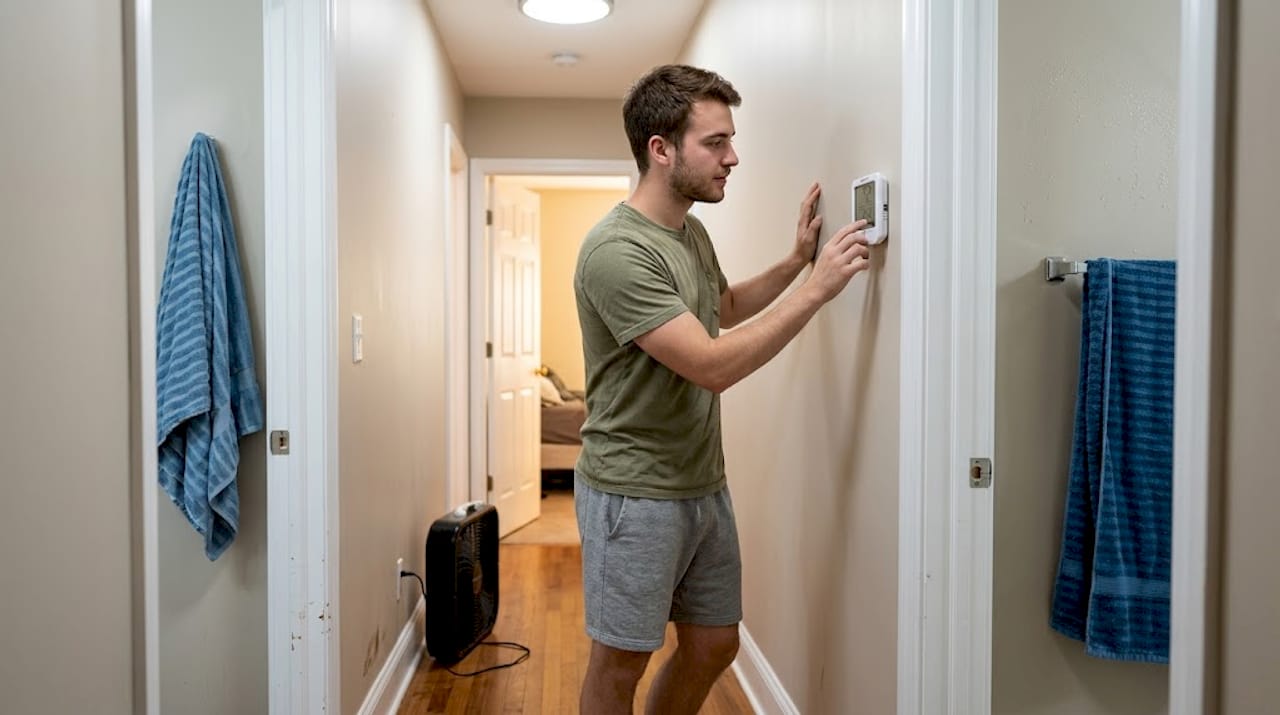
Keeping AC between 68 and 78°F and humidity between 45 and 55% is the recommended range for Florida apartments. Running exhaust fans during showers and cooking, changing filters regularly, and never turning off the AC during vacancies are habits that directly protect your air.
Central Florida also faces seasonal hazards that residents often underestimate. Wildfire smoke from controlled burns in nearby Ocala National Forest and construction dust from rapid development in Lake County and Orange County push outdoor pollutants indoors. Heavy summer storms can introduce moisture through poorly sealed windows.
Opening windows during wildfire or controlled burns can pull contaminated outdoor air inside and worsen indoor air quality significantly. Oversized AC units are another local mistake. They cool the room fast but don’t run long enough to pull out humidity, leaving the air cold but damp.
The most overlooked air quality mistakes Florida apartment residents make:
- Turning the AC completely off when leaving for a few days
- Opening windows on high-pollen or poor AQI days
- Running ceiling fans without the AC, which circulates humid air
- Skipping filter changes because it’s the landlord’s job
- Ignoring small musty smells assuming they’ll go away
Pro Tip: Before you leave for a long weekend, set your thermostat to 76°F instead of turning the system off. The few dollars saved on electricity aren’t worth the mold risk you come back to.
What works: EPA strategies for cleaner apartment air
So, what practical steps can you take? What actually works for apartment dwellers?
The EPA recommends three strategies in priority order: source control first, then improved ventilation, then filtration and air cleaning. Most residents jump straight to buying an air purifier, skipping the two more effective steps above it.
Here’s the right order for apartment residents:
- Source control: Eliminate or reduce what’s creating pollution. Store chemicals in sealed containers, switch to fragrance-free cleaning products, use a range hood or exhaust fan every time you cook, and seal gaps under doors with a door sweep.
- Ventilation: Increase fresh air when outdoor conditions allow. Open windows during low-pollution mornings, use bathroom fans after every shower, and ask building management about HVAC fresh air intake settings.
- Filtration: Use HEPA-grade portable air cleaners in bedrooms and living areas. Upgrade your in-unit filter to MERV 11 or higher if your system allows it.
Where you have the most control:
- In-unit filter type and replacement schedule
- Portable air cleaners in your bedroom
- Sealing gaps around doors and windows
- Cooking ventilation habits
- Humidity management with a standalone dehumidifier
Where building management holds the control:
- Central HVAC filter replacement and duct cleaning
- Hallway and lobby ventilation systems
- Sealing between unit walls and floors
- Pest control chemical choices
Apartments only control 50 to 70% of their own indoor air quality. The remaining 30 to 50% comes from building-wide factors you can’t fix alone. That’s why both individual action and building-level conversation matter.
Pro Tip: Check your HVAC tips page and use an air quality monitor to test your apartment before and after each intervention. That’s the only way to know what’s actually working.
What most residents miss about apartment air quality
Here’s something we don’t see discussed enough: even residents who do everything right still share air with an entire building. You can seal your door, run a HEPA purifier, and change your filter monthly, and you’ll still be affected by building-wide IAQ factors that account for 30 to 50% of your air quality.
That’s not a reason to give up on individual steps. Those steps genuinely matter and improve your day-to-day air. But the bigger picture matters too. Stack effects, pressure differences, and aging ventilation shafts are building infrastructure issues that only management can address. The most effective thing a resident can do beyond their own unit is communicate clearly with property management, request documented HVAC maintenance records, and advocate for building-wide upgrades.
We’ve seen in Central Florida that the buildings with the best air quality aren’t the newest ones. They’re the ones with engaged residents and proactive management teams. If you want lasting improvement, start with preventative HVAC strategies inside your unit, and then bring the data from your air quality monitor to the conversation with your landlord.
How Lucas Air can help your apartment stay healthy
If you’re ready to take action on your apartment air quality, here’s how local experts can help.
At Lucas Air, we work with Central Florida residents who are tired of guessing what’s in their air. Whether you need a maintenance inspection, a filter upgrade recommendation, or help diagnosing why your unit feels stuffy even with the AC running, we’ve got you covered.
Our team can walk you through a full home HVAC maintenance plan tailored to Florida’s climate, help you understand the HVAC repair steps if your system isn’t performing right, or advise on a new HVAC installation if your building’s equipment is outdated. Book a checkup with our team and start breathing easier.
Frequently asked questions
What’s the fastest way to improve apartment air quality today?
Source control, ventilation, and filtration are the EPA’s recommended starting points. Begin by sealing door gaps, changing your air filter, and placing a HEPA air purifier in your bedroom.
How do I know if my apartment air is unhealthy?
Frequent headaches, musty smells, or visible mold are clear warning signs. A handheld CO2 or PM2.5 monitor gives you real data, since CO2 over 1500 ppm is already linked to headaches and poor sleep.
Does running the AC constantly help or hurt apartment air quality?
A properly set AC filters and dehumidifies your air, which helps. Shutting it off raises mold risk fast. Keep humidity between 45 and 55% and use the auto fan setting for best results.
Can I open windows for fresh air during wildfire smoke days?
No. Opening windows during wildfire burns pulls contaminated air inside and makes things worse. Use your air purifier and keep windows sealed on poor AQI days.
What should building management be doing to help apartment air quality?
They should maintain central ventilation systems, seal shared air pathways between units, and replace filters on a documented schedule. Building-wide factors account for 30 to 50% of your indoor air quality, so their role is not optional.
