
TL;DR:
- Upgrading to a heat pump can cut pool heating costs by up to 80 percent.
- Older heaters show signs like high bills, leaks, and rust, indicating need for replacement.
- Modern heaters and accessories improve efficiency, property value, and user comfort in Central Florida.
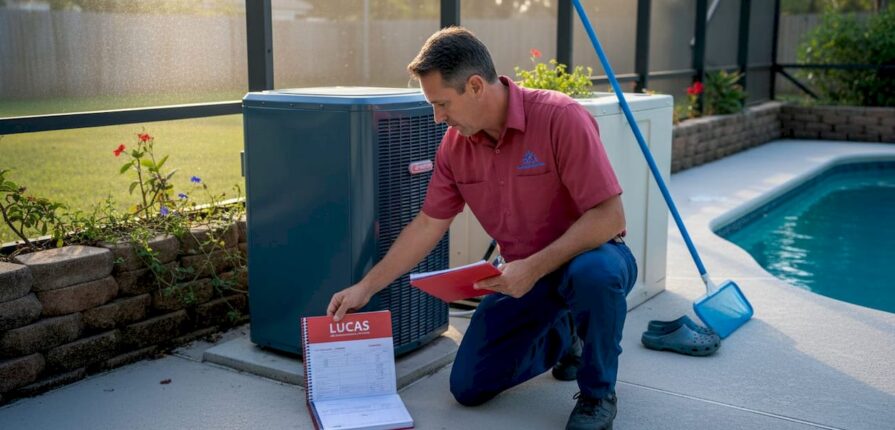
Switching from an old, inefficient pool heater to a modern system can feel like an unnecessary expense until you actually see the numbers. Homeowners and property managers across Central Florida often assume their current heater is “good enough,” but the truth is that upgrading to a heat pump from gas can cut heating costs by up to 80%. In a region where outdoor pools are used nearly year-round, that kind of savings adds up fast. This guide walks you through every angle of the decision, from spotting warning signs to choosing the right technology for your property.
Table of Contents
- Signs your pool heater needs an upgrade
- How modern pool heaters provide energy savings
- Choosing the right pool heater type for Central FL
- Other benefits: comfort, value, and code requirements
- The real ROI of a pool heater upgrade in Central Florida
- Upgrade your Central Florida comfort—expert help available
- Frequently asked questions
Key Takeaways
| Point | Details |
|---|---|
| Major energy savings | Upgrading to a modern heat pump or solar heater can reduce pool heating costs by up to 80%. |
| Ideal upgrade timing | Consider replacing your pool heater if it is 8+ years old, needs frequent repairs, or has rising energy costs. |
| Options for every use | Central Florida homeowners can choose gas, heat pump, or solar systems to best fit their weather and pool use. |
| More comfort and value | A new heater boosts swim comfort, helps attract renters, and may qualify for rebates. |
Signs your pool heater needs an upgrade
Understanding when to upgrade starts with recognizing what your current heater is telling you. Pool heaters don’t fail all at once. They give plenty of signals before they quit entirely, and each one of those signals is also a signal that your energy bills are quietly climbing.
Age is the most obvious factor. Gas heaters last 8 to 12 years while heat pumps can run for 10 to 15 years with proper maintenance. Once your unit crosses those thresholds, it’s operating on borrowed time and burning more energy to do less work. An old heater often runs longer cycles just to hit the same target temperature it once reached effortlessly.
Frequent repairs are another serious red flag. If you’ve called for service multiple times in the last two seasons, the repair costs are stacking up fast. A good rule of thumb is the 50% rule: if a repair estimate comes in at more than half the price of a brand-new unit, it’s almost always smarter to replace the whole system rather than patch an aging one.
Here are the most common warning signs that your heater is ready for retirement:
- Water temperature that takes far longer to reach your target than it used to
- Visible rust or corrosion on the unit’s exterior or internal components
- Water leaks around the heater’s connections or housing
- Noticeably higher electricity or gas bills without any change in your usage habits
- Strange noises like banging, rattling, or hissing during operation
- Error codes or persistent shutdowns that require manual resets
Pro Tip: Keep a simple log of each repair visit, including dates and costs. Over 12 months, that log will tell you exactly how much your old heater is costing you beyond normal operation. Most homeowners are surprised by the total.
If rust or leaks are present, don’t delay. Rust can contaminate pool water and damage surrounding plumbing. A small water leak near heat exchanger connections often signals internal corrosion that no repair can permanently fix. Explore your pool heater repair options first, but be honest with yourself about whether a repair is truly the right call or just a short-term band-aid.
How modern pool heaters provide energy savings
Once you recognize your heater is outdated, it’s crucial to understand what newer systems can do and how those upgrades translate directly to your wallet.
Modern pool heaters are not just more efficient versions of old technology. They represent a fundamentally different approach to heating water. Heat pumps, for example, don’t generate heat by burning fuel. They pull heat from the surrounding air and transfer it to the pool water. That process requires far less energy per unit of heat delivered, which is why they carry a COP (coefficient of performance) rating of 5 to 7. In practical terms, for every dollar of electricity you put into a heat pump, you get five to seven dollars’ worth of heat output.
Compare that to a traditional gas heater, which typically runs at 78 to 84% efficiency. Every dollar of gas you burn produces only 78 to 84 cents of actual heat. The efficiency gap is enormous, and it widens every month your old heater runs.
| Heater type | Efficiency rating | Estimated monthly cost | Lifespan |
|---|---|---|---|
| Gas heater | 78 to 84% | $200 to $400+ | 8 to 12 years |
| Heat pump | COP 5 to 7 (500 to 700%) | $50 to $100 | 10 to 15 years |
| Solar heater | Near 100% (sun dependent) | Near zero after payback | 15 to 20 years |
Solar pool heaters are an even more compelling story for Central Florida specifically. Because the region receives abundant sunshine for most of the year, solar collectors mounted on a rooftop can provide near-zero operating cost heating once the system pays for itself. That payback period is typically just 2 to 2.5 years for most Florida installations, after which your heating cost is essentially free. Weather-dependent performance is the main limitation, but pairing a solar system with a backup heat pump covers those occasional cold or cloudy stretches without much penalty.
The benefits of HVAC upgrades parallel what happens with pool heaters: the upfront cost feels significant, but the monthly savings compound quickly. Most Central Florida homeowners who switch from gas to a heat pump recover their investment within three to five years through energy bill reductions alone, and then enjoy another decade of reduced costs on top of that.
You can review the full range of HVAC service offerings to see how upgrading one system at a time builds toward a more efficient and comfortable property overall.
Choosing the right pool heater type for Central FL
With energy-saving features in mind, let’s compare the practical benefits of each heater technology for your specific situation in Central Florida.
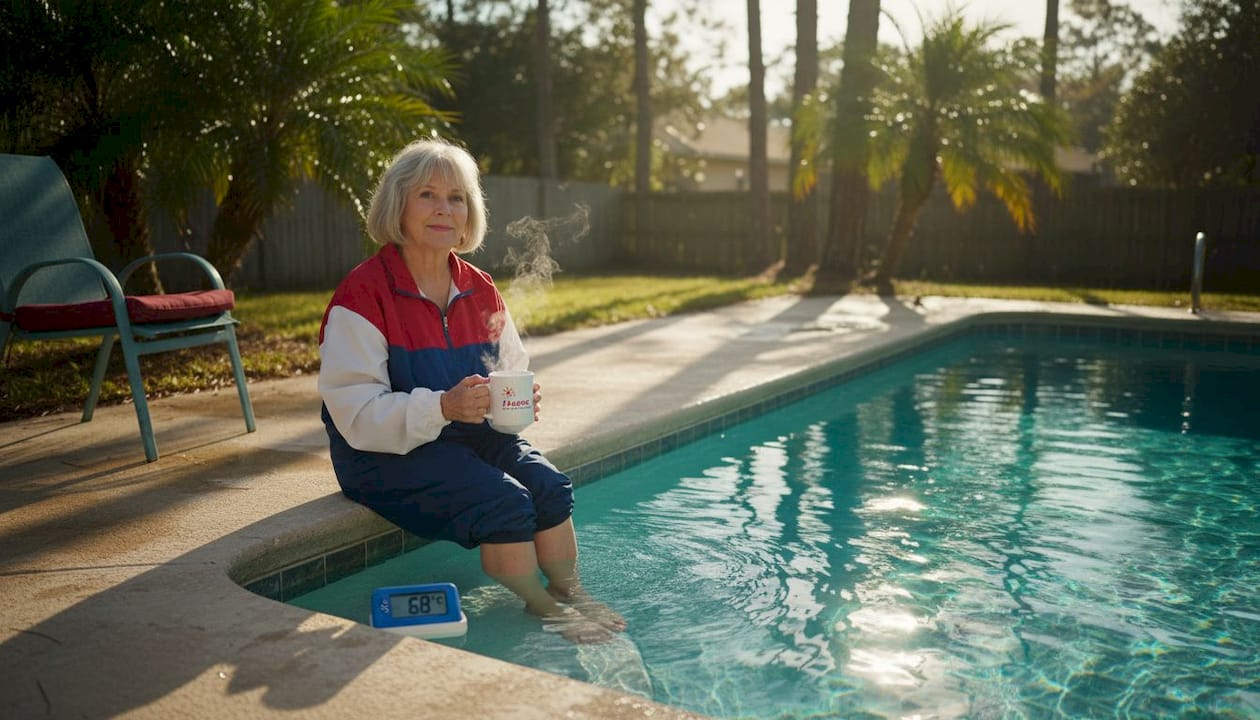
Central Florida winters are mild but not irrelevant. Temperatures typically range between 50 and 70°F from December through February. That range matters enormously when choosing a heater because heat pumps lose effectiveness below 50°F ambient temperatures. A gas heater, on the other hand, delivers consistent heat output regardless of outside temperature, making it more reliable during those occasional cold snaps that hit Central Florida.
Here’s how the main options compare based on usage patterns:
| Heater type | Best for | Weakness | Central FL fit |
|---|---|---|---|
| Heat pump | Daily or frequent use | Slow heat-up time, cold-weather limits | Excellent for regular swimmers |
| Gas heater | On-demand or quick heating needs | High operating cost | Great for spas, occasional use |
| Solar heater | Year-round use with low budget | Weather-dependent, slower to respond | Excellent if paired with backup |
| Hybrid system | Mixed on-demand and continuous use | Higher upfront cost | Strong for rental properties |
For homeowners who swim regularly, heat pumps and solar systems deliver the best efficiency and comfort return on investment in Central Florida’s climate. Gas heaters remain the right tool for specific situations: heating a spa quickly for an evening soak, or serving a vacation rental where guests expect a pool to be warm immediately upon arrival without any lead time.
Pro Tip: If your pool also has an attached spa, consider a dual-system setup. A heat pump handles the pool’s ongoing heating efficiently, while a small gas heater keeps the spa ready for quick, on-demand use. Many Central Florida property owners find this combination eliminates compromise entirely.
Here’s what to weigh before making a final decision:
- Your actual usage pattern: Do you swim every day, or only on weekends? Daily swimmers benefit most from heat pumps.
- Property type: Rental properties often need fast heat-up, which favors gas or hybrid systems.
- Budget for upfront vs. ongoing costs: Solar has the lowest lifetime cost but requires the most upfront investment.
- Available roof space or utility connections: Solar needs unshaded roof area; gas requires a natural gas or propane connection.
When you think about how to upgrade comfort and savings across your property, the heater type decision connects directly to your bigger picture goals for energy spending and guest or family experience.
Other benefits: comfort, value, and code requirements
Aside from direct energy savings, upgrading brings additional advantages worth your consideration, especially for property managers and compliance.
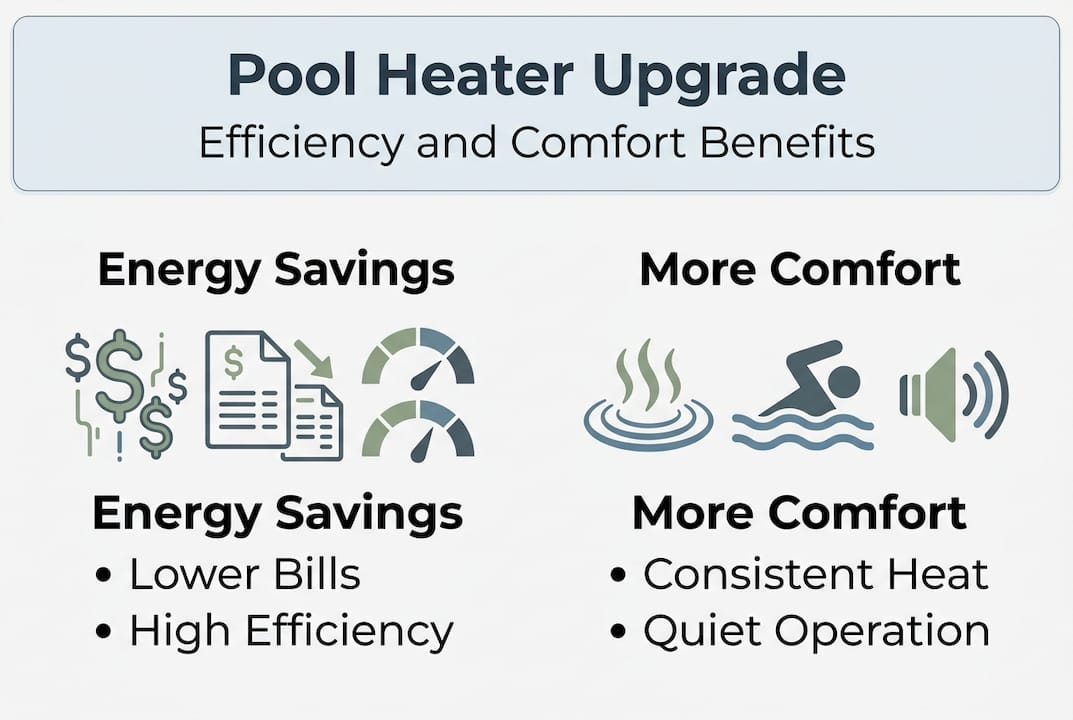
Property value and rental appeal are real considerations. A modern, efficient pool heater signals to renters and buyers that a property is well maintained. Pool heater upgrades boost rental appeal and can increase the overall value of the property, with efficient models sometimes qualifying for local utility rebates that further offset the upgrade cost. For vacation rental managers, a pool that heats up reliably and efficiently is one of the most-cited amenities in positive reviews.
Beyond economics, comfort is just as important. Older heaters produce inconsistent water temperatures. One day the pool feels perfect; the next, it’s ten degrees cooler than expected. Modern heaters with digital controls and programmable thermostats hold temperature precisely and let you automate schedules so the pool is always ready when you want it.
Here are four key steps to take when planning a Florida pool heater installation:
- Confirm permit requirements. Florida requires permits for new pool heater installations in most counties. Skipping this step can cause problems when selling your home or filing an insurance claim.
- Check rebate availability. Contact your local utility provider before purchasing. Energy-efficient heat pumps and solar systems sometimes qualify for significant rebates that reduce upfront costs.
- Plan for complementary upgrades. Pairing your new heater with a variable-speed pump and solar cover dramatically amplifies your savings. A solar cover alone can cut heat loss overnight by 50 to 70%.
- Choose a licensed contractor. Florida law requires licensed contractors for pool heater installations. Always verify your installer’s license before signing anything.
“The most effective pool heating strategy in Florida combines an efficient heater with the right accessories. A new heater working against an uncovered pool or an old single-speed pump is leaving serious money on the table.”
Understanding how comfort and efficiency work together in Florida homes is part of making the full investment pay off. Every piece of the system matters, and upgrading just the heater while ignoring a worn-out pump or a missing solar cover limits your actual return.
The real ROI of a pool heater upgrade in Central Florida
Most articles stop at the numbers, and the numbers are compelling. But there’s a more nuanced story that experienced local service providers see repeatedly.
Here’s what doesn’t get said often enough: the type of property you own should drive the heater decision far more than the published efficiency ratings alone. A vacation rental that turns over guests every week needs predictability above everything else. Guests don’t care about your COP rating. They care that the pool was warm when they arrived. For those properties, gas heaters are often preferred when natural gas is available, precisely because of their speed and reliability on demand. A heat pump set to continuous operation might be more efficient for an owner-occupied home, but it’s not always the right tool for a high-turnover rental.
On the flip side, many owner-occupied households dramatically underestimate how much they would use their pool if it were consistently warm. An owner who currently swims from June through September might find they’re using the pool from March through November once a heat pump brings the temperature up reliably. That extended usage is genuinely one of the most satisfying returns on the investment, and it doesn’t show up in any efficiency calculator.
The accessories conversation also gets skipped too often. Pairing a new heat pump with a quality solar cover and a variable-speed pump creates a system where each component amplifies the others. The solar cover reduces heat loss. The variable-speed pump cuts electricity use dramatically compared to older single-speed models. Together, they can drop your effective pool operating cost by 60 to 70% compared to an old gas heater with no accessories. For our clients in Eustis, Mount Dora, and the surrounding communities, we’ve watched that combination consistently deliver results that exceed initial estimates.
If your current heater is aging or struggling, now is the time to evaluate your situation honestly. Review your pool heater maintenance and repair history and let that data guide you rather than just hope the current unit lasts another season.
Upgrade your Central Florida comfort—expert help available
Whether you’re managing a vacation rental in Clermont or planning a backyard upgrade in Eustis, getting the right advice before choosing a new pool heater can save you thousands over the system’s lifetime. Lucas Air Conditioning and Heating brings the same precision to pool heater upgrades that we apply to every HVAC system we service throughout Central Florida.
Founded by Army Veteran Cameron Lucas, Lucas Air has served Central Florida homeowners and property managers since 2018 with honest, experienced guidance on energy-efficient upgrades and system repairs. We know the local climate, the permit requirements, and which heater types deliver real results for our specific region. Whether you need a brand-new installation or help deciding if pool heater repairs will extend your current system’s life, our team is ready to help. Explore our full list of pool and HVAC services or reach out to schedule an appointment today.
Frequently asked questions
How long does a pool heater typically last in Central Florida?
Gas pool heaters last 8 to 12 years and heat pumps can run for 10 to 15 years with regular maintenance and care.
Will a heat pump work during the coldest Central Florida nights?
Heat pumps perform well above 50°F ambient temperature, but gas heaters are the more reliable option when temperatures drop below that threshold.
How much can I really save by upgrading to a heat pump or solar heater?
Switching from gas to a heat pump can reduce pool heating costs by 80%, and solar heaters reach near-zero operating costs after a payback period of just 2 to 2.5 years.
Do pool heater upgrades add value for vacation rental properties?
Yes, modern efficient heaters boost rental appeal and property value, and energy-efficient models may also qualify for local utility rebates.
Are there rebates or codes to consider when upgrading pool heaters in Florida?
Many efficient models qualify for local rebates, and Florida requires permits for new installations, so always work with a licensed contractor to stay compliant.
