
TL;DR:
- Proper preparation and documentation are essential for accurate residential HVAC evaluations in Central Florida.
- Heat pumps are preferred due to mild winters, with special focus on humidity and latent load management.
- Address safety hazards immediately and follow up on major defects to ensure safety and efficiency.
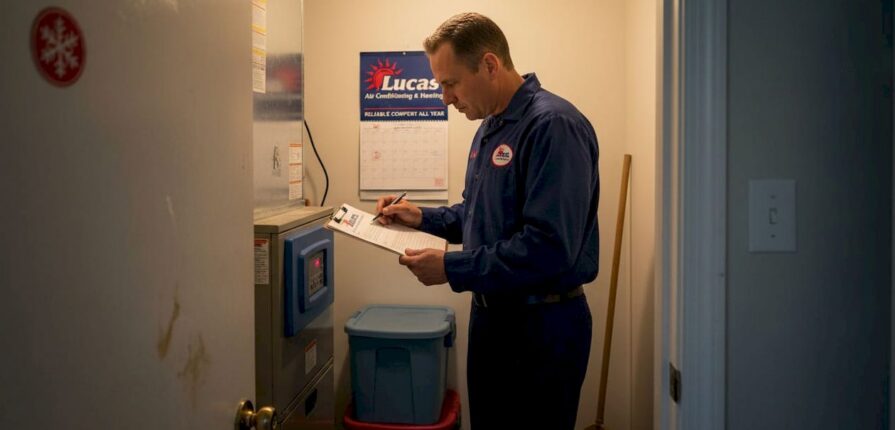
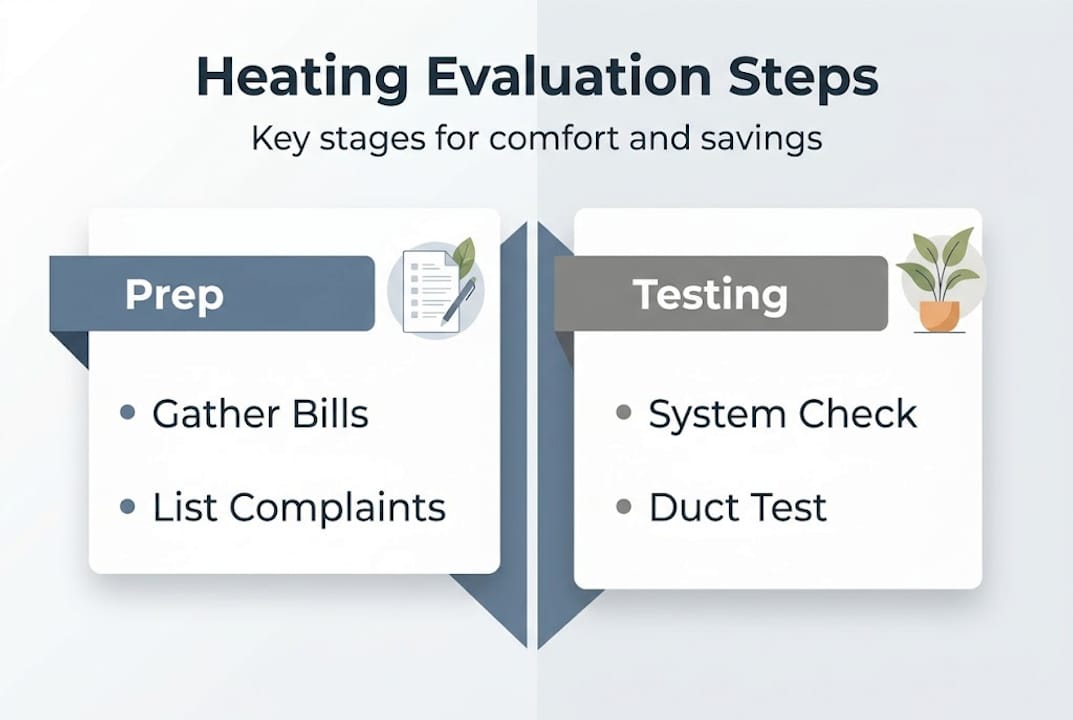
Running your heating system through a Central Florida winter and still ending up with cold spots, stuffy rooms, and energy bills that don’t make sense is one of the most frustrating experiences a homeowner or property manager can face. Professional home energy assessments typically begin with preparation, including reviewing utility bills, documenting comfort issues, and clearing access to your equipment. This guide walks you through everything: how to prepare before a technician arrives, what happens during each stage of the evaluation, what makes Central Florida unique, and how to act on your results with confidence.
Table of Contents
- Gathering information and preparing for your evaluation
- Step-by-step workflow for a professional heating system evaluation
- Special considerations for Central Florida homes and businesses
- Troubleshooting issues and interpreting evaluation results
- Why most heating system evaluations fall short in Central Florida
- Get a professional evaluation for long-term comfort and savings
- Frequently asked questions
Key Takeaways
| Point | Details |
|---|---|
| Preparation is critical | Gather bills, note comfort issues, and allow access to the system before any professional evaluation. |
| Florida focuses on heat pumps | Central Florida homes rely on efficient heat pumps and require specific code compliance for optimal results. |
| Follow the workflow | Accurate evaluations use checklists, operational tests, and reporting to detect and solve comfort and safety problems. |
| Act on evaluation results | Use the evaluation findings to prioritize repairs, maintenance, or upgrades for maximum comfort and energy efficiency. |
Gathering information and preparing for your evaluation
Once you understand why evaluations matter, the next step is proper preparation. Skipping this phase is one of the most common mistakes property owners make, and it costs real time and accuracy during the actual visit. When a technician arrives without background information, they are diagnosing blind. Every piece of data you gather beforehand shortens the inspection time and sharpens the recommendations you receive.
What to gather before the technician arrives
Start by pulling your last 12 months of utility bills. Heating costs in Central Florida may not spike as dramatically as they do in northern states, but gradual increases are still a red flag worth tracking. If your bill jumped 15% or more in a given month without a clear reason, that’s information your technician needs upfront.
Next, write down every comfort complaint you’ve noticed. Are certain rooms always warmer or cooler than the thermostat setting? Does the air feel humid even when the system is running? Have you noticed any unusual smells or sounds during startup? These details often point directly to the root cause before any equipment test is run.
Following step-by-step HVAC process protocols, technicians also need physical access to your air handler, outdoor unit, ductwork, and thermostat. Clear the area around all equipment at least two feet in every direction. If you have a crawl space or attic where ducts run, unlock that access point and make sure it’s safe to enter.
Preparation checklist
| Preparation item | Why it matters |
|---|---|
| 12 months of utility bills | Identifies usage trends and anomalies |
| List of comfort complaints | Guides inspection priorities |
| Past repair or service records | Reveals recurring issues |
| Equipment model and serial numbers | Confirms age and sizing |
| Clear access to all HVAC equipment | Allows complete inspection |
| Thermostat settings and schedules | Confirms operational baseline |
Must-have documents and information
- Copies of any past service invoices or repair records
- Manufacturer manuals if available
- Current thermostat settings including any programmed schedules
- Any permits pulled for previous HVAC work
- Notes on when comfort issues started and whether they worsen seasonally
Pro Tip: Walk through your home or building the morning before the evaluation and note any drafts near windows or doors, rooms that feel noticeably humid, and areas where supply vents seem weak. These real-time observations are often more useful than anything written in a repair log.
Step-by-step workflow for a professional heating system evaluation
With everything prepared, here’s what happens during the actual evaluation, step by step. Understanding this sequence helps you know what to expect, ask better questions, and verify that the technician is covering every necessary area.
1. Initial walkthrough and homeowner interview
The technician starts by touring the property with you. This is your opportunity to point out every concern you documented. A good technician listens carefully here because your lived experience reveals patterns that instruments can miss.
2. Visual inspection of all components
Every accessible component gets a visual check: air handler, coils, heat exchanger, blower motor, capacitors, contactors, and refrigerant lines. Rust, corrosion, oil stains, and physical damage are documented at this stage.
3. Operational system testing
The system is run through full heating cycles. Operational testing measures temperature rise between 35 and 75 degrees Fahrenheit for gas furnaces or a supply-to-return differential of 14 to 22 degrees Fahrenheit for heat pumps. These numbers tell the technician whether the system is performing within manufacturer specifications.
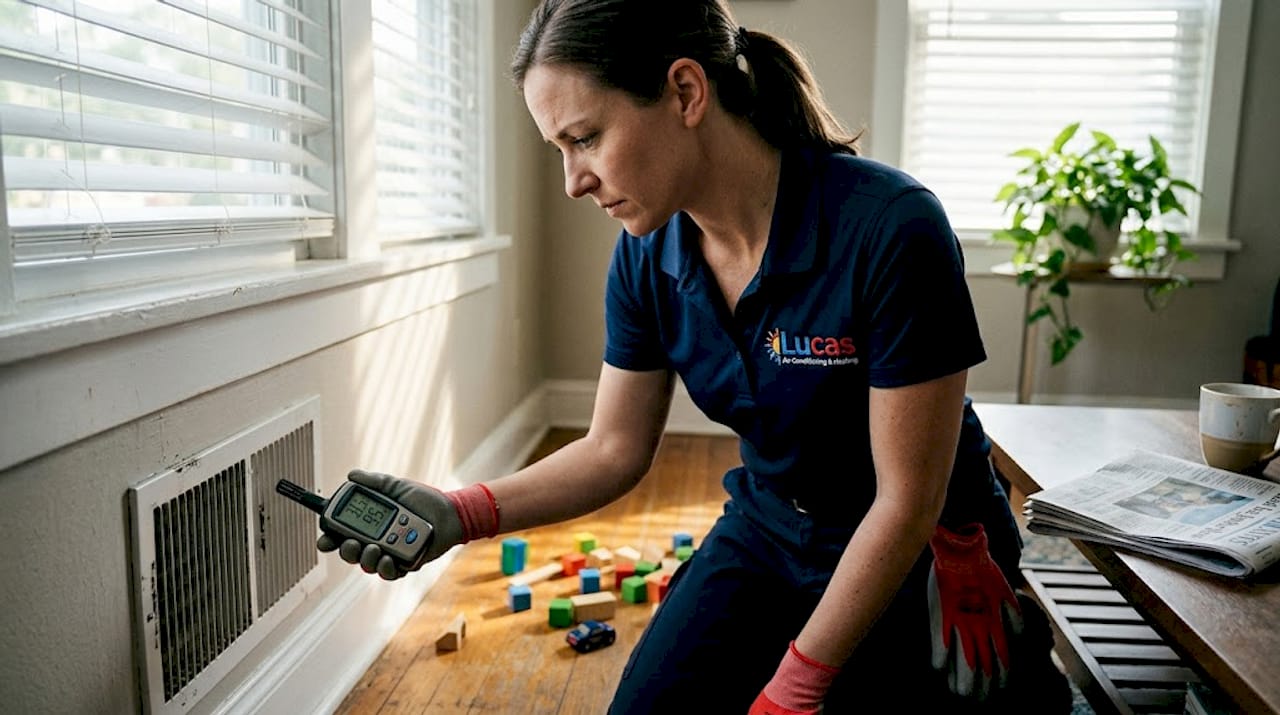
4. Airflow and duct testing
Airflow is measured at each supply and return register. Duct leakage testing uses a calibrated blower to pressurize the system and identify where air escapes before reaching its destination. Leaky ducts can waste 20 to 30% of conditioned air in some homes.
5. Humidity and ventilation assessment
Florida’s climate makes this step especially critical. The technician checks indoor humidity levels and verifies that ventilation rates meet standards. A system that passes every other test but fails humidity control is still not performing properly in this climate.
6. Final report and recommendations
All findings are compiled into a written report. Priorities are ranked from safety hazards down to routine maintenance, and specific recommendations are provided for each item.
Furnace vs. heat pump evaluation comparison
| Test category | Gas furnace | Heat pump |
|---|---|---|
| Temperature measurement | Temperature rise (35-75°F) | Supply-return differential (14-22°F) |
| Refrigerant check | Not applicable | Required |
| Heat exchanger inspection | Critical (CO risk) | Not applicable |
| Defrost cycle test | Not applicable | Required |
| HSPF2 efficiency rating | Not standard | Required in Florida |
| Duct leakage test | Required | Required |
Pro Tip: Always ask the technician to check thermostat calibration with an independent thermometer. A thermostat reading two or three degrees off can cause the system to short-cycle or run longer than necessary, adding wear and cost without improving comfort.
Special considerations for Central Florida homes and businesses
It’s important to tailor the workflow to Central Florida’s unique climate and building codes. What works for a home in Minnesota or even Atlanta does not apply cleanly here, and assuming otherwise leads to missed issues and wasted money.
Why heat pumps dominate Central Florida
Central Florida winters rarely drop below 40°F, which means heat pumps operate at peak efficiency for most of the heating season. Heat pumps move heat rather than generate it, and in mild climates they can deliver two to three times the energy output per dollar compared to electric resistance heating. HSPF2, which stands for Heating Seasonal Performance Factor 2, is the current efficiency rating for heat pumps, and it should be verified during every evaluation to confirm the system is achieving rated performance.
Gas furnaces exist in some Central Florida properties, particularly older commercial buildings, but evaluating them through a Florida lens still requires attention to sizing. An oversized furnace short-cycles, which means it turns on and off before completing a full heating cycle. That wears equipment faster, creates humidity swings, and wastes energy.
Code compliance in Florida
Understanding the role of HVAC systems in Florida means recognizing that Florida’s building code is among the most specific in the country for HVAC systems. Florida code mandates Manual J load calculations for proper sizing, duct leakage testing at no more than 4 CFM per 100 square feet, and ASHRAE 62.2 ventilation standards. Non-compliance risks permit denial and can affect insurance coverage in some cases.
Common compliance pitfalls
- Oversized or undersized equipment installed without a Manual J calculation
- Duct systems that were never tested for leakage after installation
- Ventilation rates set too low, leading to poor indoor air quality
- Refrigerant handling not performed by certified technicians
- Equipment replacements completed without required permits
Important: Skipping permit requirements or code compliance checks does not just create legal exposure. It means you may be operating equipment that has never been verified to function safely or efficiently in your specific building. For anyone considering upgrading heat pump systems or scheduling seasonal HVAC tune-ups, confirming code compliance should always be part of the conversation.
For commercial property managers, latent load, which refers to the moisture content in the air rather than just temperature, is a critical calculation. Florida’s humidity means that a commercial system sized only for sensible (temperature) load will struggle to keep tenants comfortable regardless of how well it heats or cools.
Troubleshooting issues and interpreting evaluation results
Once the evaluation is complete, it’s time to understand and act on the results. A well-written evaluation report does more than list problems. It categorizes them by urgency and explains what each finding means for your comfort, safety, and wallet.
Understanding result categories
Evaluation reports classify issues as safety hazards, major defects, or routine maintenance items. Each category demands a different response, and mixing them up can lead to either ignoring something dangerous or overspending on something minor.
Safety hazards require immediate action. Critical edge cases include cracked heat exchangers that create carbon monoxide risks, refrigerant leaks involving older R-22 systems that were phased out before 2010, duct leaks exceeding 15% of system airflow, and persistent humidity issues that indicate improper sizing or airflow problems.
Never delay action on a carbon monoxide risk. A cracked heat exchanger can allow combustion gases to mix with conditioned air and circulate through your entire building. This is a life-safety issue, not a comfort issue. If your report flags this item, shut down the system and call a certified technician before the next heating cycle.
Major defects are not immediately dangerous but will cause system failure, significant energy waste, or comfort problems if left unaddressed for more than one heating season. Failing capacitors, a worn blower motor, or duct leaks in the 10 to 15% range all fall here.
Routine maintenance covers items like dirty coils, clogged filters, and minor refrigerant adjustments. These are expected findings and are handled through regular servicing.
Typical findings and recommended responses
| Finding | Category | Recommended action |
|---|---|---|
| Cracked heat exchanger | Safety hazard | Immediate replacement |
| Refrigerant leak | Safety hazard / Major defect | Repair leak and recharge |
| Duct leakage above 15% | Major defect | Duct sealing or replacement |
| Dirty evaporator coil | Routine maintenance | Clean and inspect |
| Thermostat calibration off | Routine maintenance | Recalibrate or replace |
| Humidity above 60% RH | Major defect | Check sizing and airflow |
| Aging capacitor | Major defect | Replace before failure |
Next steps after receiving your report
- Address all safety hazards first. Do not run the system if a heat exchanger crack, CO risk, or severe refrigerant leak is flagged. Consult a preventative maintenance guide to understand what regular service prevents these issues from developing.
- Schedule repairs for major defects within 30 to 60 days. Use the HVAC repair workflow process to prioritize by impact. Items that directly affect safety or efficiency come before cosmetic or convenience repairs.
- Build a maintenance schedule around routine findings. A proactive schedule based on your HVAC maintenance checklist prevents routine items from becoming major defects over time.
The most effective property managers treat evaluation reports as a living document, scheduling follow-up visits to confirm that each issue was resolved correctly.
Why most heating system evaluations fall short in Central Florida
Here is something we see consistently in the field that most checklists will not tell you: the majority of heating system evaluations done in Central Florida treat this market like it belongs somewhere else. Technicians trained in northern climates default to furnace-based checklists, and even some local inspections skip the steps that matter most here, specifically humidity control and latent load.
Central Florida’s winters are mild enough that heating performance looks fine on paper when the outdoor temperature is 55 degrees. The real failure shows up in how the system manages moisture. A heat pump that is oversized by even one ton will short-cycle constantly, running too briefly to pull meaningful humidity from the air. You end up with a home that feels clammy and uncomfortable even though the thermostat reads exactly where you set it.
For Florida HVAC comfort insights relevant to commercial properties specifically, ventilation is just as important as temperature. ASHRAE 90.1 efficiency standards and 62.1 ventilation requirements apply to commercial buildings, and latent load calculations should be a standard part of every evaluation, not an afterthought.
We also see too many evaluations skip code compliance checks entirely, even when the property has had recent equipment changes. That omission exposes property owners to permit issues, insurance complications, and systems that are simply not sized or ventilated correctly for the building they serve.
Pro Tip: When you book your next evaluation, specifically request a humidity and ventilation review in addition to the standard heating system tests. If a technician cannot offer that, find one who can.
Get a professional evaluation for long-term comfort and savings
If this guide gave you a clearer picture of what a thorough evaluation actually looks like, the next step is finding a local team that follows through on all of it.
At Lucas Air Conditioning and Heating, we provide code-compliant evaluations for both residential and commercial properties throughout Central Florida. From residential and commercial HVAC installation to tailored preventative maintenance plans, every service is built around what actually works in this climate, not a generic national checklist. As a veteran-owned business serving the Eustis area and surrounding communities, we take precision seriously. Whether you need a full system evaluation, a targeted repair, or you want the peace of mind of a trusted HVAC contractor who knows Florida code inside and out, we are ready to help. Schedule your evaluation today and stop guessing about your comfort.
Frequently asked questions
What should I prepare before a heating system evaluation?
Gather recent utility bills, list any comfort issues such as uneven temperatures or humidity problems, and make sure your heating equipment is easily accessible. Thorough preparation allows the technician to focus on diagnosis rather than spending time tracking down basic information.
What is the main difference between a furnace and heat pump evaluation in Florida?
Heat pumps are preferred in Central Florida because mild winters rarely below 40°F make them far more efficient than furnaces, and their evaluations focus on HSPF2 efficiency, refrigerant levels, defrost cycles, and humidity control rather than temperature rise testing used for furnaces.
How are duct leaks measured during an evaluation?
Professionals use calibrated blower equipment to pressurize the duct system and measure how much air escapes. Florida code requires leakage rates to stay at or below 4 CFM per 100 square feet of conditioned floor area, and systems that exceed this threshold waste significant energy and reduce comfort.
What should I do if my evaluation report lists a safety hazard?
Stop using the system immediately and contact a certified HVAC technician before the next heating cycle. Critical safety findings such as cracked heat exchangers or refrigerant leaks carry real health and safety risks and cannot wait for a routine service appointment.
