
TL;DR:
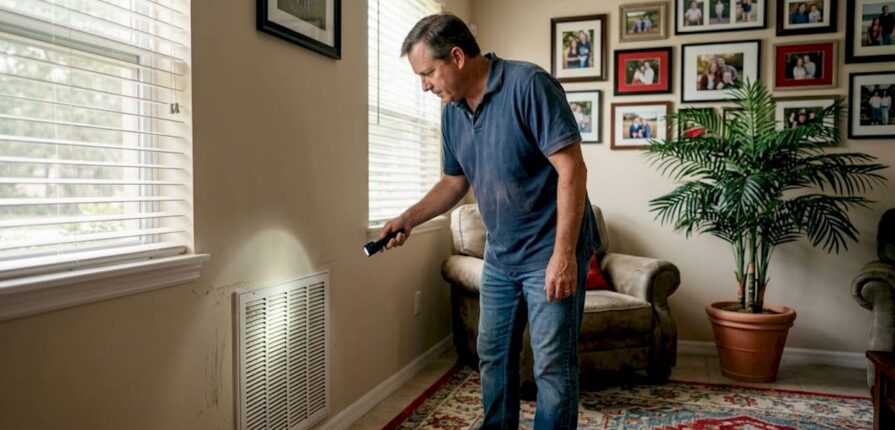
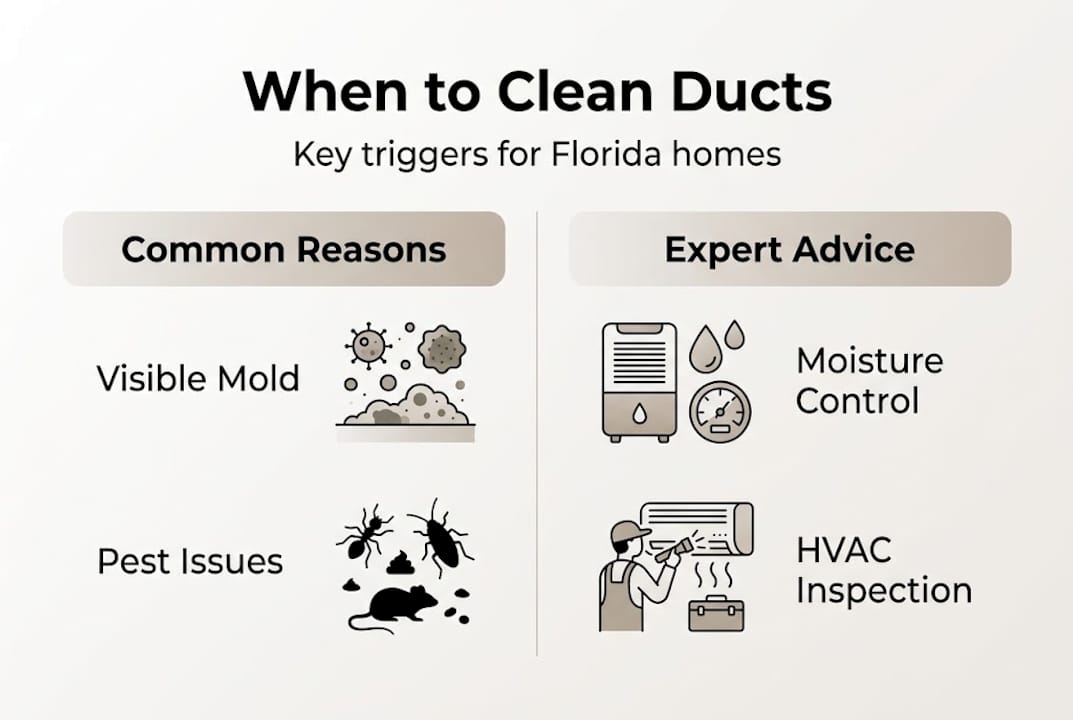
- Duct cleaning should be done only when there is visible mold, pests, or excessive debris.
- Routine duct cleaning is not supported; fixing underlying moisture or pest issues is more effective.
- Proper professional cleaning involves inspection, mechanical agitation, negative pressure vacuuming, and component cleaning.
Duct cleaning is one of those HVAC services that gets heavily marketed but rarely explained clearly. You’ve probably seen the mailers promising better air quality and lower energy bills if you just schedule a cleaning. The truth is more complicated. The EPA takes a measured position on duct cleaning, one that surprises many homeowners. This guide breaks down exactly what the evidence says, when cleaning is genuinely worth it, and what separates a quality job from one that can actually make things worse. Central Florida’s humidity and climate add a local layer to this conversation that most generic guides completely miss.
Table of Contents
- What does duct cleaning really achieve in your home?
- When does duct cleaning make sense? Key signs and situations
- How professional duct cleaning should be performed
- Does duct cleaning really boost HVAC efficiency and indoor air quality?
- A practical Central Florida perspective on duct cleaning
- Professional solutions for healthier, more efficient HVAC systems
- Frequently asked questions
Key Takeaways
| Point | Details |
|---|---|
| Routine cleaning isn’t required | EPA evidence shows most homes don’t need regular duct cleaning—only targeted, as-needed service. |
| Act on visible issues | Duct cleaning makes sense if there is mold, pests, or visible dust and debris being released in your home. |
| Whole-system approach matters | Cleaning the entire HVAC system—coils, fans, and ducts—prevents re-contamination and delivers better efficiency and air quality. |
| Choose providers carefully | Low-quality cleaning can release more pollutants or damage systems, so verify provider skills and the process they use. |
What does duct cleaning really achieve in your home?
Let’s start by examining what duct cleaning is supposed to do and whether the evidence backs up common claims.
Most marketing around duct cleaning promises a combination of improved indoor air quality (IAQ), lower energy bills, and reduced allergy symptoms. These are appealing outcomes. But the EPA’s position is more cautious than most service providers will tell you.
The EPA does not recommend routine duct cleaning; it should be done only on an as-needed basis, because evidence of benefit from duct-only cleaning is limited. That single statement from the EPA is more useful to a Central Florida homeowner than most duct cleaning brochures you’ll ever read.
So what does duct cleaning actually accomplish when it is warranted? Here’s a realistic comparison:
| Marketed Claim | What Evidence Actually Supports |
|---|---|
| Eliminates all indoor allergens | May reduce some dust; doesn’t eliminate all sources |
| Lowers energy bills significantly | Little evidence for duct-only cleaning improving efficiency |
| Prevents mold growth | Only helps if moisture source is also corrected |
| Improves system lifespan | Possible, but whole-system cleaning matters more |
| Required every 3 to 5 years | Not supported; only needed on a case-by-case basis |
The real factors that drive a genuine need for duct cleaning include:
- Visible mold growth inside the duct system or on HVAC components
- Pest infestations such as rodents or insects nesting in ductwork
- Excessive debris or dust visibly releasing into living spaces through vents
- Post-renovation contamination where construction dust has saturated the duct system
- Moving into a previously occupied home where duct history is completely unknown
Notice what’s not on that list: a fixed schedule. Many companies push annual or every-three-year cleanings as a standard upsell. The EPA’s guidance doesn’t support that approach for most homes.
The key distinction is between marketing-driven cleaning and problem-driven cleaning. When you have a professional HVAC repair visit, a qualified technician can actually inspect your system and give you an honest read on whether your ducts need cleaning or whether a different service will serve you better.
The bottom line: Duct cleaning, when done right and for the right reasons, can make a real difference. But doing it routinely without a specific trigger is unlikely to deliver the results you’re paying for.
When does duct cleaning make sense? Key signs and situations
While regular cleaning isn’t always supported by evidence, there are times when duct cleaning is a smart move.
The EPA identifies specific conditions that genuinely justify duct cleaning. Duct cleaning is most justified when there is substantial visible mold, rodent or insect infestation, or excessive dust and debris being released into occupied spaces. These are the thresholds that should drive the decision, not an arbitrary calendar.
Here are the situations that most commonly justify duct cleaning for Central Florida homeowners and property managers:
- Visible mold on hard duct surfaces. If you see mold growth inside your metal ductwork or on HVAC components like the air handler or coil housing, cleaning is warranted. But cleaning alone isn’t the fix. You must find and eliminate the moisture source, or mold will return within months.
- Evidence of pest activity inside ducts. Florida’s warm climate makes it a prime environment for insects and rodents to nest in duct systems. If you notice droppings, nesting material, or unusual odors coming from vents, that’s a red flag requiring immediate attention.
- Excessive dust blowing from vents. If you can see visible particles streaming from supply registers, or if surfaces near vents accumulate thick dust extremely quickly after cleaning, this may indicate duct contamination. This is different from normal household dust accumulation.
- Recent home renovation. Drywall dust, insulation fibers, and sawdust generated during renovations can get pulled into return ducts and spread throughout the home. Post-renovation cleaning is one of the most evidence-supported applications of this service.
- Moving into an older Florida home. If you purchase a home and have no information about prior HVAC maintenance, a one-time inspection and possible cleaning makes sense as a baseline reset.
Pro Tip: Before scheduling duct cleaning for suspected mold or moisture, get a proper HVAC inspection first. In Florida’s climate, mold in ducts almost always means there’s a moisture problem upstream, whether it’s an oversized AC unit, a refrigerant issue causing coil icing, or inadequate insulation on the duct runs themselves. Cleaning without fixing that source is like mopping a floor while leaving the faucet running.
A note on Florida’s climate: Central Florida averages relative humidity between 70% and 90% for much of the year. That creates conditions where moisture can accumulate in ductwork, especially in homes where the AC runs almost continuously. This means mold risk is genuinely higher here than in drier climates, and the EPA’s moisture-related triggers for duct cleaning are more relevant to this region than almost anywhere else in the country.
Statistically, indoor air can be 2 to 5 times more polluted than outdoor air, which makes the quality of your duct system genuinely meaningful for health. But fixing the sources of that pollution matters more than periodic cleaning without cause.
How professional duct cleaning should be performed
If you do decide that duct cleaning is necessary, it’s vital to understand what good service looks like and what to watch out for.
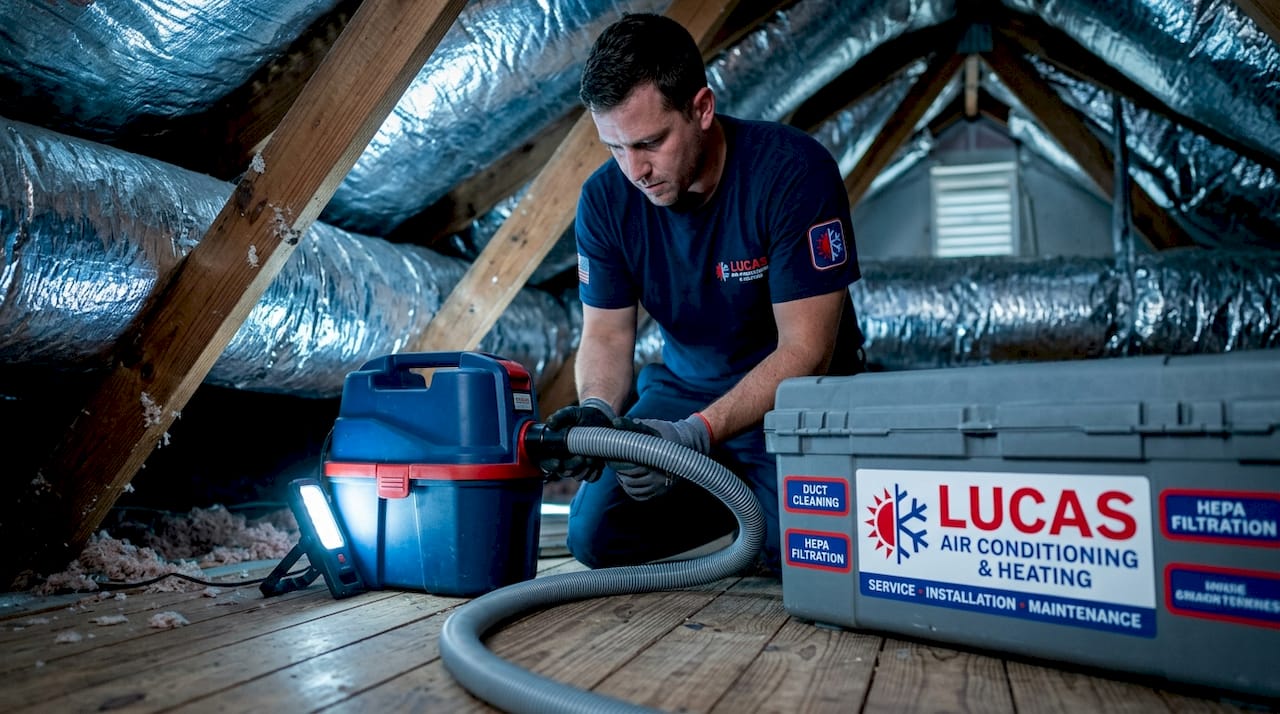
High-quality professional duct cleaning is not a two-man team with a shop vac and a brush attachment. Properly performed duct cleaning combines inspection, mechanical agitation to dislodge debris, and high-powered vacuum extraction with negative pressure containment to avoid blowing contaminants into the home. Every part of that process matters.
Here’s what a thorough professional duct cleaning should include:
- Full system inspection before cleaning begins. A technician should inspect accessible duct sections, the air handler, coil, blower fan, and drain pan. This assessment determines whether cleaning is even necessary and identifies any damage that should be addressed first. Reviewing an HVAC maintenance guide can help you understand what a proper pre-cleaning checklist looks like.
- Negative pressure setup. The company should use a truck-mounted or high-powered portable vacuum that creates negative pressure inside the duct system. This prevents loosened debris from escaping into your living spaces during cleaning.
- Mechanical agitation of duct interiors. Rotating brushes, compressed air whips, or pneumatic tools are used to break debris loose from duct walls. Hand wiping alone is not sufficient for thorough cleaning.
- Supply and return cleaning. Both sides of the system need attention. Cleaning only supply ducts while leaving return ducts contaminated is ineffective.
- Component cleaning. Coils, blower fans, and drain pans should be cleaned alongside the ducts. Understanding HVAC installation steps helps you recognize which components are part of your system.
- Post-cleaning inspection and documentation. A reputable provider should show you before-and-after photos and confirm that registers and access panels are properly resealed.
Here’s what genuinely concerns experienced HVAC professionals about the duct cleaning industry: an inadequate vacuum system can release more dust and contaminants into the home than if the ducts were left alone, and careless or undertrained providers can damage ducts and HVAC components in the process. That’s a real risk with budget operators.
| Question to Ask Your Provider | Why It Matters |
|---|---|
| Do you use negative pressure vacuum systems? | Prevents contamination spread during cleaning |
| Will you clean coils and blower fans too? | Whole-system cleaning produces real results |
| Can you show me inspection photos? | Confirms cleaning was actually needed and completed |
| Are your technicians NADCA certified? | Industry standard for trained duct cleaning professionals |
| Do you use chemical biocides or sealants? | EPA cautions against these; ask before consenting |
Pro Tip: Be very cautious about companies that offer duct cleaning at surprisingly low flat rates. Quality duct cleaning for a standard home takes two to four hours with proper equipment and should be priced accordingly. Using a home HVAC checklist before any service visit helps you ask the right questions and set reasonable expectations.
Does duct cleaning really boost HVAC efficiency and indoor air quality?
Beyond just the cleanliness of your ducts, what does the science really say about energy bills and indoor air?
This is where many homeowners feel let down after spending money on duct cleaning. You paid for a service, but your utility bill looks about the same. Here’s why.
Duct-only cleaning has limited evidence for improving HVAC efficiency; EPA notes the benefits are more associated with cleaning other system components like coils, fans, and heat exchangers. The ducts themselves are largely passive. They’re channels. The components doing the actual work of moving and conditioning air are your blower fan, evaporator coil, and heat exchanger. When those get dirty, efficiency drops. Cleaning the ductwork alone won’t fix that.
The efficiency case for duct cleaning is much stronger when:
- Evaporator coils are cleaned at the same time. Dirty coils are one of the biggest drivers of reduced efficiency and higher energy bills in Florida homes.
- The blower fan is cleaned. A coated fan blade loses significant airflow capacity, forcing the system to work harder.
- Drain pans and drain lines are cleared. A clogged drain line is one of the most common service calls in Central Florida, and it directly affects how well your system dehumidifies.
- Airflow is tested and balanced after cleaning. If cleaning reveals a collapsed duct or major leak, that repair delivers far more efficiency gain than the cleaning itself.
For IAQ, the benefit is real but conditional. You’ll see the biggest indoor air quality improvement from duct cleaning when:
- Visible contamination was present and has been physically removed
- The whole system, not just ducts, was cleaned
- The root cause of contamination was identified and fixed
Critical point from EPA guidance: “Failure to clean a component of a contaminated system can result in re-contamination of the entire system, thus negating any potential benefits.” This is why partial cleaning approaches, especially in older Central Florida homes, rarely deliver lasting results.
Getting a proper HVAC inspection before committing to a full duct cleaning service lets you make a data-driven decision about whether cleaning, component service, or system upgrades will actually move the needle on your comfort and utility costs.
A practical Central Florida perspective on duct cleaning
Here’s an observation from working with homes across Central Florida: the homes where duct cleaning makes the biggest difference are almost never the ones where a homeowner scheduled it proactively on a routine cycle. The real wins come from homes where something specific went wrong, moisture intrusion, pest access, poor filtration, or a post-renovation mess, and the duct cleaning was part of a complete correction plan.
Florida’s humidity changes everything. You can clean ducts perfectly and see mold return within a single season if the underlying moisture issue wasn’t fixed. If mold is present, the key long-term fix is correcting moisture sources, not just cleaning, because mold will recur. That means checking your system sizing, inspecting refrigerant charge, confirming your drain line flows freely, and ensuring duct insulation is intact and vapor-sealed.
The biggest mistake we see homeowners make is treating duct cleaning as a substitute for addressing real problems. A cleaning can look like a solution while the actual issue, an oversized unit that short-cycles and leaves humidity high, keeps creating the conditions for mold. Using the HVAC checklist essentials as your starting point is a much smarter approach than booking a cleaning and hoping for the best.
Don’t let a cleaning delay a repair or an upgrade your system genuinely needs.
Professional solutions for healthier, more efficient HVAC systems
If you’re ready to take preventive action or need more than a cleaning, these professional services can help.
At Lucas Air Conditioning and Heating, we help Central Florida homeowners and property managers make informed decisions about their HVAC systems. Whether you need a thorough evaluation before committing to duct cleaning or you’re exploring whether it’s time for a system upgrade, we bring straightforward answers and experienced hands to every job.
From step-by-step HVAC installation guides that help you understand what a new system involves, to full residential and commercial HVAC installation services for properties across Lake County and surrounding areas, we’re here to help. If your system needs attention now, our residential HVAC repair workflow makes getting service fast and straightforward. Call us or book online to get started.
Frequently asked questions
How often should air ducts be cleaned in a Central Florida home?
Air ducts should only be cleaned as needed, such as when mold, pests, or debris are visible, not on a routine schedule. The EPA recommends against routine duct cleaning because evidence of benefit from duct-only cleaning is limited.
Does regular duct cleaning lower energy bills?
There is little evidence that cleaning ducts alone will improve HVAC efficiency; cleaning coils and other system parts typically produces more meaningful results. The EPA notes limited evidence that duct-only cleaning improves efficiency compared to cleaning coils, fans, and heat exchangers.
What risks are there with poor duct cleaning services?
Improper duct cleaning can release more contamination into your home and may damage HVAC components in the process. The EPA warns that an inadequate vacuum system can spread more dust than if the ducts were left alone.
Is duct cleaning necessary after finding mold?
Yes, cleaning is warranted, but fixing the moisture source is the most important step to prevent mold from returning. Without addressing the root cause, mold will recur regardless of how thorough the cleaning was.
Can duct cleaning help with allergies?
It may help if excessive dust, mold, or pest contamination is present, but addressing the root cause and cleaning the whole HVAC system is typically what delivers real relief. The EPA lists substantial visible mold, pest infestation, and excessive debris as the key conditions where cleaning is justified.
