

TL;DR:
- Indoor air in Central Florida is often more polluted than outdoor air due to humidity and indoor sources.
- Key strategies include controlling moisture, improving ventilation, and upgrading air filters to enhance IAQ.
- Regular HVAC maintenance and monitoring are essential for managing indoor pollutants and ensuring healthy air quality.
Indoor air quality: improve comfort and health at home
The air inside your home may be far more harmful than the air outside. People spend 90% of their time indoors, yet most homeowners and renters never think twice about what they are actually breathing. In Central Florida, where high humidity, frequent storms, and year-round HVAC use are simply part of life, indoor air quality is more than a health topic. It affects how well you sleep, how clearly you think, and how comfortable you feel every single day. This article breaks down what indoor air quality means, what threatens it in local homes, how to measure it, and what you can actually do to make it better.
Table of Contents
- What is indoor air quality and why does it matter?
- Major sources of indoor pollutants in Central Florida homes
- How indoor air quality is measured and benchmarked
- Effective strategies to improve indoor air quality at home
- Our take: Rethinking indoor air quality for Florida homes
- Upgrade your comfort and air quality with expert help
- Frequently asked questions
Key Takeaways
| Point | Details |
|---|---|
| Indoor air pollution is common | Indoor air can contain 2-5 times more pollutants than outdoor air, impacting daily health. |
| Know your home’s risk factors | Central Florida’s humidity and weather raise unique challenges for indoor air quality management. |
| Measurement guides improvement | Tracking CO2, PM2.5, and humidity helps identify when to take action to improve air quality. |
| Upgrade HVAC for cleaner air | Using MERV 13+ filters and scheduled maintenance improves air quality more than home remedies like plants. |
What is indoor air quality and why does it matter?
Indoor air quality (IAQ) refers to the characteristics of air within buildings that affect occupants’ health, comfort, productivity, and performance. That definition might sound dry, but what it means in practice is significant. The air in your living room, bedroom, or kitchen is a mixture of gases, particles, moisture, and biological material. Some of those ingredients are harmless. Others are not.
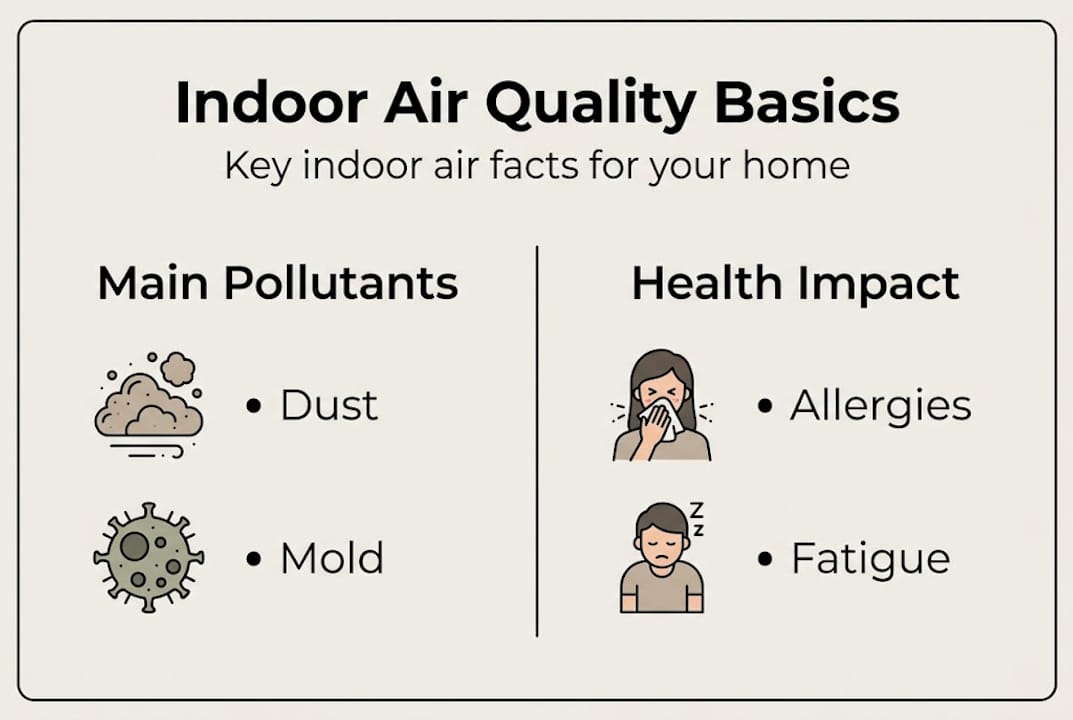
Many people assume that closing windows keeps outdoor pollution out. In reality, the opposite is often true. Indoor air pollutants can be 2 to 5 times higher in concentration than outdoor air, and in some cases the gap is even wider. This happens because buildings trap pollutants while generating new ones from inside sources.
Here is a breakdown of the most common indoor air pollutants:
- Particulate matter (PM2.5 and PM10): Tiny particles from dust, pollen, pet dander, and combustion that irritate your lungs.
- Volatile organic compounds (VOCs): Gases released from paint, adhesives, cleaning products, and furniture.
- Carbon monoxide (CO): A colorless, odorless gas from gas appliances, grills, or attached garages.
- Radon: A radioactive soil gas that seeps up from the ground, often undetected.
- Mold and bacteria: Biological growth fueled by moisture, very common in Florida.
- Nitrogen dioxide: Produced by gas stoves and unvented heaters.
“Indoor air can contain dozens of pollutants simultaneously, often at concentrations that exceed what you would find on a busy urban street.”
For Central Florida residents, this matters in specific ways. Pollen from local trees and grasses infiltrates homes every time a door opens. Mold finds every damp corner in our humid climate. And because we run our HVAC systems nearly year-round, whatever is circulating in your ductwork gets distributed throughout every room. Poor IAQ has been linked to worsened asthma, increased risk of heart disease, and measurable declines in cognitive function. These are not rare edge cases. They are documented outcomes for people living and working in buildings with poor ventilation and contaminated air.
Understanding IAQ is the first step toward doing something about it. Once you know what you are dealing with, the path to better air at home becomes much clearer.
Major sources of indoor pollutants in Central Florida homes
Knowing the definition, the next step is to recognize what causes poor indoor air quality in your home. In Central Florida, several factors combine to create conditions that are genuinely different from what homeowners in drier or cooler climates face.
Humidity and moisture are the single biggest drivers of IAQ problems in this region. Florida’s warm, wet climate means that any gap in humidity control can lead to mold growth within 24 to 48 hours on damp surfaces. Florida winter heating traps moisture without dehumidification, which surprises many residents who expect winter to mean drier air. After storms or flooding, the risk spikes dramatically.
Here is a comparison of common pollutant sources and their relative impact in Central Florida homes:
| Source | Pollutants generated | Florida-specific risk level |
|---|---|---|
| HVAC systems and ductwork | Dust, mold spores, bacteria | High (year-round use) |
| Cooking | PM2.5, VOCs, CO | Moderate |
| Cleaning products | VOCs | Moderate |
| Outdoor air infiltration | Pollen, PM2.5, ozone | High (seasonal) |
| Building materials | VOCs, formaldehyde | Moderate |
| Mold and moisture | Mold spores, mycotoxins | Very high |
| Pets | Dander, allergens | Moderate to high |
The role of HVAC systems in Florida cannot be overstated. Because your system runs so often, it acts as the lungs of your home. A dirty or poorly maintained system recirculates dust, mold spores, and other particles constantly. Without regular filter changes and duct cleaning, your HVAC becomes a pollutant delivery system rather than a comfort solution.
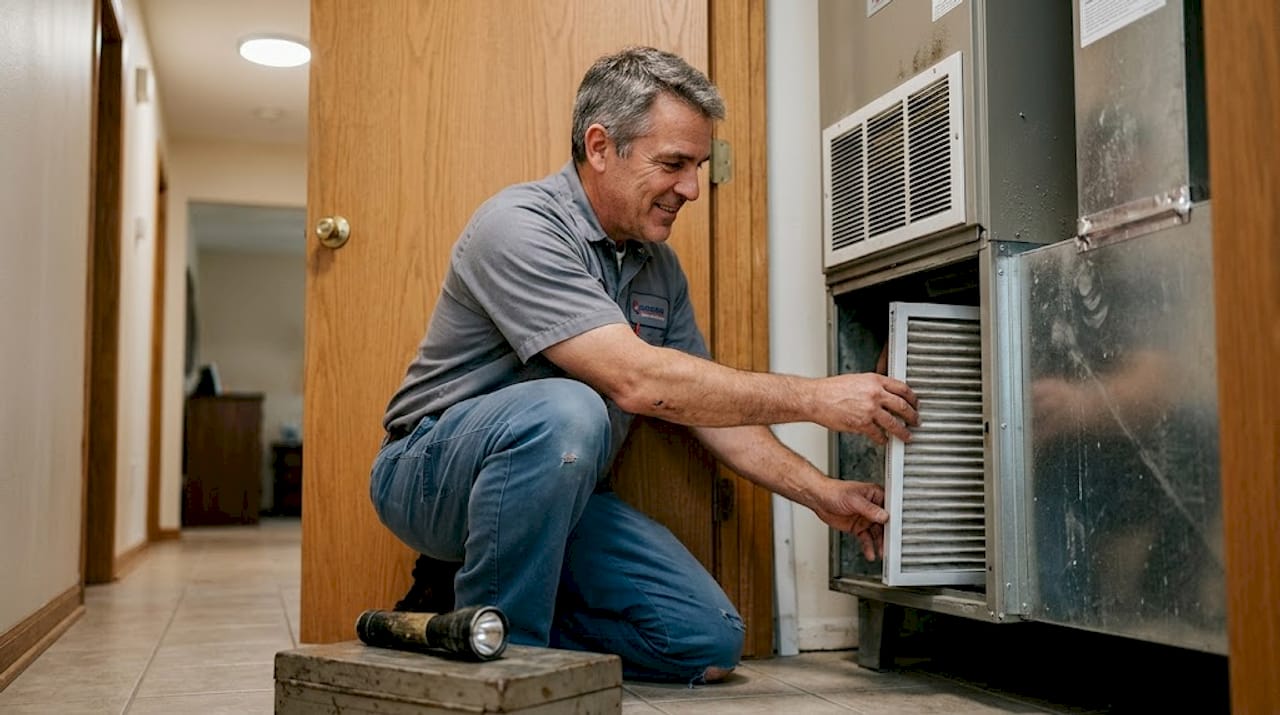
Everyday activities also add up. Frying food on the stove, spraying aerosol cleaners, or even burning scented candles can spike indoor PM2.5 and VOC levels sharply. VOCs from cooking and smoking can reach concentrations far beyond safe exposure limits in just a few minutes in an unventilated kitchen.
Another overlooked source is your building materials and furniture. New flooring, cabinetry, and upholstered furniture off-gas VOCs for months after installation. This is especially relevant if you are in a newer home or have recently renovated.
Pro Tip: Open windows on low-humidity days to cross-ventilate your home naturally. Combining this with natural ventilation strategies like window shutters can reduce indoor VOC buildup without increasing energy costs significantly.
Finally, seasonal wildfire smoke from nearby areas can push fine particulates indoors even when windows are closed. Central Florida experienced multiple smoke events in recent years that measurably affected indoor PM2.5 levels across the region.
How indoor air quality is measured and benchmarked
Once you recognize what can pollute your air, it helps to know how air quality is actually measured and assessed. This is where numbers become useful, and where many homeowners feel lost. Let us simplify it.
The four most important IAQ measurements are:
- CO2 (carbon dioxide): Indicates how well a space is ventilated. High CO2 means stale air and not enough fresh air exchange.
- PM2.5: Fine particles smaller than 2.5 microns. The EPA sets an annual mean target of 12 micrograms per cubic meter (µg/m³) for outdoor air, and indoor levels should stay at or below that.
- VOCs: Measured in parts per billion (ppb). There is no single universal limit, but lower is always better.
- Relative humidity: Ideally kept between 30 and 50 percent indoors. Higher than 60 percent creates conditions for mold.
Here is a quick reference table for key IAQ benchmarks:
| Measurement | Acceptable range | Concern threshold |
|---|---|---|
| CO2 | Below 1,000 ppm | Above 1,500 ppm |
| PM2.5 | Below 12 µg/m³ | Above 35 µg/m³ |
| Relative humidity | 30 to 50 percent | Above 60 percent |
| VOCs | Varies by compound | Any sustained elevation |
ASHRAE benchmarks set CO2 below 700 to 1,000 ppm above outdoor baseline as an indicator of adequate ventilation. Outdoor CO2 is currently around 420 ppm globally, so a well-ventilated room should stay below 1,000 to 1,100 ppm total. If your home regularly reads above 1,500 ppm, that signals a ventilation problem worth addressing.
However, here is an important nuance that often gets missed: CO2 measures ventilation but not overall IAQ. A space can have perfectly good CO2 levels while still containing elevated VOCs or particulate matter from indoor sources. CO2 is a ventilation proxy, not an all-in-one air quality score. Do not rely on it alone.
For practical monitoring, you have two options. Low-cost consumer monitors (such as those from IQAir or Airthings) can give you a reasonable real-time snapshot of CO2, PM2.5, humidity, and VOCs. Professional testing goes deeper, identifying specific mold species, radon levels, and precise VOC compounds. After a flood event, a nearby wildfire, or a renovation project, professional testing is worth the investment.
Using a home HVAC maintenance checklist alongside your monitoring data gives you a fuller picture of whether your system is contributing to or solving your air quality issues.
Effective strategies to improve indoor air quality at home
Now that you know how to measure air quality, here are proven approaches you can actually put into practice. The EPA identifies three core methodologies for improving IAQ, and applying all three together delivers far better results than any single fix.
- Source control: The most effective approach. Identify and eliminate or reduce the source of the pollutant. Switch to low-VOC paint and cleaners. Run your range hood every time you cook. Keep moisture-prone areas dry and well-ventilated. Fix leaks immediately rather than letting dampness linger.
- Ventilation: Dilute indoor air with fresh outdoor air at rates that meet ASHRAE 62.1 and 62.2 standards. This means ensuring your HVAC system has adequate fresh air intake and that exhaust fans in kitchens and bathrooms are used consistently. Energy recovery ventilators (ERVs) are especially effective in Florida because they bring in fresh air without defeating your air conditioning.
- Filtration: Upgrading to a MERV 13 or higher filter is one of the most cost-effective steps most homeowners can take. MERV 13 filters capture a large percentage of fine particles, including many airborne virus particles, pollen, and mold spores.
It is worth addressing some common myths here. Houseplants are often promoted as natural air purifiers, but they require 10 to 1,000 plants per square meter to produce a measurable effect on VOC levels. A few ferns in your living room will not move the needle. Similarly, DIY air fresheners or scented candles actually add VOCs rather than removing them.
For Central Florida homes specifically, humidity control deserves extra attention. Running a properly sized HVAC system keeps indoor humidity below 60 percent. If your system is oversized, it cools quickly but does not run long enough to dehumidify properly. A preventative HVAC maintenance plan helps catch sizing mismatches and equipment issues before they become serious IAQ problems.
Pro Tip: Run your HVAC fan continuously at a low speed rather than only when heating or cooling. This keeps air moving through your filter consistently, which removes more particles throughout the day rather than only during active cycles.
When considering upgrading your HVAC for better IAQ, look at systems with built-in air purification, UV germicidal lights, and fresh air ventilation features. These are not luxury add-ons in Florida. Given our climate, they are genuinely practical tools for maintaining healthier air year-round.
Our take: Rethinking indoor air quality for Florida homes
Most IAQ advice is written for a generic American home in a temperate climate. Central Florida is not that. We have a climate that is warm almost every day of the year, with humidity that climbs into uncomfortable territory from spring through fall. Storms can saturate a home in hours. Our HVAC systems work harder and longer than systems almost anywhere else in the country.
What we have seen firsthand is that homeowners who treat IAQ as a one-time fix consistently struggle more than those who treat it as an ongoing habit. Changing your filter once and buying a monitor does not solve the underlying issue if your ductwork is moldy or your system is undersized.
The comfortable truth is that HVAC’s full impact on comfort goes well beyond temperature. A system that manages humidity, filters your air well, and brings in fresh outdoor air is a fundamentally different living experience than one that simply raises or lowers the thermostat. Homeowners who make that shift notice it immediately, in their sleep, their allergies, and their overall sense of well-being at home.
IAQ is not a health scare topic. It is a quality of life issue, and Florida homeowners deserve to understand it clearly.
Upgrade your comfort and air quality with expert help
Ready to tackle your home’s unique air quality issues? Here’s how Lucas Air can help. Central Florida homes have specific challenges that need local expertise, not generic advice.

At Lucas Air Conditioning and Heating, we specialize in professional HVAC installation designed to match your home’s actual needs, including humidity control and fresh air ventilation features. Our maintenance agreements keep your system running clean and efficient year-round, so you are not discovering mold or filter failures at the worst possible time. And if your system just needs a reset, our tune-up services are a cost-effective way to improve performance and air quality quickly. Give us a call or schedule online to get started.
Frequently asked questions
What are the main indoor air pollutants that affect health?
The most common indoor pollutants are particulate matter (dust and pollen), VOCs, mold, carbon monoxide, and radon, all of which can cause respiratory problems, headaches, and more serious long-term health effects.
How can I quickly check my home’s indoor air quality?
A portable monitor that tracks CO2 and PM2.5 is a solid starting point, and CO2 above 1,000 ppm suggests you need better ventilation. You can also watch for physical signs like musty odors, frequent allergy symptoms, or rooms that feel stuffy even after the AC runs.
What is the best HVAC filter for improving indoor air quality?
The EPA recommends a filter rated MERV 13 or higher for effective removal of fine particles, including pollen, mold spores, and many airborne contaminants common in Central Florida homes.
Can indoor plants improve air quality in my home?
Plants have a minimal practical effect on IAQ because you would need 10 to 1,000 plants per square meter to make a measurable difference. Focus on filtration and source control for real, consistent results.
How does Central Florida weather affect my home’s air quality?
Humidity, flooding, and seasonal storms can create the moisture conditions that trap moisture and grow mold rapidly inside walls and HVAC systems, making continuous dehumidification and ventilation essential rather than optional.
