
Choosing the right heating and cooling system for your Central Florida home often means sorting through a maze of unfamiliar words and specialist terms. For many homeowners, understanding HVAC terminology is the first step toward smarter decisions about system repairs, upgrades, and regular care. By breaking down these core concepts, you gain the confidence to ask questions, compare your options, and make choices that fit your home’s comfort needs and budget.
Table of Contents
- Key HVAC Terms Every Homeowner Should Know
- Types of HVAC Systems and Their Features
- Essential Maintenance and Repair Vocabulary
- Understanding Efficiency Ratings and Costs
- Common Misconceptions and Costly Mistakes
Key Takeaways
| Point | Details |
|---|---|
| Understanding HVAC Terms | Familiarize yourself with fundamental HVAC terminology like BTU, SEER rating, and refrigerant to make informed decisions about your home’s comfort system. |
| Choosing the Right System | Select an HVAC system based on your home size, budget, and energy efficiency needs to ensure optimal climate control. |
| Importance of Maintenance | Regular maintenance, including preventative checks and filter replacements, is essential for system efficiency and longevity. |
| Awareness of Common Mistakes | Avoid common misconceptions like DIY repairs and neglecting routine check-ups to prevent costly HVAC issues and repairs. |
Key HVAC Terms Every Homeowner Should Know
Understanding the language of heating, ventilation, and air conditioning can help Florida homeowners make smarter decisions about their home comfort systems. HVAC terminology might seem complex, but breaking down key terms makes the entire process more approachable.
Here are some fundamental HVAC terms every Central Florida homeowner should know:
- BTU (British Thermal Unit): A measurement of heat energy representing the amount of thermal energy needed to raise one pound of water by one degree Fahrenheit
- SEER Rating (Seasonal Energy Efficiency Ratio): A metric that measures an air conditioner’s cooling efficiency, with higher numbers indicating better energy performance
- Condenser: The outdoor unit of your air conditioning system that releases heat from your home
- Air Handler: The indoor component responsible for circulating cooled or heated air throughout your home
- Refrigerant: The special chemical compound that absorbs and releases heat to enable cooling in air conditioning systems
Navigating these terms helps homeowners understand system performance, maintenance needs, and potential upgrades. For example, a high SEER rating means lower electricity bills and more efficient cooling during Florida’s intense summers.
Understanding these key terms empowers homeowners to make informed decisions about their HVAC systems.
Some additional important terms include compressor (the heart of your AC system that pumps refrigerant), evaporator coil (the indoor component that absorbs heat), and heat pump (a system that can both heat and cool your home).
Pro tip: Ask your HVAC technician to explain any terms you don’t understand during system consultations or maintenance visits.
Types of HVAC Systems and Their Features
Florida homeowners have several HVAC system options designed to handle our unique climate challenges. HVAC system classifications typically fall into two primary categories: central systems and self-contained unit packages, each with distinct advantages for home comfort.
Here are the most common HVAC system types for Florida homes:
- Split System: Most traditional residential setup with separate indoor and outdoor units
- Indoor air handler contains evaporator coil
- Outdoor unit houses compressor and condenser
- Typically most cost-effective for moderate-sized homes
- Heat Pump System: Versatile option providing both heating and cooling
- Works efficiently in moderate climates like Central Florida
- Can reverse refrigeration cycle to heat or cool
- Excellent for homes needing year-round temperature control
- Packaged System: All-in-one unit installed outside or on roof
- Compact design ideal for homes with limited indoor space
- Contains compressor, condenser, and air handler in single unit
- Often used in mobile homes or smaller residential spaces
- Ductless Mini-Split System: Flexible cooling solution with individual zone control
- No ductwork required
- Perfect for room additions or homes without central air
- Each unit can be independently controlled
Central HVAC systems offer more comprehensive temperature management compared to individual room units.
When selecting an HVAC system, homeowners should consider factors like home size, budget, energy efficiency, and specific cooling requirements. HVAC system design involves complex engineering to match system capabilities with unique home characteristics.
Understanding these system types helps Florida residents make informed decisions about home comfort, ensuring optimal cooling during intense summer months and efficient heating during occasional cooler periods.
Here’s a quick comparison of popular HVAC system types for Florida homes:
| System Type | Best For | Space Needs | Pros |
|---|---|---|---|
| Split System | Moderate-sized homes | Requires indoor/outdoor | Cost-effective, familiar |
| Heat Pump | Year-round comfort | Moderate to large homes | Efficient heating/cooling |
| Packaged System | Mobile or small homes | Limited indoor space | Compact, easy installation |
| Ductless Mini-Split | Room additions, no ducts | Individual zones | Flexible, zoned control |
Pro tip: Consult a local HVAC professional to perform a comprehensive home assessment before selecting your system type.
Essential Maintenance and Repair Vocabulary
Navigating HVAC maintenance requires understanding a specialized set of technical terms that can help Florida homeowners communicate effectively with service professionals. HVAC maintenance terminology provides crucial insights into system care and potential issues.
Here are essential maintenance and repair vocabulary terms every Florida homeowner should know:
- Preventative Maintenance: Regular inspections and service to prevent potential system failures
- Includes cleaning, lubricating, and adjusting system components
- Helps extend equipment lifespan
- Reduces unexpected breakdowns
- Refrigerant Charge: The precise amount of refrigerant in an HVAC system
- Impacts cooling efficiency and system performance
- Must be carefully balanced by professional technicians
- Too little or too much can cause system problems
- Filter Replacement: Routine process of changing air filters to maintain system efficiency
- Typically recommended every 1-3 months
- Prevents dust and debris from entering system
- Critical for maintaining indoor air quality
- Diagnostic Testing: Comprehensive system evaluation to identify potential issues
- Uses specialized tools and techniques
- Detects hidden problems before they become major repairs
- Includes electrical, mechanical, and performance assessments
Understanding maintenance vocabulary empowers homeowners to make informed decisions about their HVAC system care.
Professional HVAC technicians use specific maintenance standards to ensure comprehensive system evaluation and repair. These standards guide the inspection, cleaning, and upkeep of both residential and commercial HVAC systems, helping homeowners understand the depth of professional maintenance.
Knowing these terms can help you communicate more effectively with HVAC professionals, understand service recommendations, and make more informed decisions about your home’s comfort system.
Pro tip: Ask your HVAC technician to explain any unfamiliar terms during maintenance visits to improve your understanding of system care.
Understanding Efficiency Ratings and Costs
For Florida homeowners, understanding HVAC efficiency ratings is crucial to managing energy consumption and controlling utility expenses. Air conditioner efficiency metrics provide valuable insights into system performance and potential cost savings.
Key efficiency ratings every homeowner should understand include:
- SEER (Seasonal Energy Efficiency Ratio): Measures cooling efficiency
- Higher numbers indicate better energy performance
- Minimum current standard is 14 SEER in Southern states like Florida
- Can significantly impact monthly electricity bills
- EER (Energy Efficiency Ratio): Measures system efficiency at specific temperature conditions
- Represents cooling output divided by electrical input
- Higher ratings mean more efficient cooling
- Important for understanding peak performance
- ENERGY STAR Rating: Certification for high-efficiency systems
- Indicates equipment meeting strict energy conservation guidelines
- Typically 15% more efficient than standard models
- Can lead to substantial long-term cost savings
- HSPF (Heating Seasonal Performance Factor): Measures heat pump efficiency
- Specifically evaluates heating system performance
- Higher numbers indicate better winter heating efficiency
- Critical for systems providing both heating and cooling
Efficiency ratings directly translate to potential energy savings and lower utility costs for Florida homeowners.
Updated energy efficiency standards in 2023 introduced more realistic performance metrics like SEER2 and EER2, providing homeowners with more accurate representations of real-world system performance. These new standards help consumers make more informed decisions about HVAC investments.
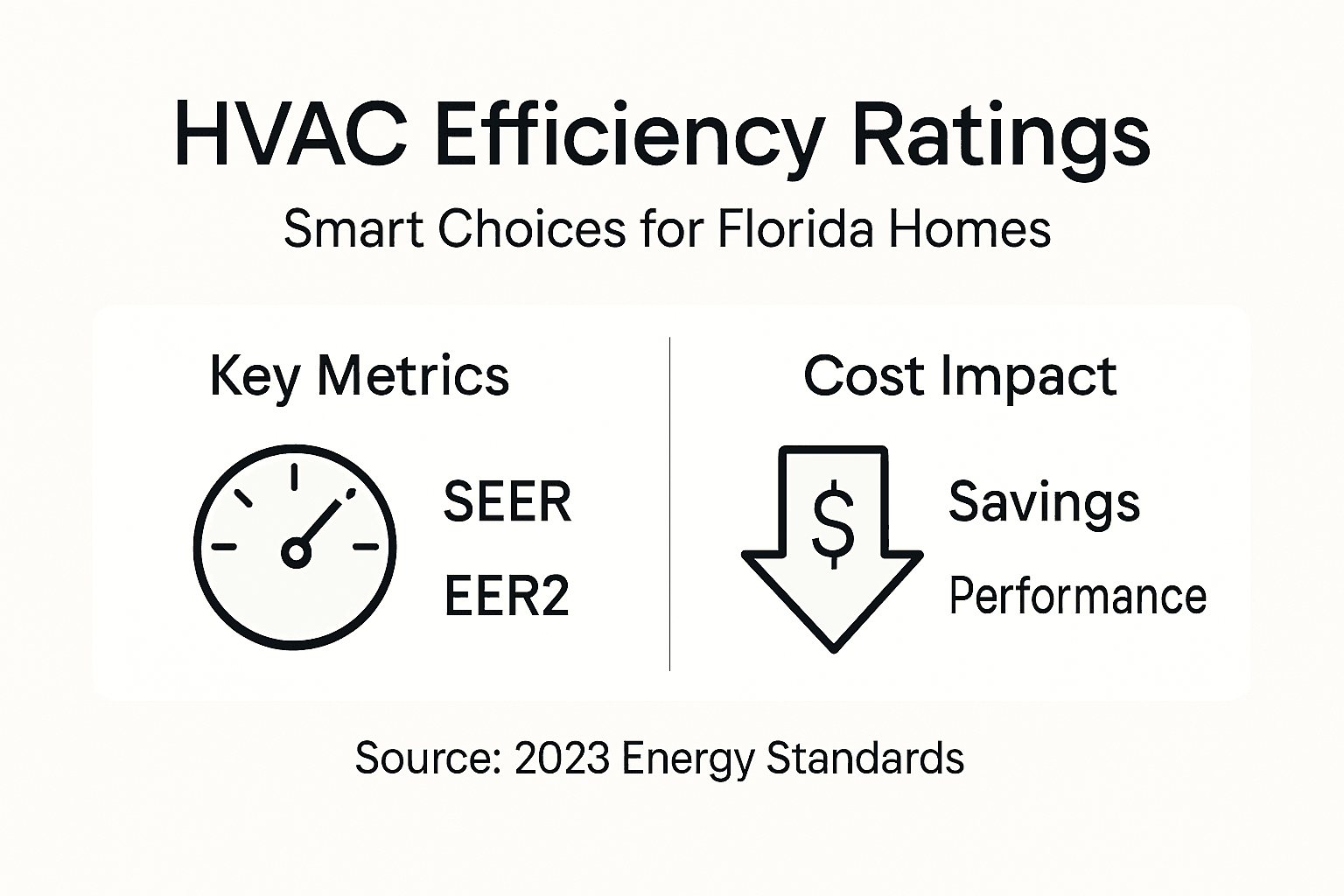
Choosing a high-efficiency system can lead to significant long-term savings, especially in Florida’s demanding climate where air conditioning runs most of the year. Understanding these ratings helps homeowners balance upfront costs with potential energy savings.
To help demystify efficiency metrics, here’s how popular HVAC ratings differ:
| Metric | Measures | Typical Range | Impact on Costs |
|---|---|---|---|
| SEER | Cooling efficiency | 14 to 22+ | Direct impact on bills |
| EER | Peak performance | 8 to 12+ | Reveals hot-weather savings |
| ENERGY STAR | Overall efficiency | Meets strict standards | Higher upfront, lower bills |
| HSPF | Heating efficiency | 7.7 to 10+ | Important for heat pumps |
Pro tip: Ask your HVAC professional to calculate potential energy savings when considering a system upgrade based on efficiency ratings.
Common Misconceptions and Costly Mistakes
Many Florida homeowners inadvertently make expensive HVAC mistakes that can dramatically impact system performance and longevity. Common air conditioner problems often stem from misunderstandings about system maintenance and operation.
Here are the most critical misconceptions that can lead to costly repairs:
- DIY Repairs: Believing all HVAC maintenance can be handled without professional help
- Complex systems require specialized knowledge
- Improper repairs can void manufacturer warranties
- Risk of additional damage is high
- Ignoring Regular Maintenance: Thinking HVAC systems don’t need routine checkups
- Skipping annual inspections leads to unexpected breakdowns
- Minor issues can escalate into major, expensive repairs
- Reduces system efficiency and lifespan
- Incorrect Filter Replacement: Misunderstanding filter maintenance importance
- Using wrong filter types
- Forgetting to change filters regularly
- Can cause significant airflow and efficiency problems
- Oversizing/Undersizing Equipment: Assuming bigger is always better
- Oversized systems waste energy
- Undersized systems strain to cool your home
- Leads to higher utility bills and premature system failure
Not all HVAC problems are visible, and professional expertise is crucial for proper diagnosis.
HVAC system maintenance standards emphasize the importance of professional assessment and proper system commissioning. These guidelines help homeowners avoid common pitfalls that can lead to expensive repairs and inefficient cooling.
Understanding these potential mistakes can save Florida homeowners thousands of dollars in unnecessary repairs and energy costs. Each misconception represents a potential risk to your home’s comfort and your wallet.
Pro tip: Schedule annual professional HVAC inspections to catch potential issues before they become expensive problems.
Make Smart HVAC Choices with Lucas Air Conditioning and Heating
Understanding HVAC terminology like SEER rating and refrigerant charge is the first step to improving your home comfort and energy efficiency. If confusing terms or maintenance challenges have left you uncertain, Lucas Air Conditioning and Heating is here to provide clear, expert guidance. Our team is dedicated to helping Florida homeowners navigate system options, maintenance needs, and cost-saving upgrades.
Start maximizing your HVAC investment today by exploring trusted solutions in our Air Conditioning Archives – Lucas Air Conditioning and Heating. Take advantage of Special Offers designed to deliver exceptional value. Visit Lucas Air Conditioning and Heating to schedule a consultation with a veteran-owned company committed to protecting your home comfort and lowering your energy bills now.
Frequently Asked Questions
What does BTU mean in HVAC terminology?
BTU, or British Thermal Unit, measures heat energy. It represents the amount of thermal energy required to raise one pound of water by one degree Fahrenheit, helping homeowners understand their heating and cooling requirements.
How is SEER rating important for my air conditioner?
The SEER (Seasonal Energy Efficiency Ratio) rating measures an air conditioner’s cooling efficiency. A higher SEER rating indicates better energy performance, which can lead to lower electricity bills in the long run.
What is the difference between a split system and a packaged system?
A split system has separate indoor and outdoor units, allowing for efficient air conditioning in larger homes. In contrast, a packaged system combines all components into a single outdoor unit, making it ideal for homes with limited indoor space.
How often should I replace my HVAC air filters?
It is recommended to replace air filters every 1-3 months. Regular filter replacement maintains system efficiency, improves indoor air quality, and prevents dust and debris from entering the HVAC system.
