
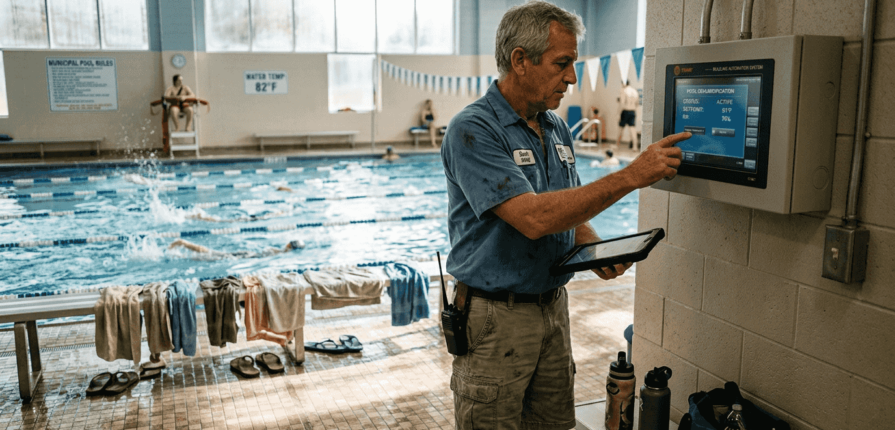
You might assume that opening a few windows or running a basic ventilation fan keeps your indoor pool area comfortable and safe. That assumption can cost you thousands in structural repairs and energy waste. Indoor pools generate relentless moisture that seeps into walls, breeds mold, and corrodes equipment when humidity and temperature aren’t controlled with precision. Specialized HVAC systems do far more than circulate air. They manage the delicate balance of humidity, temperature, and air quality that protects your investment and ensures every swim is comfortable. This guide explains how HVAC solutions tailored for pools deliver comfort, prevent damage, and cut energy costs in Central Florida.
Table of Contents
- Why HVAC Is Essential For Pool Comfort And Structural Protection
- HVAC Design Principles For Optimal Pool Environment Control
- Energy-Efficient HVAC Technologies And Maintenance For Pool Owners
- Practical Steps For Pool Owners To Enhance HVAC Performance And Comfort
- Improve Your Pool Comfort With Expert HVAC Services
Key takeaways
| Point | Details |
|---|---|
| Specialized HVAC controls humidity and temperature | Proper systems maintain 50-60% relative humidity and air temperature 2-4°F above water to prevent condensation and structural damage. |
| Proper HVAC design prevents condensation | Four to six air changes per hour with balanced air distribution eliminate moisture accumulation and protect building materials. |
| Energy-efficient HVAC solutions reduce costs | Variable-speed pumps and multi-functional dehumidifiers cut energy consumption by 50-80%, saving hundreds annually. |
| Optimal air distribution improves comfort | Ceiling diffusers and balanced supply/return vents eliminate drafts and stagnant zones for consistent swimmer comfort. |
| Regular maintenance extends system lifespan | Cleaning coils and filters every few months in corrosive pool environments prevents efficiency loss and premature failure. |
Why HVAC is essential for pool comfort and structural protection
Indoor pools produce constant moisture through evaporation, releasing gallons of water into the air daily. This moisture doesn’t simply disappear. Without effective dehumidification, excess humidity condenses inside walls, saturating drywall, insulation, and framing. High humidity in natatoriums leads to interstitial condensation and moisture accumulation, causing premature enclosure failures and structural damage. You’re looking at costly repairs to replace rotted wood, compromised insulation, and water-damaged finishes.
Mold and mildew thrive in humid environments. Indoor swimming pools generate substantial moisture that without proper dehumidification causes mold and mildew spread, damaging building materials. Black mold colonies appear on ceilings and walls, creating health risks and unsightly stains. Breathing in mold spores triggers allergies and respiratory issues, making your pool area unpleasant and potentially dangerous.
Maintaining relative humidity between 50-60% prevents these problems entirely. Specialized HVAC systems continuously monitor and adjust moisture levels, extracting excess water vapor before it condenses. Proper air temperature control also plays a critical role. Setting air temperature slightly above pool water temperature limits evaporation at the source. When air is cooler than water, evaporation accelerates, pumping more moisture into your space and forcing your dehumidifier to work harder.
HVAC systems also tackle chemical odors and improve air quality. Chlorine and other pool chemicals release vapors that irritate eyes and lungs. Adequate ventilation exchanges stale, chemical-laden air with fresh outdoor air, diluting irritants. Understanding the role HVAC plays in home comfort helps you appreciate how these systems do more than heat or cool. They create a balanced environment where structural integrity, air quality, and comfort coexist.
Key factors HVAC controls in pool environments:
- Humidity levels to prevent condensation and mold growth
- Air temperature relative to water temperature to reduce evaporation
- Ventilation rates to remove chemical odors and introduce fresh air
- Air distribution to eliminate drafts and stagnant zones
HVAC design principles for optimal pool environment control
ASHRAE establishes design parameters for indoor pool environments, balancing comfort with building protection. ASHRAE recommends specific design conditions for pool environments considering usage, air and water temperatures, and relative humidity. These standards vary by pool type, but the core principle remains: maintain air temperature 2-4°F above pool water to reduce evaporation. If your pool water sits at 82°F, aim for air temperature around 84-86°F. This small difference dramatically cuts moisture release.
Relative humidity targets between 50-60% strike the optimal balance. Lower humidity feels dry and uncomfortable, while higher humidity risks condensation. Achieving this range requires continuous dehumidification, especially in Florida’s naturally humid climate. Four to six air changes per hour are recommended to maintain air quality and prevent stagnant pockets. Air distribution is critical for comfort and preventing drafts and stagnant pockets with recommended air changes and diffuser placement.
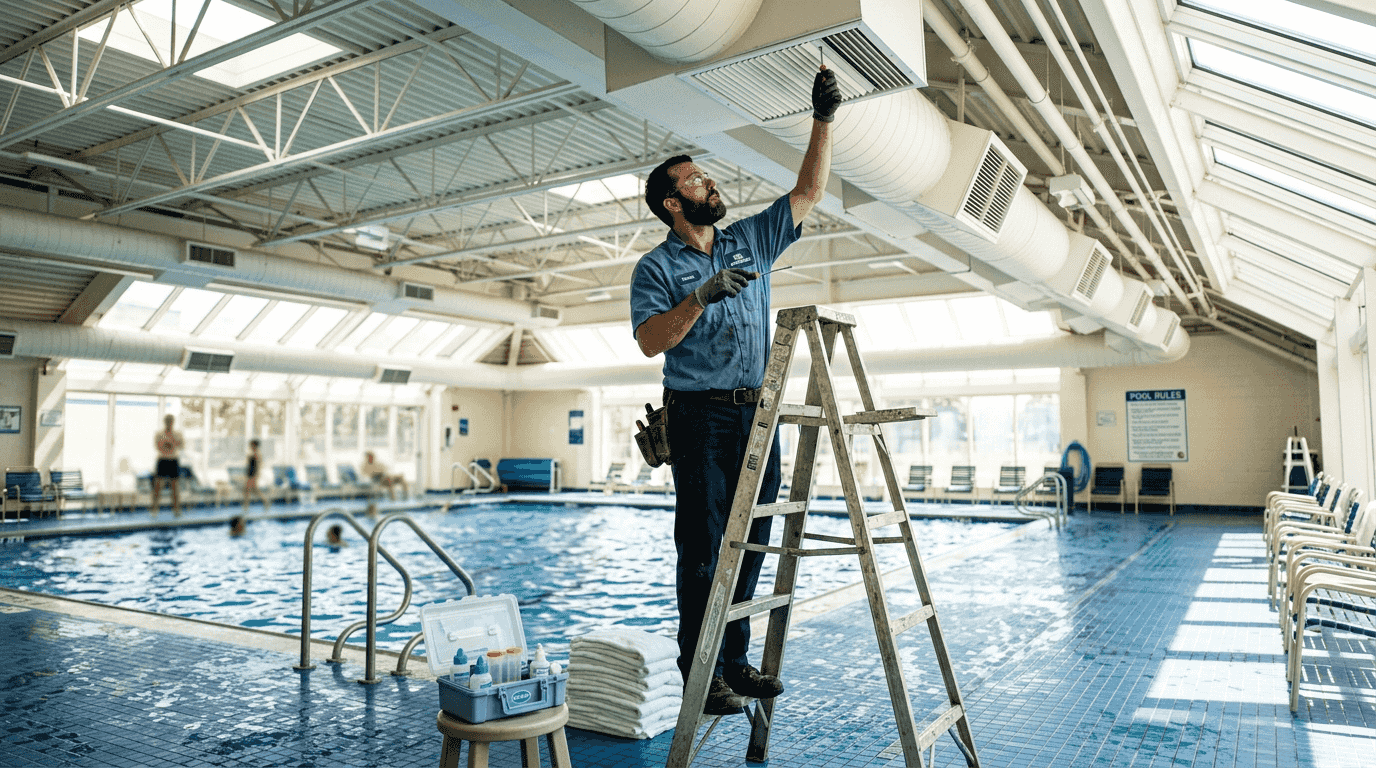
Air distribution matters as much as temperature and humidity. Ceiling or high sidewall diffusers deliver conditioned air evenly across the pool area, preventing drafts at water level where swimmers feel them most. Poorly placed vents create cold spots or leave areas with stagnant, humid air. Balanced supply and return air vents ensure smooth circulation without uncomfortable gusts. Swimmers should feel gentle, consistent airflow, not blasts of cold air.
| Pool Type | Air Temp (°F) | Water Temp (°F) | Relative Humidity (%) | Air Changes/Hour |
|---|---|---|---|---|
| Private Residential | 82-86 | 78-82 | 50-60 | 4-6 |
| Public Recreation | 80-84 | 78-82 | 50-60 | 6-8 |
| Competitive/Lap | 78-82 | 78-80 | 50-60 | 6-8 |
Proper HVAC design follows these principles:
- Calculate pool surface area and expected evaporation rates to size dehumidification capacity accurately.
- Position supply diffusers high on walls or ceilings to distribute air without creating drafts at water level.
- Install return air grilles low on walls to capture humid air before it rises and condenses.
- Integrate outdoor air ventilation to dilute chemical vapors and maintain fresh air quality.
- Use corrosion-resistant materials for all HVAC components exposed to pool chemicals and moisture.
Exploring HVAC system types helps you understand which configurations work best for pool environments. Dedicated pool dehumidifiers often integrate heating, cooling, and ventilation into a single unit, simplifying installation and control.
Energy-efficient HVAC technologies and maintenance for pool owners
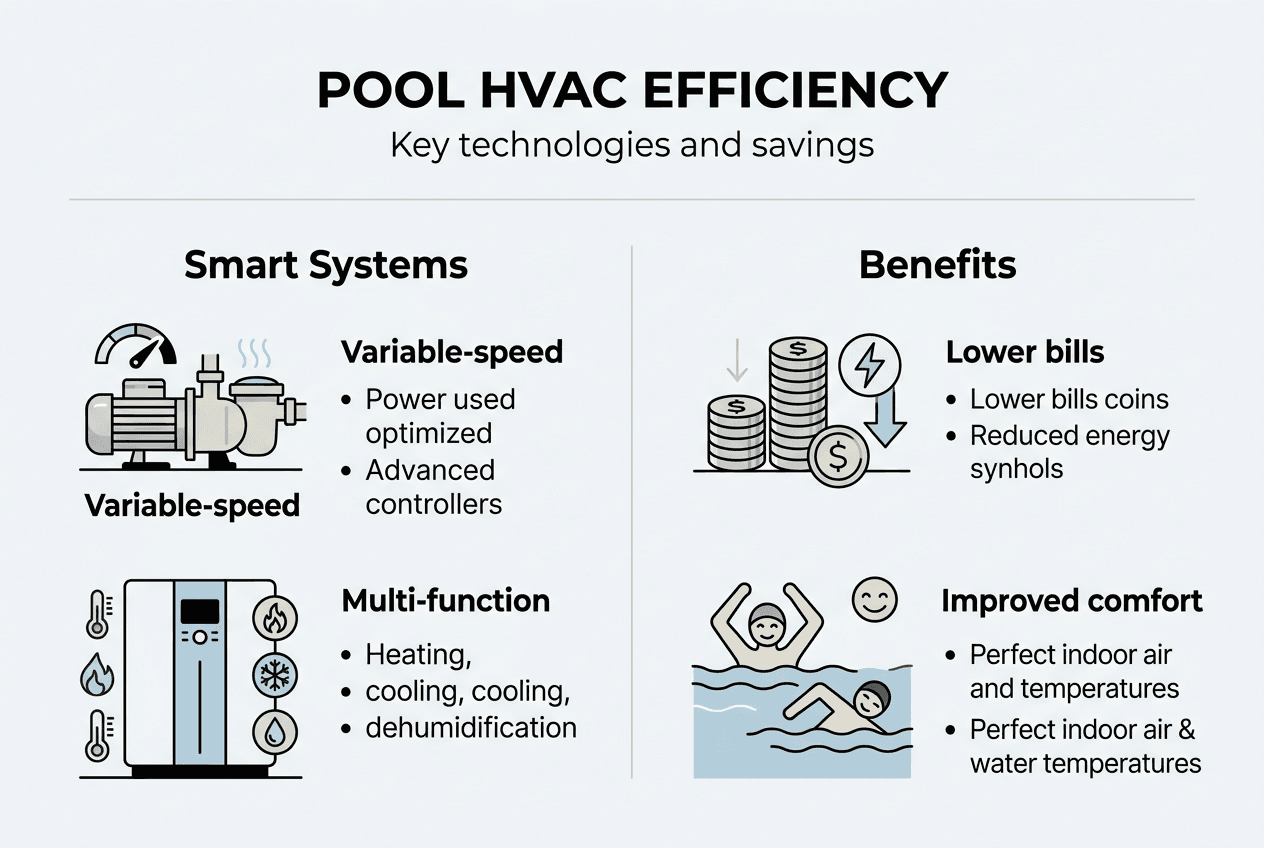
Multi-functional dehumidifiers combine dehumidification with heating, cooling, and pool water heating in one system. DCA dehumidifiers recover heat from dehumidification to warm pool rooms efficiently. When the unit removes moisture from air, it releases heat. Instead of wasting this energy, the system redirects it to warm the pool room or heat pool water directly. You get three benefits from one piece of equipment, reducing installation costs and energy consumption.
Variable-speed pumps represent another major efficiency upgrade. Single-speed pumps run at full power constantly, consuming far more electricity than necessary. Variable-speed pumps reduce pool energy consumption by 50-80%, saving $500-$1,200 annually. These pumps adjust speed based on demand, running slower during filtration and faster when heating or cleaning. The energy savings pay for the pump upgrade within a few years.
Centralized HVAC systems like Central Energy Plants serve multiple pool facilities or large commercial operations. Central Energy Plants reduce usage by 30-40% and thermal storage cuts energy costs by shifting loads off-peak. Thermal storage uses ice banks to shift cooling loads to off-peak hours when electricity rates drop. The system makes ice overnight, then uses it to cool during expensive daytime peak hours. This strategy cuts energy expenses without sacrificing comfort.
Pro Tip: Pool environments are corrosive. Chlorine vapors and high humidity attack metal components, causing rust and premature failure. Schedule professional maintenance every six months to inspect coils, clean filters, and check for corrosion. Use HVAC equipment rated for pool environments with corrosion-resistant coatings and materials.
Energy-saving strategies for pool HVAC owners:
- Install multi-functional dehumidifiers that recover heat for room and water heating
- Upgrade to variable-speed pumps and fans to match energy use with actual demand
- Use pool covers when the pool is not in use to reduce evaporation by up to 95%
- Schedule filtration during off-peak electricity hours to lower utility costs
- Integrate smart thermostats to optimize temperature and humidity control automatically
| Technology | Primary Benefit | Typical Energy Savings | Maintenance Needs |
|---|---|---|---|
| Multi-functional Dehumidifier | Heat recovery for room/water heating | 20-30% vs separate systems | Coil cleaning every 3-6 months |
| Variable-Speed Pump | Adjusts output to demand | 50-80% vs single-speed | Annual motor inspection |
| Central Energy Plant | Centralized efficiency for multiple facilities | 30-40% operational reduction | Quarterly system checks |
| Thermal Storage (Ice Banks) | Shifts cooling to off-peak hours | 15-25% cost reduction | Seasonal inspection |
Staying informed through HVAC tips and news keeps you updated on emerging technologies and best practices. Following a home HVAC maintenance checklist ensures your system runs efficiently year-round.
Practical steps for pool owners to enhance HVAC performance and comfort
Correctly sizing HVAC and dehumidification equipment is the foundation of effective pool climate control. Undersized dehumidification causes excessive humidity and damage; oversizing wastes energy. An undersized system runs constantly, never achieving target humidity levels and wearing out prematurely. An oversized system short-cycles, turning on and off repeatedly without removing moisture effectively. Work with HVAC professionals who calculate loads based on pool surface area, water temperature, air temperature, and expected occupancy.
Optimizing filtration and circulation schedules reduces energy consumption without sacrificing water quality. Optimize filtration schedules to reduce energy; Florida pools typically need 6-8 hours daily circulation. Running pumps during off-peak electricity hours lowers costs. Many pool owners over-filter, running pumps 12-16 hours daily when 6-8 hours suffices for residential pools. Monitor water clarity and adjust schedules as needed.
Common mistakes undermine HVAC performance and waste money. Undersized systems struggle to maintain comfort and allow moisture damage. Poor maintenance leads to clogged filters, dirty coils, and reduced efficiency. Ignoring corrosion risks results in expensive component replacements. Skipping professional evaluations means you miss opportunities to optimize settings and catch problems early. Regular maintenance including filter and coil cleaning is essential for optimal system performance and longevity.
Maintenance best practices and operational tips:
- Schedule professional HVAC inspections at least annually, ideally before peak pool season
- Clean or replace air filters every 1-3 months depending on usage and environment
- Inspect dehumidifier coils for corrosion and clean them every 3-6 months
- Check condensate drains monthly to prevent clogs and water damage
- Monitor humidity levels with a hygrometer and adjust system settings to maintain 50-60%
- Use pool covers when the pool is not in use to reduce evaporation and HVAC load
- Verify balanced air distribution by checking for drafts or stagnant areas during operation
Pro Tip: Avoid drafts by positioning supply diffusers away from the pool deck and seating areas. Swimmers are most sensitive to cold air when wet. Ensure return air grilles are placed low on walls to capture humid air before it rises and condenses on ceilings.
Engaging professionals for system evaluation and maintenance protects your investment. HVAC technicians trained in pool environments understand the unique challenges of corrosion, high humidity, and chemical exposure. They calibrate controls, test safety systems, and identify wear before it leads to failure. Considering an upgrade to your HVAC system can deliver improved efficiency, comfort, and reliability. Understanding the HVAC repair workflow helps you know what to expect during service calls and maintenance visits.
Improve your pool comfort with expert HVAC services
Managing humidity, temperature, and air quality in pool environments requires specialized knowledge and equipment. Lucas Air Conditioning and Heating brings expertise in pool HVAC systems tailored to Florida’s unique climate challenges. We understand how Central Florida’s heat and humidity amplify the demands on your pool HVAC system. Our services include repair, installation, and maintenance designed to maximize comfort and energy savings. Whether you need a new dehumidifier, variable-speed pump upgrade, or routine maintenance, our team delivers reliable solutions. Professional assessment and system tuning ensure your equipment operates at peak efficiency, protecting your facility and cutting energy costs. Contact Lucas Air for a consultation and discover how expert HVAC repair workflow and system types can transform your pool experience. We also specialize in pool heater repair to keep your water at the perfect temperature year-round.
FAQ
How does HVAC specifically control humidity in indoor pools?
HVAC dehumidifiers remove moisture from the air by cooling it below the dew point, causing water vapor to condense and collect in a drain pan. Dehumidifiers remove moisture and recover heat, which can warm pool rooms efficiently. The system then reheats the dried air before returning it to the pool area, maintaining comfort while controlling humidity. This process prevents condensation on walls, windows, and structural components.
What are signs my pool HVAC system needs maintenance or upgrades?
Increased humidity, mold odors, and visible condensation on windows or walls indicate your dehumidification system isn’t keeping up. Higher energy bills and uneven air distribution, with some areas feeling stuffy while others are drafty, suggest inefficiency or imbalance. Visible corrosion on HVAC components, unusual noises, or frequent system cycling are warning signs. Ignoring maintenance leads to corrosion, reduced efficiency, and potential system failure.
Can HVAC systems help reduce energy costs for pool owners?
Absolutely. Variable-speed pumps and centralized HVAC plants reduce energy use by up to 40-80%. Variable-speed pumps adjust output to match demand, running slower during filtration and faster when heating or cleaning. Multi-functional dehumidifiers recover heat from moisture removal, redirecting it to warm the pool room or water. Properly designed HVAC reduces unnecessary energy consumption by maintaining optimal conditions without overworking equipment.
How often should I have my pool HVAC system serviced?
Professional inspection and maintenance should occur at least annually, ideally before peak pool season. Filter and coil cleaning every three to six months is essential in pool environments due to corrosive chemical vapors and high humidity. More frequent service may be necessary for commercial pools or facilities with heavy use. Regular maintenance prevents efficiency loss, extends equipment lifespan, and catches problems before they become expensive repairs.
