
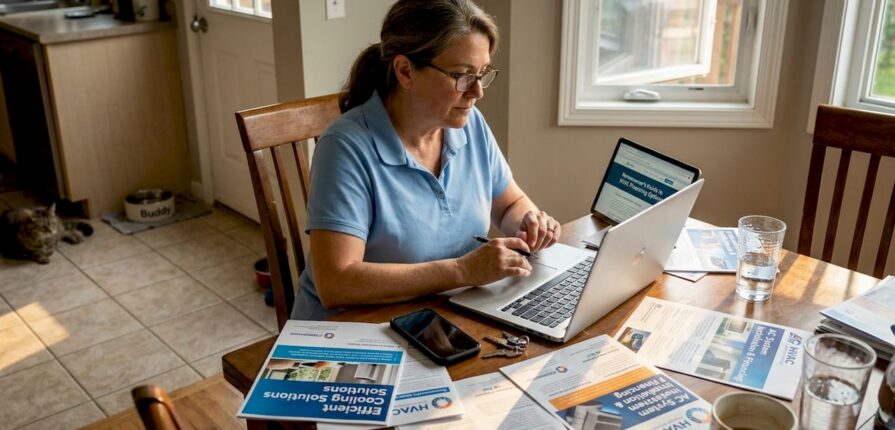
Upgrading or repairing your HVAC system can feel overwhelming when the cost hits unexpectedly. Many Central Florida homeowners and property managers hesitate because they assume financing is complicated or out of reach. Understanding your financing options transforms a stressful expense into manageable monthly payments. This guide breaks down the main financing methods, compares terms and benefits, and shows how rebates and incentives can reduce your total cost. You will gain practical steps to choose and apply for the right financing for your 2026 HVAC installation, upgrade, or repair project.
Table of Contents
- Understanding Different HVAC Financing Methods
- Comparing Financing Options: Terms, Benefits, And Drawbacks
- Incorporating Rebates, Incentives, And Energy Efficiency Financing
- Practical Steps To Choose And Apply For HVAC Financing In Central Florida
- Find Expert HVAC Financing Support In Central Florida
- Frequently Asked Questions
Key takeaways
| Point | Details |
|---|---|
| Financing types vary widely | Options include personal loans, home equity lines, credit cards, manufacturer financing, and leasing with different rates and terms. |
| Rebates reduce total costs | Government and manufacturer incentives can significantly lower upfront expenses and monthly payments when combined with financing. |
| Credit score affects terms | Higher credit scores unlock better interest rates and longer repayment periods, while lower scores may limit options. |
| Application process matters | Researching offers, preparing documents, and working with trusted contractors streamline approval and service delivery. |
Understanding different HVAC financing methods
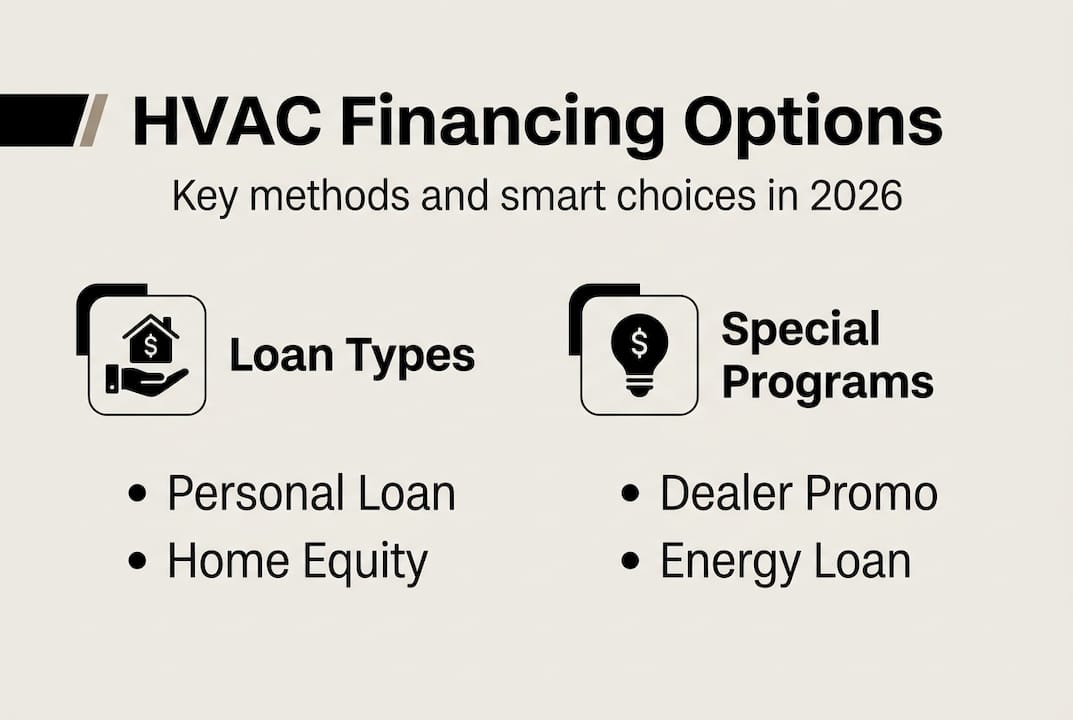
Choosing the right financing starts with knowing what options exist and how each works. Personal loans from banks or credit unions provide immediate funds for HVAC projects without using your home as collateral. Interest rates vary based on your credit score, and repayment terms typically range from one to seven years. Credit cards offer quick access to funds but often carry higher interest rates unless you secure a promotional zero percent period.
Home equity loans or home equity lines of credit tap into your property’s value, usually offering lower interest rates because your home serves as collateral. These work well for larger HVAC installations or whole home upgrades but require sufficient equity and a strong credit profile. Applying for HVAC financing through your contractor can simplify the process since many HVAC companies partner with lenders to offer streamlined approvals.
Manufacturer or dealer financing programs frequently feature promotional terms like deferred interest or zero percent financing for qualified buyers. These offers can save substantial money if you pay off the balance within the promotional window. Missing that deadline, however, can trigger retroactive interest charges on the entire original amount. Leasing or rental options reduce upfront costs by spreading payments over time, but you may not own the equipment outright and could pay more in total over the lease term.
Pro Tip: Compare the total cost of financing, not just the monthly payment. A longer term with lower payments can mean paying significantly more in interest over time.
Your choice depends on several factors: your credit situation, the size of your HVAC project, how quickly you need the work done, and your long term financial goals. Understanding the HVAC installation steps helps you estimate project costs more accurately before selecting a financing method. Each financing type serves different needs, so matching the right option to your circumstances saves money and stress.
Comparing financing options: terms, benefits, and drawbacks
Once you understand the basic financing types, comparing their specific terms reveals which option fits your situation best. Interest rates form the foundation of any financing decision. Home equity loans typically offer the lowest rates, often between 4% and 8% in 2026, because your property secures the loan. Personal loans from banks range from 6% to 15% depending on creditworthiness, while credit cards can charge 18% to 25% or more if you carry a balance beyond promotional periods.
Repayment terms directly affect your monthly budget and total interest paid. Short term loans of one to three years keep total interest low but require higher monthly payments. Medium term options of five to seven years balance affordability with reasonable interest costs. Long term financing up to 15 years, common with home equity lines, minimizes monthly payments but maximizes total interest over the life of the loan. Different loans and credit options differ significantly in interest rates, repayment periods, and credit requirements, so understanding these details prevents costly surprises.
Eligibility requirements vary substantially across financing types. Most lenders prefer credit scores above 620, with the best terms reserved for scores above 720. Income verification, debt to income ratios, and employment history all factor into approval decisions. Home equity products also require sufficient equity in your property, typically at least 15% to 20% after the loan. Manufacturer financing may have more flexible credit requirements but often caps loan amounts at specific thresholds.
| Financing Type | Typical Interest Rate | Repayment Period | Credit Requirement | Main Advantage | Main Drawback |
|---|---|---|---|---|---|
| Home Equity Loan | 4% to 8% | 5 to 15 years | 620+ score, equity needed | Lowest rates available | Home at risk if you default |
| Personal Loan | 6% to 15% | 1 to 7 years | 620+ score preferred | No collateral required | Higher rates than secured loans |
| Credit Card | 0% to 25% | Revolving, no set term | 600+ score typical | Immediate access to funds | Very high rates after promo |
| Manufacturer Financing | 0% to 12% promotional | 1 to 5 years | 640+ score common | Zero interest if paid in window | Retroactive interest if late |
| Leasing | Varies by agreement | 3 to 10 years | 600+ score typical | Low upfront cost | Higher total cost, no ownership |
Pro Tip: Always read the fine print on promotional financing offers. Some zero percent deals require paying off the entire balance before the promotional period ends, or you face retroactive interest on the full original amount.
Understanding the benefits of upgrading HVAC systems helps justify financing decisions. Energy efficient equipment reduces monthly utility bills, which can offset loan payments and improve long term affordability. Weighing these ongoing savings against financing costs provides a clearer picture of true value. Exploring upgrading HVAC benefits further clarifies how modern systems deliver comfort and efficiency gains worth financing.
Incorporating rebates, incentives, and energy efficiency financing
Rebates and incentives dramatically reduce the effective cost of HVAC financing by lowering the amount you need to borrow. Central Florida homeowners can access state and local rebates for qualifying high efficiency HVAC systems in 2026. These programs often target equipment with high SEER ratings or Energy Star certifications. Rebate amounts vary but can range from a few hundred to several thousand dollars depending on system type and efficiency level.
Manufacturers frequently offer seasonal promotions, cash back deals, or deferred interest financing tied to specific product lines. Timing your purchase around these offers maximizes savings. Some manufacturers bundle rebates with extended warranties or free maintenance packages, adding further value. Rebates and incentives can significantly reduce upfront costs and improve financing affordability, making expensive upgrades more accessible. Checking current HVAC rebates before finalizing your financing ensures you capture all available savings.
Energy efficient systems qualify for specialized financing programs designed to encourage green upgrades. These loans may offer lower interest rates or longer repayment terms because energy savings reduce default risk. Energy efficient upgrades are often eligible for special financing and rebates in Florida, creating a powerful combination of lower borrowing costs and reduced utility bills. The monthly energy savings from a high efficiency system can partially or fully offset loan payments, improving cash flow.
Combining rebates with financing requires careful planning. Some rebate programs have strict eligibility criteria, application deadlines, or installation requirements. You typically need to purchase qualifying equipment, complete installation by a licensed contractor, and submit documentation within specified timeframes. Missing a deadline can forfeit hundreds or thousands in rebates. Working with an experienced contractor who understands rebate programs streamlines this process and prevents costly errors.
Pro Tip: Apply for rebates immediately after installation while paperwork is fresh. Many programs require proof of purchase, installation invoices, and equipment specifications, which are easier to gather right away.
Understanding energy efficient HVAC benefits helps you calculate the true return on investment. A system that costs more upfront but qualifies for rebates and delivers lower energy bills can prove cheaper over its lifespan than a basic model. Factor these long term savings into your financing decision to see the complete financial picture. Energy efficiency financing transforms what looks like a large expense into a value generating investment.
Practical steps to choose and apply for HVAC financing in Central Florida
Securing the right HVAC financing requires a methodical approach. Start by researching and comparing financing offers from multiple sources. Contact your bank or credit union for personal loan rates, check manufacturer financing programs through HVAC dealers, and explore home equity options if you have sufficient property equity. Gathering at least three quotes helps you identify the best terms and avoid overpaying for financing.
Check your credit score before applying for any financing. Your score directly impacts interest rates and approval odds. Free credit reports from major bureaus reveal your current standing and highlight any errors that could hurt your application. If your score needs improvement, consider paying down existing debt or correcting report mistakes before applying. Even a small score increase can unlock significantly better rates.
Contact reputable local contractors to discuss financing options and service packages. Applying for financing through trustworthy contractors can simplify approval and service coordination. Many established HVAC companies have relationships with multiple lenders and can match you with programs suited to your credit profile and project scope. Working with a trusted HVAC contractor The Villages area ensures quality installation and smooth financing coordination.
Follow these steps to maximize your approval chances:
- Gather required financial documents including recent pay stubs, tax returns, bank statements, and proof of homeownership if applying for secured loans.
- Complete the application accurately with no errors or omissions, as mistakes can delay approval or trigger denials.
- Submit applications to multiple lenders within a short window to minimize credit score impact from multiple inquiries.
- Review all loan terms carefully before signing, paying special attention to interest rates, repayment schedules, prepayment penalties, and total cost.
- Plan your monthly budget to accommodate loan payments comfortably, leaving room for unexpected expenses.
- Consider prepayment options that allow you to pay off the loan early without penalties, saving interest over time.
Pro Tip: Ask your contractor about package deals that bundle financing with extended warranties or maintenance plans. These combinations often provide better overall value than financing alone.
Maintain open communication with both your contractor and lender throughout the process. Confirm installation timelines align with financing approval and fund disbursement. Verify that your contractor pulls necessary permits and follows local building codes, as compliance issues can complicate financing or void warranties. Understanding how to apply for HVAC financing through your chosen contractor eliminates confusion and speeds up project completion.
Once approved, monitor your loan account regularly. Set up automatic payments to avoid late fees and credit score damage. If your financial situation improves, consider making extra payments to reduce total interest. Staying proactive with your HVAC financing protects your credit and keeps your comfort system running smoothly for years.
Find expert HVAC financing support in Central Florida
Navigating HVAC financing becomes significantly easier when you partner with experienced local professionals who understand both the technical and financial aspects of your project. Lucas Air Conditioning and Heating offers tailored financing solutions designed specifically for Central Florida homeowners and commercial property managers. Their team works with multiple lenders to match your budget, credit situation, and project scope with the most favorable terms available in 2026.
As a veteran owned business established in 2018, Lucas Air brings integrity and expertise to every installation, upgrade, and repair. Their certified technicians ensure your new system performs optimally, maximizing the value of your financing investment. You can apply for financing directly through Lucas Air for streamlined approval and coordinated service delivery. They serve The Villages, Tavares, Leesburg, Mount Dora, and surrounding Central Florida communities with comprehensive HVAC services backed by transparent pricing and customer focused support. Their local knowledge helps you access available rebates and incentives while their financing partnerships simplify the approval process. Working with a trusted HVAC contractor The Villages residents rely on means your comfort upgrade happens smoothly from financing approval through final installation.
Frequently asked questions
What credit score is needed for HVAC financing?
Most financing programs prefer a credit score of 620 or higher, with the best interest rates and terms reserved for scores above 720. Higher scores demonstrate lower risk to lenders and unlock promotional offers like zero percent financing. Some manufacturer or dealer financing programs may approve applicants with scores below 620 but typically charge higher interest rates or require larger down payments. Checking your score before applying helps you understand which financing options you qualify for and whether improving your credit first could save money.
Can I combine HVAC financing with energy rebates in Central Florida?
Yes, combining financing with rebates and incentives is an excellent strategy to reduce your total cost. Many rebate programs have no restrictions on how you pay for the equipment, so financing the purchase and then applying for rebates works perfectly. The rebate money can be used to pay down your loan balance, reducing total interest paid. It is essential to verify eligibility requirements and application deadlines before purchasing to ensure you qualify. Working with a knowledgeable contractor helps you navigate multiple rebate programs and maximize your savings.
What is the typical repayment period for HVAC loans?
Repayment terms typically range from one to 15 years depending on the loan type and lender. Personal loans often span one to seven years, while home equity loans can extend up to 15 years. Manufacturer financing usually offers shorter terms of one to five years, often tied to promotional interest rates. Longer repayment periods reduce your monthly payment but increase the total interest you pay over the loan’s life. Shorter terms mean higher monthly payments but less total interest. Choosing the right term balances your monthly budget with your goal to minimize total financing costs.
How quickly can I get approved for HVAC financing?
Approval timelines vary by financing type and lender. Some manufacturer or dealer financing programs provide instant or same day approval decisions, especially for applicants with strong credit. Personal loans from banks or credit unions may take one to three business days for approval and funding. Home equity loans typically require longer processing times of one to three weeks due to property appraisals and additional documentation. Having your financial documents organized and your application completed accurately speeds up the process significantly. Many contractors can help expedite approval by working directly with their financing partners.
Should I finance a repair or wait and finance a full replacement?
This decision depends on your system’s age, condition, and repair cost. If your HVAC system is less than 10 years old and the repair costs less than half the price of a new system, financing the repair often makes sense. For older systems requiring expensive repairs, financing a full replacement typically provides better long term value through improved efficiency, lower energy bills, and reduced future repair needs. A reputable contractor can assess your system and provide honest guidance on whether repair or replacement offers better financial value. Financing a high efficiency replacement often qualifies for rebates that make the total cost more competitive with major repairs.
