
TL;DR:
- Upgrading HVAC systems improves energy efficiency, humidity control, and air quality for restaurants.
- Demand-controlled ventilation and corrosion-resistant units offer quick payback and climate resilience.
- Matching HVAC upgrades to specific restaurant needs and climate risks maximizes long-term ROI.
Running a restaurant in Central Florida means fighting heat, humidity, and sky-high energy bills every single day. Your HVAC system is not just a comfort tool. It is a business asset that directly affects customer satisfaction, staff productivity, and your monthly operating costs. With so many upgrade options on the market, from smart ventilation controls to fully electric heat pump systems, it is easy to get lost in the specs and miss the upgrades that actually move the needle. This guide breaks down the top HVAC enhancements with real savings numbers, local climate considerations, and a clear framework to help you invest wisely.
Table of Contents
- How to evaluate HVAC upgrades for restaurants
- Demand-controlled kitchen ventilation (DCKV) systems
- Corrosion-resistant RTUs and energy recovery ventilators (ERVs)
- Variable refrigerant flow (VRF) heat pump systems
- Comparing top HVAC upgrades for Central Florida restaurants
- Why most restaurants miss out on HVAC upgrade ROI
- Get expert help with your restaurant HVAC upgrade
- Frequently asked questions
Key Takeaways
| Point | Details |
|---|---|
| Start with local risks | Pick upgrades like corrosion-resistant RTUs and ERVs to handle humidity and salt exposure common in Central Florida. |
| Kitchen ventilation saves big | Demand-controlled kitchen ventilation can deliver 50-60% energy cuts and rapid payback for busy restaurant kitchens. |
| Compare payback periods | Upgrade options differ in upfront cost, but smart choices offer paybacks under four years when paired with incentives. |
| Consult local experts | A professional assessment ensures upgrades fit your unique space and needs, maximizing efficiency and comfort. |
How to evaluate HVAC upgrades for restaurants
Choosing the right HVAC upgrade starts with matching the solution to your actual pain points. Not every restaurant has the same problems. A high-volume kitchen in Orlando has different needs than a waterfront dining spot near the coast. Before you spend a dollar, you need a clear method for ranking your options.
Start by auditing these key problem areas:
- Energy consumption: Are your utility bills climbing every summer? Look at upgrades that target your biggest energy draws first.
- Humidity control: Central Florida’s humidity is relentless. Poor moisture management leads to mold, uncomfortable guests, and equipment damage.
- Indoor air quality (IAQ): Cooking odors, smoke, and airborne particles affect both health and customer experience.
- Equipment durability: Salt air near coastal areas accelerates corrosion. Standard coils can fail years ahead of schedule.
- Upfront cost vs. long-term savings: Some upgrades pay back in under three years. Others take a decade. Know the difference before you commit.
Certifications and utility rebates matter too. Many qualifying systems unlock Florida Power and Light rebates or federal tax credits that dramatically shorten payback periods. Always ask your contractor which incentives apply before signing anything.
For restaurants near Central Florida’s lakes and coastal zones, upgrade benefits go beyond comfort. Coastal Florida conditions demand corrosion-resistant rooftop units (RTUs) and energy recovery ventilators (ERVs) over standard systems to prevent coil failures. Use our restaurant HVAC checklist to map your current gaps before committing to any upgrade path.
Pro Tip: Prioritize upgrades that address your local climate risks first. In Central Florida, that means humidity control and corrosion protection before anything else.
Demand-controlled kitchen ventilation (DCKV) systems
If you run a busy kitchen, demand-controlled kitchen ventilation is probably the single fastest-payback upgrade available to you. DCKV systems use optical sensors and temperature detectors to monitor actual cooking activity in real time. When the grill is cold and the fryers are off, the system dials back fan speed automatically. When the kitchen is running at full blast, it ramps up to match.
Here is why that matters for your bottom line:
- Dramatic fan energy savings: DCKV systems using optical sensors reduce kitchen exhaust energy by 50 to 60%, with overall HVAC savings of 30 to 50%.
- Lower makeup air costs: Less exhaust means less conditioned air pulled out of your dining room, which reduces the load on your main HVAC system.
- Significant annual savings: Larger restaurant kitchens can see annual savings reaching $92,000 depending on volume and operating hours.
- Reduced equipment wear: Variable-speed fans run less aggressively, extending motor and belt life considerably.
“The best DCKV installations are ones where the sensor placement matches the actual cooking zones. A system calibrated to your specific kitchen layout will always outperform a generic install.”
Before upgrading, review your restaurant HVAC workflow to confirm your current exhaust setup can integrate with a DCKV controller. Some older hood systems need minor modifications, but the investment is almost always worth it given the payback timeline.
Corrosion-resistant RTUs and energy recovery ventilators (ERVs)
DCKV systems pare down kitchen energy use, but for overall climate resilience, corrosion-resistant RTUs and ERVs are game changers. Central Florida’s mix of high humidity, summer storms, and proximity to saltwater bodies creates a brutal environment for standard HVAC equipment.
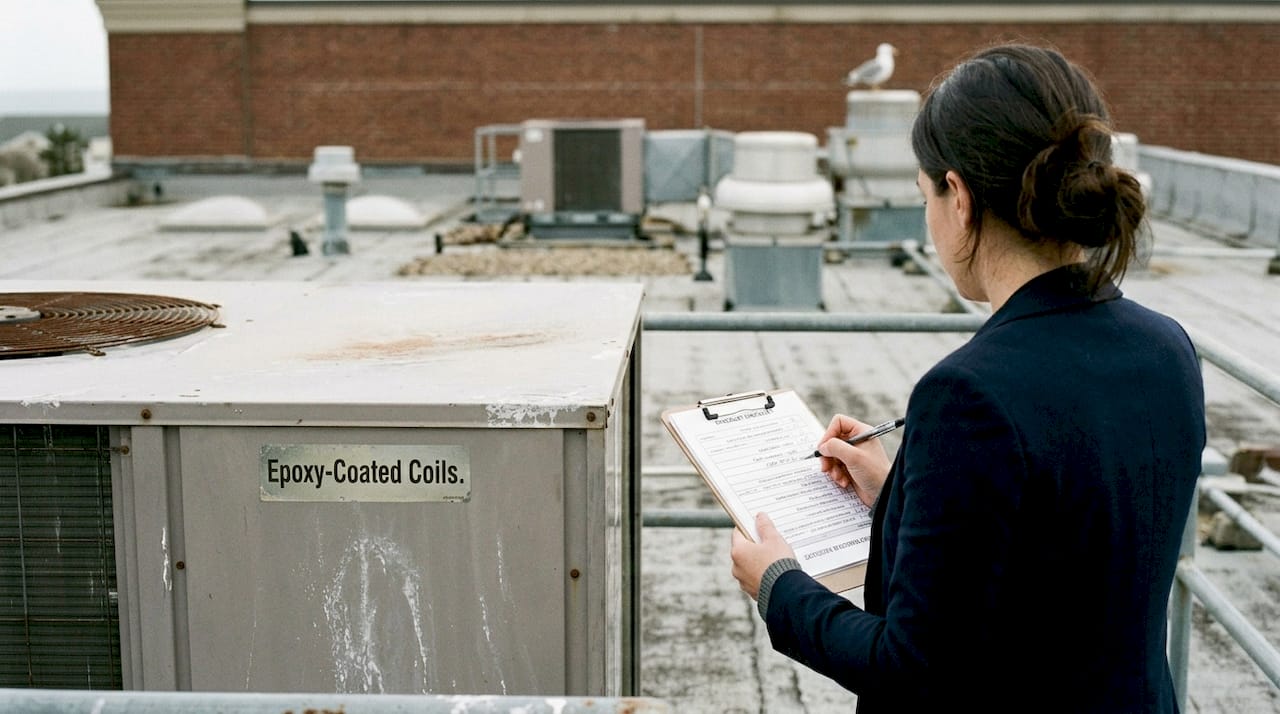
Here is the problem with conventional rooftop units in this climate: the coils corrode. Salt particles and moisture attack aluminum and copper fins over time, reducing efficiency and eventually causing system failure. Epoxy-coated coils and corrosion-resistant cabinets solve this problem at the source.
| Upgrade | Key benefit | Payback period |
|---|---|---|
| Epoxy-coated RTU coils | Prevents corrosion failure | 3.8 years with rebates |
| Energy recovery ventilator (ERV) | Recovers 65% of exhaust energy | 4 to 5 years |
| Combined RTU + ERV | Maximum climate resilience | Under 4 years combined |
ERVs work by capturing heat and moisture from exhausted air and transferring it to incoming fresh air. In practice, corrosion-resistant RTUs with ERVs recover 65% of exhaust heat and moisture, reducing gas usage by 42%. The same study found IAQ improved by 70%, and Yelp ratings increased by 0.5 stars for participating restaurants. That last point is not a coincidence. Guests notice when the air feels fresh and the temperature is consistent.
Learn more about how ERVs in humid climates protect both your equipment and your guests.
Pro Tip: An ERV upgrade does double duty. It cuts your energy bill and improves the air your customers breathe, which directly influences how long they stay and how they rate their experience.
Variable refrigerant flow (VRF) heat pump systems
For restaurants seeking greener operations and maximum efficiency, the next upgrade is variable refrigerant flow heat pump systems. VRF is a technology that continuously adjusts refrigerant output to match the actual heating or cooling demand of each zone in your building. Instead of running at full capacity and cycling on and off, VRF modulates constantly, which is far more efficient.
Here is what makes VRF stand out from conventional split systems:
- Zone-level control: Dining rooms, private event spaces, and kitchens can each maintain their own temperature without fighting each other.
- Fully electric operation: No gas furnace needed. This simplifies your mechanical system and reduces fire risk in kitchen-adjacent areas.
- Massive energy reduction: VRF heat-pump systems with integrated ERVs reduce site energy by 41% and HVAC electricity by 55%, with $68,000 in annual savings and a 2.9-year payback when tax credits apply.
| System type | Energy reduction | Annual savings | Payback period |
|---|---|---|---|
| Standard split system | Baseline | Baseline | N/A |
| VRF with ERV | 41% site energy | Up to $68,000 | 2.9 years |
Restaurants that make this switch often qualify for Green Business certification, which is a growing marketing advantage with environmentally conscious diners. Understand what VRF means for your specific building type, and explore Florida commercial upgrades to see which incentives are currently available in 2026.
Comparing top HVAC upgrades for Central Florida restaurants
With all major upgrade options on the table, let’s compare their value side by side for Central Florida restaurants. Real-world case studies show that different HVAC system upgrades produce dramatically different savings and resilience outcomes depending on the restaurant type and location.
| Upgrade | Best for | Energy savings | Payback period | Climate fit |
|---|---|---|---|---|
| DCKV system | High-volume kitchens | 50 to 60% exhaust energy | 1 to 3 years | All Florida climates |
| Corrosion-resistant RTU | Coastal and lakefront restaurants | Prevents costly failures | 3.8 years | Coastal and humid zones |
| ERV | All restaurants | 42% gas reduction | 4 to 5 years | High-humidity areas |
| VRF heat pump | Full-service and event venues | 41% site energy | 2.9 years | All Florida climates |
A few key takeaways for decision-making:
- Combine upgrades for compounding benefits. A DCKV system paired with an ERV addresses both kitchen ventilation and fresh air quality simultaneously.
- Match the upgrade to your restaurant type. A fast-casual spot with heavy kitchen use should prioritize DCKV first. A fine dining restaurant with a large dining room benefits most from VRF zone control.
- Do not ignore climate-specific risks. For any restaurant near water in Central Florida, corrosion-resistant RTUs are not optional. They are a baseline requirement.
For a broader look at how these upgrades affect HVAC and Florida comfort year-round, and to stay current with latest HVAC advice, check those resources before finalizing your upgrade plan.
Why most restaurants miss out on HVAC upgrade ROI
Here is the hard truth: most restaurant owners in Central Florida do not underinvest in HVAC because they are uninformed. They underinvest because they focus on the wrong metrics. They look at the upfront price tag and stop there. They skip the lifecycle cost analysis that would show them a corrosion-resistant RTU outlasts a standard unit by six or more years in this climate.
Shortcuts almost always cost more in the long run. A cheap standard coil system installed near a Florida lake will corrode, lose efficiency, and fail years before a protected unit would. The repair and replacement costs erase any initial savings quickly.
The restaurants that see the best ROI from HVAC upgrades are the ones that match their investment to both their climate threats and their business goals. A beachside restaurant that installs ERVs and corrosion-resistant RTUs is not just saving energy. It is protecting its entire mechanical infrastructure. Explore a clear Florida HVAC upgrade strategy to build a plan that accounts for your specific location and operating model. The payback is real, but only when the upgrade fits the environment.
Get expert help with your restaurant HVAC upgrade
Upgrading your restaurant’s HVAC system is one of the most impactful decisions you can make for long-term efficiency and guest comfort. But the details matter enormously, and the wrong choice can cost you years of savings.
At Lucas Air Conditioning and Heating, we work with Central Florida restaurant owners to identify the upgrades that deliver the fastest payback and the most durable results for our specific climate. From reviewing the HVAC system upgrade benefits that apply to your operation, to handling full commercial installation services, our team brings local expertise and veteran-level commitment to every project. Reach out today to schedule a professional assessment and find out exactly which upgrades make the most sense for your restaurant.
Frequently asked questions
What is the most cost-effective HVAC upgrade for a small restaurant?
DCKV reduces kitchen exhaust energy by 50 to 60%, making it the fastest-payback option for busy kitchens with high cooking volumes. Most small restaurants recoup the investment within one to three years.
How do ERVs improve restaurant air quality?
ERVs recover heat and moisture from exhausted air before it leaves the building, which improves IAQ by up to 70% in real-world restaurant settings. Better air quality means fewer odors, lower humidity, and more comfortable guests.
Are there HVAC upgrades that qualify for tax incentives or rebates?
Yes. VRF heat-pump systems with ERVs qualify for federal tax credits that can bring payback periods down to 2.9 years, making them one of the most financially attractive upgrades available in 2026.
What makes HVAC upgrades important for coastal Florida restaurants?
Salt air, persistent humidity, and storm exposure cause standard HVAC coils to corrode and fail far ahead of schedule. Corrosion-resistant RTUs and ERVs are essential protections for any restaurant operating near Florida’s coastlines or inland waterways.
