
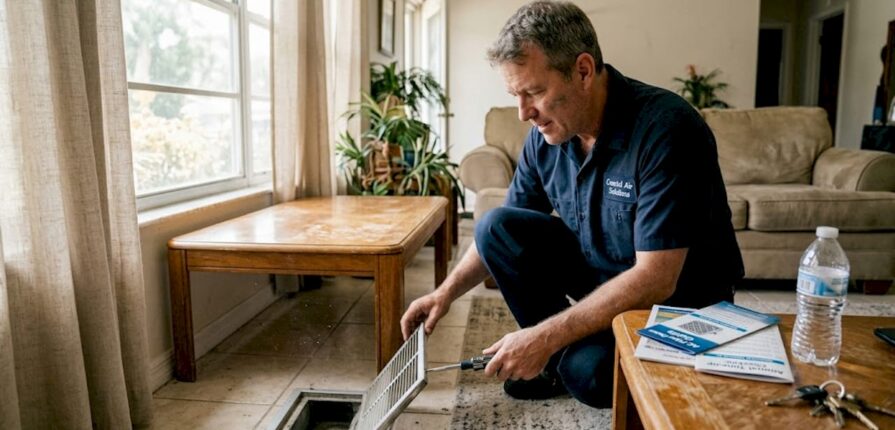
TL;DR:
- Routine duct cleaning does not significantly improve indoor air quality in healthy, uncontaminated systems.
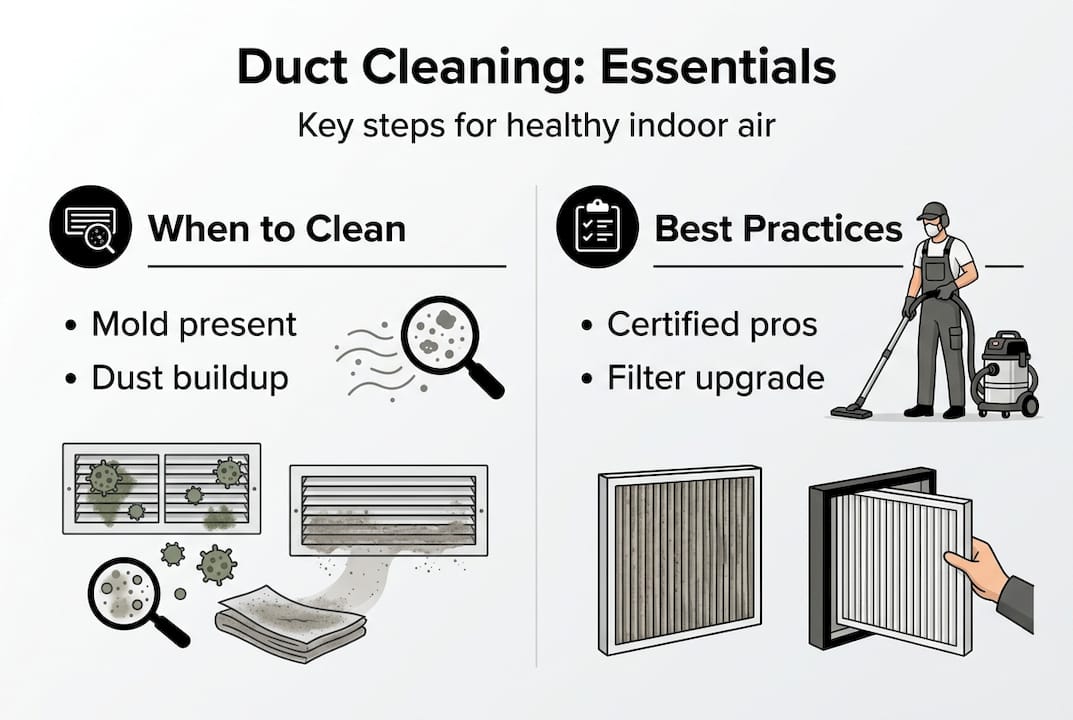
- Cleaning is essential only when visible mold, vermin, or heavy dust buildup are present.
- Addressing moisture sources and system leaks is crucial, especially in humid Central Florida environments.
Most homeowners assume that cleaning their air ducts automatically leads to cleaner, healthier indoor air. It feels logical: dirty ducts equal dirty air, so clean them and breathe easier. But the reality is more nuanced than that. The EPA and independent researchers have spent years studying this question, and the findings might surprise you. This guide walks Central Florida homeowners and business owners through what the evidence actually shows, when duct cleaning genuinely helps, when it doesn’t, and what strategies make the biggest difference for indoor air quality year-round.
Table of Contents
- Understanding air ducts and indoor air quality
- What research says: Does duct cleaning improve air quality?
- Unique duct cleaning considerations for Central Florida
- Best practices: When and how to clean ducts for healthier air
- A fresh take: Rethinking duct cleaning for Florida homes and businesses
- How Lucas Air can help you breathe easier
- Frequently asked questions
Key Takeaways
| Point | Details |
|---|---|
| Routine cleaning not always needed | Only clean ducts when there’s visible contamination or health-relevant issues. |
| Local climate impacts needs | Central Florida’s humidity increases the risk of mold and influences duct cleaning urgency. |
| Proper method is critical | Follow NADCA standards and use certified pros to ensure effective and safe cleaning. |
| Air quality is multi-layered | Combine duct service with filtration, humidity control, and routine HVAC maintenance for best results. |
Understanding air ducts and indoor air quality
Air ducts are the hidden highways of your HVAC system. They move conditioned air from your furnace, air handler, or heat pump into every room, and then pull return air back to be filtered, heated, or cooled again. In a commercial building or a large Florida home, you might have hundreds of linear feet of ductwork running through walls, attics, and crawl spaces.
Over time, various contaminants can settle inside these ducts:
- Dust and debris from normal household activity
- Mold spores fueled by humidity and condensation
- Pet dander and hair from pets that share the space
- Construction particles after renovations or new builds
- Insect or rodent byproducts in cases of pest infiltration
- Fiberglass fibers from deteriorating duct liner material
Here’s the catch, though. Most of what settles in ducts stays stuck to duct surfaces and doesn’t necessarily become airborne when your system runs. Whether those contaminants actively degrade air quality depends a lot on your specific system, your home’s construction, and yes, your local climate. Understanding the role of HVAC systems in moving and filtering air is the real starting point for any air quality decision.
The duct condition can absolutely affect airflow. Debris-clogged ducts force your system to work harder, cut efficiency, and reduce the volume of air reaching each room. That’s a real, measurable problem worth solving. But the jump from “ducts affect airflow” to “cleaning ducts always improves air quality” is where the logic gets shaky.
Florida’s climate adds another layer. High heat and humidity create ideal conditions for mold and biological growth inside ducts, especially if there’s any moisture intrusion or condensation on duct surfaces. In drier climates, dust is often the biggest concern. Here in Central Florida, moisture is the wild card. The EPA does not recommend routine duct cleaning unless there is visible contamination or other evidence of concern, which means the burden is on you to identify a real problem before scheduling a cleaning.
What research says: Does duct cleaning improve air quality?
Let’s get into the science. Studies have looked at whether routine duct cleaning measurably improves the air people breathe inside their homes. The results are consistently underwhelming for healthy, uncontaminated systems.
The EPA found no conclusive evidence that duct cleaning prevents health problems or significantly improves air quality in clean systems. That’s a direct statement from the country’s leading environmental authority, and it’s worth taking seriously.
However, cleaning is clearly justified under specific circumstances. Here’s how common scenarios break down:
| Scenario | Is cleaning recommended? | Priority level |
|---|---|---|
| Visible mold inside ducts or on components | Yes | High |
| Vermin infestation confirmed | Yes | High |
| Excessive dust buildup restricting airflow | Yes | Moderate |
| New construction or major renovation | Yes | Moderate |
| No visible contamination, routine schedule | No | Low |
| Allergy complaints with no visible cause | Consider inspection first | Variable |
“No conclusive evidence shows that duct cleaning prevents health problems or significantly improves air quality in clean systems.” — U.S. Environmental Protection Agency
When cleaning is warranted, it must be done correctly to have any benefit. The NADCA ACR Standard (NADCA stands for the National Air Duct Cleaners Association) requires source removal cleaning using negative pressure, HEPA vacuums, mechanical agitation, and a whole-system approach. HEPA stands for High Efficiency Particulate Air, meaning the vacuum captures particles as small as 0.3 microns without releasing them back into your home.
Here’s a prioritized sequence for deciding whether to clean:
- Inspect first. Get a visual inspection before committing to any cleaning service.
- Identify root causes. Look for moisture intrusion, leaks, pest evidence, or recent construction.
- Check your filter. A clogged or undersized filter is a more common air quality culprit than dirty ducts.
- Evaluate complaints. Allergy or respiratory symptoms may trace back to sources other than ductwork.
- Choose certified professionals. If cleaning is warranted, make sure the provider meets industry standards.
Using your HVAC maintenance checklist before calling for duct cleaning is a smart first step. Regular HVAC inspection helps you catch contamination early rather than reacting after a problem grows.
Unique duct cleaning considerations for Central Florida
Central Florida isn’t like Denver or Chicago. The combination of subtropical humidity, year-round air conditioning use, and construction styles common to this region creates a very specific set of duct concerns.
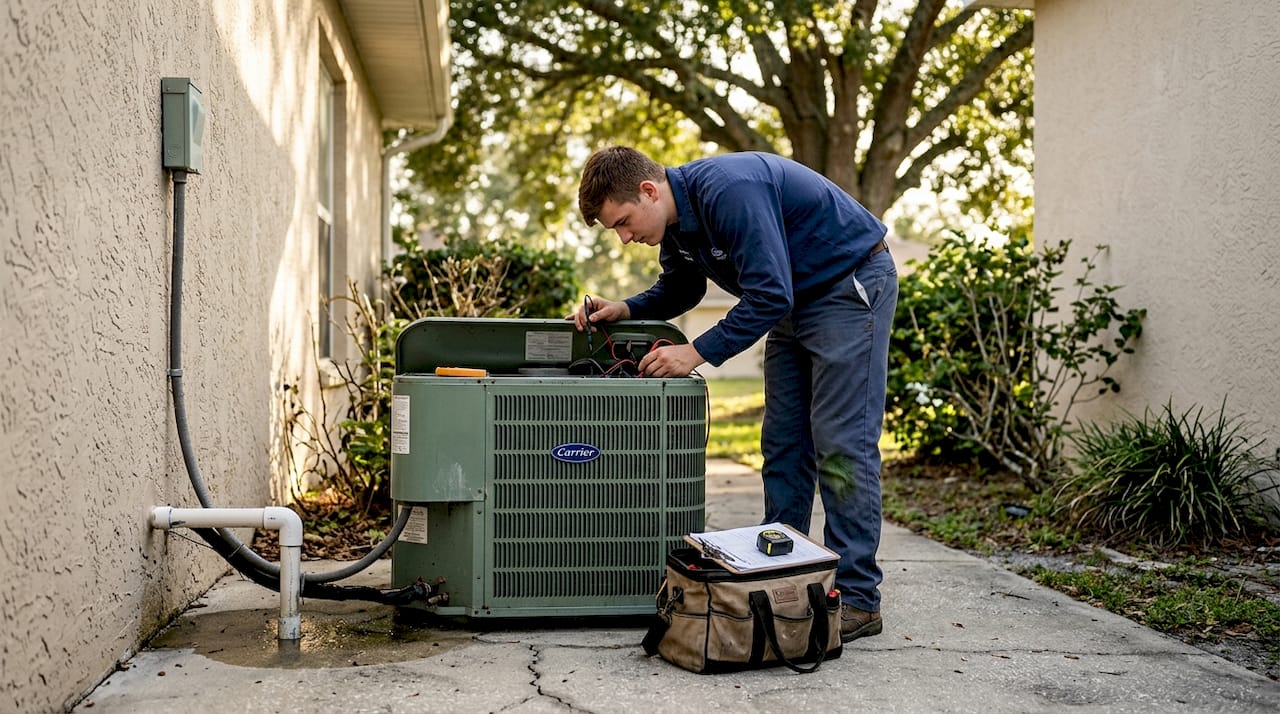
The biggest risk here is mold. When warm, humid outdoor air contacts a cool duct surface, condensation forms. If that moisture isn’t quickly removed, biological growth can take hold inside the ductwork. Central Florida’s humidity means mold risk in ducts is higher; cleaning is beneficial if ducts have visible contamination, but sources of moisture must be fixed first. Cleaning moldy ducts without addressing the moisture source is like mopping up a flood without turning off the faucet.
Here are the key factors that set Central Florida apart:
- Attic ductwork exposure: Many Florida homes run flex duct through hot attics, which can cause condensation on cool duct exteriors and allow moisture inside if seals fail.
- Humidity cycling: With outdoor humidity often above 80%, small duct leaks let moist air into the system regularly.
- Older fiberglass-lined ducts: Internal fiberglass lining degrades over time and can harbor biological growth that’s impossible to fully clean. Moldy fiberglass ducts require replacement, not just cleaning.
- Pest pressure: Florida’s warm climate means insects and rodents actively look for entry points into ductwork year-round.
Pro Tip: Before scheduling duct cleaning, ask your HVAC contractor to check for duct leaks and moisture intrusion. Fixing those problems first makes any cleaning far more effective and longer-lasting.
Seasonal HVAC tune-ups in spring and fall are ideal times to catch moisture issues before they escalate into mold problems. A qualified HVAC contractor in Central Florida can assess your specific setup and recommend whether cleaning or repair is the better first step. You might also consider the role of humidifiers for air quality management when addressing moisture-related air quality concerns in your home.
Best practices: When and how to clean ducts for healthier air
If inspection confirms that your ducts need cleaning, doing it right matters more than doing it often. Here’s what a proper process looks like and what to expect from a qualified provider.
Steps for a proper duct cleaning job:
- Full system assessment: Technicians should inspect registers, return air vents, the air handler, coils, and all accessible ductwork before starting.
- Negative pressure setup: Equipment is connected to create suction throughout the system so dislodged debris is captured, not blown into living spaces.
- Mechanical agitation: Brushes, compressed air tools, or whips loosen stuck-on debris from duct walls.
- HEPA vacuum collection: All loosened material is collected into HEPA-filtered equipment and removed from the premises.
- Visual verification: After cleaning, a camera or strong flashlight inspection confirms that duct surfaces meet cleanliness standards.
NADCA-certified professionals train specifically to follow this process and verify results. When shopping for a duct cleaning service, always ask for NADCA certification and a post-cleaning inspection report.
Pro Tip: After a duct cleaning, upgrade your air filter to at least a MERV 8 rating. MERV stands for Minimum Efficiency Reporting Value, and higher numbers capture smaller particles. MERV 8 to 13 balances air quality improvement with minimal airflow restriction for most home systems.
| Strategy | Benefit | When to apply |
|---|---|---|
| MERV 8-13 filter upgrade | Captures finer particles | Immediately after cleaning |
| UV light installation | Kills biological growth in air handler | After cleaning, as an upgrade |
| Duct sealing | Prevents future contamination | Before or after cleaning |
| Dehumidifier installation | Reduces mold risk long-term | Ongoing, especially in Florida |
| Smart humidifier strategies | Balances humidity year-round | Integrated with HVAC system |
Think of duct cleaning as one piece of a larger puzzle. Pairing it with preventative HVAC maintenance gives you the strongest foundation for sustained indoor air quality rather than a one-time fix.
A fresh take: Rethinking duct cleaning for Florida homes and businesses
Here’s something most duct cleaning discussions skip: the biggest air quality problems in Central Florida homes aren’t usually hiding in the ducts themselves. They’re hiding in a leaky air barrier, an oversized AC system that short-cycles and never fully dehumidifies, or a filter that gets changed twice a year instead of every 30 to 60 days.
We’ve seen property owners invest several hundred dollars in duct cleaning only to call back six months later with the same musty smell, because nobody fixed the attic air leak or the condensate drain issue creating the moisture in the first place. Cleaning is not a substitute for diagnosis.
Our perspective, shaped by years of working in this specific climate: treat duct cleaning as a corrective measure for confirmed contamination, not a scheduled ritual. When you do clean, hold your provider to NADCA standards and verify results with a camera inspection. And invest the rest of your budget in upgrading HVAC systems and root-cause fixes that deliver lasting results. That’s the approach that actually moves the needle on air quality.
How Lucas Air can help you breathe easier
If this guide has you wondering about the actual state of your ducts or your overall indoor air quality, that’s exactly where Lucas Air comes in. We’re a veteran-owned HVAC company based in Eustis, Florida, and we’ve been serving Central Florida homes and businesses since 2018 with honest assessments and certified service.
Whether you need a full HVAC installation for a new build, a thorough inspection of your existing residential or commercial HVAC system, or help navigating the right HVAC repair workflow after a breakdown, our team brings the knowledge and transparency you deserve. Reach out to schedule a consultation and let us give you a clear picture of what your system actually needs.
Frequently asked questions
When is duct cleaning actually necessary for improving air quality?
Duct cleaning is necessary only when you have confirmed mold growth, vermin activity, or heavy dust buildup inside the ducts. The EPA recommends cleaning only in those specific cases, not on a routine schedule.
How often should I have my ducts checked in Central Florida?
Annual visual inspections are a smart baseline for any home, but Florida’s high humidity demands more diligence because mold can develop faster here than in drier climates.
Does duct cleaning remove all indoor air pollutants?
No. Duct cleaning only addresses contaminants physically inside the ductwork. It doesn’t remove gases, volatile organic compounds (VOCs), or allergens that originate elsewhere in your home. Routine duct cleaning won’t solve most whole-home air quality problems on its own.
What is the safest way to ensure air quality after duct cleaning?
Upgrade to proper MERV-rated filters, address any moisture or leak issues, and confirm that your cleaning was performed to NADCA standards with a post-cleaning visual verification.
Recommended
- HVAC Tips & News Archives – Lucas Air Conditioning and Heating
- Essential HVAC Preventative Maintenance Guide for Homeowners
- 7 Steps to a Complete Home HVAC Maintenance Checklist
- Role of HVAC in Home Comfort: What Homeowners Need
- Role of appliance filters in maintaining home efficiency – Expert Appliance
