
TL;DR:
- A burning smell from a heat pump may be harmless dust burn-off or a sign of a serious electrical or mechanical fault. If the odor persists beyond 30 minutes or worsens, it indicates a potentially dangerous issue requiring immediate professional inspection.
A burning smell from your heat pump is either a harmless dust burn-off during seasonal startup or a warning sign of a serious electrical or mechanical fault. Knowing which one you are dealing with changes everything. Dust burn-off dissipates within 10–60 minutes of operation and poses no danger. A smell that lingers, intensifies, or carries a sharp chemical or plastic quality is a different story entirely. This guide walks you through the causes, how to tell them apart, what to do right now, and when to call a professional.
What causes a heat pump to smell like burning?
Several distinct problems produce a burning odor from a heat pump. Each has a different smell profile, a different location, and a different level of urgency.
- Dust on heating elements. After months of sitting idle, dust settles on the heat exchanger and heating strips. When the system fires up for the first time each season, that dust burns off. The smell is faint, dusty, and musty. It clears quickly and is completely normal.
- Clogged air filters. Dirty filters restrict airflow and force the blower motor to work harder than it should. That extra strain generates heat and friction, producing a metallic or rubber-like burning odor. Filters should be replaced every 1–3 months to prevent this.
- Electrical faults. Failing contactors, shorted wiring, and overheating control boards all produce a burning smell. Burning plastic, ozone, or rubber odors are critical electrical fault signs. These require immediate power shutdown before any inspection.
- Overheated motors or bearings. A motor nearing the end of its life generates friction heat. The smell resembles hot metal or burning rubber and often comes with unusual humming or grinding noises.
- Foreign objects in the ductwork or blower. A plastic toy, a piece of insulation, or a small animal can get pulled into the system. The resulting smell is sharp, acrid, and often unmistakable as burning plastic or rubber.
Pro Tip: Sniff near the vents and near the outdoor unit separately. The location of the strongest odor tells you a lot about the source before a technician even arrives.
One detail most homeowners miss: a fishy smell is not a fish problem. A fishy odor often signals an overheating control board, while a melting plastic smell points to wire insulation failure. Both require professional attention immediately.
Is the burning smell normal or a serious problem?
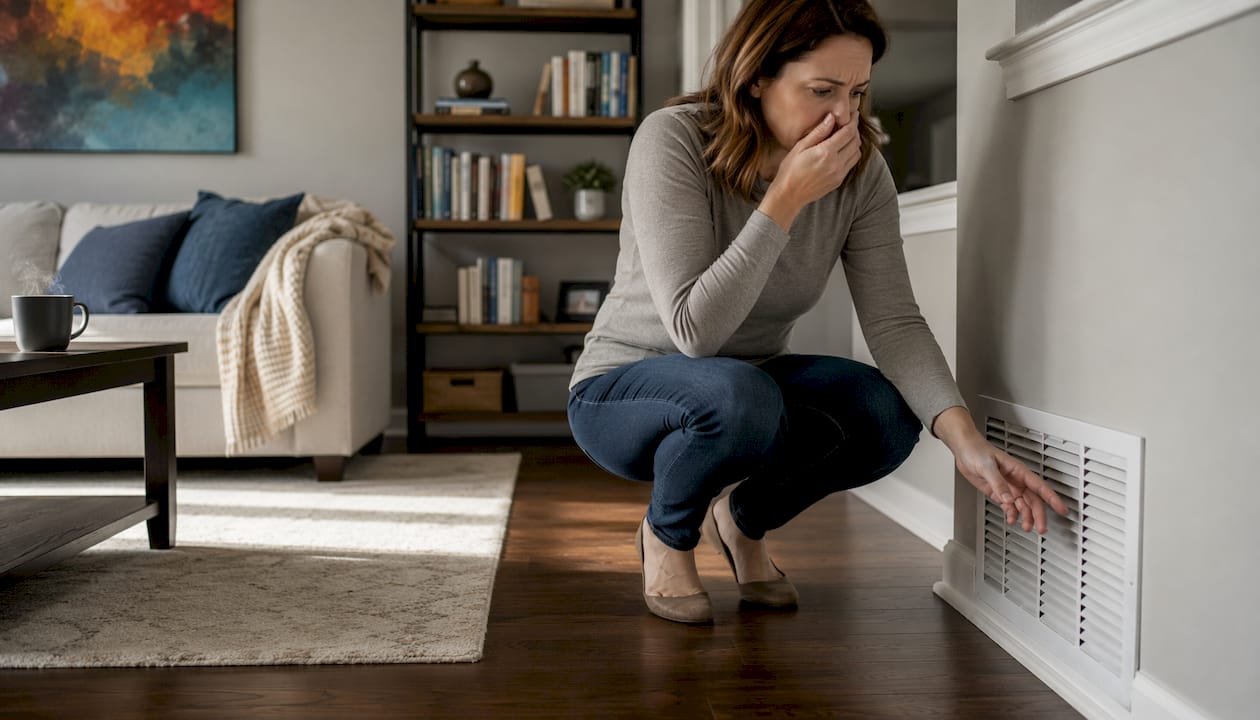
The single most useful diagnostic tool you have is your nose, combined with a clock. The dust burn-off smell at first seasonal start fades within 15–30 minutes. If the smell is still present after 30 minutes, or if it gets stronger, you are no longer dealing with dust.
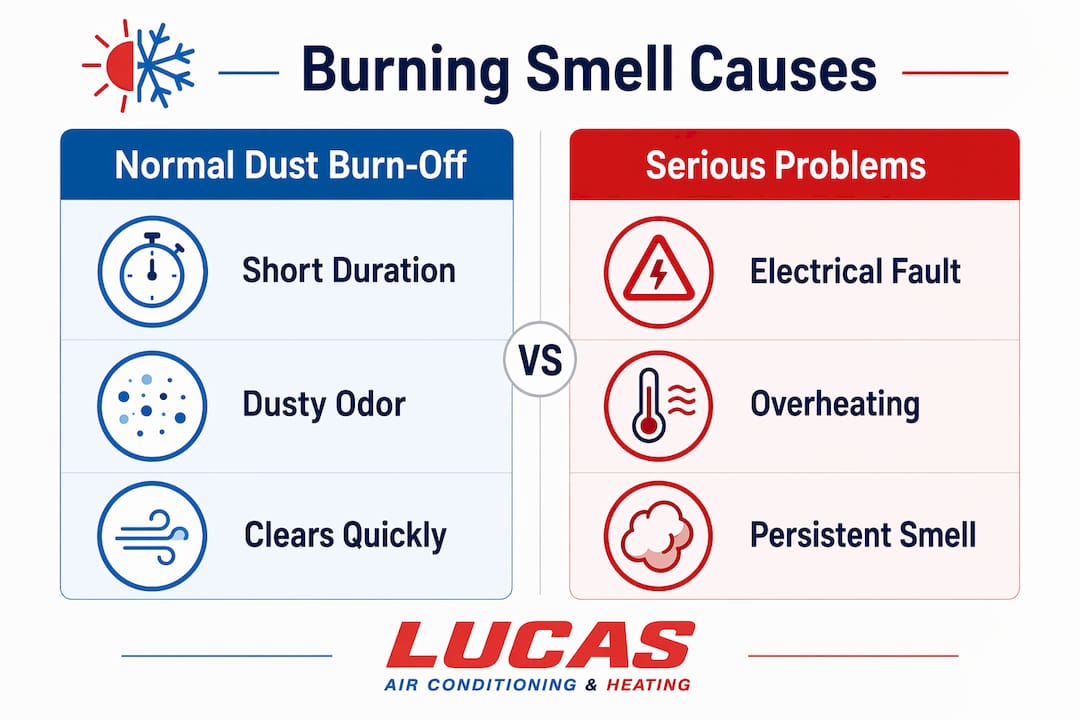
Smell quality matters just as much as duration. A dusty, slightly musty odor is the hallmark of harmless burn-off. An acrid, sharp, or chemical smell points to an electrical fault. A rubber or hot metal smell suggests a mechanical problem. These are genuinely different sensory experiences, and learning to tell them apart is a practical safety skill.
Watch for these additional warning signs alongside the smell:
| Symptom | Normal dust burn-off | Serious problem |
|---|---|---|
| Smell duration | Clears in 15–30 minutes | Persists or intensifies |
| Smell quality | Dusty, musty | Acrid, plastic, chemical, rubber |
| Breaker behavior | No trips | Breaker trips or resets |
| Visible smoke | None | Smoke from vents or unit |
| Unusual noises | None | Buzzing, grinding, or humming |
| Recurrence | Only at first startup | Returns each time system runs |
If you check two or more boxes in the “serious problem” column, shut the system off at the thermostat and the breaker. Do not wait to see if it improves. Persistent or intensifying burning odors with acrid or plastic smells should prompt immediate system shutdown and emergency HVAC service.
How to troubleshoot a burning smell from your heat pump
Work through these steps in order before calling a technician. Some causes are things you can fix yourself in under ten minutes.
- Check your air filter first. Pull the filter out and hold it up to the light. If you cannot see light through it, replace it immediately. A clogged filter is one of the most common causes of heat pump odor issues and one of the easiest to fix. Changing filters regularly prevents motor damage and reduces burning odors significantly.
- Open all supply and return vents. Closed vents trap hot air and force the system to overheat. Blocked vents cause overheating and should be inspected before running the heat. Walk through every room and confirm all registers are fully open.
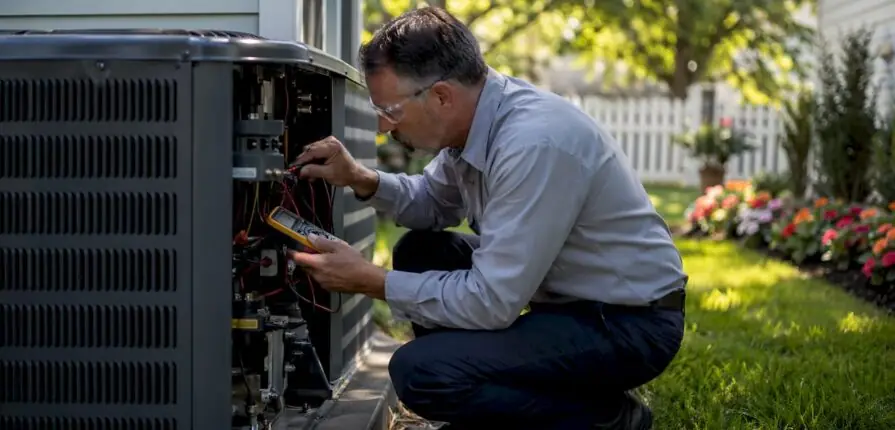
- Inspect the outdoor unit. Look for leaves, sticks, or debris packed around the unit. Check for any visible signs of melted plastic, scorch marks, or burned insulation on the wiring. Do not touch any wiring directly.
- Time the smell. Turn the system on and set a timer. If the odor clears within 30 minutes and does not return, dust burn-off is the likely cause. If the smell persists past 30 minutes or returns on subsequent cycles, move to step 5.
- Shut the system down safely. Turn the thermostat to “off” first, then go to your electrical panel and switch off the breaker labeled for the heat pump or air handler. This sequence protects the compressor from a hard shutdown.
- Call a licensed HVAC technician. At this point, the problem is beyond safe DIY territory. A professional can test contactors, check wiring integrity, measure motor amperage, and identify the exact fault.
Pro Tip: Take a short video on your phone of any smoke, unusual sounds, or visible damage before shutting the system down. That footage helps a technician diagnose the problem faster and more accurately.
You can learn more about what to watch for by reviewing common HVAC warning signs before your technician arrives. Being informed speeds up the repair process.
What are the risks if you ignore an electrical or mechanical burning smell?
Ignoring a burning smell from a heat pump is not a calculated risk. It is a gamble with your home and your family’s safety.
Electrical faults carry the most serious consequences. A heat pump contactor failure or motor short can cause burning odors, buzzing noises, or complete system failure. Burning smells from outdoor units often link to coil insulation failure or internal short circuits. Left unaddressed, these faults can start a fire inside the unit or within the walls where wiring runs.
Mechanical failures follow a predictable progression. A blower motor running hot from a dirty filter will first produce a burning rubber or metal smell. If the system keeps running, the safety circuit eventually trips to protect the motor. If that safety circuit fails or is bypassed, the motor burns out entirely. A burned-out motor costs significantly more to replace than a filter or a simple motor service.
The risks compound quickly:
- Fire hazard. Electrical faults in heat pumps can cause fires and significant damage if ignored.
- Compressor damage. Restricted airflow from a clogged filter stresses the compressor, which is the most expensive component in the system.
- Carbon monoxide risk. In systems with gas backup or auxiliary heat strips, overheating can crack heat exchangers, creating a carbon monoxide hazard.
- Voided warranty. Running a system with a known fault often voids manufacturer warranties on parts and labor.
A professional HVAC inspection and repair at the first sign of a serious odor is always cheaper than the alternative. The cost of a service call is a fraction of what compressor replacement or fire damage remediation runs.
Key Takeaways
A heat pump burning smell is either harmless dust burn-off that clears in under 30 minutes or a serious electrical or mechanical fault that demands immediate shutdown and professional repair.
| Point | Details |
|---|---|
| Normal smell duration | Dust burn-off clears within 15–30 minutes and does not return on subsequent cycles. |
| Danger signs | Acrid, plastic, or chemical odors that persist or intensify require immediate system shutdown. |
| Filter maintenance | Replace air filters every 1–3 months to prevent motor overheating and burning odors. |
| Safe shutdown sequence | Turn the thermostat to “off” first, then cut power at the breaker panel. |
| When to call a pro | Any smell that returns, intensifies, or comes with tripped breakers or smoke needs a licensed technician. |
What I’ve learned after years of heat pump calls
The homeowners who call us in the worst situations share one thing in common: they waited. They smelled something odd, told themselves it was probably nothing, and ran the system for another day or two. By the time they called, a $200 contactor repair had turned into a $1,500 motor replacement or worse.
The counterintuitive truth about heat pump odor issues is that the smell itself is not the problem. It is a symptom. The real problem is the decision you make in the next 30 minutes after you first notice it. If the smell clears fast and never comes back, you are fine. If it does not, every additional minute the system runs is doing damage.
Regular preventative maintenance eliminates most of these situations before they start. A technician who checks your filters, tests your contactors, and measures motor amperage twice a year will catch a failing component before it starts burning. That is not a sales pitch. That is just how the math works.
The other thing I want homeowners to understand: your nose is a legitimate diagnostic tool. Trust it. If something smells wrong, it probably is. You do not need to be an HVAC technician to know that burning plastic coming from your air handler is not normal. Act on that instinct. Shut the system down and call someone who can confirm what you already suspect.
— Results
Lucasair is ready to help with your heat pump
Lucasair serves homeowners across Central Florida with fast, honest HVAC diagnosis and repair. When your heat pump produces a strange smell, the Lucasair team identifies the exact cause, whether it is a dirty filter, a failing contactor, or a more serious electrical fault.

Lucas Air’s preventative maintenance agreement keeps your system inspected and your filters fresh before odor problems develop. For homeowners who need a repair now, Lucasair’s residential repair service covers everything from component replacement to full system diagnosis. Book an appointment online or call the team directly. Veteran-owned, locally trusted, and ready to help.
Need a hand? Lucas Air Conditioning and Heating offers heat pump repair in Tavares, FL for homes and businesses across Lake County.
FAQ
Why does my heat pump smell like burning when I first turn it on?
Dust accumulates on heating elements during the off-season and burns off during the first startup. This smell is normal and clears within 15–30 minutes of operation.
How long should a burning smell from a heat pump last?
A normal dust burn-off smell lasts no more than 30–60 minutes. Any smell that lasts beyond 60 minutes or returns on subsequent cycles signals a fault that needs professional attention.
What does an electrical burning smell from a heat pump indicate?
An acrid, plastic, or chemical odor points to failing contactors, shorted wiring, or an overheating control board. These are critical electrical fault signs that require immediate power shutdown and a licensed HVAC technician.
Can a dirty filter cause a burning smell?
Yes. A clogged filter restricts airflow and forces the blower motor to overheat, producing a metallic or rubber burning odor. Replacing your filter every 1–3 months is the simplest heat pump burning smell fix available to any homeowner.
When should I call an HVAC technician for a burning smell?
Call a technician if the smell persists past 30 minutes, returns on multiple cycles, smells like plastic or chemicals, or comes with tripped breakers, smoke, or unusual noises. You can also review typical HVAC startup odors to compare what is normal before you call.
Recommended
- Heating System Troubleshooting: Fix 20% HVAC Failures Fast – Lucas Air Conditioning and Heating
- Emergency HVAC Repair: Restoring Comfort Fast in Florida
- 6 Signs of HVAC System Issues Every Homeowner Should Know – Lucas Air Conditioning and Heating
- HVAC Repair Workflow Residential: Step-by-Step Guide