

Finding relief from Central Florida’s heat can feel challenging for homeowners settling into a new place or buying their first house. With long summers and high humidity, choosing an efficient HVAC system is about more than just staying cool—it’s your chance to control energy costs year-round while improving comfort. By focusing on a home’s unique needs and making smart equipment choices, you can create lasting comfort and savings that fit your Florida lifestyle. Start with a thorough home assessment so every decision works for your family and budget.
Table of Contents
- Step 1: Assess Your Home’s Needs
- Step 2: Compare System Types And Efficiencies
- Step 3: Evaluate Installation And Maintenance Factors
- Step 4: Verify System Suitability And Cost
Quick Summary
| Key Insight | Explanation |
|---|---|
| 1. Assess Your Home’s Needs | Understand comfort issues, insulation, and air sealing before choosing an HVAC system. |
| 2. Compare System Efficiencies | Explore different HVAC types and their efficiency ratings to find the best fit for your home. |
| 3. Ensure Quality Installation | Verify contractor credentials and installation processes to guarantee system performance and longevity. |
| 4. Evaluate Lifecycle Costs | Focus on total ownership costs, not just the initial price, to maximize savings over time. |
| 5. Check for Incentives | Look for utility company rebates to lower out-of-pocket costs on high-efficiency systems. |
Step 1: Assess Your Home’s Needs
Before you shop for a new HVAC system, you need to understand what your home actually requires. This means looking beyond “my air conditioner is old” and identifying the real comfort and efficiency issues your home is experiencing right now.
Start by walking through your home and noticing patterns. Do certain rooms feel warmer or cooler than others? Are there drafts near windows or doors? Do you see any visible gaps in your attic or basement? These details reveal where your current system struggles and where energy is escaping.
Next, check your home’s insulation and air sealing. Your attic insulation matters more than you might think in Central Florida’s heat. Assessing your home’s insulation helps you understand whether your current system is fighting against poor insulation or whether the system itself is the problem.
Here’s what to evaluate:
- Temperature consistency: Track indoor temps for a few days across different rooms
- Air leaks: Look for cracks, gaps, or spaces around outlets, baseboards, and door frames
- Humidity levels: Note if your home feels muggy even with AC running (common in Florida)
- Energy bills: Review your past 12 months of cooling costs to establish baseline usage
- System age: If your unit is over 15 years old, efficiency drops significantly
Your home’s climate zone and occupancy also matter. How many people live there? Do you work from home? Understanding your building’s unique needs directly impacts which system size and type will serve you best.
Don’t skip the attic inspection. A poorly insulated attic in Florida can force your AC to work 40% harder than necessary. You’re looking for gaps in the insulation layer, moisture damage, or signs of air infiltration from the outside.
Your HVAC system can only work as well as your home’s ability to hold conditioned air—insulation and air sealing come first.
Take photos or notes of problem areas. This information becomes valuable when you talk to an HVAC professional about what system will actually solve your comfort problems.
Pro tip: Record your current system’s thermostat settings and indoor humidity levels over one week—this baseline data helps a professional recommend the right capacity and features for your specific home.
Step 2: Compare System Types and Efficiencies
Now that you understand your home’s needs, it’s time to explore the different HVAC system types available. Each option has distinct advantages, efficiency ratings, and price points that affect both your comfort and long-term energy costs.
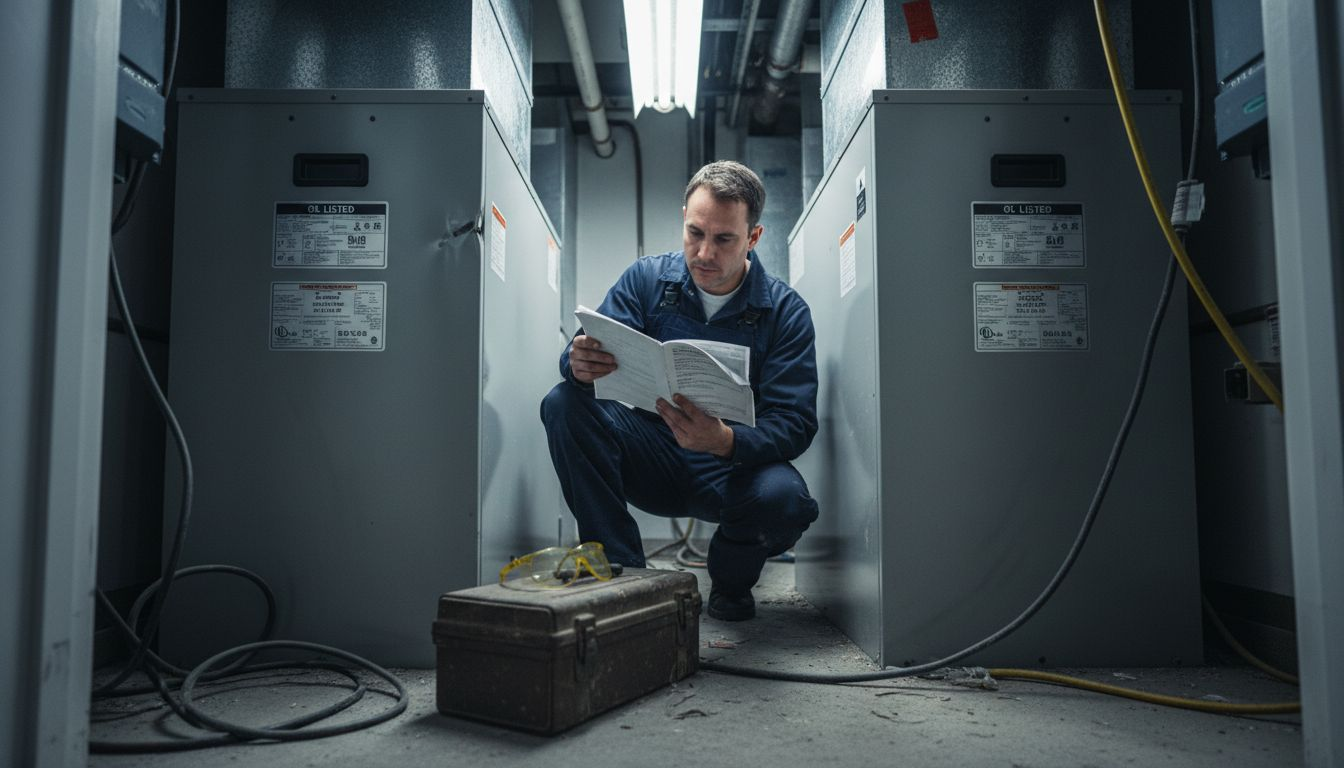
The most common system for Central Florida homes is the split system, which pairs an outdoor unit with an indoor air handler. These are affordable and effective for most residential applications. However, heat pump systems are gaining popularity because they provide both heating and cooling, making them more versatile year-round.
Mini-split systems offer flexibility if you want to cool specific zones without running the entire home’s AC. They’re particularly useful if you have rooms you rarely use or want independent temperature control. Exploring energy-efficient HVAC options helps you understand which technologies deliver the best efficiency for your situation.
Here’s how the main options compare:
Here’s a summary of HVAC system types, highlighting their best use case and payback potential:
| System Type | Best For | Typical Payback Period | Notable Advantage |
|---|---|---|---|
| Split System | Standard homes, tight budgets | 3–6 years | Reliable and affordable |
| Heat Pump | Year-round use, mild climates | 4–7 years | Provides heating and cooling |
| Mini-Split | Multi-zone or room additions | 5–9 years | Flexible zone control |
| Geothermal | Long-term owners, large lots | 8–15 years | Lowest long-term energy cost |
- Split systems: Lower upfront cost, proven reliability, good efficiency ratings
- Heat pumps: Higher efficiency, year-round capability, better for mild climates
- Mini-splits: Zone control, flexibility, higher installation cost
- Geothermal systems: Highest efficiency, substantial upfront investment, ideal for long-term savings
Efficiency is measured using the SEER2 rating (Seasonal Energy Efficiency Ratio). Higher numbers mean lower energy consumption. Currently, the minimum federal standard is SEER2 13, but units rated SEER2 18 or higher deliver significant savings in Florida’s hot climate.
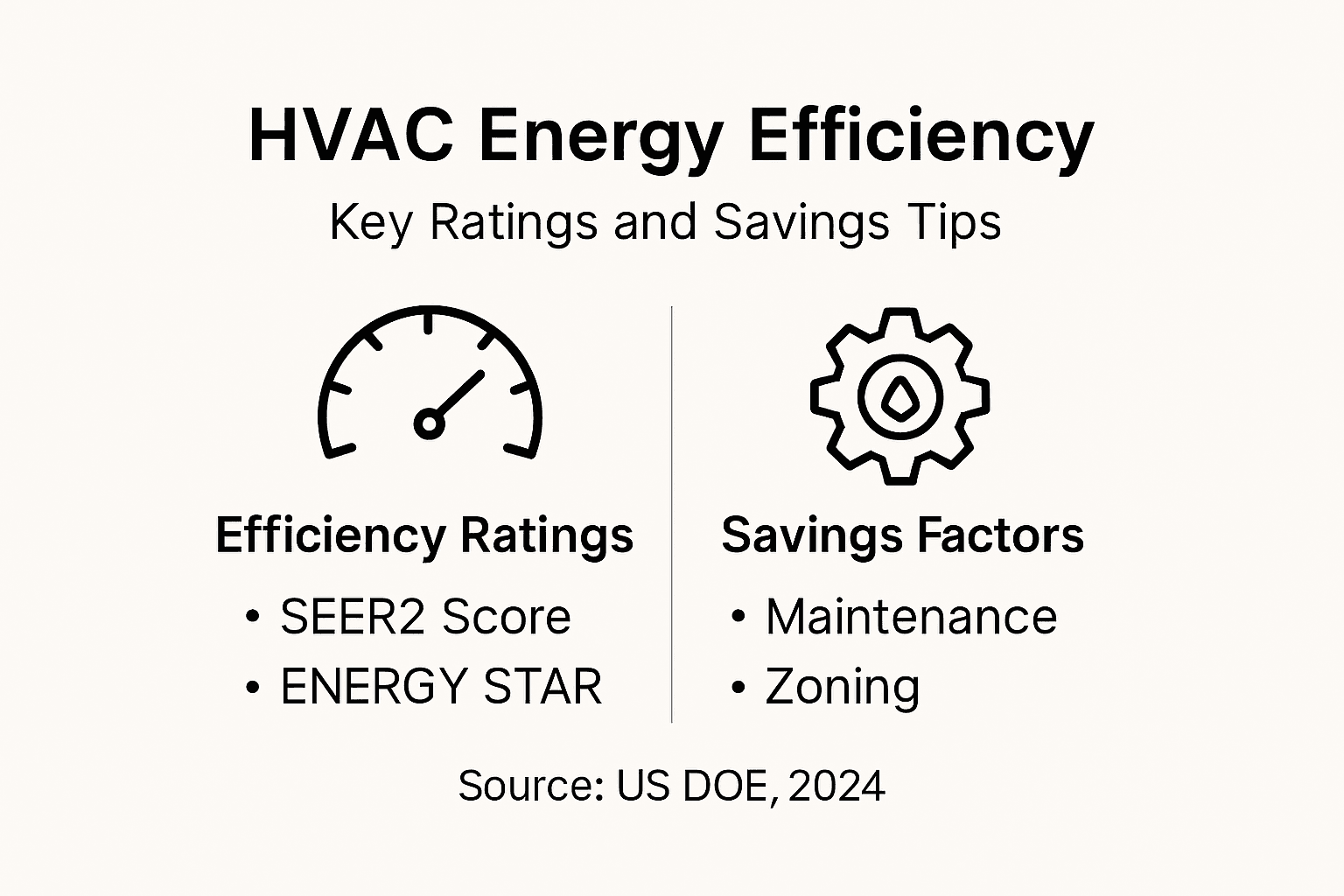
Don’t assume the newest system automatically fits your home best. Matching equipment types to efficiency needs requires considering your home’s insulation, ductwork condition, and climate zone.
For Central Florida, a high-efficiency heat pump or split system with SEER2 16 or above typically makes the most financial sense. You’ll see those savings on your cooling bills within two to three summers.
The cheapest system isn’t always the most economical—focus on the lowest total cost of ownership, not just the price tag.
Compare quotes from multiple contractors. They should assess your home’s specific characteristics and recommend systems accordingly, not just push the most expensive option.
Pro tip: Ask contractors about financing options and any available rebates from your utility company or government programs—many systems qualify, which can reduce your effective cost significantly.
Step 3: Evaluate Installation and Maintenance Factors
Choosing the right system means nothing if it’s installed poorly or neglected afterward. Installation quality and maintenance habits directly determine whether your new HVAC system delivers the efficiency and comfort you paid for.
Start by vetting potential contractors carefully. Look for companies with proper licensing, insurance, and certifications. A technician’s credentials matter because proper installation and regular maintenance are essential for optimizing system performance and longevity.
Ask contractors about their installation process. Will they properly size the system for your home? Do they perform a load calculation to determine exact capacity needs? Will they verify that all components match and are compatible? These details separate quality installations from rushed work.
Here’s what to verify before hiring:
- Certifications: NATE certification or equivalent for technicians
- Load calculations: Ensure they size the system to your home, not just guess
- Ductwork assessment: Leaky ducts waste 20-30% of cooled air
- Warranty clarity: Understand what’s covered and for how long
- References: Ask for recent customer contacts you can call
Maintenance is where many homeowners stumble. Your new system won’t stay efficient without regular tune-ups. Schedule professional maintenance at least once yearly, ideally before cooling season starts in Florida.
Basic maintenance you can handle yourself includes changing or cleaning air filters every 90 days and keeping outdoor unit debris-free. But refrigerant checks, electrical inspections, and coil cleaning require a professional.
Many contractors offer maintenance plans that bundle yearly service at a discount. This ensures your system gets attention on schedule and helps catch problems early before they become expensive repairs.
Use this table to quickly compare important installation and maintenance priorities for your HVAC project:
| Category | Why It Matters | What to Ask Contractors |
|---|---|---|
| Proper Sizing | Ensures comfort, saves energy | Do they perform load calc? |
| Warranty Terms | Protects against early failures | Is labor included? |
| Ductwork Quality | Prevents wasted conditioned air | Will they inspect ducts? |
| Maintenance Plan | Extends system’s usable life | Is a plan available? |
A well-maintained system stays efficient for 15-20 years, while a neglected one may fail in 10.
Don’t put off maintenance thinking you’ll save money. You’ll actually spend more replacing a system prematurely or paying for emergency repairs during the hottest part of summer.
Pro tip: Schedule your first professional maintenance appointment before your system is even installed, and ask about their maintenance plan pricing upfront—this locks in service costs and ensures consistent care.
Step 4: Verify System Suitability and Cost
Before making your final decision, confirm that your chosen system meets efficiency standards and makes financial sense for your situation. This step protects you from overspending and ensures your investment complies with current regulations.
Florida follows federal efficiency standards that vary by system type and season. Your chosen system must meet minimum SEER2 requirements set by the Department of Energy. Understanding regional efficiency standards ensures your system remains compliant with 2023 DOE regulations and local building codes.
Ask your contractor to provide documentation showing your system’s efficiency rating and proof that it meets or exceeds Florida’s requirements. Don’t accept vague assurances—get written specifications.
Now for the financial piece. Get detailed quotes from at least three contractors that break down costs clearly:
- Equipment cost: The unit itself and components
- Installation labor: Ductwork modifications, electrical work, testing
- Permits and inspections: Required for code compliance
- Disposal fee: Removing your old system
- Warranty: Years of coverage on parts and labor
Evaluating lifecycle costs rather than just upfront price helps you make financially sound decisions that support long-term energy savings. A higher-efficiency system costs more initially but saves hundreds annually in cooling costs.
Calculate your payback period. If a SEER2 18 system costs $1,500 more than SEER2 13 but saves you $300 yearly, you recover that investment in five years. After that, it’s pure savings.
Don’t forget about incentives. Check with your local utility company and the Florida Energy Commission for rebates on high-efficiency systems. Some programs offer $500 to $2,000 back, which directly reduces your out-of-pocket cost.
The lowest bid isn’t the best deal if it comes from an uncertified contractor or includes inferior equipment.
Compare the complete package: equipment quality, contractor reputation, warranty coverage, and total cost. A slightly higher investment upfront often means better reliability and savings later.
Pro tip: Request itemized quotes in writing and ask each contractor about available rebates and financing programs—some offer zero-interest payment plans that make high-efficiency systems more affordable immediately.
Make Energy-Efficient Comfort a Reality with Lucas Air Conditioning and Heating
Choosing the right HVAC system is about more than just price. It requires careful assessment of your home’s unique needs, efficiency ratings like SEER2, and expert installation to ensure lasting comfort and savings. If you are ready to move beyond guesswork and avoid common pitfalls like poor sizing or neglected maintenance, Lucas Air Conditioning and Heating is here to help you achieve the optimal solution for your Central Florida home.
Discover trusted, veteran-owned expertise with a team that prioritizes quality installations, thorough inspections, and maintenance plans designed to keep your system efficient for years. Explore Special Offers for January 2026 to take advantage of financing options and rebates that make upgrading easier. Need advice on improving your home’s air quality and sealing? Our Ventilation Archives offer insights to complement your new system investment. Take the first step toward lower energy bills and consistent comfort by scheduling your consultation today at Lucas Air. Your perfect HVAC solution is just a call or click away.
Frequently Asked Questions
How do I assess my home’s HVAC needs before choosing a system?
Start by observing temperature consistency in different rooms, checking for air leaks, and reviewing your energy bills. Take notes on any patterns or issues that arise to discuss with an HVAC professional.
What are the key factors in comparing different HVAC system types?
When comparing systems, consider their efficiency ratings, upfront costs, and suitability for your home’s unique needs. Look for a balance between initial investment and long-term energy savings; a higher-efficiency system can significantly reduce energy costs over time.
How can I find the right size HVAC system for my home?
To find the right size, have a contractor perform a load calculation that considers factors like insulation quality and home layout. Ensuring proper sizing prevents inefficiencies and enhances comfort, with many systems needing to be optimized for performance.
Why is installation quality important for my HVAC system?
Proper installation is crucial as it directly affects efficiency and longevity. Verify that your contractor follows best practices, including system sizing and ductwork assessment, to avoid costly repairs or reduced performance later on.
What maintenance should I plan for my new HVAC system?
Schedule professional maintenance at least once a year, ideally before the cooling season starts. Regular upkeep, like filter changes and system checks, can extend the system’s life and maintain efficiency, potentially saving you hundreds in energy costs annually.
How do I evaluate the total cost of an HVAC system?
Request detailed quotes from multiple contractors that break down equipment costs, installation labor, permits, and any potential rebates. Compare the total costs to understand the payback period for efficient systems, ensuring it aligns with your budget and financial goals.
