
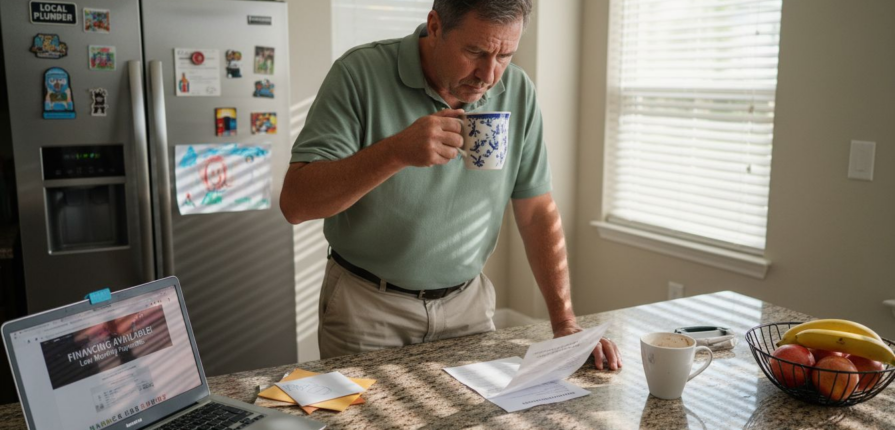
When Central Florida heat feels relentless and your air conditioner sputters out, costly repairs or upgrades can seem out of reach for many Eustis homeowners. Affordable HVAC financing bridges this gap, making dependable comfort realistic without draining your savings. With options that support energy efficiency upgrades and even federal programs offering direct financial help, you gain the freedom to enhance your home’s comfort and lower monthly utility bills on your own timeline.
Table of Contents
- What HVAC Financing Means for Homeowners
- Popular HVAC Financing Types and Programs
- How Approval and Repayment Work
- Comparing Costs, Terms, and Risks
- Mistakes to Avoid When Financing HVAC
Key Takeaways
| Point | Details |
|---|---|
| Affordable Monthly Payments | HVAC financing allows homeowners to spread large costs into manageable monthly payments, making repairs and upgrades more accessible. |
| Energy Efficiency Improvements | Financing enables homeowners to invest in energy-efficient systems that lead to long-term savings on utility bills. |
| Investment in Home Value | Upgrading to newer HVAC systems enhances home value and marketability, appealing to potential buyers. |
| Understanding Financing Options | Homeowners should compare different financing options to find the best terms, interest rates, and potential savings. |
What HVAC Financing Means for Homeowners
HVAC financing transforms how homeowners in Eustis approach system repairs and upgrades. Instead of facing a five-figure bill upfront, you spread costs across manageable monthly payments.
This shift makes real comfort accessible. When your air conditioner fails on a humid Central Florida afternoon, financing means you can act immediately without draining savings.
Why Homeowners Need HVAC Financing
Air conditioning and heating systems fail without warning. A replacement system easily costs $5,000 to $10,000, and most homeowners don’t keep that amount sitting in emergency funds.
Financing bridges that gap. You get the system installed today and pay for it over time.
Beyond emergencies, financing unlocks energy efficiency upgrades. Modern systems reduce electricity consumption significantly, but the upfront investment stops many homeowners from upgrading aging equipment.
Here’s what financing actually does for homeowners:
- Spreads large costs into affordable monthly payments
- Eliminates the choose-between-comfort-and-savings dilemma
- Enables proactive upgrades before systems completely fail
- Opens access to newer, more efficient technology
- Preserves emergency savings for genuine unexpected expenses
The Real Financial Impact
Financing makes sense when you look at the numbers. Federal incentives exist specifically to help homeowners afford better systems. You can claim home energy tax credits for qualifying HVAC improvements, directly reducing what you owe the government.
For low-income households, programs like the Weatherization Assistance Program help reduce energy costs. Qualifying homeowners save an average of $372 annually through efficiency improvements.
These savings compound. When your financed system uses 15-20% less electricity than the old one, your monthly utility bills drop. The financing payment often gets offset by lower energy costs.
Financing isn’t just about spreading payments—it’s about investing in equipment that pays dividends through lower utility bills month after month.
How Financing Affects Your Monthly Budget
The math is straightforward. A $7,000 system financed over five years typically costs $130-150 monthly, depending on interest rates and terms.
Compare that to your current situation:
- Old system running inefficiently
- Higher monthly utility bills
- Risk of catastrophic failure requiring emergency replacement
- Declining comfort as equipment ages
When you factor in reduced electricity usage and predictable financing, the monthly cost often stays similar or even decreases.
Building Long-Term Home Value
Financing an HVAC upgrade isn’t an expense. It’s an investment in your home’s value and your family’s comfort.
Prospective buyers in Eustis recognize newer, efficient systems. A modern HVAC installation appeals to home inspectors and future owners. You’re not just paying for comfort today—you’re enhancing your property’s marketability.
Pro tip: Request an energy audit before financing a system upgrade; it quantifies exactly how much you’ll save annually, helping justify the monthly payment and ensuring you choose the right system size for your home.
Popular HVAC Financing Types and Programs
HVAC financing isn’t one-size-fits-all. Eustis homeowners have multiple paths to afford system upgrades, each with different terms, benefits, and eligibility requirements.

Understanding your options helps you choose the right fit for your budget and timeline.
Traditional HVAC Financing Plans
Manufacturer financing comes directly from HVAC equipment makers. These plans often offer zero-interest periods if you pay within 12-24 months, making them ideal for homeowners with good credit who can pay quickly.
Contractor financing through your local HVAC company provides flexibility. Many companies partner with lenders to offer on-site approval, sometimes within hours of your estimate.
Bank loans and home equity lines of credit are traditional options. You borrow against your home’s equity at competitive rates, then use those funds for your HVAC project.
Here’s how these compare:
Here’s a quick overview of the main HVAC financing options and their unique features:
| Financing Type | Key Benefit | Typical Interest Rate | Approval Speed |
|---|---|---|---|
| Manufacturer Financing | Zero-interest, short-term | 0% (with deadline) | 1-2 days |
| Contractor Financing | Flexible terms, local support | 4-9% | Same day to 2 days |
| Bank Loan | Lower rates for strong credit | 5-7% | 2-5 days |
| Home Equity Line | Large amounts, longer terms | Variable (4-8%) | 5-7 days |
- Manufacturer plans: Zero interest if paid quickly; strict payment deadlines
- Contractor financing: Fast approval; competitive rates; flexible terms
- Bank loans: Lower rates for good credit; requires formal application process
- Home equity lines: Access to large amounts; variable interest rates
Government-Backed Programs
Federal programs exist specifically to help homeowners afford efficient systems. The Weatherization Assistance Program offers subsidized or free upgrades for qualifying low-income households, covering HVAC improvements alongside other weatherization work.
This program eliminates upfront costs entirely for eligible homeowners. You receive professional installation and ongoing support at no expense.
Federal tax credits cover 30% of qualified HVAC equipment costs, up to specific limits. If you install an ENERGY STAR-certified air source heat pump, you can claim significant credits on your tax return.
These aren’t loans—they’re direct reductions in what you owe the government.
Government programs transform HVAC upgrades from luxury purchases into achievable home improvements, especially for low-income households and those installing high-efficiency equipment.
Promotional Financing Offers
Retailers and HVAC companies frequently run seasonal promotions. “No payments for 18 months” or “3% interest for 60 months” deals appear regularly in Eustis.
These work well if you:
- Have stable income to meet the payment schedule
- Understand when interest kicks in (often if unpaid by deadline)
- Compare total interest costs across different offers
- Read the fine print on penalty terms
Many homeowners overlook promotional financing because it requires discipline. Missing a payment might trigger retroactive interest charges on the entire balance.
Energy Savings Financing
Some programs let your energy savings cover the financing cost. As your monthly utility bills drop with a new efficient system, that money flows toward your loan payment.
This approach aligns your savings with your costs directly.
Pro tip: Compare the total interest you’ll pay across all available options before choosing—a slightly lower monthly payment might cost hundreds more in total interest over the loan term, so calculate the full cost, not just the monthly amount.
How Approval and Repayment Work
Getting HVAC financing approval happens faster than you might expect. Most homeowners in Eustis receive decisions within 24-48 hours, sometimes on the same day they request quotes.
Understanding the approval and repayment process removes anxiety from the decision.
The Approval Process
Financing starts with a simple application. You provide basic information: income, credit history, employment status, and the HVAC project cost.
Lenders evaluate your creditworthiness quickly. They check your credit score, debt-to-income ratio, and payment history.
Here’s what happens during approval:
- Submit your application with personal and financial information
- Lender reviews credit profile and verifies income
- Decision issued (approved, conditional, or denied)
- Accept terms and sign financing agreement
- Funds dispersed to contractor for installation
Good credit typically means lower interest rates and faster approval. Even if your credit is fair, you’ll likely qualify for financing, though at higher rates.
How Repayment Schedules Work
Most HVAC financing uses amortized loan structures. This means each monthly payment includes both interest and principal portions, gradually reducing your loan balance over time.
Your amortization schedule clarifies exactly how much principal and interest you pay each month. Early payments cover more interest; later payments reduce principal faster.
For example, a $7,000 loan at 8% interest over five years breaks down like this:
- Month 1: Roughly $47 interest, $83 principal
- Month 30: Roughly $28 interest, $102 principal
- Month 60: Roughly $6 interest, $124 principal
As you progress, more of your payment goes toward actually paying down the debt.
Compare amortized loan schedules to understand how your payments change over time:
| Month | Interest Portion | Principal Portion | Remaining Balance |
|---|---|---|---|
| Month 1 | $47 | $83 | $6,917 |
| Month 30 | $28 | $102 | $3,433 |
| Month 60 | $6 | $124 | $0 |
Your monthly payment stays constant, but the balance decreases faster as you approach the end of the loan term.
Payment Options and Flexibility
Most lenders offer flexible payment schedules. You choose terms ranging from 24 to 84 months, depending on the loan amount and your preference.
Shorter terms mean higher monthly payments but less total interest. Longer terms reduce monthly costs but increase total interest paid.
Consider these factors:
- Monthly budget: Can you comfortably afford $150 monthly versus $100?
- Total interest: A 5-year loan costs less in total interest than an 8-year loan
- Life plans: Will you stay in your home long enough to benefit from the new system?
Some contractors offer early payoff options without penalties. Paying extra principal when you have extra cash accelerates debt reduction.
After Approval and Installation
Once approved and your system is installed, repayment begins. Your first payment typically starts 30-60 days after installation, giving you a brief grace period.
Set up automatic payments if possible. This ensures you never miss deadlines and often qualifies you for small interest rate discounts.
Stay organized by keeping records of payments and your amortization schedule. If issues arise, contact your lender immediately.
Pro tip: Request a detailed amortization schedule before signing—knowing your exact payment breakdown for all months helps you budget accurately and identify opportunities to pay extra principal when unexpected money comes in.
Comparing Costs, Terms, and Risks
Not all HVAC financing options cost the same. A difference of 2% in interest rates or five years in repayment terms can mean thousands of dollars over the life of your loan.
Comparing options carefully protects your wallet and your financial future.
Total Cost Versus Monthly Payment
Homeowners often focus on monthly payments and miss the bigger picture. A $150 monthly payment sounds manageable, but over seven years that’s $12,600 for a $7,000 system.
That extra $5,600 represents interest and financing fees. Over five years, the same system might cost only $10,500 total, saving $2,100.
Here’s what affects your total cost:
- Interest rate: Higher rates increase total cost significantly
- Loan term: Longer terms cost more in total interest
- Down payment: Larger upfront payments reduce the amount financed
- Hidden fees: Origination, processing, or prepayment penalties
Always calculate total cost, not just monthly payments.
Evaluating Risk Factors
Balancing startup and ongoing costs requires assessing your financial risk. Can you handle the monthly payment if your income drops? What happens if you need to sell your home before the loan is paid?
Consider your job stability, emergency savings, and family situation. Financing a system at $180 monthly works fine if you’re confident in stable income. It becomes risky if your job is uncertain.
Key risks to evaluate:
- Job security: Can you sustain payments through economic uncertainty?
- Home plans: Will you stay long enough to benefit from this investment?
- Interest rate risk: Is the rate fixed or variable?
- Early payoff penalties: Can you pay faster without penalties?
Comparing Specific Financing Options
Cost estimation requires analyzing capital costs, operating expenses, financing charges, and indirect costs together. A cheap system with high financing costs might cost more than a quality system with better financing terms.
Here’s a practical comparison:
Option A: Manufacturer Financing
- System cost: $6,500
- Interest rate: 0% for 12 months
- Total cost: $6,500 (if paid in 12 months)
- Risk: Entire balance due if not paid in time
Option B: Contractor Financing
- System cost: $6,500
- Interest rate: 7% over 60 months
- Monthly payment: $127
- Total cost: $7,620
Option C: Bank Loan
- System cost: $6,500
- Interest rate: 6% over 72 months
- Monthly payment: $107
- Total cost: $7,704
The cheapest monthly payment isn’t always the best deal—total cost over the loan’s life matters more than single-month affordability.
Making Your Comparison
Gather quotes from at least three financing sources. Request the same information from each: interest rate, term length, monthly payment, and total cost.
Create a simple spreadsheet comparing these numbers. Factor in any available rebates, tax credits, or energy savings you’ll receive.
Don’t choose based on the lowest monthly payment alone. Consider total cost, your financial stability, and whether early payoff options exist without penalties.
Pro tip: Request written loan estimates showing the APR, total amount financed, and total amount you’ll pay—federal law requires lenders to provide this in a standardized format, making direct comparisons between offers straightforward and accurate.
Mistakes to Avoid When Financing HVAC
HVAC financing seems straightforward until you make a costly error. Homeowners in Eustis often overlook details that cost thousands extra or leave them stuck with poor systems and high payments.
Knowing what to avoid protects both your money and your comfort.
Working with Unqualified Contractors
This mistake tops the list. You find a contractor offering great financing terms, sign paperwork, and later discover they’re unlicensed or use unapproved lenders.
Working with approved contractors and lenders protects you from fraud, inflated costs, and poor workmanship. Verify credentials before signing anything.
Always check:
- Licensing: Confirm active state HVAC license
- Insurance: Request proof of liability and workers’ compensation
- References: Call past customers about their experience
- Reviews: Check online ratings and Better Business Bureau status
- Lender approval: Verify the financing company is legitimate
A reputable contractor like Lucas Air Conditioning and Heating welcomes credential verification. If someone resists, that’s a red flag.
Misunderstanding Loan Terms
Many homeowners sign agreements without fully understanding what they’re agreeing to. You might not realize your interest rate is variable, or that missing one payment triggers penalties and rate increases.
Read every document carefully. Ask questions about anything unclear. Don’t let pressure push you into signing before you understand.
Common misunderstandings include:
- Variable versus fixed rates: Does your rate stay the same or change?
- Prepayment penalties: Can you pay early without extra charges?
- Late payment terms: What happens if you miss a payment?
- Balloon payments: Is a large lump sum due at the end?
Reading your loan agreement thoroughly before signing takes 30 minutes but saves thousands in unexpected costs and penalties.
Missing Tax Credit Deadlines and Requirements
Federal energy tax credits exist for qualifying HVAC upgrades, but misunderstanding eligibility or missing deadlines prevents you from claiming them. Credits cover 30% of qualified equipment costs, but only if you meet strict requirements.
Common mistakes:
- Installing equipment that doesn’t qualify for credits
- Missing the deadline to claim credits on your tax return
- Failing to keep documentation proving installation dates and costs
- Not verifying equipment meets ENERGY STAR or other certification standards
Before financing, confirm your chosen system qualifies for available credits. Ask your contractor for documentation proving ENERGY STAR certification or other required credentials.
Underestimating Total Project Costs
You get a $6,500 quote for the system, finance it, then discover ductwork, electrical upgrades, and permits add $2,000 more. Now you’re financing a higher amount than expected.
Request detailed written estimates including all costs before committing to financing. Clarify what’s included and what costs extra.
Ignoring the True Cost of Longer Loan Terms
A $150 monthly payment feels better than $200 monthly, so you choose the seven-year loan instead of five years. You just added $1,200 in extra interest without realizing it.
Calculate total cost for every term option. Short-term loans cost more monthly but less overall.
Pro tip: Before signing any financing agreement, calculate the total amount you’ll pay over the loan’s entire term, then compare it to at least two other financing options to ensure you’re choosing based on complete cost information, not just monthly affordability.
Make HVAC Financing Work for You with Trusted Local Experts
Facing the challenge of high upfront costs for HVAC upgrades or unexpected repairs can feel overwhelming. The article highlights how financing can spread out payments, protect your emergency savings, and even deliver energy savings with smart system choices. If you want to avoid emergency breakdowns, take advantage of special financing offers, and upgrade confidently with clear loan terms, Lucas Air Conditioning and Heating is here to guide you.
Explore our current Special Offers to see financing options that fit your budget. Our veteran-owned team in Eustis provides expert installation, repairs, and maintenance with integrity and respect for your schedule. Discover how our professional solutions help you balance comfort and cost effectively. Ready to experience affordable comfort today Visit Lucas Air Conditioning and Heating to schedule your consultation or learn more about our wide range of HVAC services including commercial solutions. Don’t wait until a sudden system failure costs you more—take control with trusted local financing support now.
Frequently Asked Questions
What are the benefits of HVAC financing?
HVAC financing allows homeowners to spread the cost of system repairs and upgrades into manageable monthly payments, making it easier to maintain comfort without draining savings. It can also enable proactive upgrades to more energy-efficient systems, potentially lowering utility bills.
How does HVAC financing work in terms of monthly payments?
Most HVAC financing options involve amortized loan structures, meaning your monthly payments include both principal and interest. The payment amount typically remains constant throughout the loan term, but the proportions of interest and principal change over time.
Are there government programs available for HVAC financing?
Yes, there are federal programs like the Weatherization Assistance Program that help low-income households afford efficient HVAC upgrades. Additionally, federal tax credits can cover a significant portion of qualified equipment costs, reducing the financial burden.
What should I consider when comparing different HVAC financing options?
When comparing HVAC financing options, consider the total cost of the loan, including interest rates and fees, repayment terms, and whether prepayment penalties exist. It’s also important to understand the benefits of energy efficiency and any applicable tax credits that may lower your overall expenses.
