
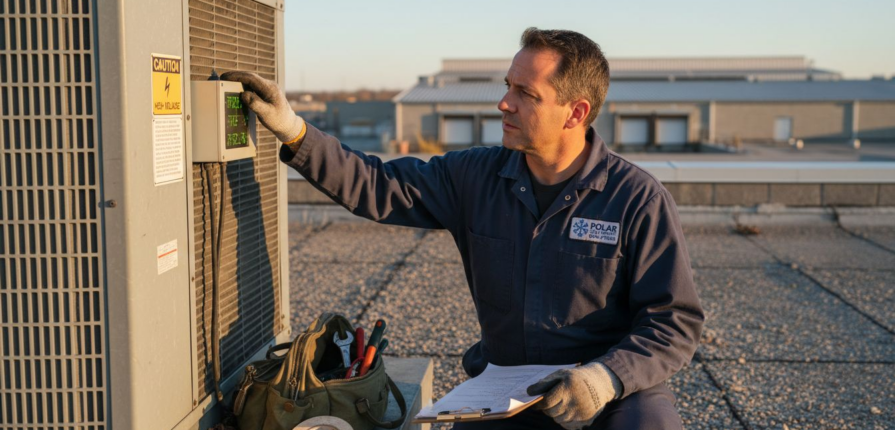
Costly HVAC breakdowns rarely happen overnight. For commercial property managers and business owners across Central Florida, regular inspection and maintenance of industrial HVAC systems keeps facilities comfortable, efficient, and safe. Overlooking small issues in components or air quality can quickly lead to energy waste and complaints. This guide walks you through proven steps used by leading industry experts to safeguard system function, meet compliance standards, and avoid expensive repairs before they disrupt your operation.
Table of Contents
- Step 1: Inspect System Components For Safety And Function
- Step 2: Clean Filters, Coils, And Ducts Thoroughly
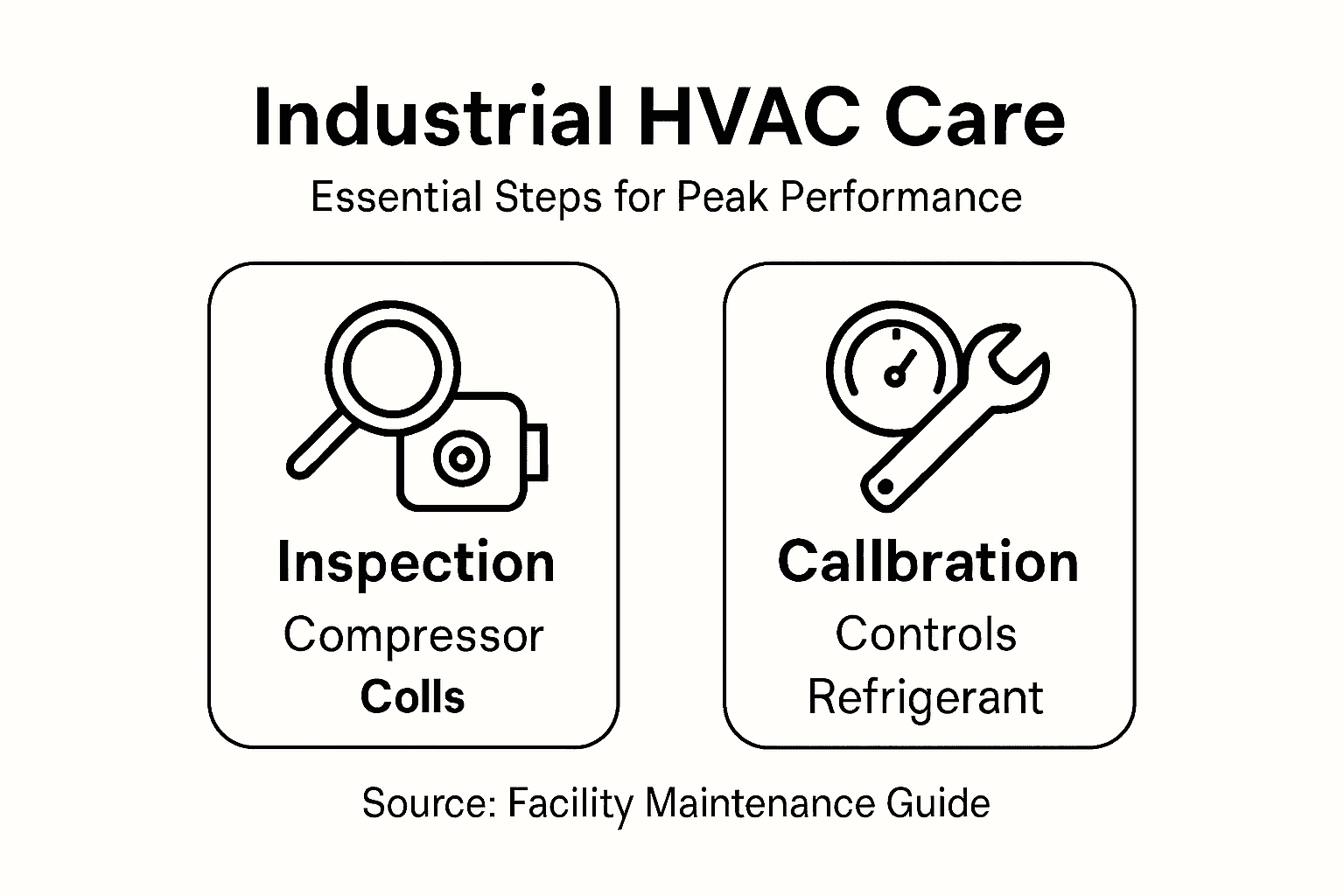
- Step 3: Calibrate Controls And Check Refrigerant Levels
- Step 4: Test System Performance And Address Issues
Quick Summary
| Important Insight | Description |
|---|---|
| 1. Regular Inspections Prevent Issues | Inspect key HVAC components to catch problems early and ensure safety. |
| 2. Clean Components Enhance Efficiency | Maintain clean filters and coils to boost airflow and system performance. |
| 3. Calibrate Controls for Accuracy | Regularly check and calibrate controls to maintain optimal refrigerant levels and temperature measurement. |
| 4. Test Performance Consistently | Run the system under real conditions to identify performance gaps that require immediate attention. |
| 5. Document Findings for Future Reference | Keep detailed maintenance logs to track issues and schedule preventative repairs effectively. |
Step 1: Inspect system components for safety and function
A thorough component inspection catches problems before they become expensive repairs or safety issues. You’ll examine key parts to verify they’re operating correctly and pose no hazard to your facility or staff.
Start by visually inspecting the compressor unit for any signs of leaks, corrosion, or physical damage. Look for oil stains around seals and connections, which indicate potential refrigerant loss. Check that all bolts and fasteners are tight and secure.
Next, examine the condenser coils and evaporator coils for dirt buildup, debris, or bent fins. Dirty coils reduce efficiency significantly and can cause the system to work harder than necessary. Clean coils with a soft brush or compressed air, being careful not to damage the delicate fins.
Inspect all refrigerant lines and connections for visible damage, kinks, or signs of leakage. Proper HVAC inspection procedures ensure you identify leaks before they compromise system performance or create workplace safety concerns.
Check the blower motor and fan for unusual noises, vibration, or hesitation during startup. The motor should spin freely without grinding sounds. Verify that all electrical connections are tight and free from corrosion.
Examine ductwork and airflow paths for blockages, disconnections, or damage. Blocked ducts restrict airflow and force your system to work inefficiently. Look for visible gaps where conditioned air escapes.
Key areas to inspect during your walkthrough:
- Compressor seals and fasteners for tightness
- Coil surfaces for dirt, debris, or blockages
- Refrigerant lines for kinks, cracks, or leaks
- Electrical connections for corrosion or loose terminals
- Motor bearings for unusual noise or excessive vibration
- Fan blades for cracks or imbalance
- Ductwork for gaps, holes, or disconnections
A single refrigerant leak can reduce system efficiency by 10 percent, forcing your equipment to run longer and increasing energy costs significantly.
Document your findings in a maintenance log. Note the date, components inspected, any issues found, and actions taken. This record helps you track patterns and schedule preventative repairs before breakdowns occur.
Here’s a summary of typical HVAC inspection findings and their business impacts:
| Issue Detected | Potential Consequence | Recommended Action |
|---|---|---|
| Refrigerant leak | Higher energy bills, system strain | Repair and recharge immediately |
| Dirty coils | Reduced cooling efficiency | Clean coils with proper tools |
| Loose connections | Electrical hazards or shutdown | Tighten and replace as needed |
| Blocked ductwork | Uneven airflow, wasted energy | Seal gaps and remove obstructions |
Pro tip: Schedule your most detailed inspections during mild weather months when your system isn’t running at full capacity, allowing you to catch and fix issues without disrupting facility operations.
Step 2: Clean filters, coils, and ducts thoroughly
Clean filters, coils, and ducts are the foundation of an efficient HVAC system. This step removes accumulated dirt, debris, and microbial growth that reduce performance and compromise air quality in your facility.
Begin with the air filters. Check them monthly and replace them every 90 days, or sooner if your facility operates in a dusty environment. A clogged filter forces your system to work harder, wasting energy and reducing efficiency. Keep replacement filters on hand so you’re never caught without a clean one.
Next, tackle the evaporator and condenser coils. Turn off power to your system before starting. Inspect coils closely for dirt buildup, algae growth, or debris. Use a soft brush or coil cleaning solution to gently remove buildup without bending the delicate aluminum fins.
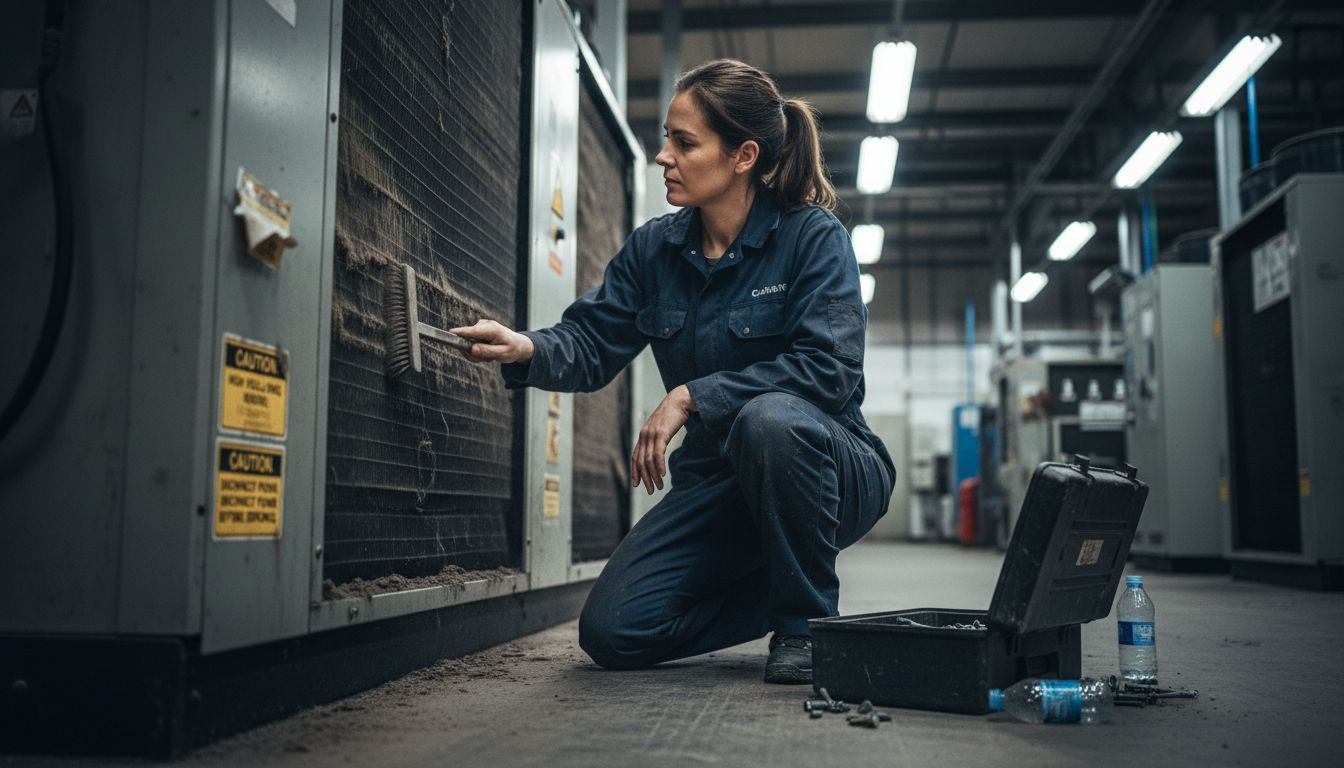
For duct cleaning, start by inspecting accessible sections for visible dirt, dust, or mold. Access panels and return air plenums often need attention first. HVAC duct cleaning techniques include vacuuming debris, brushing interior surfaces, and using compressed air to dislodge stubborn buildup.
Follow this cleaning sequence for best results:
- Turn off the system and ensure all power switches are off
- Remove and inspect all accessible filters
- Clean or replace filters based on their condition
- Clean evaporator coil surfaces with appropriate cleaning solution
- Clean condenser coil fins with soft brush and compressed air
- Vacuum accessible ductwork using industrial-grade equipment
- Use proper filtration standards when selecting replacement filters for your system type
Dirty coils and filters reduce airflow by up to 40 percent, forcing your compressor to run significantly longer while delivering less cooling capacity.
Regular coil cleaning alone can restore system efficiency by 15 to 25 percent and extend equipment lifespan by several years.
After cleaning, run your system for 15 minutes to verify proper operation and airflow. Listen for unusual sounds and check that all sections are reaching proper temperature.
Pro tip: Schedule deep coil and duct cleaning during spring and fall when seasonal transitions allow system downtime, preventing disruptions to your facility’s climate control needs.
This table compares routine versus deep HVAC cleaning to help guide maintenance planning:
| Cleaning Type | Frequency | Main Tasks | Benefit |
|---|---|---|---|
| Routine Cleaning | Monthly/Quarterly | Replace filters, surface dusting | Maintains airflow, saves energy |
| Deep Cleaning | Semiannual/Annual | Coil and duct cleaning | Boosts efficiency, extends lifespan |
Step 3: Calibrate controls and check refrigerant levels
Proper calibration and refrigerant levels are critical for system efficiency and worker safety. Inaccurate readings lead to overcharging or undercharging, both of which damage equipment and waste energy.
Start by checking your thermostat calibration. Set it to a known temperature and verify that the actual temperature matches the display within two degrees Fahrenheit. If it reads incorrectly, recalibrate according to the manufacturer’s instructions. Many modern systems allow digital calibration adjustments through the control panel.
Next, inspect all temperature and pressure sensors throughout your system. These devices tell your controls how the system is operating. Proper HVAC tool calibration ensures your gauges and sensors accurately measure conditions, preventing costly misdiagnosis and inefficient operation.
For refrigerant level checks, you’ll need proper equipment and training. The refrigerant charge must match manufacturer specifications exactly. Too little refrigerant reduces cooling capacity and efficiency. Too much creates excess pressure and strains the compressor. Use calibrated gauges to measure system pressure and compare results to pressure temperature charts for your specific refrigerant type.
Follow this calibration checklist during your maintenance visit:
- Verify thermostat temperature accuracy within acceptable range
- Check temperature sensors for proper readings and secure connections
- Inspect pressure gauges for damage or fogging
- Measure system pressure with calibrated gauges
- Compare readings to manufacturer pressure temperature charts
- Document all calibration results in your maintenance log
- Record refrigerant type and charge amount used
Refrigerant levels that are even slightly off reduce system efficiency by 5 to 10 percent, forcing longer runtimes and higher energy bills.
An undercharged system works twice as hard to achieve the same cooling, while an overcharged system risks compressor failure and costly emergency repairs.
If refrigerant levels need adjustment, only certified technicians should handle this task due to EPA regulations and safety requirements. Document the amount added and date completed.
Pro tip: Maintain detailed records of each calibration and refrigerant check, including technician name, measurements taken, and any adjustments made, which helps track system performance trends and prevents recurring issues.
Step 4: Test system performance and address issues
Testing your system under actual operating conditions reveals problems that inspections alone won’t catch. This step ensures your industrial HVAC delivers the cooling and air quality your facility needs.
Begin by running the system at full capacity for at least 30 minutes. Monitor temperature readings throughout your facility to verify that all zones reach desired setpoints. Listen for unusual noises, vibrations, or grinding sounds that indicate mechanical problems.
Check airflow patterns in each section of your building. Feel air coming from vents and returns to confirm consistent flow. Weak airflow in specific areas points to blockages, ductwork damage, or fan issues requiring attention.
Measure supply and return temperatures at multiple locations using calibrated thermometers. Compare actual temperatures against design specifications provided by the system manufacturer. Functional performance testing procedures help you establish baseline performance metrics and detect deviations that signal developing problems.
Record these key performance indicators during your test:
- Compressor runtime and cycling patterns
- Supply air temperature at main trunk and branch ducts
- Return air temperature entering the unit
- Outdoor ambient temperature and humidity levels
- System pressure readings at evaporator and condenser
- Electrical current draw on compressor motor
- Thermostat accuracy and response time
Common issues to address include refrigerant leaks reducing efficiency, ductwork disconnections causing uneven cooling, and fan motor problems creating inadequate airflow. Document each issue found and prioritize repairs by severity.
A system running at only 80 percent capacity costs 25 percent more to operate while delivering inadequate climate control.
If testing reveals significant performance gaps, schedule repairs immediately. Small issues compound quickly into major problems requiring expensive emergency service. Create a follow-up maintenance appointment to verify repairs were successful.
Pro tip: Schedule performance tests during moderate outdoor temperatures when your system can run at steady state without emergency cycling, providing the most accurate readings and clearest picture of actual performance.
Ensure Your Industrial HVAC Runs Smoothly with Expert Maintenance
Keeping your industrial HVAC system in peak condition requires careful inspection, precise cleaning, and accurate calibration. The challenges highlighted in this article—such as detecting refrigerant leaks, cleaning coils and ducts thoroughly, and calibrating controls—can save your business from costly energy waste and unexpected breakdowns. Ignoring these critical steps can lead to inefficient cooling, increased operational costs, and potential safety hazards.
Lucas Air Conditioning and Heating understands these pain points and delivers trusted solutions tailored for commercial and industrial clients across Central Florida. Our services include comprehensive maintenance plans, expert handling of ventilation and ductwork issues, and precise system tune-ups to maximize your equipment’s lifespan.
Ready to prevent downtime and reduce energy expenses? Visit Lucas Air Conditioning and Heating today to schedule your detailed industrial HVAC inspection or cleaning service. Don’t wait until small problems become emergency repairs. Explore our trusted commercial HVAC solutions at Commercial Archives and stay informed with the latest ventilation best practices. Protect your investment by acting now.
Frequently Asked Questions
How do I perform an initial inspection of my industrial HVAC system?
Start by visually examining the compressor unit for leaks, corrosion, or damage. Check seals and connections for oil stains, inspect coils for dirt buildup, and ensure refrigerant lines are intact.
What steps should I take to clean the HVAC filters and coils?
Begin by replacing air filters every 90 days, or sooner in dusty environments. Next, turn off the system, then carefully clean the evaporator and condenser coils using a soft brush or appropriate cleaning solution to remove debris without damaging any components.
How can I accurately check and calibrate refrigerant levels in my HVAC system?
Use calibrated gauges to measure system pressure against manufacturer specifications. If levels are incorrect, add or remove refrigerant as needed, ensuring precise adherence to guidelines to maintain efficiency and prevent damage.
What performance tests should I conduct after maintenance?
Run the HVAC system at full capacity for at least 30 minutes to observe temperatures and airflow throughout the facility. Document supply and return temperatures and listen for unusual sounds to identify any underlying issues.
How can I maintain the HVAC system to ensure optimal efficiency?
Schedule inspections, routine cleaning, and performance tests regularly, aiming for at least every six months. Keeping a detailed maintenance log helps track system performance and identify patterns that require attention.
When is the best time to perform deep cleaning on the HVAC system?
Conduct deep cleaning during spring and fall when temperatures are moderate, allowing the system to be offline without disrupting operations. This timing helps you thoroughly clean coils and ducts, significantly boosting efficiency.
Recommended
- Essential HVAC Preventative Maintenance Guide for Homeowners
- 7 Essentials for a Thorough Commercial HVAC Checklist
- Streamline Your Business HVAC Repair Workflow Easily
- 7 Steps to a Complete Home HVAC Maintenance Checklist
- HYGIENE: Nachrüsten und Erweitern von Klimatechnik – optimale Hygiene durch einfache Wartung und Reinigung inklusive – hotelimpulse
