
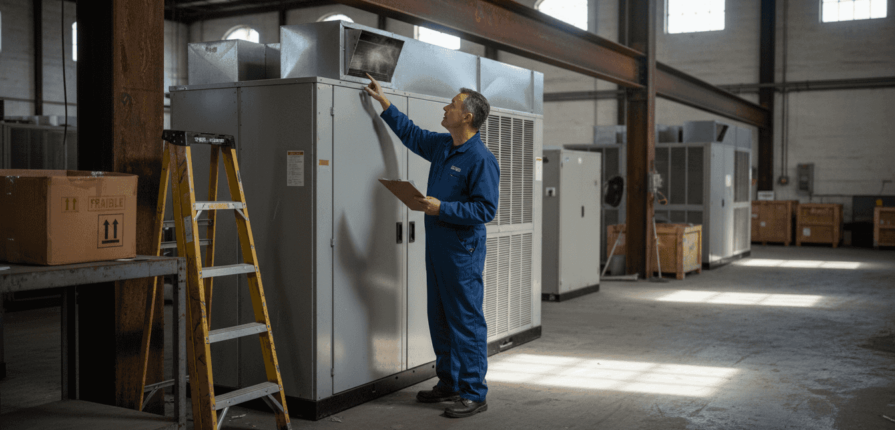
Managing warehouses and large office buildings across Central Florida means balancing climate control against rising energy costs and regulatory demands. Industrial HVAC systems require a different approach from residential units, with greater complexity, continuous operation, and strict compliance under the Florida Building Code and ASHRAE standards. This guide helps commercial property managers grasp industrial HVAC system basics and practical choices that protect budgets, inventory, and worker health in demanding environments.
Table of Contents
- Defining Industrial HVAC Systems In Florida
- Major Types Of Industrial HVAC Solutions
- How Industrial HVAC Systems Operate
- Compliance, Safety, And Efficiency Factors
- Maintenance Needs And Cost Considerations
Key Takeaways
| Point | Details |
|---|---|
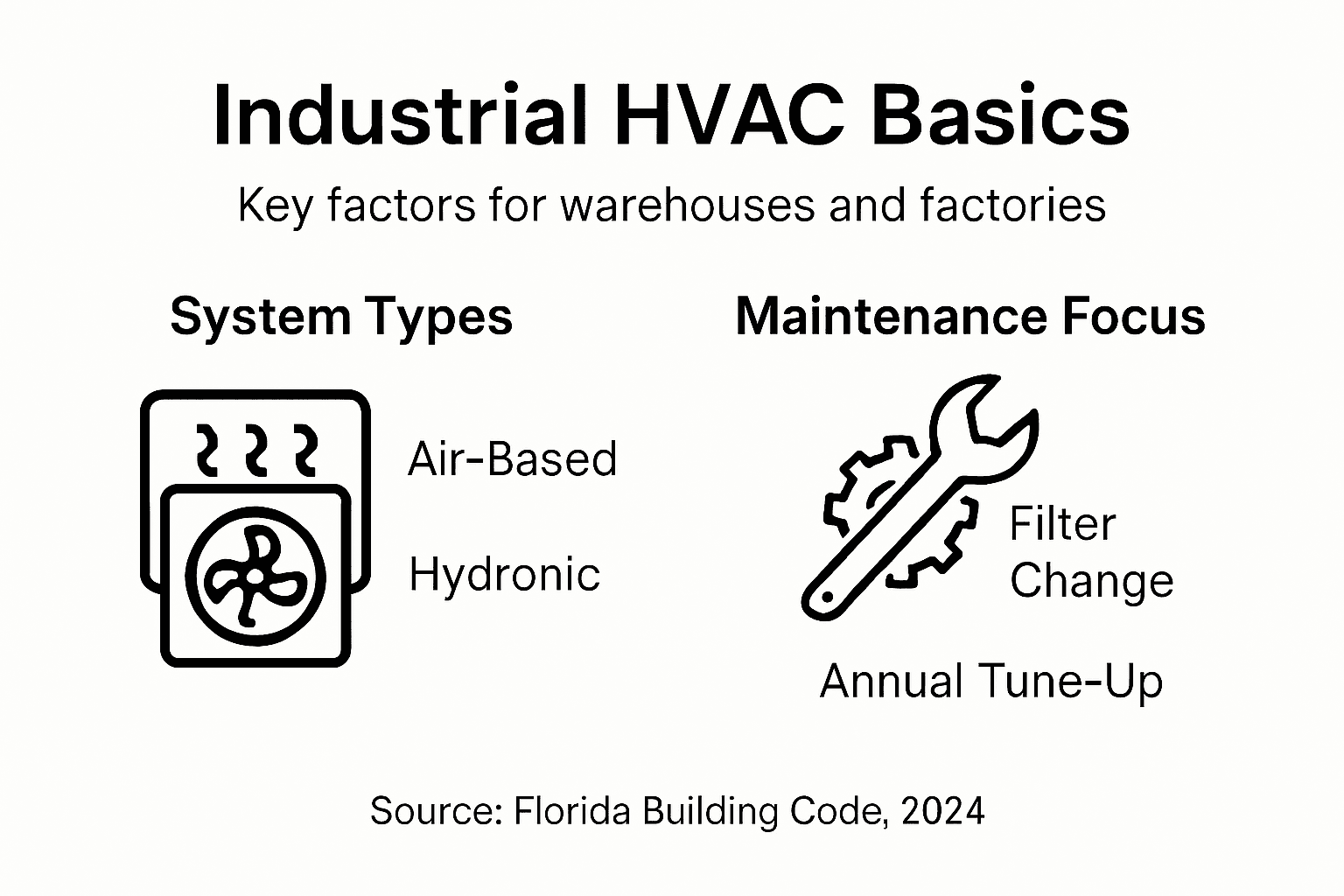
| Differentiation of Industrial HVAC | Industrial HVAC systems are significantly larger and operate continuously, requiring specialized equipment and maintenance compared to residential systems. |
| Compliance with Regulations | Understanding and adhering to Florida’s HVAC regulations is crucial for safety, efficiency, and avoiding penalties. |
| Importance of Regular Maintenance | Regular maintenance can extend the life of HVAC systems by 5 to 10 years and prevent costly emergency repairs. |
| Selecting the Right System Type | Choose the appropriate HVAC system based on your facility’s size and climate control needs to optimize efficiency and operating costs. |
Defining Industrial HVAC Systems in Florida
Industrial HVAC systems differ fundamentally from residential units. They handle much larger spaces, higher temperature swings, and more complex air quality demands than what most property managers encounter.
Warehouses, manufacturing facilities, and large commercial complexes in Central Florida require specialized climate control. These systems work continuously, managing massive air volumes while maintaining strict temperature and humidity levels.
What Makes Industrial HVAC Different
Size and capacity separate industrial systems from everything else. A typical warehouse HVAC setup might serve 50,000 to 500,000 square feet, compared to a residential unit handling maybe 2,000 square feet.
Key differences include:
- Equipment scale: Rooftop units, large ductwork systems, and multiple compressors
- Operational demands: 24/7 operation instead of intermittent residential use
- Air quality standards: Dust filtration, humidity control, and ventilation requirements
- Energy consumption: Significant utility costs that justify professional maintenance
Industrial systems also control humidity differently. Warehouses storing goods like electronics or pharmaceuticals need precise moisture levels to prevent product damage.
Florida’s Regulatory Framework
The Florida Building Code governs HVAC installations with specific equipment installation standards and energy conservation requirements. Licensed contractors must follow the 2023 Mechanical 7th Edition guidelines closely.
Your system must meet current efficiency standards. A minimum SEER rating of 14 applies to air conditioning units under Department of Energy standards for new installations.
Local amendments in your jurisdiction add extra compliance layers. Each city and county may have specific ventilation codes beyond state requirements.
System Components You Should Know
Understanding what you’re maintaining helps you communicate with service providers. Industrial HVAC systems contain more components than residential units.
Standard components include:
- Large capacity compressors (often multiple units)
- Extensive ductwork networks with multiple zones
- Commercial-grade thermostats and control systems
- High-efficiency air handlers
- Advanced filtration systems
- Emergency disconnect switches (required by code)
System design and equipment selection depend on your building layout, occupancy, and operational hours. A 24/7 manufacturing facility needs different equipment than a standard office building with typical business hours.
Industrial HVAC systems often account for 40 percent or more of a building’s total energy consumption, making efficiency upgrades directly impact your operating costs.
Why This Matters for Your Bottom Line
A failing industrial HVAC system doesn’t just affect comfort. It impacts product quality, employee productivity, and equipment lifespan.
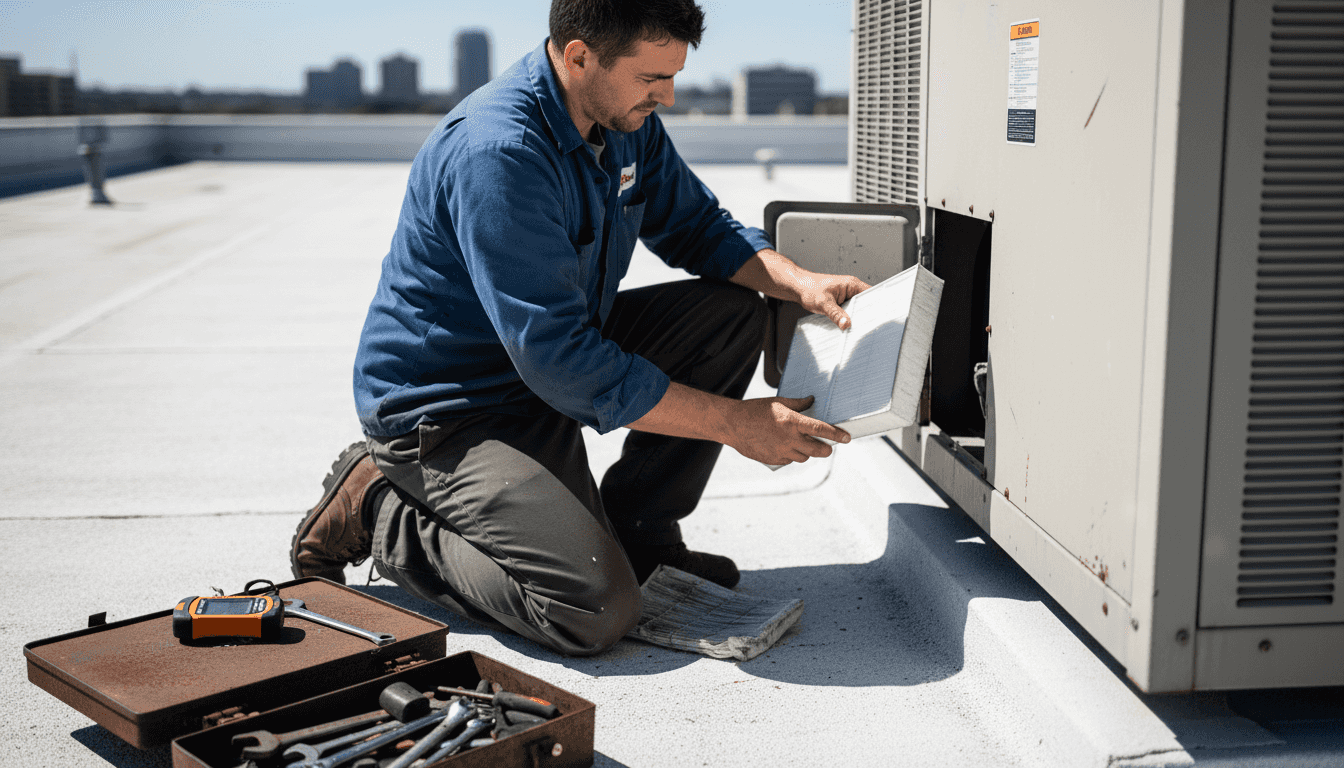
Temperature fluctuations damage sensitive inventory. Humidity swings cost money through product loss and operational inefficiency. Poor air quality affects worker health and safety, triggering potential liability issues.
Proper maintenance extends system life by 5 to 10 years. Regular tune-ups catch problems before they become expensive emergency repairs.
Pro tip: Schedule preventative maintenance twice yearly (spring and fall) to avoid mid-season breakdowns that disrupt operations and spike energy bills.
Major Types of Industrial HVAC Solutions
Industrial HVAC comes in three primary varieties, each suited to different warehouse and facility needs. Understanding which type works for your property helps you plan maintenance schedules and budget for upgrades.
Your choice depends on building size, temperature precision requirements, and energy efficiency goals. Florida’s humid climate makes some options more practical than others for Central Florida operations.
Here’s a summary comparing the three main types of industrial HVAC solutions:
| System Type | Best Application | Efficiency Level | Maintenance Complexity |
|---|---|---|---|
| Air-Based | Large warehouses | Moderate | Straightforward |
| Hydronic | Sensitive storage areas | High | Requires skilled staff |
| Refrigerant-Based | Large cooling demands | Very high | Advanced expertise |
Air-Based Systems
Air-based systems represent the most common industrial solution in Florida warehouses. They use combustion or refrigerant compressors to transfer heat through air and heat exchangers.
These systems excel at ventilation and air circulation throughout large spaces. They work well when you need to move significant air volumes quickly across extensive ductwork networks.
Strengths of air-based systems:
- Effective for high-volume ventilation requirements
- Lower initial installation costs than alternatives
- Straightforward maintenance for experienced technicians
- Works well in Florida’s high-humidity environments
Air-based systems do require robust ductwork infrastructure. If your warehouse has older or poorly designed ducts, efficiency suffers considerably.
Hydronic Systems
Hydronic cooling and heating use water or steam instead of air as the heat transfer medium. These systems pump temperature-controlled liquid through smaller piping networks to heating or cooling units.
HydronicDoes systems deliver precise temperature control with remarkable energy efficiency. They work especially well in facilities requiring tight climate control, like storage areas for temperature-sensitive products.
Key advantages include:
- Precise humidity and temperature management
- Higher energy efficiency than air-based alternatives
- Smaller piping footprint saves space
- Quieter operation compared to air systems
HydronicDoes systems typically need separate ventilation systems. This adds complexity and cost but provides unmatched environmental control.
Refrigerant-Based Systems
Refrigerant-based systems use refrigerants directly for cooling and heating functions. These systems often deliver superior efficiency in large industrial environments with substantial cooling demands.
Refrigerant systems work by circulating refrigerant through compressors, evaporators, and condensers. They handle extreme temperature swings while maintaining consistent performance.
Benefits for industrial facilities:
- Highest efficiency ratings for heavy cooling loads
- Handles extreme temperature variations
- Scalable for facilities of any size
- Fast response to temperature changes
The type you select determines your long-term operating costs and maintenance complexity; choosing correctly saves thousands annually in energy bills.
Choosing the Right Type for Your Facility
Your specific needs drive the decision between these three approaches. Commercial HVAC system selection depends on facility size, function, and climate control precision requirements.
Warehouse operations storing sensitive inventory need hydronic or refrigerant systems. Standard warehouse facilities with basic climate control typically use air-based systems successfully.
Manufacturing floors requiring precise humidity control benefit from hydronic setups. Distribution centers prioritizing air circulation favor air-based solutions.
Pro tip: Request system type recommendations from multiple HVAC contractors during the consultation phase; different types suit different operational goals, and choosing wrong costs you significantly in wasted energy and maintenance.
How Industrial HVAC Systems Operate
Industrial HVAC systems work through interconnected components that regulate temperature, humidity, and air quality across massive spaces. The basic principle mirrors residential units, but the scale and complexity are dramatically different.
Understanding the operational flow helps you communicate problems to technicians and anticipate maintenance needs. Your warehouse’s climate control depends on these components working in perfect synchronization.
The Core Operating Cycle
Industrial HVAC components like compressors and evaporators work together through a continuous refrigeration cycle. The system moves refrigerant through four main stages: compression, condensation, expansion, and evaporation.
The compressor pressurizes refrigerant gas, creating heat. This hot gas flows to the condenser, where it releases heat to the outside environment and becomes liquid.
The liquid refrigerant then passes through an expansion valve, which reduces pressure and temperature. Finally, it reaches the evaporator, where it absorbs heat from your warehouse air and returns to gas form.
This cycle repeats continuously, moving heat out of your facility.
Key Operating Components
Each component plays a specific role in the overall system function. Understanding them helps you recognize when something isn’t working correctly.
Critical components include:
- Chillers and cooling towers: Exchange heat with the external environment
- Air handling units: Control temperature, humidity, and air distribution
- Control systems: Monitor and adjust operations based on facility demands
- Ductwork and filters: Move air and remove contaminants
- Expansion valves: Regulate refrigerant flow and pressure
In Florida’s climate, cooling towers work overtime managing the heat load from your warehouse. They pull warm refrigerant and dump heat to the atmosphere through water circulation.
How the System Manages Your Climate
The control system acts as the brain of your industrial HVAC setup. It reads temperature sensors throughout your warehouse and adjusts component operation to maintain target conditions.
When your warehouse temperature rises above the setpoint, the system increases compressor speed. More refrigerant circulates, pulling more heat from the air. When temperature drops below setpoint, the system reduces compressor output.
This constant adjustment keeps conditions stable despite external heat, equipment load, and occupancy changes.
Industrial HVAC systems adapt to fluctuating loads automatically; a well-maintained control system responds to changes within minutes, preventing temperature swings that damage inventory or disrupt operations.
Ventilation and Air Quality Management
Beyond temperature control, your system handles fresh air intake and contaminant removal. The ventilation function brings outside air into your facility while exhausting stale air and pollutants.
This process serves multiple purposes:
- Replaces oxygen consumed by workers and equipment
- Removes airborne contaminants and dust
- Maintains pressure balance in the facility
- Supports humidity control in warehouses storing sensitive goods
Proper ventilation design prevents hot spots and ensures even air distribution. Poorly designed ventilation creates dead zones where temperature swings occur.
Pro tip: Have your control system calibrated annually by a licensed technician; even small sensor drift causes the system to over-cool or under-cool, wasting energy and creating uncomfortable zones in your warehouse.
Compliance, Safety, and Efficiency Factors
Industrial HVAC systems don’t operate in a vacuum. Federal, state, and local regulations govern everything from refrigerant handling to workplace safety and energy efficiency. Non-compliance costs money through fines, operational shutdowns, and potential liability.
Central Florida property managers must understand these requirements to protect workers, avoid penalties, and maintain system performance. Compliance isn’t optional—it’s the foundation of safe, legal operations.
Federal and State Safety Regulations
OSHA and EPA regulations establish strict standards for workplace safety and refrigerant handling in industrial facilities. These agencies enforce rules protecting workers from hazardous conditions and environmental damage.
Key regulatory areas include:
- Refrigerant management: Proper handling, recovery, and disposal of cooling fluids
- Worker safety protocols: Training requirements, protective equipment, and emergency procedures
- Indoor air quality standards: Ventilation minimums and contaminant limits
- Equipment certification: Systems must use approved materials and designs
Violations carry hefty fines ranging from thousands to hundreds of thousands of dollars. More importantly, unsafe conditions endanger your employees and disrupt operations.
Energy Efficiency Standards
ASHRAE 90.1 establishes energy efficiency requirements for commercial buildings. These standards mandate minimum efficiency ratings for equipment and system design practices.
Florida’s climate makes energy efficiency critical. Your cooling costs represent a substantial portion of operating expenses. Compliant systems use less energy while maintaining better climate control.
Energy compliance requirements include:
- Minimum SEER ratings for air conditioning units
- Proper insulation and ductwork sealing
- Advanced control systems that optimize load management
- Regular maintenance schedules documented and completed
Upgrading to compliant equipment often qualifies for utility rebates and tax incentives in Florida.
Ventilation and Air Quality Compliance
ASHRAE 62.1 specifies ventilation guidelines ensuring adequate fresh air and contaminant removal. Your warehouse must exchange air at rates specified by occupancy type and function.
Poor ventilation compliance creates health hazards and operational problems. Inadequate fresh air leads to CO2 buildup, reducing worker cognitive function and increasing fatigue.
Ventilation compliance protects:
- Worker health and safety
- Product quality in temperature-sensitive storage
- Equipment longevity through proper humidity control
- Legal liability protection
Non-compliance with ventilation standards creates legal exposure; a single workplace injury claim can cost exponentially more than implementing proper ventilation design and maintenance.
Ongoing Compliance Responsibilities
Compliance isn’t a one-time installation issue. You must maintain documentation proving your system operates within regulations.
Required documentation includes:
- Equipment certification and specifications
- Refrigerant handling and recovery records
- Maintenance logs showing scheduled service completion
- Training records for staff handling refrigerants
- Energy consumption data and efficiency metrics
Evading standards creates compounding problems. Inspectors can shut down non-compliant systems, disrupting your entire operation. Insurance may deny claims if non-compliance contributed to problems.
Pro tip: Partner with a licensed commercial HVAC contractor who maintains compliance certifications; they stay current on regulatory changes and handle documentation requirements, protecting your facility from costly violations and operational disruptions.
Maintenance Needs and Cost Considerations
Industrial HVAC maintenance isn’t optional if you want to avoid expensive breakdowns. A well-maintained system costs less to operate and lasts significantly longer than one neglected until problems force emergency repairs.
Understanding maintenance requirements and associated costs helps you budget properly and make informed decisions about system upgrades. Preventative maintenance saves money—period.
The True Cost of Neglect
Poor maintenance increases energy consumption by up to 20 percent. That’s significant money wasted on utilities every single month your system operates inefficiently.
Beyond energy waste, deferred maintenance creates cascading problems. Dirty filters reduce airflow, forcing compressors to work harder. Worn components leak refrigerant, reducing cooling capacity. Eventually, the system fails during peak demand, forcing expensive emergency repairs.
Maintenance Cost Breakdown
Commercial HVAC maintenance costs include labor and parts, with labor representing approximately 35 percent of total expenses. Mid-sized warehouse facilities typically budget $6,000 to $13,200 annually for maintenance.
Cost components include:
- Labor: Technician time for inspections, repairs, and seasonal tune-ups
- Parts: Filters, refrigerant, belts, capacitors, and valve replacements
- Energy waste: Inefficiency from deferred maintenance
- Emergency calls: Premium pricing for after-hours breakdowns
Emergency repairs cost 3 to 5 times more than scheduled maintenance. A compressor replacement that could have been prevented through proper maintenance costs thousands more than catching the problem early.
Review this reference table for typical annual maintenance budgets and operating impacts for Florida industrial HVAC:
| Facility Size | Annual Maintenance Budget | Impact of Deferred Service |
|---|---|---|
| Small (up to 50k sq ft) | $6,000 – $8,000 | Higher energy bills, reduced lifespan |
| Medium (50k-200k sq ft) | $8,000 – $10,000 | Increased emergency repairs, downtime |
| Large (200k+ sq ft) | $10,000 – $13,200 | Major system failures, costly repairs |
Planning Your Maintenance Schedule
Industrial HVAC systems need maintenance at least twice yearly. Spring tune-ups prepare for summer cooling demands, while fall service readies equipment for year-round operation.
Routine maintenance tasks include:
- Filter replacement (monthly or quarterly depending on environment)
- Refrigerant level checks and adjustments
- Compressor and motor inspection
- Control system calibration and testing
- Ductwork sealing and inspection
- Cooling tower cleaning and treatment
Additional maintenance depends on your facility type. Warehouses with dust-heavy operations need more frequent filter changes. Manufacturing facilities with high heat loads require more intensive compressor monitoring.
Life-Cycle Cost Analysis
Economic analyses consider initial installation, operating, and maintenance costs over the system’s lifetime. This approach reveals that cheaper equipment often costs more over time.
A high-efficiency system costs more upfront but reduces operating expenses by 15 to 30 percent annually. Over 20 years, efficiency gains offset the higher initial investment multiple times.
Life-cycle cost decisions require consideration of:
- Initial equipment and installation expenses
- Annual operating and maintenance budgets
- Energy efficiency ratings and seasonal performance
- System lifespan and replacement planning
- Available rebates and tax incentives
Investing in proper maintenance now prevents catastrophic failures that shut down operations for days, costing far more than scheduled service ever would.
Creating Your Maintenance Budget
Establish a dedicated annual maintenance budget rather than treating service as an unexpected expense. This approach smooths costs and prevents last-minute financial crises when equipment fails.
Your budget should account for seasonal variations. Summer months typically require more frequent service calls due to increased system load. Winter demands are lower in Florida but still significant.
Track actual maintenance expenses monthly to identify trends and cost-saving opportunities. If certain components fail repeatedly, replacement may be more economical than continued repair.
Pro tip: Negotiate an annual maintenance contract with a licensed contractor at fixed costs; this locks in pricing, ensures priority service access, and motivates the contractor to keep your system running efficiently rather than waiting for emergency calls.
Ensure Your Industrial HVAC System Runs Efficiently with Lucas Air Conditioning and Heating
Managing an industrial HVAC system in Florida demands expertise and reliable service to tackle challenges like maintaining precise temperature control, adhering to strict energy efficiency standards, and preventing costly breakdowns highlighted in the article. Lucas Air Conditioning and Heating understands the critical role these systems play in protecting your product quality and workforce comfort. We specialize in professional maintenance, timely repairs, and system upgrades tailored specifically for industrial needs.
Don’t let fluctuating temperatures or mounting energy costs jeopardize your operation. Take advantage of our veteran-owned team’s experience and strong community commitment by scheduling expert service today. Visit Lucas Air Conditioning and Heating to explore our commercial HVAC solutions, request maintenance, and secure peace of mind with dependable, compliant climate control.
Discover how our dedicated technicians can help you avoid emergency repairs and extend your system’s lifespan. Act now to protect your facility and reduce operating expenses by contacting us at Lucas Air Conditioning and Heating.
Frequently Asked Questions
What is industrial HVAC?
Industrial HVAC refers to heating, ventilation, and air conditioning systems specifically designed for large-scale industrial environments such as warehouses, manufacturing facilities, and commercial complexes. These systems are built to manage larger spaces and higher demands for air quality compared to residential units.
How does industrial HVAC differ from residential HVAC?
Industrial HVAC systems differ primarily in size, capacity, and operational demands. They serve much larger areas, operate continuously (24/7), and must meet stricter air quality standards and energy efficiency requirements than residential systems, which typically handle smaller areas and intermittent use.
Why is proper maintenance important for industrial HVAC systems?
Proper maintenance of industrial HVAC systems is crucial to avoid costly breakdowns, improve energy efficiency, extend the lifespan of the equipment, and ensure optimal operation. Neglecting maintenance can lead to increased energy costs, reduced performance, and emergency repairs.
What are the main types of industrial HVAC solutions available?
The main types of industrial HVAC solutions include air-based systems, hydronic systems, and refrigerant-based systems. Each type serves different applications, with variations in efficiency levels, maintenance complexity, and appropriateness for specific environmental conditions.
Recommended
- Role of HVAC Systems – How Comfort and Efficiency Affect Florida Homes
- Role of HVAC in Home Comfort: What Homeowners Need
- What Is Commercial HVAC and Its Impact on Business
- 7 Steps to a Complete Home HVAC Maintenance Checklist
- Specialized Asbestos Damage Public Adjuster Claim Advocacy In Metro Atlanta
- What Is Commercial Painting and Why It Matters – Astrotech Construction
