
TL;DR:
- Occupancy-based controls can save hotels 18 to 45% on HVAC energy costs.
- Preventive maintenance reduces energy use by 15 to 25% and extends equipment lifespan.
- Combining controls, maintenance, and equipment upgrades maximizes energy savings and return on investment.
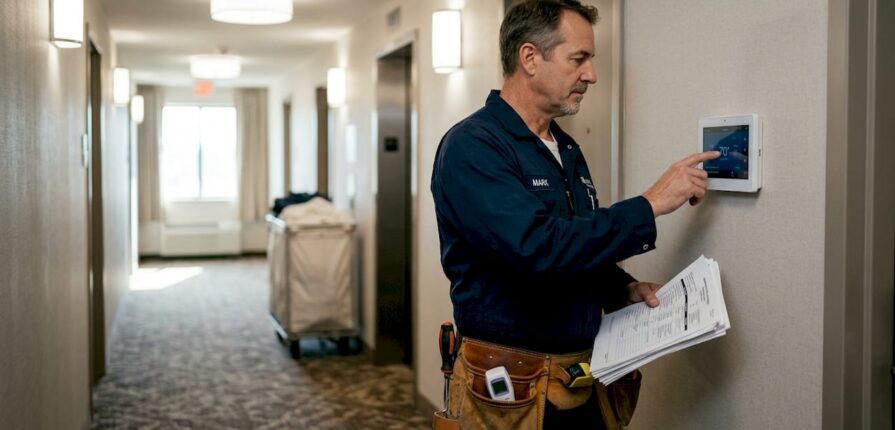
HVAC is one of the biggest line items on any Central Florida hotel’s operating budget, and it’s not hard to see why. The region’s heat and humidity push cooling systems hard for most of the year, and that constant demand adds up fast. The good news is that hotels can cut HVAC energy usage by up to 45% through smart controls and scheduled maintenance. This article breaks down the most effective, practical strategies to lower your energy spend without sacrificing the guest comfort that keeps your reviews strong and your occupancy rates healthy.
Table of Contents
- Use occupancy-based and smart controls for instant savings
- Maximize performance with preventive and predictive maintenance
- Leverage benchmarking and audits to prioritize upgrades
- Upgrade HVAC equipment and zone controls for deeper efficiency
- Why a blended approach outperforms one-size-fits-all solutions
- Trusted support for hotel HVAC savings and system care
- Frequently asked questions
Key Takeaways
| Point | Details |
|---|---|
| Smart controls deliver big savings | Occupancy-based and PMS-integrated HVAC controls can cut hotel energy costs by up to 45%. |
| Routine maintenance pays off | Monthly filter changes and preventive routines slice energy use by 15–25% and cut guest complaints. |
| Benchmarking guides smart upgrades | Comparing usage to top-performing hotels highlights where upgrades or retrofits make the most impact. |
| Layer solutions for best results | Blending controls, maintenance, and upgrades consistently achieves deeper, lasting energy efficiency. |
Use occupancy-based and smart controls for instant savings
With the potential for major savings on the table, the first and often fastest win is upgrading the way guest room climate is controlled. Most hotels still rely on thermostats that run at the same setting whether a room is occupied or sitting empty for 12 hours. That’s money walking out the door.
Occupancy-based controls use sensors and integration with your property management system (PMS) to automatically adjust temperature when a room is vacant. When a guest checks out, the system raises the cooling setpoint. When the keycard activates, it returns to a comfortable preset before the guest even opens the door. No discomfort, no wasted energy.
Integrating occupancy sensors and PMS can yield 18 to 45% HVAC energy savings, which is a significant range that reflects how much waste currently exists in most properties. The bigger the gap between your current setup and a smart system, the bigger the payoff.
Here’s a simple implementation checklist to get started:
- Audit all guest room thermostats and identify models that support smart integration.
- Select a PMS-compatible occupancy sensor or smart thermostat platform.
- Set unoccupied room temperature setbacks of 8 to 10 degrees Fahrenheit above your standard cooling setpoint.
- Configure pre-arrival cool-down windows so rooms reach comfort levels before check-in.
- Install sensors in common areas like lobbies, fitness centers, and meeting rooms for secondary savings.
- Monitor energy dashboards weekly during the first 90 days to validate savings and catch outliers.
Pro Tip: Don’t overlook common areas. Ballrooms and conference rooms that sit empty between events are prime candidates for occupancy-based setbacks. A single large meeting room running full-time cooling on an empty schedule can cost hundreds of dollars per month unnecessarily.
The key advantage here is that guest comfort is protected, not compromised. Smart systems respond in real time, so your guests feel the difference only in a positive way. For more ideas on reducing energy waste throughout your property, the HVAC energy-saving tips on our site are a solid starting point.
Maximize performance with preventive and predictive maintenance
While smart controls optimize efficiency, ongoing maintenance ensures systems run at peak performance and prevents costly downtime. A hotel HVAC system that runs dirty or uncalibrated doesn’t just waste energy. It also breaks down at the worst possible times, generating guest complaints and emergency repair bills.

Preventive maintenance, including monthly filter changes, reduces HVAC energy use by 15 to 25%. Skipping that maintenance can cause 15 to 30% excess energy consumption. That’s a wide swing in operating costs based entirely on whether you follow a schedule.
Here’s what a solid hotel maintenance routine looks like:
- Monthly: Replace or inspect air filters in all guest rooms and common areas. Check for unusual noises or airflow issues.
- Quarterly: Clean evaporator and condenser coils, inspect refrigerant levels, and test occupancy sensor accuracy.
- Annually: Full system calibration, duct inspection, thermostat recalibration, and a complete review of all PTAC (packaged terminal air conditioner) units.
“Predictive maintenance cut HVAC energy by 19% in a 428-room resort, while also extending equipment life significantly.”
That 19% reduction came from using sensor data to catch problems before they became failures. Predictive maintenance uses real-time performance data to flag units that are drawing more power than they should, often weeks before they break down.
The contrast between reactive and preventive approaches is stark. Reactive maintenance means you fix things after they fail, which usually means emergency service rates, rushed parts orders, and unhappy guests. Preventive maintenance means you spend a little consistently to avoid spending a lot unexpectedly.
Pro Tip: Build your maintenance schedule into your PMS or a dedicated facilities management platform. When filter changes and coil cleanings are tied to automated reminders, they actually happen on time instead of getting pushed back during busy seasons.
A good preventive HVAC maintenance guide can help you structure your approach, and a detailed HVAC maintenance checklist keeps your team consistent. For hotels that want professional accountability built in, maintenance agreements are worth considering.
Leverage benchmarking and audits to prioritize upgrades
With controls and maintenance practices optimized, the next step is to get clear on your hotel’s current energy standing and where to direct investment for the highest impact. Without a benchmark, you’re making upgrade decisions based on guesswork rather than data.
Hotels average 120 to 140 kWh per square meter per year. Top performers using energy management systems (EMS) achieve 95 to 115 kWh per square meter annually. That gap represents real dollars, and knowing where your property sits tells you exactly how much opportunity exists.
Key metrics every hotel manager should track:
- kWh per square meter per year: Your core efficiency benchmark against regional and national peers.
- Cost per occupied room night: Tracks how HVAC spend scales with actual occupancy.
- Temperature setback savings: Every 1 degree Fahrenheit of setback saves roughly 3% on cooling costs. Eight degrees equals roughly 24% savings on unoccupied room conditioning.
- Peak demand charges: Florida utilities often charge based on your highest 15-minute usage window each month. Staggering HVAC startups reduces this charge significantly.
Once you have your baseline, use a graduated approach to prioritize upgrades:
| Priority | Action | Estimated savings | Capital required |
|---|---|---|---|
| 1 | Lighting and controls audit | 10 to 20% | Low |
| 2 | EMS installation or upgrade | 15 to 25% | Medium |
| 3 | Duct sealing and insulation | 10 to 15% | Medium |
| 4 | Equipment retrofit or replacement | 20 to 30% | High |
Start with audits and controls because they cost less and deliver results quickly. Use those savings to fund the bigger capital projects. This approach also gives you real performance data to justify equipment investment to ownership.
Understanding the HVAC upgrade benefits specific to commercial properties helps you build a business case, and reviewing HVAC performance goals for Florida’s climate keeps your targets realistic and relevant.
Upgrade HVAC equipment and zone controls for deeper efficiency
Having set clear energy targets and priorities, some hotels may need strategic upgrades to maximize savings over the long term. Controls and maintenance take you far, but aging equipment has a ceiling on how efficient it can become.
The main upgrade paths worth evaluating:
- High-SEER central air units: Modern systems rated SEER 18 or higher use significantly less electricity than older SEER 10 to 12 units still running in many properties.
- PTAC heat pump replacements: Newer PTAC units with heat pump technology are dramatically more efficient than older resistance-heat models, especially relevant for Florida’s mild winters.
- Variable refrigerant flow (VRF) systems: VRF technology allows precise zone-by-zone temperature control across large areas, making it ideal for hotels with diverse space types.
Hotels using zone controls exceeded 30% HVAC energy savings, which demonstrates how much impact targeted zoning delivers beyond simple thermostat upgrades. Zone controls let you treat a pool area, a conference wing, and a guest room corridor as separate systems with separate schedules.
| Upgrade type | Savings potential | Typical payback period |
|---|---|---|
| Smart thermostats and sensors | 18 to 45% | 1 to 2 years |
| High-SEER central systems | 20 to 30% | 4 to 7 years |
| VRF zoned systems | 25 to 35% | 5 to 8 years |
| PTAC heat pump units | 15 to 25% | 3 to 5 years |
Upgrades typically provide 20 to 30% savings with payback periods of 4 to 7 years, which is a reasonable return for major capital investment when combined with the quick wins from controls. The key is sequencing: capture the easy savings first, then use the data and cash flow to justify equipment replacement.
Guest comfort is a direct output of good zone control. A lobby in Central Florida needs aggressive cooling in July. A fitness center needs different airflow than a ballroom. Treating every space the same wastes energy and frustrates guests. The commercial HVAC checklist is a useful tool when evaluating where your property stands.
Why a blended approach outperforms one-size-fits-all solutions
After working with commercial properties across Central Florida, one pattern stands out clearly. Hotels that chase a single solution rarely capture their full savings potential. A property that installs smart thermostats but ignores maintenance will see those gains erode as equipment degrades. A property that replaces all its equipment but skips controls integration will overspend and underperform.
Quick wins with sensors and PMS deliver up to 40% savings with low capital investment, while equipment upgrades offer 20 to 30% but require longer payback. The real opportunity is layering both. Controls deliver immediate returns that fund long-term upgrades. Maintenance sustains both.
Central Florida adds a layer of complexity that generic HVAC advice doesn’t account for. Humidity control is not optional here. A system optimized purely for temperature setbacks without accounting for humidity can create guest comfort issues and even mold risk. Any strategy for this region has to address both cooling load and moisture management together.
The maintenance best practices that work for a hotel in Phoenix need to be adapted for Lake County’s heat and humidity. That’s not a minor adjustment. It’s the difference between a strategy that works on paper and one that works in practice.
Trusted support for hotel HVAC savings and system care
Implementing these tips is easier with a trusted HVAC partner who understands the unique needs of Central Florida hotels.
Lucas Air Conditioning and Heating has been serving commercial properties across Central Florida since 2018, with a focus on honest service and practical results. Whether you need a full energy assessment, a structured maintenance plan, or guidance on which upgrades make sense for your property size and budget, we’re ready to help. Review our business HVAC repair workflow guide to understand how commercial service calls work, and explore our preventative maintenance agreements to keep your systems running efficiently year-round. Reach out to schedule a consultation and start building a plan that fits your hotel.
Frequently asked questions
What is the fastest way for a hotel to cut HVAC energy costs?
Integrating occupancy-based controls and smart thermostats often delivers immediate 18 to 45% HVAC energy savings with relatively low upfront investment compared to full equipment replacement.
How often should hotel HVAC filters and coils be serviced?
Replace filters monthly, clean coils quarterly, and calibrate the full system annually. Monthly filter changes alone reduce HVAC energy use by 15 to 25%.
How much does preventive maintenance reduce HVAC complaints and costs?
A consistent preventive maintenance program extends PTAC equipment life from 5 to 7 years up to 12 to 15 years and can cut guest complaints related to HVAC by up to 85%.
What benchmarks should hotels use to measure HVAC efficiency?
Top-performing hotels achieve 95 to 115 kWh per square meter annually. The national average sits between 120 and 140 kWh, so that gap is your improvement target.
Do HVAC upgrades or controls have a faster payback?
Controls and sensors consistently pay back faster. Sensors and PMS integration deliver up to 40% savings with low capital costs, while major equipment upgrades typically take 4 to 7 years to recoup.
