
TL;DR:
- Upgrading to modern, high-efficiency heat pumps improves comfort and reduces energy bills in Central Florida.
- Proper assessment, professional installation, and regular maintenance are essential for maximum HVAC system performance.
- Choosing a system that meets regional standards and addressing home insulation and ductwork enhances long-term savings.
If your Central Florida home runs too hot in one room and too cold in another, your heating system may be the real problem. Aging HVAC equipment quietly drains your wallet every month while delivering uneven comfort. Many homeowners across Lake County and the surrounding areas are dealing with systems that are 10, 15, or even 20 years old, running at a fraction of today’s efficiency standards. Upgrading your home heating is one of the most impactful investments you can make for comfort, lower energy bills, and long-term value. This guide walks you through every step, from identifying problems to verifying your new system is running at its best.
Table of Contents
- Assess your current heating system and needs
- Choose the right heating system for your Central Florida home
- Prepare your home for an HVAC upgrade
- Post-upgrade: Verifying installation and maximizing performance
- Our take: Don’t overlook the comfort and cost cycle in upgrades
- Take the next step with local HVAC specialists
- Frequently asked questions
Key Takeaways
| Point | Details |
|---|---|
| Assess your needs | Carefully evaluate your current system and home comfort issues before starting an upgrade. |
| Choose energy efficiency | Opt for systems that meet or exceed SEER2 and ENERGY STAR standards for maximum savings and rebates. |
| Prep and verify | Proper preparation and a quality installation process are key to lasting performance and comfort. |
| Maintain for savings | Regular professional maintenance ensures your new system delivers comfort and efficiency for years. |
Assess your current heating system and needs
Before you spend a single dollar, you need to know what you’re working with. Many homeowners skip this step and end up buying more system than they need, or worse, replacing the unit without fixing the real problem.
Start with a simple self-assessment. Walk through your home during a heating cycle and pay attention to a few key things:
- Temperature consistency: Are some rooms noticeably warmer or cooler than others?
- Energy bills: Have your monthly utility costs crept up over the past two or three years without a clear reason?
- Noise: Does your system rattle, bang, or run longer than it used to?
- Age: Systems older than 10 to 15 years are likely operating well below modern efficiency standards.
- Frequent repairs: If you’ve called a technician more than once in the past year, the math often favors replacement.
Central Florida’s climate is mild compared to northern states, but that doesn’t mean heating efficiency is irrelevant. Heat pumps, which handle both heating and cooling, are the dominant choice here. An older heat pump may carry an HSPF (Heating Seasonal Performance Factor) rating of 7 or 8, while modern units reach HSPF2 ratings of 9 or higher. The difference shows up directly on your power bill.
| System age | Typical efficiency | Modern benchmark |
|---|---|---|
| 10 to 15 years | SEER 13 to 14 | SEER2 15.2+ |
| 15 to 20 years | SEER 10 to 12 | SEER2 15.2+ |
| 20+ years | SEER 8 to 10 | SEER2 15.2+ |
Old systems often have much lower efficiency than modern ENERGY STAR certified units, meaning you’re paying more for less comfort every single month. Understanding the comfort and cost benefits of an upgrade helps you make a confident decision rather than a reactive one.
Pro Tip: Pull out your last 12 months of utility bills and look for a pattern. If your heating costs have increased 15% or more without a lifestyle change, your system is likely losing efficiency fast.
Knowing when to upgrade your HVAC is not always obvious, but these signals together paint a clear picture. Don’t wait for a complete breakdown in the middle of a cold snap.
Choose the right heating system for your Central Florida home
Once you know your needs, the next step is choosing an upgraded system tailored to Central Florida’s requirements and your goals.
For most homes in this region, a heat pump is the smart choice. It handles both heating and cooling efficiently, which matters in a climate where you might run the heat in January and the AC by March. Here’s a quick comparison of your main options:
| System type | Best for | Key efficiency metric |
|---|---|---|
| Heat pump (split) | Most Central Florida homes | SEER2 15.2+, HSPF2 9+ |
| Ductless mini-split | Additions, older homes | SEER2 16+, HSPF2 10+ |
| Gas furnace | Rare in Florida, backup heat | AFUE 80%+ |
| High-efficiency AC with strip heat | Budget installs | SEER2 14.3+ |
Florida now falls under the DOE Southeast region standards, which means SEER2 14.3 to 15.2 is required for new split AC and heat pump installations, and ENERGY STAR recommends 15.2 SEER2 or higher to qualify for rebates. Choosing a system that just meets the minimum means you miss out on rebate money and long-term savings.
Here’s a numbered checklist to guide your selection:
- Confirm your home’s square footage and insulation level before sizing any system.
- Check your utility provider’s rebate program for qualifying SEER2 and ENERGY STAR requirements.
- Ask your contractor about HSPF2 ratings for heat pumps, not just SEER2.
- Consider ductless options if your home has rooms that are chronically uncomfortable.
- Factor in financing if upfront cost is a concern. Many installers offer payment plans.
Understanding regional efficiency standards is key to making a choice you won’t regret. And if you’re unsure which unit fits your home best, reviewing the best heating systems for Florida homes gives you a solid starting point.
Pro Tip: Don’t just shop by price. A unit with a SEER2 rating of 17 or 18 may cost $500 to $1,000 more upfront but can save you that amount within two to three years in Central Florida’s year-round climate.
Prepare your home for an HVAC upgrade
With your system selected, proper preparation ensures installation is smooth and meets both safety and efficiency standards.
Many homeowners think preparation just means clearing a path to the air handler. It’s actually much more involved. Here’s what you should address before the technicians arrive:
- Ductwork inspection: Leaky or undersized ducts can reduce system efficiency by 20% to 30%. Have your ducts inspected and sealed if needed.
- Electrical supply: Modern high-efficiency heat pumps may require a dedicated circuit or panel upgrade. Confirm this with your contractor early.
- Attic and wall insulation: A new system working against poor insulation is like filling a leaky bucket. Address insulation gaps before installation.
- Access clearance: Clear at least three feet around the air handler and outdoor unit for safe, efficient installation.
- Existing thermostat compatibility: Smart thermostats may need wiring updates to work with your new system.
“Upgrading to a heat pump system with SEER2 16 or higher is often required for rebates and may need permit and code updates to be fully compliant.”
Permitting is not optional in Florida. Most counties require a permit for HVAC replacements, and skipping this step can void your warranty, disqualify you from rebates, and create problems when you sell your home. Always ask your contractor to pull the permit before work begins.
When selecting a contractor, verify that they are licensed by the Florida Department of Business and Professional Regulation and carry liability insurance. Ask for references and check online reviews. A good installer makes or breaks a great system. Explore local HVAC services to find vetted professionals in your area.
Keep copies of all documentation: the permit, the equipment specs, the warranty registration, and your rebate application. Store these digitally and in a physical folder. You’ll need them for rebates, future service calls, and resale. Understanding the full HVAC installation steps helps you ask the right questions and avoid surprises.
Post-upgrade: Verifying installation and maximizing performance
After upgrade completion, follow these post-installation steps for peace of mind and ongoing performance.
A new system is only as good as its installation. Don’t assume everything is perfect just because the technician left and the air is blowing. Here’s what to check right after installation:
- Confirm airflow in every room. Walk through the house with the system running. Every supply vent should have steady, consistent airflow.
- Check the thermostat response. Set a temperature and time how long the system takes to reach it. Sluggish response may signal an issue.
- Listen for unusual sounds. New systems should run quietly. Rattling, hissing, or clicking sounds need immediate attention.
- Verify refrigerant charge. Ask your technician to confirm the refrigerant level was checked and documented during installation.
- Review the installation report. A professional installer should provide a written summary of what was done, including system settings and test results.
Systems rated SEER2 16 or higher deliver optimal energy efficiency for Central Florida’s climate, but they still need annual professional checks to maintain those savings over time. Skipping maintenance is one of the most common and costly mistakes homeowners make after an upgrade.
Pro Tip: Set your thermostat fan to “Auto” rather than “On.” Running the fan continuously wastes energy and can reduce dehumidification, which matters a lot in Florida’s humid climate.
A preventative maintenance agreement is one of the best ways to protect your investment. Regular tune-ups catch small problems before they become expensive failures, and they keep your system running at the efficiency rating you paid for.
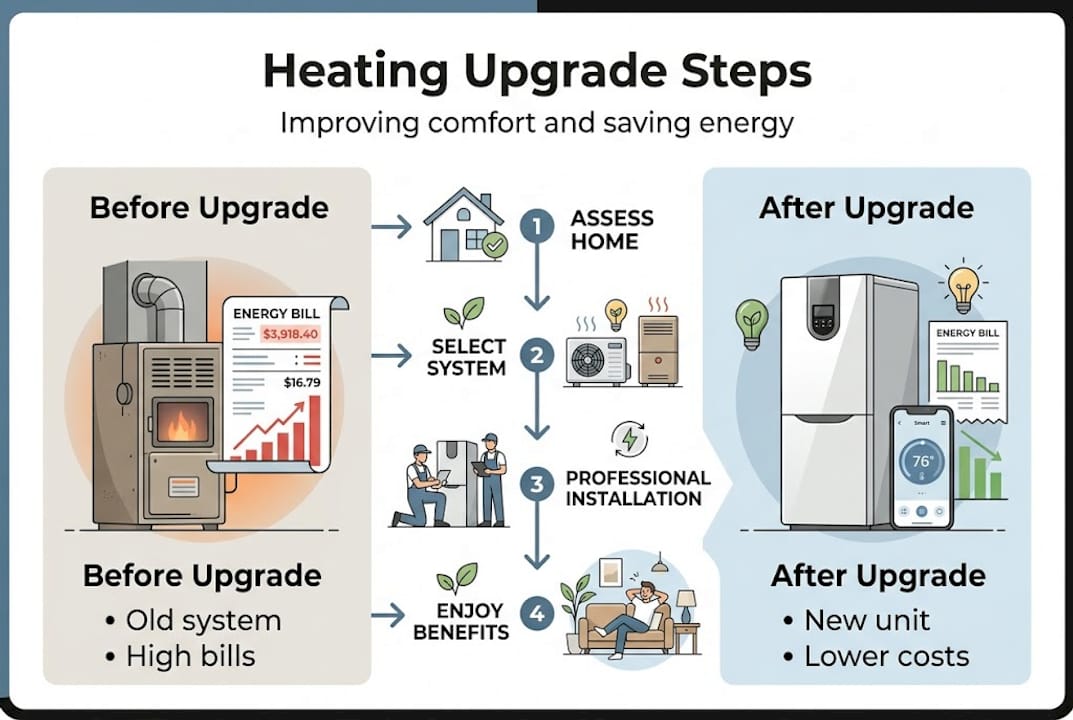
Adjust your thermostat settings seasonally. In winter, 68 to 70 degrees when you’re home and 65 degrees when you’re away is a comfortable and efficient range for most Central Florida households. Small adjustments add up to real savings over a full year.
Our take: Don’t overlook the comfort and cost cycle in upgrades
Here’s something the industry doesn’t say loudly enough: the equipment is rarely the whole story. We’ve seen homeowners invest in top-tier heat pumps and still end up with high bills and uneven comfort because the ductwork was never addressed, or the system was oversized for the home.
Bigger is not better with HVAC. An oversized system short-cycles, meaning it turns on and off too frequently, which wears out components faster and leaves your home feeling humid and uncomfortable. Proper load calculation, where a contractor measures your home’s actual heating and cooling needs, is the step that separates a great upgrade from an expensive disappointment.
The real HVAC upgrade benefits come from the combination of the right equipment, correct installation, and consistent maintenance. Efficiency is a long-term habit. Annual service calls, filter changes, and small thermostat adjustments deliver more value over five years than the brand name on the unit ever will. Don’t let the excitement of new equipment distract you from the fundamentals.
Take the next step with local HVAC specialists
Ready to move forward? Working with a trusted local team makes every step easier, from selecting the right system to navigating permits and rebates.
At Lucas Air Conditioning and Heating, we’ve been helping Central Florida homeowners upgrade their systems since 2018. As a veteran-owned business based in Eustis, we bring the same attention to detail to every installation that Cameron Lucas brought home from his service. Whether you need a full system replacement or a consultation to figure out your next step, our team handles all air conditioning and heating services with care. If you’re in The Villages or surrounding communities, our The Villages HVAC contractor team is ready to help. Reach out today to schedule your consultation.
Frequently asked questions
What heating systems qualify for rebates in Central Florida?
SEER2 16 or higher systems with ENERGY STAR certification typically qualify for rebates in Central Florida. Always confirm current rebate terms with your utility provider before purchasing.
Do I need permits to upgrade my home heating?
Yes, most home heating upgrades in Florida require permits to ensure code compliance and protect your eligibility for rebates and warranties. Your licensed contractor should handle the permit process before any work begins.
How often should I service my new HVAC system?
Your HVAC system should receive professional service annually to maintain peak efficiency and keep your manufacturer warranty valid. Skipping annual maintenance is the fastest way to lose the savings your upgrade was designed to deliver.
What size system do I need for my home?
Proper sizing depends on your home’s square footage, insulation quality, window placement, and local climate conditions. A qualified HVAC contractor should perform a Manual J load calculation to determine the exact system size your home requires.
