
TL;DR:
- Regular HVAC maintenance prevents food safety violations, equipment damage, and revenue loss.
- Implementing scheduled checks and professional inspections ensures system efficiency and compliance.
- Bundling maintenance services and tracking performance metrics optimize restaurant operations and costs.
Running a restaurant in Central Florida means battling heat, humidity, and a kitchen that never stops generating heat. When your HVAC system (heating, ventilation, and air conditioning) fails, the consequences go far beyond sweaty guests. You risk food safety violations, negative reviews, and emergency repair bills that can easily run into thousands of dollars. The good news is that most of those crises are completely avoidable. This guide walks you through the real risks, the right tools, the exact steps your team should follow, and how to verify that your efforts are actually working.
Table of Contents
- Understand the risks of neglecting restaurant HVAC
- Prepare: Tools, schedules, and maintenance agreements
- Step-by-step HVAC maintenance for commercial kitchens
- Troubleshooting and avoiding common HVAC mistakes
- Verify results and keep improving
- Why proactive HVAC strategy is the smart restaurant choice
- Elevate your comfort with local HVAC experts
- Frequently asked questions
Key Takeaways
| Point | Details |
|---|---|
| Prevent breakdowns | Routine HVAC maintenance prevents up to 80% of costly emergencies in restaurants. |
| Combine services | Bundling HVAC and refrigeration maintenance maximizes efficiency and eases management. |
| Follow clear routines | Use step-by-step schedules to delegate staff and contractor HVAC tasks. |
| Document everything | Track all maintenance and repairs to meet health codes and warranty requirements. |
| Go proactive, not reactive | A strategic, ongoing approach saves money and keeps your business running smoothly. |
Understand the risks of neglecting restaurant HVAC
Restaurant operators often treat HVAC as background infrastructure until something breaks. That mindset is expensive. A single system failure during a Friday dinner rush can mean lost revenue, spoiled inventory, and a dining room full of unhappy customers posting one-star reviews before they even get to their cars.
Understanding why HVAC maintenance matters goes beyond comfort. In a commercial kitchen, proper ventilation controls grease buildup, removes combustion gases, and keeps food storage areas within safe temperature ranges. When those functions slip, you are not just uncomfortable. You are potentially in violation of local health codes.
Here is what poor HVAC maintenance actually costs you:
- Lost revenue from emergency closures or reduced seating capacity during breakdowns
- Food safety risks when refrigeration zones and kitchen temps drift out of compliance
- Shortened equipment lifespan as motors and compressors work harder than designed
- Poor indoor air quality that affects both staff performance and guest experience
- Failed health inspections that can result in fines or temporary closure
The data backs this up. Preventive maintenance prevents 70-80% of emergency HVAC failures. That means the vast majority of the breakdowns restaurant owners scramble to fix were preventable with routine care.
Using a solid commercial HVAC checklist is one of the fastest ways to get your team aligned on what needs attention and when.
“A restaurant’s HVAC system is not a luxury. It is a food safety tool. When it fails, your license to operate is on the line.”
Now that you know what is at risk, let us get prepared with the right tools and schedule.
Prepare: Tools, schedules, and maintenance agreements
Good HVAC maintenance does not happen by accident. It requires the right supplies on hand, a realistic schedule your team will actually follow, and a professional relationship with a certified contractor who knows commercial systems.
Start by stocking these essential tools and supplies:
- Replacement air filters (sized for each unit in your building)
- A digital thermometer to verify supply and return air temperatures
- Coil cleaner spray for accessible evaporator and condenser coils
- A flashlight and inspection mirror for tight spaces
- A logbook or digital maintenance app for recording every action taken
A written schedule keeps maintenance from falling through the cracks. Here is a practical framework for most Central Florida restaurants:
| Frequency | Task | Responsible Party |
|---|---|---|
| Daily | Check thermostat settings and airflow from vents | Kitchen manager |
| Weekly | Inspect filters for visible clogging or damage | Designated staff |
| Monthly | Replace filters, clean accessible vents and grilles | Staff or contractor |
| Quarterly | Coil cleaning, belt inspection, drain line flush | Certified HVAC contractor |
| Annually | Full system tune-up, refrigerant check, duct inspection | Certified HVAC contractor |
One often-overlooked strategy is bundling your service contracts. Bundling HVAC and refrigeration maintenance with a single provider simplifies scheduling, reduces administrative overhead, and often lowers your total cost. You get one point of contact, one invoice, and a technician who understands how your entire climate control system works together.
For a deeper look at what a structured service plan covers, the HVAC preventive maintenance guide is a useful reference. And if you are ready to formalize your service relationship, reviewing maintenance agreement info will show you exactly what protections a written contract provides.
Pro Tip: Assign one staff member as your HVAC point of contact. This person logs issues, communicates with your contractor, and ensures nothing slips between shifts. Accountability makes a measurable difference.
With the right tools and agreements in place, you are ready to follow effective maintenance steps.
Step-by-step HVAC maintenance for commercial kitchens
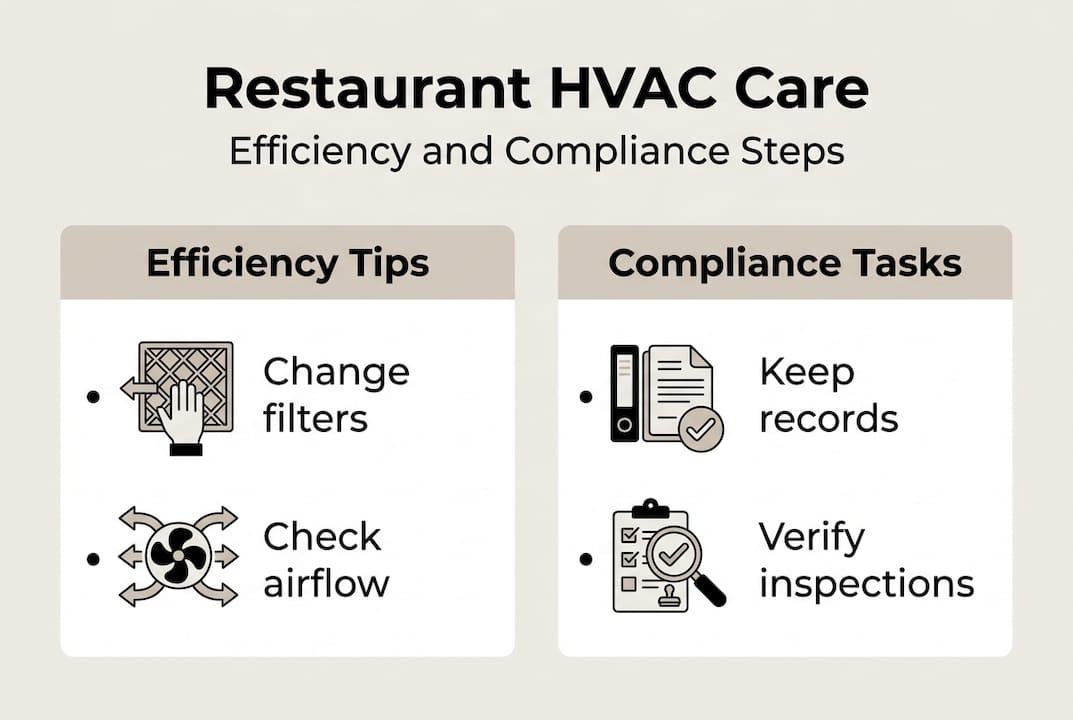
Effective maintenance combines what your staff does every day with what a licensed technician handles on a scheduled basis. Neither alone is enough. Preventive maintenance should combine staff tasks and pro inspections to protect both performance and warranty coverage.
Here is a numbered sequence your team can follow:
- Check thermostat settings every morning before service begins. Confirm the system is in the correct mode and set to the right temperature for that day’s expected occupancy.
- Inspect all supply and return vents weekly for blockages from stored boxes, equipment, or grease buildup near cooking lines.
- Replace filters monthly without exception. In a high-volume kitchen, filters clog faster than in any other commercial environment.
- Flush condensate drain lines monthly to prevent water backup that can damage ceilings, walls, and electrical components.
- Schedule a quarterly contractor visit for coil cleaning, refrigerant pressure checks, electrical connection tightening, and belt or blower inspection.
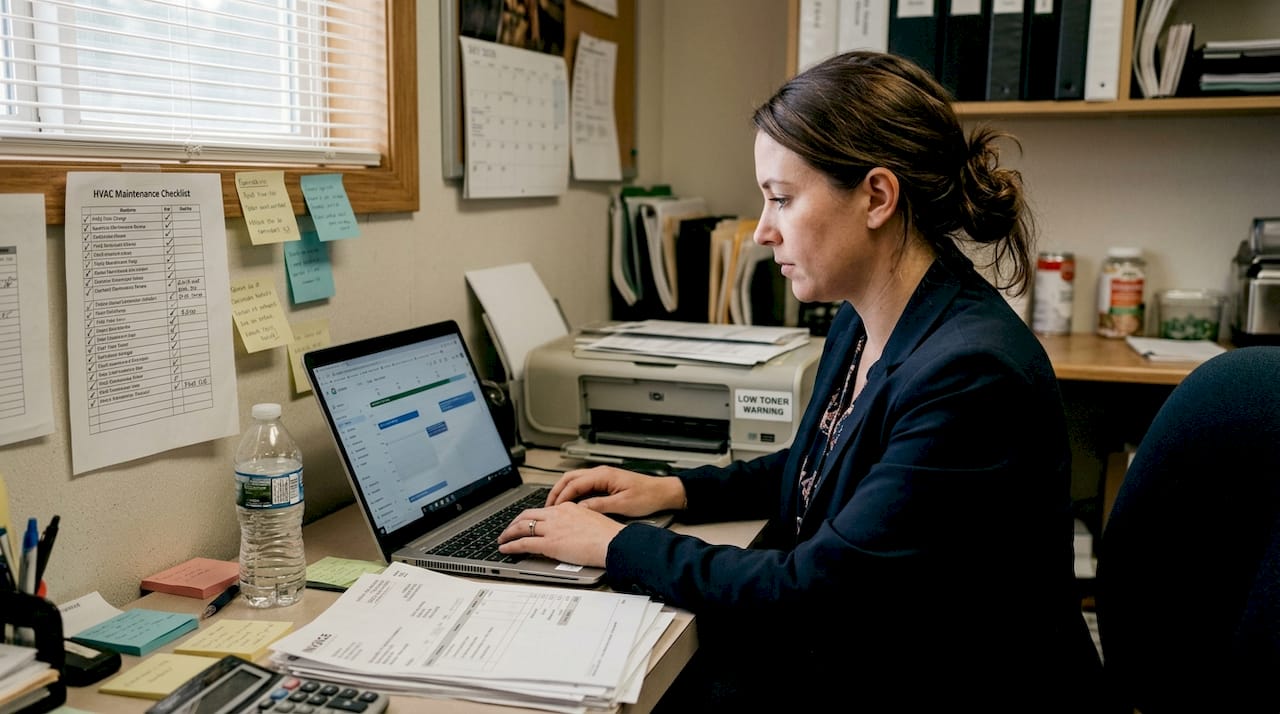
- Document every action in a maintenance log. Note the date, the task completed, who did it, and any observations about system behavior.
Documentation is not just good practice. It is your protection during health inspections, warranty claims, and insurance reviews. Inspectors and auditors want to see a paper trail that proves your system has been maintained.
For a complete breakdown of what each visit should cover, the commercial HVAC checklist is a practical tool to keep posted in your manager’s office.
Pro Tip: Use automated scheduling tools to send calendar reminders for monthly and quarterly tasks. A simple recurring alert prevents the “I thought someone else handled it” problem that causes most missed maintenance windows.
For more operational guidance, the HVAC tips for restaurants section on our site covers real-world scenarios from Central Florida commercial properties.
Even with diligent routines, issues can arise. Know what to watch out for.
Troubleshooting and avoiding common HVAC mistakes
Even a well-maintained system will occasionally show warning signs. Catching them early is the difference between a $150 service call and a $4,000 emergency replacement.
Watch for these red flags:
- Unusual noises such as banging, squealing, or rattling from air handlers or outdoor units
- Uneven temperatures across different parts of the dining room or kitchen
- High humidity that makes the space feel muggy even when the system is running
- Unexpected spikes in energy bills with no obvious explanation
- Water stains near vents or air handlers indicating a clogged or overflowing drain line
- Weak airflow from supply vents that used to deliver strong, consistent output
These symptoms rarely fix themselves. Proper troubleshooting supports both food safety and long-term system performance. Ignoring them accelerates wear and increases the chance of a full breakdown during peak hours.
Some of the most common mistakes restaurant operators make include skipping filter changes during busy seasons, ignoring small refrigerant leaks, and failing to document repairs. Undocumented repairs are a liability. If a warranty claim is denied because you cannot prove maintenance history, you absorb the full cost.
“Uncontrolled kitchen temperatures and poor air circulation are among the top reasons restaurants fail health inspections. Your HVAC system is your first line of defense.”
Know when to call a professional. If you hear grinding sounds, see ice forming on coils, or notice the system short-cycling (turning on and off rapidly), stop trying to troubleshoot in-house. Review the HVAC repair workflow to understand when a licensed technician needs to step in. Understanding the full scope of commercial HVAC impact on your business helps you make faster, smarter decisions when something goes wrong.
Once routine maintenance is in place and mistakes are avoided, review how to verify results and adjust your approach.
Verify results and keep improving
Maintenance only works if you measure it. Tracking a few key performance indicators tells you whether your system is performing as expected or quietly degrading between service visits.
Focus on these metrics:
- Temperature consistency: Are dining areas and food storage zones holding their target temperatures throughout the day?
- Energy consumption: Compare monthly utility bills year over year. Creeping costs often signal declining efficiency before a visible problem appears.
- Inspection paperwork: Are all service records complete, dated, and filed where your manager can access them during an inspection?
At the end of each month, run through this verification checklist:
- Review the maintenance log for any skipped or incomplete tasks
- Confirm filter replacement was completed and documented
- Check for any open work orders or unresolved service notes from your contractor
- Compare this month’s energy bill to the same month last year
- Schedule the next contractor visit before the current month closes
Routine verification is critical for audit readiness and ongoing system performance. Restaurants that skip this step often discover compliance gaps only when a health inspector is standing in their kitchen.
Update your protocols at least once a year. Equipment ages, menus change, and occupancy patterns shift. A maintenance plan that worked perfectly two years ago may need adjustments to reflect your current operation. Staff training refreshers are equally important. Turnover is high in food service, and new employees need to understand their role in keeping the system running.
Using the HVAC verification checklist as a monthly anchor keeps your team accountable and your system ready for whatever Central Florida’s climate throws at it.
Why proactive HVAC strategy is the smart restaurant choice
Here is the uncomfortable truth most operators learn the hard way: reactive repairs are not cheaper. They feel cheaper because you only pay when something breaks. But emergency service calls cost two to three times more than scheduled maintenance, and that does not account for the revenue lost while your dining room sits empty or your kitchen operates at reduced capacity.
The conventional wisdom of “if it is not broken, do not fix it” simply does not apply to commercial HVAC. A compressor that fails on a Saturday night in July costs you far more than the quarterly tune-up that would have caught the early warning signs.
Bundling your HVAC and refrigeration care under one strategy for maintenance agreements is not just convenient. It is a smarter financial model. You get predictable costs, priority scheduling, and a technician who knows your specific equipment. The operators who treat maintenance as a system rather than a series of isolated chores consistently outperform those who do not, both financially and operationally.
Elevate your comfort with local HVAC experts
Central Florida restaurants face unique challenges: intense summer heat, year-round humidity, and kitchen environments that push HVAC systems to their limits. Working with a local, certified contractor who understands those conditions makes a real difference in system performance and longevity.
At Lucas Air Conditioning and Heating, we work with commercial clients across the region, including as an HVAC contractor in The Villages, to build maintenance programs that fit the real demands of food service operations. Whether you need a structured preventative maintenance agreement or want to explore our full HVAC services, our team is ready to help you build a system that keeps your restaurant running smoothly, stays compliant, and avoids the expensive surprises that derail even well-run operations.
Frequently asked questions
How often should restaurant HVAC filters be changed?
Routine filter changes are essential in high-traffic restaurant environments, and filters should be replaced monthly to maintain air quality and system efficiency.
What are signs that my restaurant’s HVAC needs repair?
Warning signs include unusual noises, uneven temperatures, high humidity, or unexpected spikes in energy bills. Identifying problems early can prevent emergency breakdowns that cost far more than a timely service call.
Does regular HVAC maintenance help reduce health code violations?
Yes. A properly maintained system ensures adequate air quality and temperature control, both of which are evaluated during inspections. HVAC maintenance supports food safety and keeps you compliant with local health codes.
Can I combine HVAC and refrigeration maintenance with one provider?
Yes. Bundling HVAC and refrigeration with a single contractor improves scheduling efficiency and often reduces your overall service costs.
Is a maintenance agreement worth the investment for my restaurant?
Absolutely. Preventive maintenance agreements reduce emergency costs, maximize system reliability, and ensure your restaurant stays compliant year-round.
