
TL;DR:
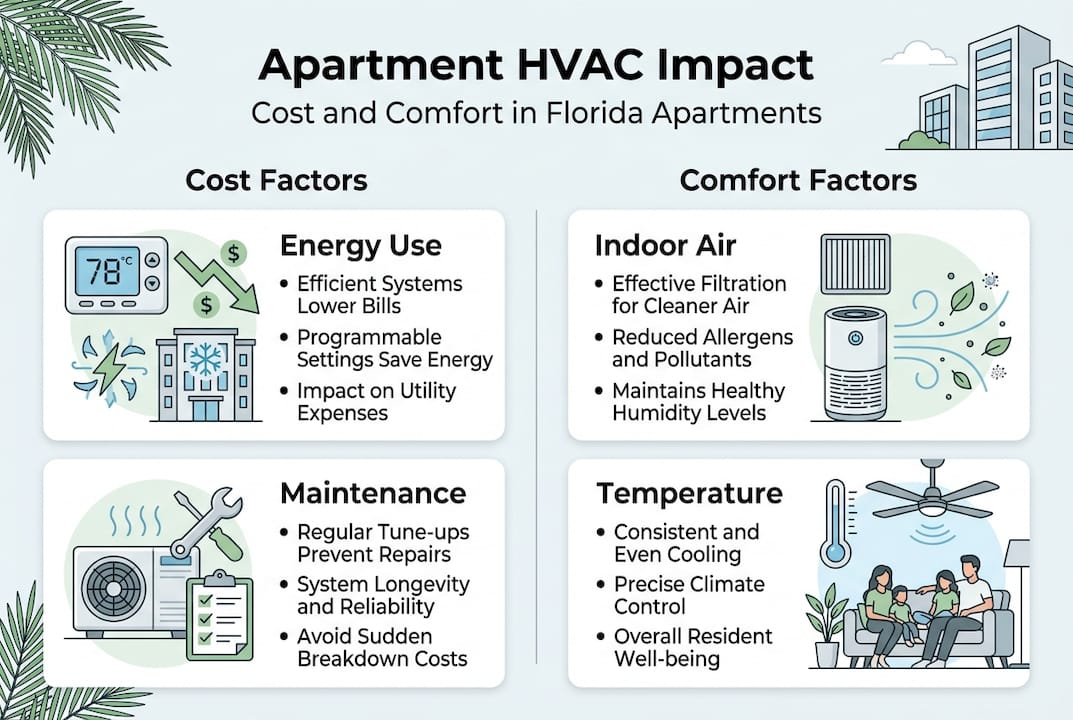
- HVAC accounts for over 40% of utility costs in Central Florida apartments, making efficiency vital.
- Upgrading to 15 SEER systems with smart thermostats can save up to 40% on cooling expenses.
- Proactive HVAC maintenance and upgrades improve tenant satisfaction, retention, and long-term property value.
HVAC is the single largest energy expense most Central Florida apartment communities carry, yet it rarely gets the strategic attention it deserves. HVAC can exceed 40% of a building’s total utility bill, which means every inefficient unit, outdated thermostat, and skipped tune-up is quietly draining your operating budget. For apartment managers and owners across Central Florida, where summer heat runs relentlessly from April through October, this is not a background issue. It is a core business decision. This guide breaks down exactly how HVAC choices affect your costs, your tenants, and your property’s long-term value, and what you can do about it starting today.
Table of Contents
- The true cost of apartment HVAC inefficiency
- Comfort: The key to retention and value
- Modern HVAC solutions: What works in Central Florida
- Practical actions: Steps to optimize your apartment HVAC
- Why apartment HVAC deserves more attention: Beyond the numbers
- Get expert HVAC support for your apartment community
- Frequently asked questions
Key Takeaways
| Point | Details |
|---|---|
| HVAC impacts costs | Efficient or outdated HVAC systems can drive or drain apartment budgets. |
| Better comfort means value | Tenant satisfaction and retention are rooted in reliable, comfortable climate control. |
| Modern solutions pay off | Upgrading to 15 SEER or greater and using smart thermostats can save 20-40% annually. |
| Maintenance is critical | Routine upkeep prevents emergencies and major losses, with community-wide savings. |
The true cost of apartment HVAC inefficiency
Given how influential HVAC is on expenses, let’s look at how inefficiency specifically impacts your property’s bottom line.
Florida’s climate is not forgiving. Your HVAC systems run harder and longer than in almost any other state, and when those systems are aging or poorly maintained, the financial bleed is significant. Upgrading to a 15 SEER system or above can yield 20 to 40 percent cooling cost savings across your community. That is not a marginal improvement. That is a real shift in your annual operating expenses.
Older systems have two problems working against you at once. First, they are simply less efficient at converting electricity into cooling. Second, they run longer to reach the same temperature setpoint, compounding the energy waste. In a vacant unit, an outdated system without smart controls may run for hours without anyone benefiting from the cooling. Multiply that across 50, 100, or 200 units, and you are looking at serious waste.
The numbers are stark. Inefficient HVAC management in multifamily properties can cost owners between $17,000 and $36,000 per year in unnecessary energy spend across a community. That figure alone makes a strong case for proactive investment in upgrade HVAC systems benefits.
Here is a quick comparison of what inefficiency versus efficiency looks like in practice:
| Scenario | Estimated annual cost per unit | Community-wide impact (100 units) |
|---|---|---|
| Older system, no smart controls | $1,800 to $2,200 | $180,000 to $220,000 |
| 15 SEER system with smart thermostat | $1,100 to $1,400 | $110,000 to $140,000 |
| Potential savings | $700 to $800 | $70,000 to $80,000 |
Those savings do not just stay in your pocket. They give you room to keep rents competitive, invest in amenities, and avoid passing rising utility costs onto tenants. Understanding the comfort and efficiency impact of your current systems is the first step toward making smarter decisions.
Key cost drivers to watch for include:
- Aging units running past their 15-year lifespan with declining efficiency ratings
- Vacant unit runtime without occupancy-based controls
- Deferred maintenance causing systems to work harder than designed
- Duct leakage losing conditioned air before it reaches living spaces
- Mismatched system sizing leading to short cycling or overcooling
Every one of these issues is correctable. The cost of correction is almost always lower than the cost of doing nothing.
Comfort: The key to retention and value
Besides costs, comfort plays a vital role in tenant satisfaction and property success.
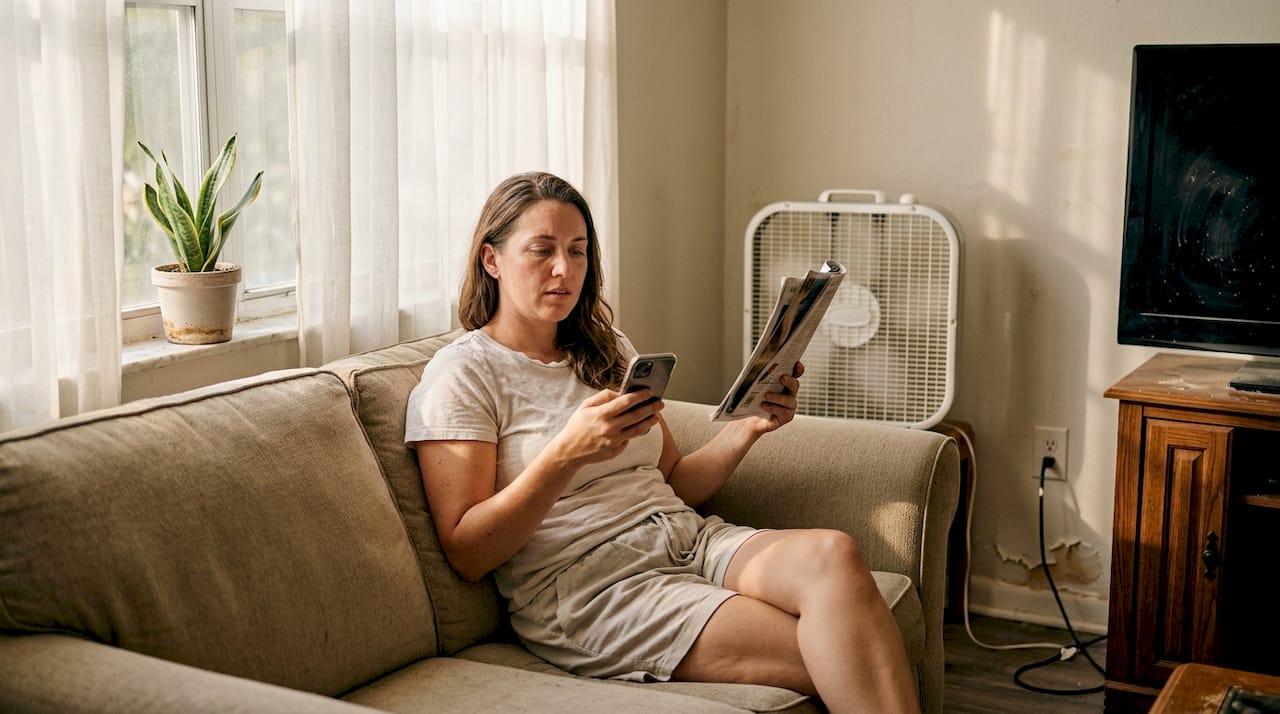
In Central Florida, a malfunctioning air conditioner is not an inconvenience. It is a crisis. Tenants who experience repeated HVAC failures, inconsistent temperatures, or humidity problems do not quietly tolerate it. They submit maintenance requests, leave negative reviews, and eventually move out. Vacancy is expensive, and poor HVAC performance is one of the most preventable causes.
Smart thermostats and upgraded systems cut vacant runtime by 32 to 55 percent, which directly improves property value and tenant satisfaction scores. That kind of improvement is not just an energy win. It signals to tenants that their comfort is being managed proactively.
Here is how common comfort complaints map to HVAC strategies:
- Complaint: “My unit never cools down” — Strategy: Inspect refrigerant levels, replace undersized or aging system
- Complaint: “It feels humid even when the AC runs” — Strategy: Add dehumidification controls or upgrade to a variable-speed system
- Complaint: “My energy bill is too high” — Strategy: Install smart thermostats, seal duct leaks, upgrade to 15 SEER minimum
- Complaint: “The AC is always breaking” — Strategy: Implement preventative HVAC maintenance on a scheduled basis
“Tenant satisfaction in multifamily housing is increasingly tied to environmental comfort. HVAC reliability ranks among the top three maintenance concerns cited by renters nationwide.”
Pro Tip: Scheduling biannual maintenance visits, once before cooling season and once before heating season, prevents the majority of emergency calls and comfort complaints. It is the single highest-return maintenance habit for any apartment community.
When tenants feel comfortable and know their maintenance concerns are handled quickly, renewal rates improve. That means lower turnover costs, fewer vacancy days, and a stronger reputation on review platforms. Reliable HVAC is not just an operational expense. It is a retention tool.
Modern HVAC solutions: What works in Central Florida
Knowing the value of efficiency and comfort, here is what actually works for Central Florida properties.
Not every HVAC solution fits every property. Central Florida’s combination of extreme heat, high humidity, and long cooling seasons creates specific demands. The good news is that modern systems are designed to handle exactly these conditions, and the options have expanded significantly.
Here is a comparison of the most common systems for multifamily properties:
| System type | Efficiency | Best for | Humidity control | Estimated ROI timeline |
|---|---|---|---|---|
| Standard split system (under 14 SEER) | Low | Replacement only | Basic | N/A |
| High-efficiency split (15+ SEER) | High | Most unit types | Good | 3 to 5 years |
| Ductless mini-split | Very high | Older buildings, additions | Excellent | 4 to 6 years |
| Smart thermostat add-on | Moderate boost | Any existing system | N/A | Under 1 year |
Higher efficiency systems paired with smart thermostats drive up to 40 percent annual cooling savings. For a 100-unit community, that number transforms your budget. Understanding HVAC types explained helps you match the right solution to each building type on your property.
To evaluate your property’s current situation, follow these steps:
- Audit system ages across all units. Any system over 12 years old is a candidate for replacement planning.
- Review energy bills by building or unit cluster to identify outliers with unusually high consumption.
- Check SEER ratings on existing equipment and flag anything below 15 SEER for priority upgrade.
- Assess thermostat types. Manual or basic programmable thermostats are low-hanging fruit for immediate improvement.
- Inspect ductwork for leaks, especially in attic-run systems common in Florida construction.
Pro Tip: Plan HVAC upgrades to coincide with tenant turnovers. You avoid disrupting occupied units, and you can complete work faster with full access to the space. Review the apartment HVAC maintenance steps to build this into your turnover checklist.
Practical actions: Steps to optimize your apartment HVAC
Finally, translating insights into action, these steps help you take advantage of HVAC opportunities right now.
Knowing what to do is one thing. Building a system around it is what separates properties that control costs from those that constantly react to them. Scheduling regular maintenance and upgrading controls can result in $17,000 to $36,000 in community-wide annual savings. That is a return worth organizing your operations around.
Here is a step-by-step optimization approach built for property managers:
- Benchmark your current costs. Pull 12 months of utility data and calculate your average cost per unit. This is your baseline.
- Prioritize by age and efficiency. Use your audit data to rank units by upgrade urgency. Oldest and least efficient go first.
- Set a 15 SEER minimum standard for all new installations and replacements going forward.
- Deploy smart thermostats across vacant units immediately. This delivers fast payback with minimal disruption.
- Establish a maintenance schedule. Work with a local HVAC provider to set up biannual tune-ups for every unit.
- Track results quarterly. Compare utility bills against your baseline to measure progress and adjust.
For quick wins you can act on this week, consider these options:
- Replace air filters in all units on a monthly schedule during peak cooling season
- Check condenser units for debris, overgrown vegetation, or shade obstruction
- Seal visible duct connections in utility closets and mechanical rooms
- Verify that all unit thermostats are functioning and calibrated correctly
- Review your business HVAC repair workflow to streamline how maintenance requests are handled
Using a structured commercial HVAC checklist keeps your team consistent and accountable across every building. When everyone follows the same process, problems get caught early and costs stay predictable.
Why apartment HVAC deserves more attention: Beyond the numbers
Most property managers we talk to think of HVAC the same way they think of plumbing. It is infrastructure. It either works or it does not. When it breaks, you fix it. That mindset is understandable, but it is also costly.
The properties that consistently outperform on tenant satisfaction and net operating income treat HVAC as a value lever, not a maintenance line item. They upgrade proactively. They track efficiency. They build maintenance into their operating calendar instead of reacting to emergencies.
Deferred maintenance is almost always more expensive than the investment it avoids. A $400 tune-up that catches a failing capacitor prevents a $3,000 compressor replacement and a furious tenant in August. The math is not complicated. But it requires a shift in how you see the role of HVAC in your property’s performance.
Understanding why upgrades matter is the first step. Acting on that understanding before a system fails is what separates reactive management from proactive ownership. In Central Florida’s climate, there is no off-season. Your HVAC systems are working year-round, and so should your strategy for managing them.
Get expert HVAC support for your apartment community
Ready to take the next step? Here is how you can get specialized support for apartment HVAC.
At Lucas Air Conditioning and Heating, we work with apartment communities across Central Florida to design and maintain HVAC solutions that reduce costs and keep tenants comfortable. Whether you need installation for apartments across multiple units or reliable apartment HVAC repairs when something goes wrong, our team brings local expertise and a commitment to getting it right the first time.
Founded by Army Veteran Cameron Lucas in Eustis, Florida, we understand what it means to serve a community well. From preventative maintenance programs to full system upgrades, we help property managers build HVAC strategies that protect their investment and their tenants. Reach out today to schedule a property assessment and find out how much your community could save.
Frequently asked questions
How does HVAC affect tenant retention in apartments?
Reliable HVAC keeps tenants comfortable through Florida’s long cooling season, which directly reduces complaints and increases the likelihood of lease renewals. Properties with consistent comfort and retention see fewer vacancy days and stronger long-term occupancy rates.
What’s the fastest way to reduce HVAC operating costs in apartments?
Upgrading to a minimum 15 SEER system paired with smart thermostats delivers the fastest measurable reduction in cooling costs, often in the first billing cycle after installation.
Is routine HVAC maintenance worth the investment for apartment buildings?
Absolutely. Consistent maintenance extends system life, prevents emergency failures, and can save a community $17,000 to $36,000 annually compared to a reactive-only approach.
What HVAC upgrades should Central Florida apartment owners prioritize?
Start with SEER 15+ systems, add smart thermostats across vacant units first, and address humidity management through variable-speed systems or standalone dehumidification controls suited to Florida’s climate.
Recommended
- Why Upgrade HVAC Systems: Comfort and Cost Benefits
- Role of HVAC in Home Comfort: What Homeowners Need
- Role of HVAC Systems – How Comfort and Efficiency Affect Florida Homes
- Why Upgrade Your HVAC System for Florida Homes
- Fűtési rendszer átmosás ára – mitől függ? – Kazán szerelő Kecskemét, Kazán szerviz Kecskemét, Kazáncsere Kecskemét
