

Balancing comfort across every room can feel like a challenge for many Central Florida homeowners, especially during blazing summers or unpredictable weather. The quest for lower utility bills and a more comfortable living environment makes finding smart climate solutions a top priority. By embracing energy-efficient HVAC zoning, you can target cooling and heating only where it is needed, customize comfort for every family member, and discover strategies that cut unnecessary energy use without sacrificing performance.
Table of Contents
- Defining HVAC Zoning and Common Misconceptions
- How HVAC Zoning Systems Work
- Types of Zoned HVAC Solutions Explained
- Benefits of HVAC Zoning for Homeowners
- Cost, Installation, and Mistakes to Avoid
Key Takeaways
| Point | Details |
|---|---|
| HVAC Zoning Enhances Comfort | HVAC zoning allows for customized temperature control in different areas of the home, increasing overall comfort and satisfaction. |
| Energy Efficiency Gains | Zoned HVAC systems can reduce energy consumption by up to 30%, leading to significant cost savings on utility bills. |
| Retrofitting is Possible | Advanced zoning technologies can be retrofitted into existing HVAC systems, making them suitable for various home configurations. |
| Avoid Common Installation Pitfalls | Ensuring proper design and professional installation is crucial to avoid costly mistakes and maximize system efficiency. |
Defining HVAC Zoning and Common Misconceptions
HVAC zoning is a sophisticated approach to home climate control that transforms how homeowners manage temperature and comfort. By dividing your home into distinct heating and cooling zones, this system allows for precise temperature management in different areas, addressing individual room characteristics and occupancy patterns. Zoning divides home spaces with unique thermal requirements, enabling customized comfort throughout your living space.
At its core, HVAC zoning uses motorized dampers and independent thermostats to control airflow in specific home areas. These dampers strategically open and close within your central ductwork, directing heated or cooled air precisely where needed. The system considers multiple factors when creating zones, including:
- Room size and orientation
- Sun exposure
- Occupancy patterns
- Insulation variations
- Individual comfort preferences
Contrary to popular belief, HVAC zoning is not exclusively for new construction or large homes. Advanced zoning technologies can be retrofitted into almost any existing HVAC system, making it a versatile solution for diverse residential configurations.
Many homeowners mistakenly think zoning is overly complex or prohibitively expensive. However, the long-term energy savings and enhanced comfort often offset initial installation costs. By targeting heating and cooling only where needed, zoned systems can reduce energy consumption by up to 30%, providing significant financial and environmental benefits.
Pro tip: Before implementing an HVAC zoning system, conduct a professional home energy audit to identify your specific thermal zones and optimize your system’s design.
How HVAC Zoning Systems Work
HVAC zoning systems are sophisticated climate control solutions that transform home temperature management through precision engineering. Automatic duct dampers create targeted heating and cooling by strategically controlling airflow throughout different home areas, ensuring each space receives exactly the right amount of conditioned air.
The core components of a zoning system include:
- Independent thermostats for each zone
- Motorized dampers within central ductwork
- Control panel managing zone interactions
- Temperature sensors in multiple locations
- Smart home integration capabilities
When a specific zone requires heating or cooling, its dedicated thermostat signals the control panel, which then opens corresponding dampers while closing others. This targeted approach means you’re not wasting energy conditioning unused rooms. Heat pump systems can further enhance this efficiency by providing precise temperature control across different zones.
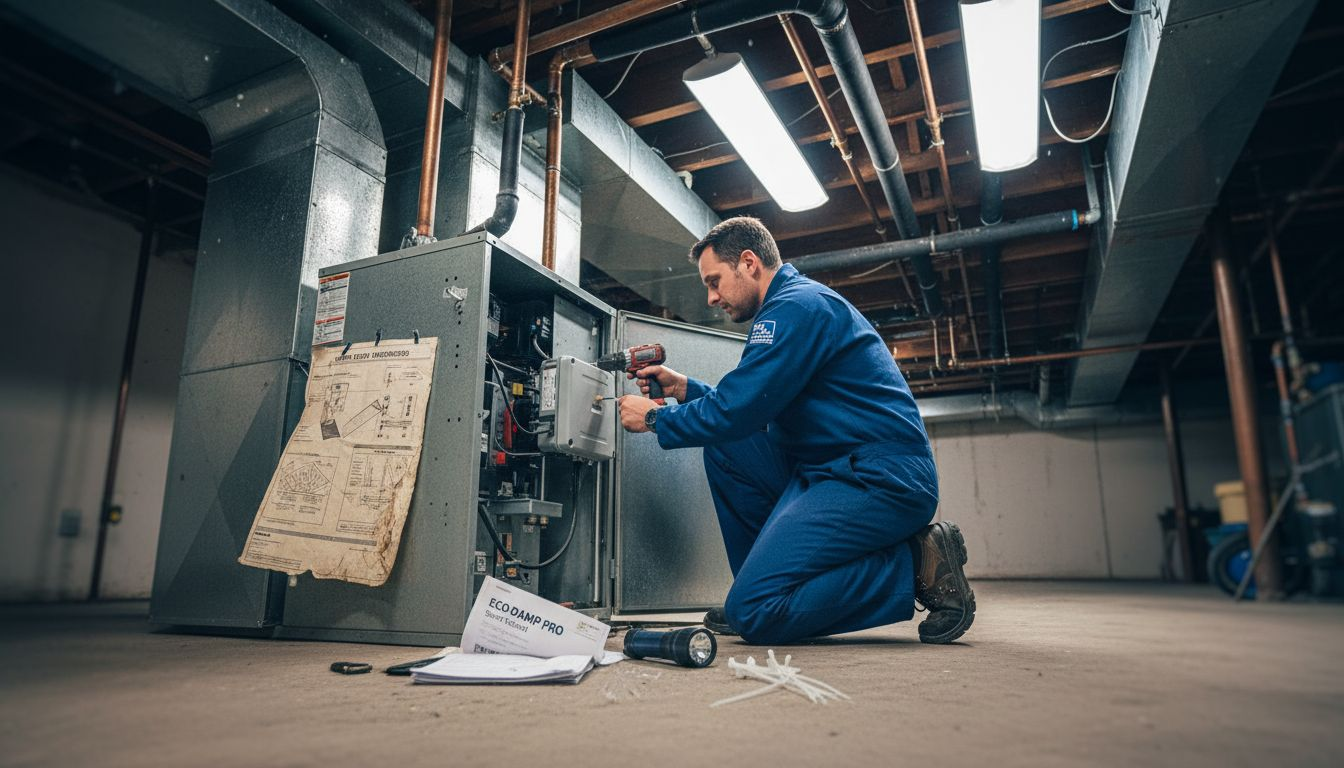
Advanced zoning systems can incorporate additional features like motion sensors and occupancy detection, allowing even more granular climate management. These intelligent systems learn your home’s thermal patterns, automatically adjusting airflow to maintain optimal comfort while minimizing energy consumption. By creating custom temperature zones, homeowners can address unique challenges like sunny rooms, basement cooling, or individual family member preferences.
Pro tip: Consider consulting an HVAC professional to map your home’s thermal zones during initial system design to maximize zoning effectiveness.
Types of Zoned HVAC Solutions Explained
Homeowners have multiple zoned HVAC solutions to choose from, each designed to address unique comfort and efficiency needs. Zoned heating and cooling technologies offer flexible approaches to managing home temperatures with precision and intelligence.
The primary types of zoned HVAC systems include:
- Ducted Zone Damper Systems
- Central system with motorized dampers
- Controls airflow through existing ductwork
- Ideal for homes with traditional central HVAC
- Ductless Mini-Split Systems
- Individual units for each zone
- No ductwork required
- Perfect for additions, renovations, or homes without central air
- Hybrid Zoning Solutions
- Combines ducted and ductless technologies
- Maximizes flexibility in complex home layouts
- Addresses unique thermal challenges
Ducted zone systems work by strategically opening and closing dampers to direct conditioned air precisely where needed. Residential zoning design standards provide comprehensive guidelines for implementing these systems, ensuring optimal performance and energy efficiency.
Ductless mini-split systems offer unparalleled flexibility, allowing homeowners to create independent temperature zones without extensive renovation. These systems are particularly beneficial for homes with challenging layouts, rooms with unique heating and cooling requirements, or spaces without traditional ductwork.
Pro tip: Consult with a local HVAC professional to perform a detailed home assessment and determine the most suitable zoning solution for your specific living space.
Here’s a quick comparison of common HVAC zoning system types and their ideal use scenarios:
| System Type | Best For | Installation Complexity |
|---|---|---|
| Ducted Zone Damper | Traditional central HVAC homes | Moderate |
| Ductless Mini-Split | Homes without ducts, renovations | Low to moderate |
| Hybrid Zoning | Complex layouts, mixed systems | High |
Benefits of HVAC Zoning for Homeowners
HVAC zoning offers a revolutionary approach to home comfort and energy management, transforming how homeowners experience indoor climate control. High-performance HVAC technologies enable precise temperature regulation that can dramatically improve both comfort and energy efficiency.
The primary benefits of HVAC zoning include:
- Energy Cost Savings
- Reduce energy consumption by 10-40%
- Condition only occupied spaces
- Lower monthly utility bills
- Enhanced Personal Comfort
- Independent temperature control for different rooms
- Accommodate individual temperature preferences
- Eliminate hot and cold spots
- Extended HVAC Equipment Lifespan
- Reduce system runtime
- Minimize unnecessary wear and tear
- Decrease likelihood of premature equipment failure
Zoned systems provide unparalleled flexibility by allowing homeowners to create custom temperature settings for different areas. Zoned heating and cooling strategies enable precise control, ensuring each room receives exactly the right amount of heating or cooling based on its unique characteristics.
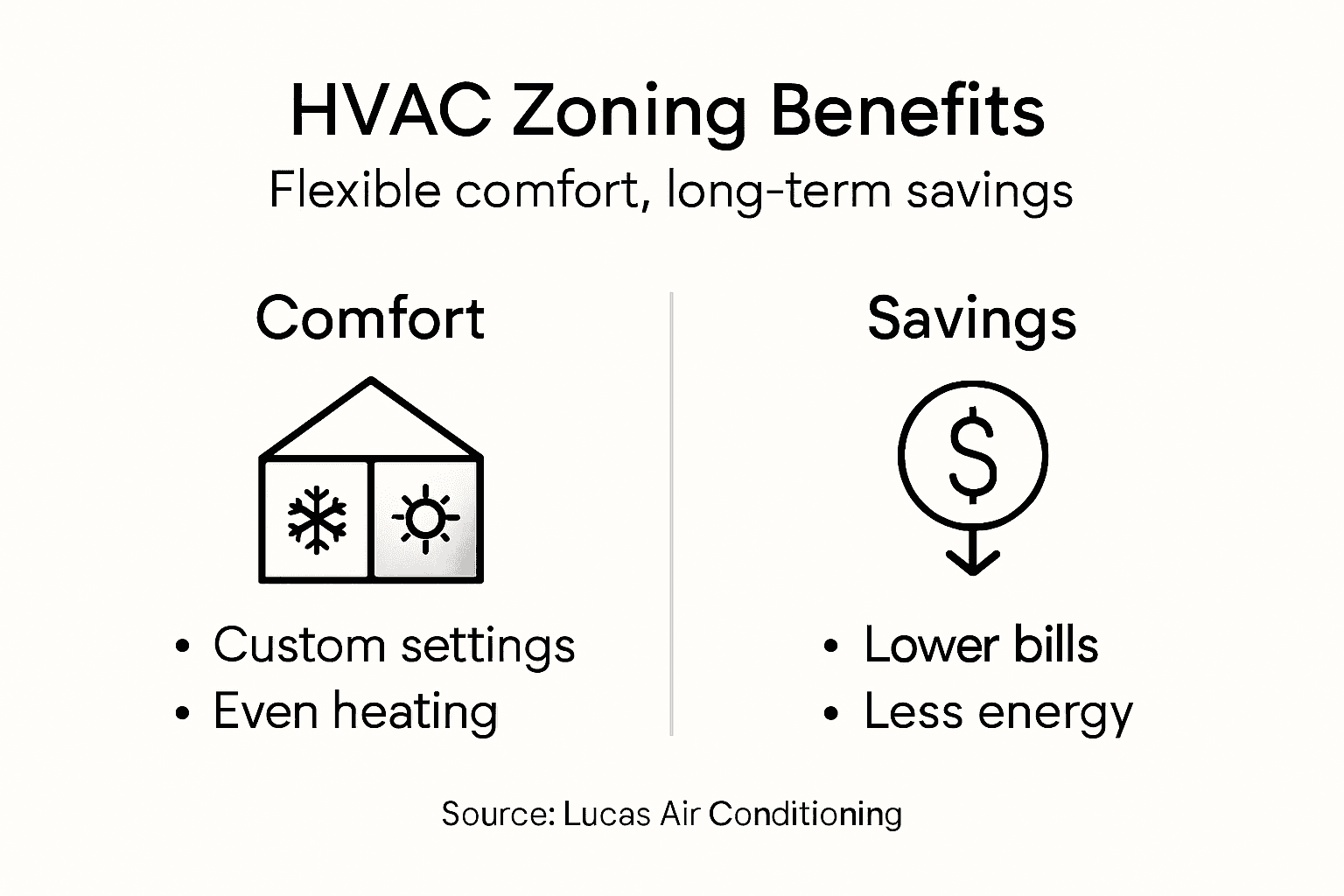
Beyond immediate comfort, HVAC zoning represents a smart investment in your home’s long-term efficiency. By optimizing temperature management and reducing unnecessary energy consumption, homeowners can significantly lower their carbon footprint while enjoying personalized comfort throughout their living spaces.
Pro tip: Have an HVAC professional conduct a comprehensive home assessment to identify the most effective zoning strategy for your specific living environment.
Cost, Installation, and Mistakes to Avoid
Installing an HVAC zoning system requires careful planning and professional expertise to ensure optimal performance and cost-effectiveness. HVAC system installation standards emphasize the critical importance of precise design and implementation to maximize system efficiency.
Common installation mistakes homeowners should avoid include:
- Design and Planning Errors
- Incorrect load calculations
- Inadequate ductwork sizing
- Poor zone configuration
- Neglecting existing HVAC system compatibility
- Technical Installation Problems
- Improper damper placement
- Incorrect control wiring
- Failing to include bypass provisions
- Misaligned thermostat programming
- Financial Considerations
- Initial equipment costs
- Professional installation fees
- Potential ductwork modifications
- Long-term energy savings potential
ACCA installation standards highlight that professional design and implementation are crucial for preventing costly errors. Typical zoning system installations can range from $3,000 to $15,000, depending on home size, system complexity, and existing infrastructure. While this might seem expensive, the potential energy savings and improved comfort can offset initial costs within a few years.
The key to successful HVAC zoning is working with experienced professionals who understand local building codes, your home’s unique thermal characteristics, and can design a system tailored to your specific needs. Proper installation not only ensures comfort but also protects your investment by minimizing future repair and replacement expenses.
To help you plan your HVAC zoning upgrade, here’s a summary of typical cost factors and potential long-term benefits:
| Cost Factor | Typical Range | Long-Term Benefit |
|---|---|---|
| Equipment & hardware | $2,500-$8,000 | Reduced energy bills |
| Installation labor | $500-$7,000 | Improved comfort |
| System maintenance | $100-$500/year | Extended equipment life |
Pro tip: Request detailed written proposals from multiple HVAC professionals, comparing their proposed zoning strategies, equipment recommendations, and total project costs before making a final decision.
Experience Ultimate Comfort with Expert HVAC Zoning from Lucas Air Conditioning and Heating
Struggling to maintain consistent temperatures in different rooms or worried about high energy bills from heating and cooling unused spaces? HVAC zoning offers personalized climate control tailored to your home’s unique needs by dividing it into specific zones with independent thermostats and motorized dampers. At Lucas Air Conditioning and Heating, we understand these challenges and are ready to help you achieve precise temperature control, improved comfort, and energy savings with professional zoning solutions.
Take advantage of our Special Offers today to upgrade your home with an efficient zoned HVAC system. Trust a local, veteran-owned company committed to quality and customer care. Visit our website at Lucas Air Conditioning and Heating to schedule a consultation and start maximizing your comfort and savings now.
Frequently Asked Questions
What is HVAC zoning?
HVAC zoning is a climate control system that divides your home into different zones, allowing for precise temperature management in individual areas based on unique heating and cooling needs.
How do HVAC zoning systems work?
HVAC zoning systems use independent thermostats and motorized dampers within the ductwork to control airflow, ensuring that conditioned air is directed precisely where it’s needed, resulting in energy savings and enhanced comfort.
What are the benefits of using HVAC zoning?
The primary benefits include energy cost savings by reducing energy consumption, enhanced personal comfort with independent temperature control for different rooms, and an extended lifespan for HVAC equipment due to minimized runtime and wear.
What types of HVAC zoning solutions are available?
Common types include ducted zone damper systems, which use existing ductwork, ductless mini-split systems that require no ducts, and hybrid zoning solutions that combine both for maximum flexibility in complex home layouts.
