
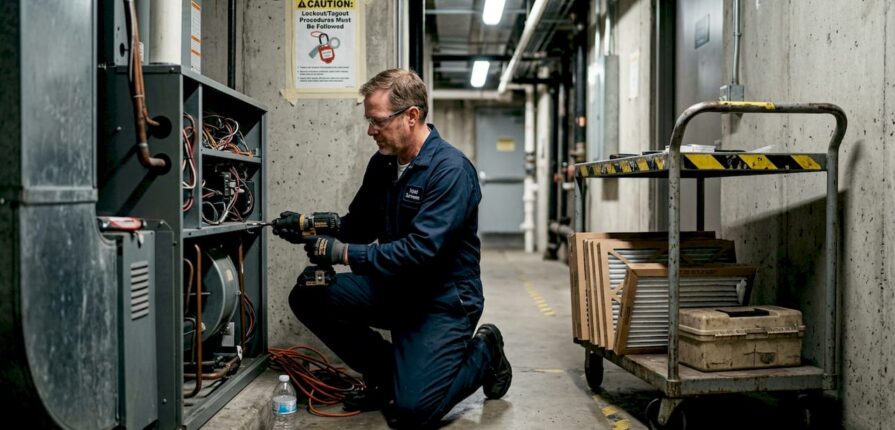
Hotels depend on reliable HVAC systems to deliver consistent comfort, yet maintenance often falls behind until a breakdown disrupts operations. When air conditioning fails during peak season or heating malfunctions in winter, guest satisfaction plummets and emergency repairs drain budgets. Proactive upkeep prevents these costly disruptions while extending equipment life and reducing energy waste. This guide walks hotel maintenance managers through essential HVAC maintenance tasks, from preparation and routine servicing to troubleshooting and performance verification, ensuring your systems support guest comfort and operational efficiency year round.
Table of Contents
- Key takeaways
- Essential tools and preparation for hotel HVAC maintenance
- Step by step routine maintenance tasks for hotel HVAC systems
- Troubleshooting common HVAC problems and mistakes to avoid in hotels
- Verifying maintenance success and optimizing HVAC performance long term
- Enhance your hotel HVAC maintenance with expert services
- Frequently asked questions
Key Takeaways
| Point | Details |
|---|---|
| Preventive maintenance | Regular inspections and timely filter changes prevent breakdowns and extend HVAC life. |
| Coil and filter care | Cleaning evaporator and condenser coils and replacing dirty filters improves efficiency and reduces energy waste. |
| Safety protocols | Establish lockout tagout and verify zero voltage before service to protect workers and equipment. |
| Digital asset database | Create a digital record of each unit with model, installation date, and filter size to speed parts ordering and scheduling. |
Essential tools and preparation for hotel HVAC maintenance
Before touching any HVAC equipment, gather the right tools and establish safety protocols to protect both personnel and systems. Proper preparation with tools and safety gear is critical for efficient HVAC upkeep. You will need replacement filters sized for each unit, coil cleaner, refrigerant gauges, multimeter for electrical testing, and personal protective equipment including gloves and safety glasses. Stock basic hand tools like screwdrivers, wrenches, and flashlights for inspections.
Safety comes first in any maintenance work. Always shut down power at the breaker before servicing equipment and implement lockout/tagout procedures to prevent accidental startup during maintenance. Verify zero voltage with your multimeter before proceeding. For rooftop units common in hotels, ensure fall protection equipment is available and workers are trained in its use.
Understanding your HVAC components simplifies maintenance planning. Hotel systems typically include multiple air handlers, condensing units, thermostats, and ductwork serving different zones. Familiarize yourself with each unit’s location, capacity, and service history. This HVAC preventative maintenance guide for homeowners offers foundational knowledge applicable to commercial settings.
| Tool or material | Primary purpose | Replacement frequency |
|---|---|---|
| HVAC filters | Remove airborne particles, protect equipment | Every 1 to 3 months |
| Coil cleaner | Dissolve dirt and debris on evaporator and condenser coils | As needed during cleaning |
| Refrigerant gauges | Measure system pressures and diagnose refrigerant issues | N/A (calibrate annually) |
| Multimeter | Test electrical connections and voltage | N/A (replace if damaged) |
| Belt tension gauge | Ensure proper belt tightness on blower motors | N/A (calibrate annually) |
Pro Tip: Create a digital database documenting each HVAC unit’s make, model, installation date, and filter size. This speeds up ordering replacement parts and helps schedule maintenance based on manufacturer recommendations rather than guesswork.
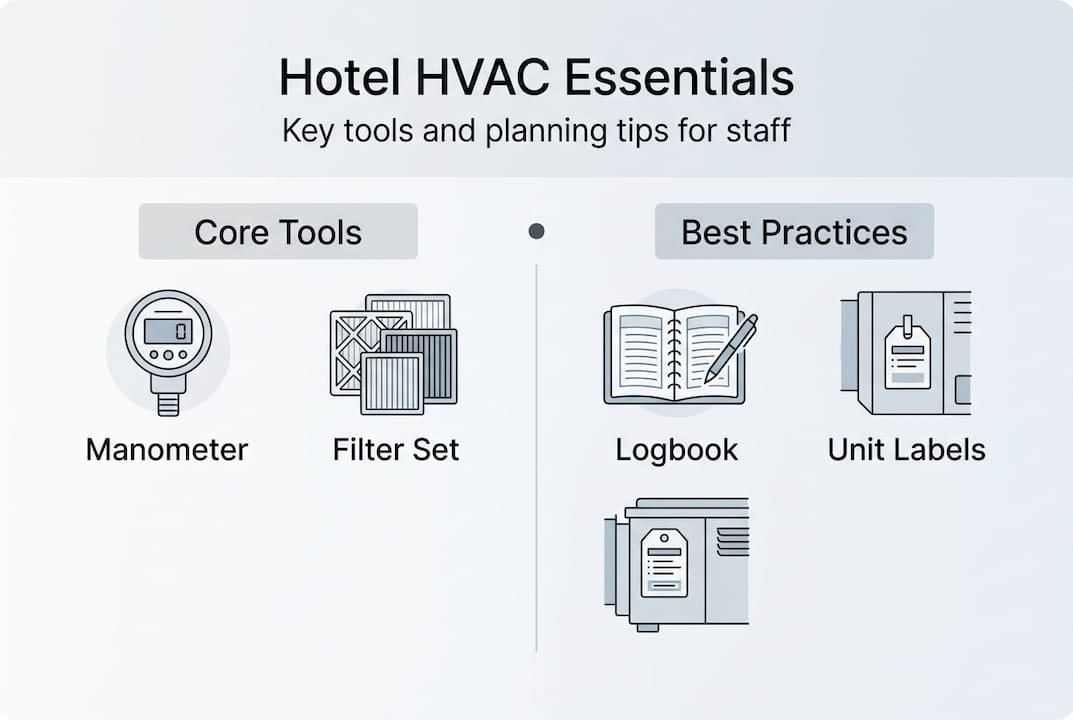
Review the commercial HVAC checklist essentials to understand comprehensive maintenance requirements beyond basic preparation. Proper planning prevents rushed work and overlooked details that lead to premature system failure.
Step by step routine maintenance tasks for hotel HVAC systems
Executing maintenance systematically ensures no critical steps are missed and systems run at peak efficiency. Follow this sequence for each unit on your maintenance schedule.
- Power down the system at the breaker and verify electrical isolation with a multimeter before beginning work.
- Replace air filters by removing access panels, sliding out dirty filters, and installing new ones with airflow arrows pointing toward the blower. High occupancy periods may require monthly changes.
- Clean evaporator and condenser coils using approved coil cleaner, following product instructions for application and rinsing. Dirty coils reduce efficiency by up to 30 percent.
- Inspect and clear condensate drain lines by flushing with water and mild bleach solution to prevent clogs that cause water damage.
- Check drive belts for wear, cracks, or improper tension, adjusting or replacing as needed to prevent blower motor strain.
- Examine electrical connections for corrosion or looseness, tightening terminals and cleaning contacts to ensure reliable operation.
- Measure refrigerant pressures using gauges attached to service ports, comparing readings to manufacturer specifications to detect leaks or charge issues.
- Test thermostat calibration and programming, verifying temperature accuracy and schedule settings match operational needs.
- Lubricate motor bearings if applicable, following manufacturer guidelines for type and amount of lubricant.
- Restore power and observe startup, listening for unusual noises and confirming normal operation before moving to the next unit.
Routine filter changes and coil cleaning significantly improve HVAC efficiency and lifespan. Document each maintenance session with date, technician name, and observations about system condition. This creates a service history valuable for warranty claims and helps identify patterns indicating developing problems.
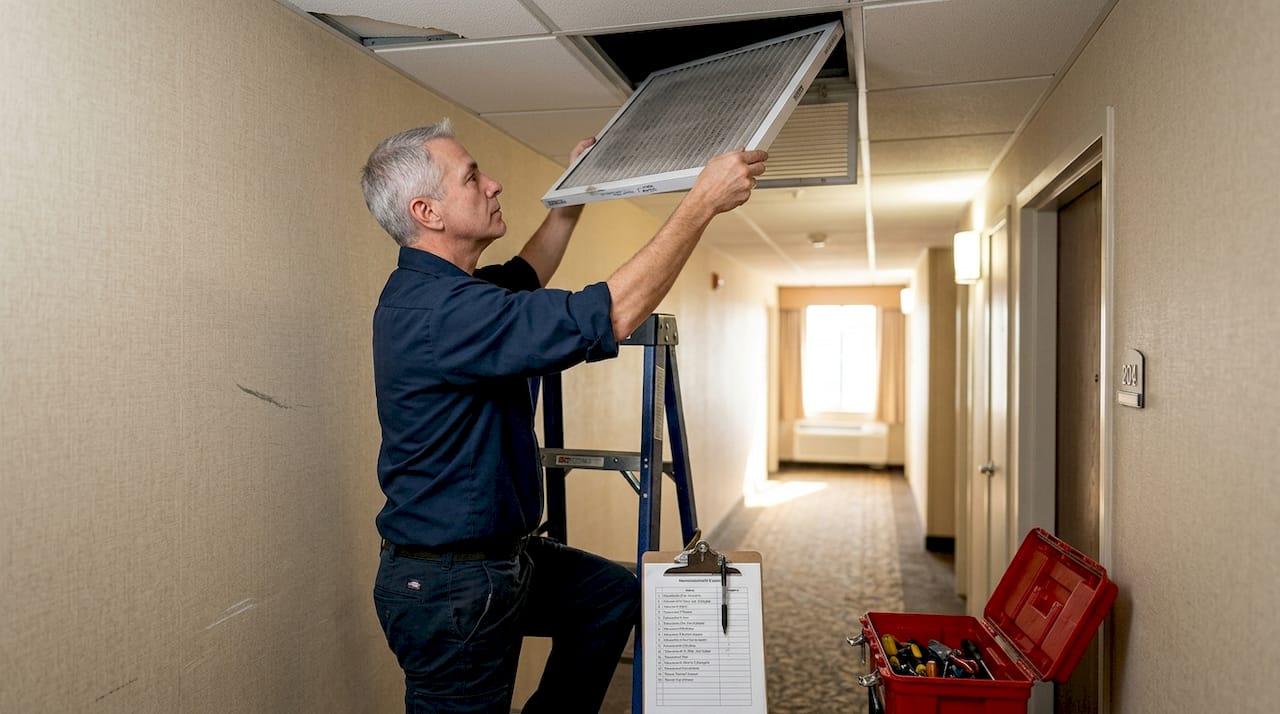
Pro Tip: Photograph equipment conditions before and after maintenance, especially when documenting wear or damage. Visual records support budget requests for replacements and provide evidence for insurance or warranty claims.
Consult the HVAC preventative maintenance guide for additional detail on specific tasks. Consistency matters more than perfection when building a maintenance routine that prevents emergency failures.
Troubleshooting common HVAC problems and mistakes to avoid in hotels
Recognizing warning signs early prevents minor issues from escalating into guest complaints and expensive repairs. Several problems appear frequently in hotel HVAC systems.
Common issues include uneven cooling or heating across rooms, indicating airflow imbalances or zoning problems. Noisy operation from rattling panels, squealing belts, or grinding bearings signals mechanical wear requiring attention. Rising energy bills without increased occupancy suggest efficiency loss from dirty coils, refrigerant leaks, or failing components. Water leaks around air handlers point to clogged drain lines or frozen evaporator coils from restricted airflow.
Watch for these warning signs during daily operations. Unusual odors like mustiness indicate mold growth in ductwork or drain pans, while burning smells suggest electrical problems or overheating motors. Frequent cycling where systems turn on and off repeatedly wastes energy and stresses components. Thermostat errors or unresponsive controls may stem from wiring issues, dead batteries, or failed sensors.
Avoid these maintenance mistakes that compromise system reliability. Neglecting maintenance schedules allows small problems to compound into major failures during peak demand. Attempting complex repairs without proper training risks further damage and safety hazards. Ignoring small faults like minor leaks or odd sounds leads to catastrophic breakdowns at the worst possible times.
Recognizing early signs of HVAC problems prevents guest discomfort and energy waste. When issues exceed in house capabilities, professional intervention protects your investment and maintains service quality.
Do not delay calling qualified technicians when problems persist despite routine maintenance. Refrigerant handling requires EPA certification, and electrical work demands licensed expertise. The cost of professional HVAC repair importance is minimal compared to guest refunds, negative reviews, and emergency service premiums from weekend failures.
Verifying maintenance success and optimizing HVAC performance long term
Confirming that maintenance achieved desired results requires measuring specific performance indicators before and after service. Temperature consistency across all served spaces shows proper airflow distribution and thermostat calibration. Measure supply air temperature at registers and compare to setpoints, looking for deviations under five degrees. Airflow volume can be estimated by holding tissue near vents and observing movement strength, though professional testing provides precise CFM measurements.
Energy usage tracking reveals efficiency gains from maintenance. Compare utility bills and runtime hours between maintenance intervals, accounting for weather and occupancy variations. Well maintained systems cycle less frequently and consume less power per cooling or heating degree day.
| Performance metric | Before maintenance | After maintenance | Target improvement |
|---|---|---|---|
| Average room temperature variance | ± 4°F from setpoint | ± 2°F from setpoint | 50% reduction |
| System runtime per day | 18 hours | 14 hours | 22% decrease |
| Monthly energy cost per ton | $85 | $68 | 20% savings |
| Filter pressure drop | 0.8 inches water column | 0.2 inches water column | 75% improvement |
| Guest comfort complaints | 12 per month | 3 per month | 75% reduction |
Sustaining HVAC excellence requires ongoing optimization beyond routine maintenance. Schedule professional tune ups twice yearly, before cooling and heating seasons, to catch issues early and optimize settings for changing demands. Consider system upgrades when equipment exceeds 15 years old or requires frequent repairs, as newer models offer significant efficiency improvements. Conduct energy audits to identify opportunities for control upgrades, zoning improvements, or insulation enhancements that reduce HVAC load.
Implement these ongoing optimization methods:
- Upgrade to programmable or smart thermostats that adjust temperatures based on occupancy patterns and reduce runtime during low demand periods
- Install variable speed drives on larger motors to match output to actual load rather than running full speed constantly
- Seal ductwork leaks that waste conditioned air in unconditioned spaces like attics or mechanical rooms
- Add insulation to exposed ductwork and refrigerant lines to minimize thermal losses during air distribution
- Train housekeeping staff to report room temperature issues immediately rather than waiting for guest complaints
Pro Tip: Deploy digital monitoring systems with sensors that track temperature, humidity, and equipment status in real time. Cloud based platforms send alerts when readings exceed normal ranges, enabling proactive response before guests notice problems. Regular verification and optimization ensure lasting guest comfort and reduced operational costs.
Review the benefits of upgrading HVAC systems when planning capital improvements. Modern equipment pays for itself through energy savings and reduced maintenance needs within five to seven years in most hotel applications.
Enhance your hotel HVAC maintenance with expert services
While in house maintenance handles routine tasks effectively, partnering with experienced HVAC professionals ensures comprehensive system care and addresses complex issues beyond typical staff capabilities. Lucas Air Conditioning and Heating brings specialized expertise to hotel HVAC challenges throughout Central Florida, offering preventive maintenance programs tailored to hospitality demands and rapid response repairs that minimize guest impact.
Our technicians understand the unique pressures hotels face, from peak season reliability requirements to budget constraints during slower periods. We provide thorough inspections that catch developing problems before they cause failures, plus system upgrades that improve efficiency and guest comfort. Whether you need support implementing the strategies in this HVAC preventative maintenance guide for homeowners or require emergency HVAC repair services, our team delivers prompt, professional solutions. Contact us to discuss maintenance partnerships or explore commercial HVAC installation services for aging systems ready for replacement.
Frequently asked questions
How often should hotel HVAC filters be changed?
Filters should be inspected monthly and replaced every one to three months depending on occupancy levels, local air quality, and filter type. High occupancy properties or those in dusty environments require more frequent changes. Neglecting filter replacement reduces airflow, forces systems to work harder, and degrades indoor air quality that guests notice immediately.
What are signs that a hotel HVAC system needs professional repair?
Watch for frequent breakdowns requiring resets, uneven temperature distribution across rooms, unusual noises like grinding or squealing, and unexplained increases in energy costs. Visible refrigerant leaks, frozen coils, or water pooling around units also demand immediate professional attention. Addressing these signs promptly preserves equipment lifespan and prevents guest dissatisfaction from comfort issues.
Can regular maintenance reduce hotel energy costs?
Yes, properly maintained HVAC systems consume 15 to 30 percent less energy than neglected equipment by operating at designed efficiency levels. Clean coils transfer heat effectively, correct refrigerant charge prevents compressor strain, and calibrated controls avoid unnecessary runtime. Scheduled maintenance also prevents inefficient operation and eliminates costly emergency repairs that carry premium pricing.
What should a hotel HVAC maintenance checklist include?
A comprehensive checklist covers filter inspection and replacement, evaporator and condenser coil cleaning, refrigerant pressure verification, electrical connection inspection, condensate drain clearing, belt condition assessment, thermostat calibration, and motor lubrication where applicable. Document all findings and actions taken for each unit. Refer to this commercial HVAC maintenance checklist for detailed step by step guidance tailored to commercial applications.
